Decide the discharge route before selecting equipment
The permitted discharge route and any reuse obligation determine the treatment objectives before a supplier compares equipment. Available destinations may include a municipal sewer, an agreed private receiving arrangement or an on-site reuse route, but the relevant authority or receiving party must confirm access, ownership and applicable conditions. The supplied research contains no verified Ibadan effluent limits or permit procedure, so neither should be inferred from general guidance or a product description.
Separate the wastewater streams before drawing the process flow. Record blackwater from guestrooms and staff areas; kitchen wastewater; laundry wastewater; swimming-pool discharge; spa discharge; and any other site-generated stream. Their hydraulic loads and operating characteristics differ, so combining them into one undifferentiated daily volume can conceal the controls required by the selected route.
Ibadan sanitation research supports the need for a controlled solution without defining a legal effluent standard. Olufemi and Olatunde’s qualitative study, published in 2026 but based on research conducted in 2019, identifies inadequate sanitation and the public-health hazard of open discharge. It does not establish a discharge concentration, permit procedure or route for a hotel project.
Decide whether reuse is mandatory, optional or unnecessary. The supplied WSZ material makes no reuse claim for its underground package unit, while the MBR material identifies water-reuse projects as an application. If reuse is required, identify the intended service and required quality before treating it as a design output.
For a wider treatment-route discussion, see the hotel wastewater treatment route considerations.
Build the hotel wastewater input sheet
Reliable tender sizing requires measured water use, operating schedules and site-specific wastewater streams rather than occupancy or guest-room counts alone. Collect the following items from hotel operating records, utility bills and the site survey, and mark each missing item as an explicit tender assumption rather than filling it with an unsupported value.
- Record current daily water consumption, average wastewater flow, peak morning and evening flows, occupancy, event use and expected future expansion.
- Measure or estimate separate flows for guestrooms, kitchens, laundry, pools, spas and staff facilities; identify the operating characteristics of kitchen and laundry wastewater.
- Request BOD, COD, suspended solids, oil and grease, pH and temperature data where the treatment train or discharge route requires them.
- Survey the available footprint, excavation access, soil and groundwater conditions, power reliability, drainage routes, odor-control requirements and sludge-removal access.
- State the design average flow and design peak flow separately. The supplied WSZ capacity of 1–80 m³/h is an hourly flow range and must not be compared with a daily average without conversion justified by the hotel’s verified flow profile.
| Input to complete | Evidence to request | Why it affects selection |
|---|---|---|
| Water and wastewater balance | Utility records, meter data, occupancy and event schedule | Establishes the average and peak design basis |
| Stream-by-stream flows | Separate kitchen, laundry, pool, spa and sanitary flow estimates | Identifies equalization, grease and side-stream requirements |
| Wastewater characterization | BOD, COD, suspended solids, oil and grease, pH and temperature | Defines biological loading and pretreatment duties |
| Site and utilities | Footprint, excavation route, soil, groundwater, power and drainage survey | Tests installation, resilience and civil-works feasibility |
| Sludge and maintenance | Sludge destination, removal route, storage and maintenance access | Completes the operating and solids-management scope |
| Approval and reuse | Confirmed receiving party, permit conditions and reuse requirement | Defines the required outlet quality and compliance route |
Use the hotel A/O package plant versus MBR comparison as a worksheet prompt, but keep Ibadan-specific permit items open until the responsible authority confirms them.
Compare A/O package treatment with MBR
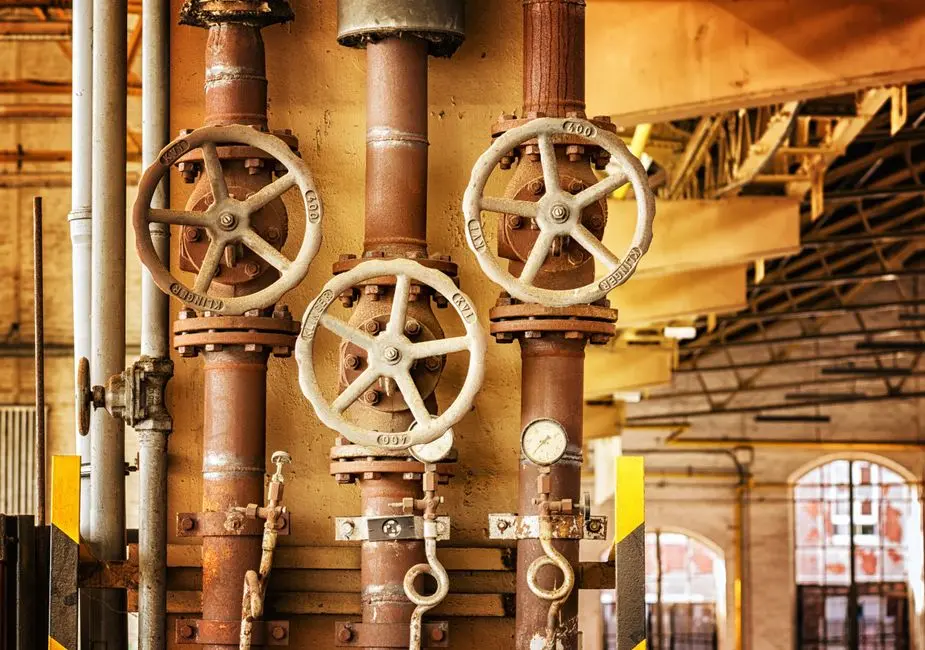
The WSZ underground A/O package plant combines anoxic/aerobic biological contact oxidation, sedimentation and disinfection in one buried unit with automated operation. It is intended for hotel applications, covers 1–80 m³/h, can be installed below grade with landscaping above, or mounted on a trailer for mobile deployment. These are the supplied product specifications, not measured performance at an Ibadan hotel.
The supplied MBR material describes activated sludge combined with submerged PVDF membrane filtration, a capacity range of 10–2,000 m³/day, filtration below 1 μm and a footprint 60% smaller than conventional systems. It identifies water-reuse projects among its applications. The footprint statement is a catalog comparison; it should not be represented as a site-specific saving until the competing layout and treatment objectives are defined.
| Decision item | WSZ underground A/O package treatment plant | MBR membrane bioreactor system |
|---|---|---|
| Process configuration | Anoxic/aerobic biological contact oxidation, sedimentation and disinfection in one buried package unit | Activated sludge with submerged PVDF membrane filtration |
| Supplied capacity range | 1–80 m³/h | 10–2,000 m³/day |
| Installation | Below grade with landscaping above, or trailer-mounted for mobile deployment | Confirm supplied configuration, footprint and installation method during tender |
| Operating emphasis | Automated operation | Stronger fit where reuse quality, solids separation or modular expansion is required |
| Reuse relevance | No reuse claim is stated in the supplied WSZ material | Water-reuse projects are identified as an application |
| Selection rule | Use as the baseline where compactness, automation and limited visible civil works dominate | Consider where reuse, stronger solids separation or modular treatment expansion justify added complexity |
Apply the decision directly: if the hotel needs compact automated domestic-sewage treatment and no defined reuse duty, start with the A/O package route. If a required reuse application or tighter solids-separation objective is confirmed, compare MBR against that duty. Do not introduce DAF, UF or RO as the primary sewage route without a documented grease, solids, membrane or reuse requirement. The available DAF equipment reference should therefore be treated as a possible pretreatment option only after the influent evidence establishes that duty.
For technical review, request the complete data sheets for the WSZ underground A/O package treatment plant and the MBR membrane bioreactor system.
Specify the system and verify supplier acceptance criteria
A wastewater tender specification becomes commercially meaningful only when it states the verified design flow, treatment objectives, outlet requirements, installation constraints and acceptance tests. Each bidder should map its proposed equipment to those requirements and list every exclusion, assumption and site condition that could change the price or delivery scope.
| Supplier submission | Required evidence for acceptance |
|---|---|
| Capacity demonstration | Show how the offered duty covers the stated average and peak design basis, with assumptions identified |
| Process and effluent basis | Submit process description, outlet quality offered, and the confirmed discharge or reuse route addressed |
| Installation method | Provide civil interface, excavation or above-ground arrangement, access, drainage, odor control and landscaping requirements |
| Controls and power | Specify local or remote controls, alarm handling, power supply and continuity provisions |
| Sludge management | State sludge generation, storage, removal, destination and maintenance access |
| Operations and support | Provide routine maintenance schedule, spare parts, operator training and after-sales support |
| Final acceptance | Carry out site testing with the confirmed influent and discharge route; do not infer compliance from product descriptions |
Include the verified input sheet in the tender appendices. Require the supplier to return marked-up deviations, a general-arrangement drawing, a process flow diagram, duty points, an equipment schedule, commissioning and testing plans, operator training, and the commercial exclusions schedule. These documents should use the same flow units and identify whether capacity refers to an hourly or daily duty.
Keep scope control explicit. Sewage treatment for discharge or reuse must not be confused with potable-water purification, which requires separate treatment products and quality objectives. Acceptance should also remain conditional on confirmation of the applicable Ibadan approval conditions because the supplied research does not establish those requirements.
Frequently Asked Questions
What flow should be used to size a hotel wastewater treatment plant in Ibadan?
Use the verified average and peak wastewater flows from hotel operating records, not occupancy or guest-room count alone. State both bases in the tender and ask the supplier to demonstrate coverage. Compare the WSZ range of 1–80 m³/h with an hourly peak basis, and the MBR range of 10–2,000 m³/day with a daily basis only after the same flow definitions are confirmed.
How much should an A/O package plant or MBR system cost for an Ibadan hotel?
The supplied research provides no Ibadan-specific price for either route, so a responsible budget must be obtained through comparable quotations. Ask each supplier for a base price covering the verified design basis, installation, controls, commissioning, testing, training, sludge handling and stated exclusions. Compare the quotations on the same scope and request the commercial assumptions behind each price.
How should a buyer select and qualify a hotel wastewater supplier?
Require a capacity calculation, complete technical data sheets, process drawings, confirmed outlet-duty evidence, installation method, controls, maintenance plan, sludge route, spare-parts list and site-specific acceptance proposal. Ask the supplier to identify every excluded assumption. Also request a package sewage plant and MBR selection for a hotel as a discussion aid, while judging the bid against the hotel’s verified design basis.
What should be confirmed before accepting discharge compliance or reuse performance?
Confirm the receiving party, discharge route, applicable permit conditions and any reuse specification before final acceptance. The supplied sources do not provide an Ibadan-specific effluent limit or permit procedure. Require site testing with the confirmed influent and discharge route, and treat compliance as unresolved until the responsible authority and accepted test results confirm it.