Define the wastewater duty before selecting equipment
Room count provides context, but it does not establish hydraulic loading; the supplier’s Peshawar hotel wastewater system guide states that equipment must be sized from documented flow and load data. For a Pakistani hotel or resort, begin with current and planned occupancy, guest-night wastewater generation, average daily flow, peak-hour flow and flow-duration records. Use metered data where available, document the metering period, and state operating assumptions. The same guide identifies kitchen wastewater, laundry effluent, cleaning-chemical discharges, pool discharge, cooling-water discharge and separately collected greywater as inputs that must be mapped to collection points and treatment stages.
Do not send every discharge to the biological stage by default. Kitchen grease, fibrous material and high solids need removal or controlled pretreatment before biological treatment; screening alone does not guarantee grease removal. Laundry and cleaning chemicals can affect process selection and require separate consideration. Buyers should also establish whether pool and cooling-water flows enter the sanitary sewer or require a separate route.
Ask each bidder to state its design flow, peak-flow provision, influent load assumptions and proposed equalisation. Check that proposed duty against the bidder’s stated capacity range rather than accepting a generic equipment rating. The following basis should be completed before quotations are invited.
| Design-basis field | Evidence required from the site | Procurement consequence |
|---|---|---|
| Occupancy and flow | Current and planned occupancy; metered average daily flow; peak-hour flow; flow-duration records | Defines hydraulic capacity and equalisation needs |
| Waste streams | Kitchen, laundry, cleaning chemicals, pool, cooling water and separately collected greywater | Defines collection points and pretreatment |
| Pollutant load | Solids, grease, fibrous material and expected kitchen or laundry loads | Protects biological stages and pumps |
| Disposal and operation | Sludge route, maintenance access, standby power, controls and monitoring | Defines whole-life operating scope |
Fix the discharge or reuse route first
The receiving point determines the required effluent quality and approval pathway before equipment selection. A municipal sewer, surface water body, lined soakaway, reuse network or approved land application each creates different technical and administrative requirements. The Peshawar hotel wastewater system guide states that compliant discharge, irrigation, toilet flushing and cooling make-up require different treatment objectives; it also warns that the same wastewater can encounter different requirements depending on its destination. Aligning your treatment technology with these specific disposal constraints ensures regulatory compliance.
PKWT states that treated water may support gardening, toilet flushing and floor washing after biological and tertiary treatment. It states that additional UF and RO can support recovery for cooling towers, boilers or process use (PKWT, Wastewater Treatment Plant in Pakistan, 2026). That means a reuse target must be written as a complete quality specification rather than a general request for “reusable water.” Identify the intended application, end user, distribution system and operating responsibilities.
Before ordering equipment, ask the relevant authority for current discharge standards, application requirements, effluent-testing frequency, connection conditions and site-specific restrictions. NEQS wastewater discharge or applicable provincial SEQS effluent compliance references should be treated as a framework to verify, not as proof of approval for a particular property. The supplied research contains no verified numerical effluent limit for a specific Pakistani hotel site, so do not adopt a remembered limit or a supplier’s general compliance statement as the permitting basis.
Ask suppliers to identify the proposed receiving point, sampling locations, test parameters, testing frequency and permit-support documents. They should also state which approvals remain the hotel’s responsibility. This separates an equipment performance claim from the administrative work required to authorize discharge or reuse.
Compare a package sewage plant with MBR
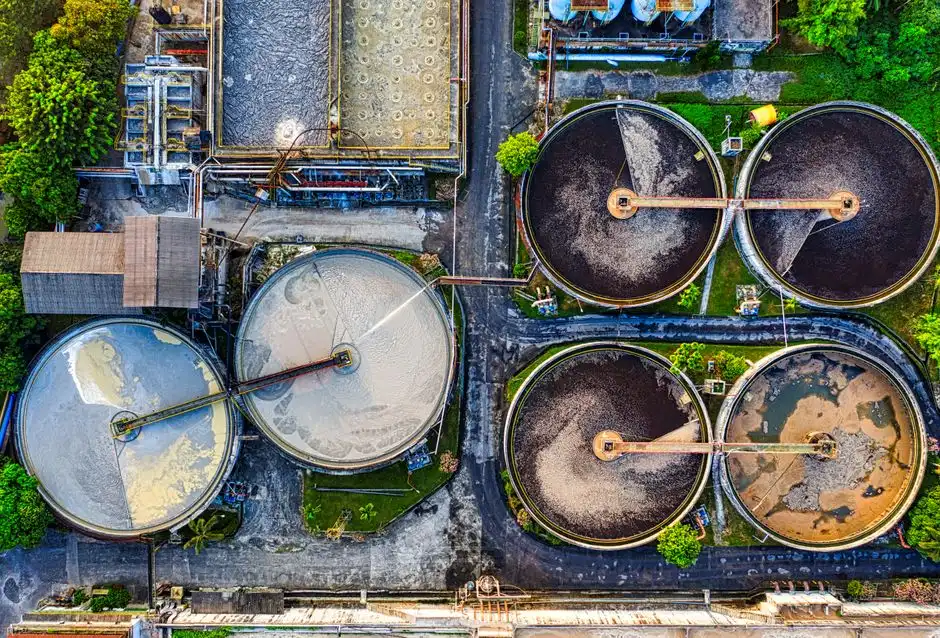
The treatment architecture should follow the verified duty and required output quality. The WSZ underground package sewage treatment plant combines anoxic/aerobic biological contact oxidation, sedimentation and disinfection and is rated by the supplier at 1–80 m³/h. The MBR wastewater treatment system combines activated sludge with submerged PVDF membrane filtration, is rated at 10–2,000 m³/day and is stated to filter below 1 μm. These are supplier specifications reported in the Peshawar hotel wastewater system guide, not independently verified site guarantees. Selecting the appropriate system depends on your specific footprint and water quality objectives.
Choose the WSZ approach when the objective is a compact, automated package for conventional sanitary-sewage treatment. Choose MBR when a verified reuse specification justifies membrane polishing or when tighter solids separation is required. A below-1 μm filtration claim does not define a complete reuse specification: the bid must still establish the parameters, applications and acceptance tests required by the receiving authority or user.
For MBR, require the quotation to state whether final disinfection is included, where it occurs and how its performance will be verified. The WSZ description includes integrated disinfection, while the supplied MBR description emphasizes biological treatment and membrane filtration. The MBR supplier also states a 60% smaller footprint than conventional systems, but excavation, groundwater, utilities, maintenance access and redundancy still require project-specific review.
| Decision point | Package biological treatment | MBR |
|---|---|---|
| Supplier-stated capacity | WSZ: 1–80 m³/h | MBR: 10–2,000 m³/day |
| Process scope | Anoxic/aerobic contact oxidation, sedimentation and disinfection | Activated sludge with submerged PVDF membranes; filtration stated below 1 μm |
| Best-fit condition | Conventional sanitary sewage and a compact below-grade package | Verified reuse quality or tighter solids separation justifies membrane polishing |
| Key purchase check | Confirm buried-component access, equalisation and disinfection acceptance criteria | Confirm disinfection scope, membrane guarantees, cleaning access and redundancy |
| Evidence boundary | Supplier specification; final design requires measured site flows | Supplier specification; filtration performance is not a complete reuse specification |
The package sewage plant versus MBR for a hotel comparison is useful as a decision framework, but it should not replace Pakistan-specific flow, soil, groundwater, discharge and compliance data.
Build a treatment train that protects biological stages
Pretreatment must be specified as part of the treatment train, not treated as an optional accessory. Require separate handling or assessment for kitchen grease, fibrous material, laundry effluent and cleaning chemicals before biological treatment. The Peshawar hotel wastewater system guide states that incoming solids, grease and fibrous material should be removed before the biological stage. It identifies the GX Series rotary mechanical bar screen as a candidate where continuous fine screening is needed to protect downstream pumps and biological processes; that is an evaluation point, not a requirement for every site.
Make final disinfection an explicit objective. Define the method, its location in the train, the verification method and the operating checks. Do not assume membrane filtration is a substitute for disinfection.
Plan residual-sludge removal, storage, dewatering and disposal before comparing prices. The Peshawar guide identifies a plate-and-frame filter press as a dewatering option to evaluate where operating space, labour and a cake-disposal route are available. The selected route must reflect actual solids characteristics rather than a generic dewatering package.
For context, The Express Tribune reported in 2026 that the Galiyat Development Authority was constructing underground plants using ABR septic and disinfection tanks to treat up to 95% of hotel wastewater before discharge. That is a reported project approach, not a universal performance guarantee and not a substitute for site-specific design or acceptance testing.
Issue one comparable request for proposal
A comparable tender requires every bidder to price the same measured duty, receiving route, treatment objective and delivery boundary. Require each proposal to state design flow, peak-flow provision, treatment process, performance guarantees, pretreatment, disinfection, sludge handling, controls, utilities, installation boundary, commissioning tests and O&M support. Include occupancy scenarios, flow records, kitchen and laundry data, pool or cooling-water flows, soil and groundwater reports, available footprint, access, power reliability, flood exposure and the receiving point. Standardizing these requirements allows for an objective evaluation of competing bids.
Request FAT and SAT plans, material standards, membrane or media guarantees, spare-parts availability, operator training, troubleshooting support and maintainable access. For MBR, add membrane-cleaning methods and access; for the WSZ, identify how buried components will be inspected and serviced. Require a maintenance schedule, power-failure response, monitoring responsibilities and local service arrangements.
Commercial exclusions determine whether bids can be compared. Require each bidder to identify exclusions for collection piping, site works, power, effluent testing, training, sludge disposal and permit-support documents. Do not compare quotations until every bidder uses the same installation and operating boundary.
Obtain a written site-specific quotation because the supplied research contains no supported Pakistan-specific hotel treatment price. The following fillable checklist can be issued as the common RFP schedule.
| RFP schedule | Bidder response required | Buyer review |
|---|---|---|
| Duty and destination | Design flow, peak-flow provision, treatment objective and receiving point | Matches measured site data and confirmed route |
| Process scope | Pretreatment, biological stage, clarification or membranes, disinfection and sludge route | Protects biological stages and closes the treatment train |
| Acceptance evidence | Performance criteria, FAT/SAT plan, membrane or media guarantees and material standards | Tests are measurable and tied to the duty |
| Installation | Footprint, excavation, groundwater, flood exposure, access, lifting route, power and construction method | Compatible with site constraints |
| Operations | Maintenance schedule, training, monitoring, spare parts, troubleshooting and sludge responsibilities | Identifies maintainability and operating resources |
| Commercial boundary | Collection network, site works, tests, approvals, power, residual disposal, exclusions and price | Bids price the same deliverable |
Frequently Asked Questions
How should a hotel or resort wastewater treatment plant in Pakistan be sized?
Use measured average and peak flows, flow-duration data and documented pollutant loads, then check the proposed duty against the selected supplier’s stated capacity range. Room count alone is insufficient, as noted in the Peshawar hotel wastewater system guide.
How should a buyer select between a package sewage plant and MBR?
Select the package route for conventional sanitary-sewage treatment and select MBR when a verified reuse specification justifies membrane polishing. Require the same process scope, acceptance evidence and operating responsibilities from every bidder.
What should be included when comparing cost and supplier quotations?
Request written quotations with installation, power, testing, training, commissioning and sludge handling defined. No supported Pakistan-specific price or lead time is supplied, so compare like-for-like scopes and list exclusions separately.
Which discharge requirements should be confirmed before ordering?
Confirm the current applicable requirement, discharge route, application, testing frequency and site restrictions with the relevant authority. NEQS or provincial SEQS references do not establish approval for a particular hotel site without that verification.