Set the permit and liability position before closing
A Samsung Electronics fab acquired in Hungary should not be treated as having a transferable compliance position merely because the seller’s permit appears in the register. Government Decree 314/2005 and Directive 2010/75/EU provide the Hungarian IPPC route, while the permit status, BAT assessment, consultation record and pending challenges must be verified before closing (HydropureWater, 2026). The acquisition team should treat permit transferability, measured wastewater characteristics and installed ETP capacity as linked diligence issues: if the existing permit does not cover the acquired operation or current production, a modified or replacement application may be required before relying on the site’s treatment and discharge arrangements.
The controlling warning is the Göd decision. On 10 October 2025, a Hungarian court annulled Samsung SDI’s operating permits because of deficiencies in public consultation and the BAT assessment for the cathode-coating line, with production suspended until new permits were issued (HydropureWater, 2026, citing Daily News Hungary, 2025-10). A signed share-purchase agreement does not cure a defective permit. Under the transfer position described in the same source, the buyer inherits the recorded permit status, including pending annulment, modification or public-interest challenge.
Request the complete permit file, five years of self-monitoring reports, BAT documentation, inspection correspondence and public-participation records. Check whether a substantive challenge remains open within the stated two-year period from permit notification (HydropureWater, 2026). For a new-operator review, the source indicates a typical 60–105-day window, so the permit application, BAT assessment and long-lead equipment procurement should proceed in parallel rather than sequentially.
| Due-diligence question | Evidence to obtain | Decision or action |
|---|---|---|
| What is the recorded permit status? | Current IPPC permit, permit file, transfer history and court or authority notices | Do not assume closing cures an annulment, modification or pending challenge. |
| Does the permit cover the acquired activity and current load? | Approved process lines, production assumptions, BAT assessment, monitoring reports and permit limits | Determine whether continued operation is covered or a modification or replacement application is required. |
| Is procedural exposure open? | Consultation record, non-technical summary, public comments and correspondence with the Inspectorate for Environmental Protection | Escalate any substantive challenge within the stated two-year notification period. |
| Can procurement wait for the permit decision? | Equipment lead times, process design basis and BAT-linked equipment requirements | Use the indicated 60–105-day new-operator review window to run permit, design and procurement workstreams concurrently. |
The broader Hungarian fab ETP guide provides useful regulatory context, but the buyer should treat its site-specific examples as diligence prompts, not as substitutes for the target fab’s permit file.
Identify the legally controlling discharge route
The wastewater discharge route determines the controlling limits, approving authority and reuse constraints, so it must be established before equipment selection. For non-hazardous surface-water discharge, the acquisition guide identifies Government Decree 28/2004 and Government Decree 27/2008 Annex 2, with tighter site-specific requirements in sensitive zones including Lake Balaton and the Tisza watershed (HydropureWater, 2026). Where effluent enters a municipal collection system, Directive 91/271/EEC and the receiving POTW’s sewer bylaws govern the acceptance route; the same source indicates 30–60 days for a sewer agreement.
This is not a secondary commercial check. A surface-water permit, a sewer acceptance agreement and an internal reuse plan create different compliance tests. An ETP may meet an industrial discharge profile while failing the sewer inlet specification, or it may produce water suitable for reuse only after additional polishing and monitoring. The acquirer therefore needs the permit, sewer rules, discharge agreement, receiving-water classification and current monitoring results before accepting a performance guarantee.
| Discharge route | Controlling framework identified in the 2026 acquisition guide | Buyer must verify |
|---|---|---|
| Surface water | Government Decree 28/2004; Government Decree 27/2008 Annex 2; IPPC permit conditions | Receiving-water classification, sensitive-zone status, discharge point, site-specific limits and BAT-AEL conditions. |
| Municipal sewer | Directive 91/271/EEC, receiving POTW sewer bylaws and the discharge agreement | Sewer inlet limits, permitted substances, monitoring obligations and whether the POTW accepts the proposed flow and pollutant profile. |
| Internal reuse or zero liquid discharge | Permit conditions, process-water specifications and industrial wastewater reuse requirements | Treatment train, water-quality acceptance tests, distribution constraints and residual concentrate or sludge route. |
The Hungarian fab ETP guide is a useful cross-check on the Hungarian framework. The acquisition decision should record which route controls, which authority has approved it and whether any tighter site-specific limit overrides the general values.
Characterize wastewater before sizing the ETP
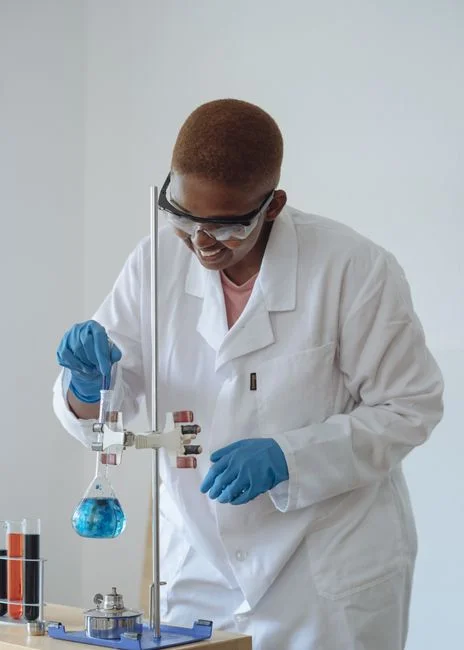
Wastewater sampling must distinguish semiconductor and battery-cell risks because the contaminants, treatment barriers and reuse specifications are different. The 2026 acquisition guide identifies fluoride, TMAH, organic strippers and copper in semiconductor fab wastewater, reporting fluoride up to 1,000 mg/L HF-equivalent in concentrated streams and NHKV exceedances by factors of 10–100 (HydropureWater, 2026). For battery-cell production, it identifies NMP, PVDF binder, LiPF6-derived fluoride, cobalt, nickel and lithium as parameters that can exceed default municipal limits without pretreatment (HydropureWater, 2026). These are screening references, not a substitute for sampling the acquired site.
Build a sampling plan that separates clean process streams from concentrated waste, storm water, domestic sewage, floor and equipment washdown, laboratory drains and any battery-cell cathode or coating streams. Sample across production states rather than only during a commissioning campaign. For each stream, record flow, source, production rate, pH, temperature, COD/BOD, TSS, total nitrogen, total phosphorus, fluoride, TMAH, NMP, organic solvents, copper, cobalt, nickel, lithium, dissolved solids and relevant conductivity or salinity parameters.
| Stream or decision | Required analytical focus | Implication for treatment |
|---|---|---|
| Semiconductor concentrated waste | Fluoride, TMAH, organic strippers and copper | Test fluoride-specific pretreatment and copper removal before biological polishing; verify discharge and reuse targets. |
| Battery-cell cathode or coating waste | NMP, PVDF binder, LiPF6-derived fluoride, cobalt, nickel and lithium | Assess equalization, solids or FOG removal, biological treatment and metal-bearing sludge management. |
| General wastewater | COD/BOD, TSS, total nitrogen, total phosphorus, flow variability and pH | Determine biological loading, equalization and final polishing requirements. |
| Existing ETP comparison | Measured flows and loads versus demonstrated operating envelope and design basis | Test whether aeration, membrane, pumping, equalization and sludge systems remain adequate for current and planned production. |
The metal-control analogy from Samsung Austin is useful because it shows why source separation can change the waste profile. The 2022 TEEA account reports that copper ion exchange eliminated 1.5 million pounds of copper sludge and 2.8 million pounds of treatment chemicals, recovered copper valued at USD 35,000 per year, and removed 115 twenty-yard containers of sludge per year from roads (TCEQNews, 2022). It is an analog for process evaluation, not evidence of performance at the Hungarian site; use the semiconductor fab wastewater treatment guide to structure that comparison.
Choose the treatment train and reuse destination
Each treatment unit should have a defined contaminant, permit constraint or reuse function. Mechanical screening protects pumps and downstream equipment. The acquisition guide specifies 8–24 hours of hydraulic residence for flow and load equalization in its stated wastewater-loading case, using rotary bar screening with a 2–6 mm aperture (HydropureWater, 2026). DAF is then evaluated for suspended solids, FOG and colloidal material, including NMP-bearing cathode waste; the cited DAF capacity band is 4–300 m³/h. For equipment comparison, see DAF pretreatment for fab wastewater.
MBR addresses BOD, total nitrogen and TSS polishing. The supplied DF-series equipment uses 0.1 µm PVDF flat sheets, with each 80–225 m² cassette producing 32–135 m³/day, allowing staged scale-up (HydropureWater, 2026). An MBR wastewater treatment system should therefore be assessed against measured organic and solids loads, membrane redundancy, cleaning strategy and the required effluent profile—not selected from flow alone.
| Unit operation | Function in the acquisition route | Acceptance input |
|---|---|---|
| Screening and equalization | Protect downstream equipment and damp flow and load variation | Screen aperture, peak flow, batch discharges, 8–24-hour hydraulic-residence case from the 2026 guide. |
| DAF | Remove suspended solids, FOG and selected colloidal material | Flow, oil and solids loading, flotation performance, sludge characteristics and redundancy. |
| MBR | BOD, total nitrogen and TSS polishing | Influent load, membrane area, 0.1 µm PVDF flat-sheet configuration, flux and cleaning basis. |
| Industrial RO | Residual fluoride removal and reuse polishing | Feed chemistry, recovery requirement, concentrate disposal and reuse-water specification; cited recovery reaches 95%. |
| Sludge dewatering | Reduce sludge volume and define the disposal route | Metal and fluoride content, solids concentration, dewatering performance, filter-pressate recycling and permitted disposal. |
The 2026 guide estimates that RO polish water can supply roughly 60–75% of incoming fresh-water demand for battery rinsing and semiconductor ultrapure-water pretreatment (HydropureWater, 2026). Treat that as a feasibility range, not a guaranteed reuse yield. Confirm the process demand, permeate quality, contamination control, storage, distribution and whether the permit authorizes the intended reuse.
Samsung’s published water-management process separates sewage, wastewater, industrial water and ultrapure water, records reuse monthly in its EHS system and treats wastewater through on- and off-site facilities (Samsung, 2025). The acquirer should use that separation concept to define water streams and metering points before deciding whether reuse is technically and regulatorily possible. The related industrial wastewater recycling blueprint can help frame reuse-quality and zero-liquid-discharge questions.
Decide between ETP retrofit and new capacity
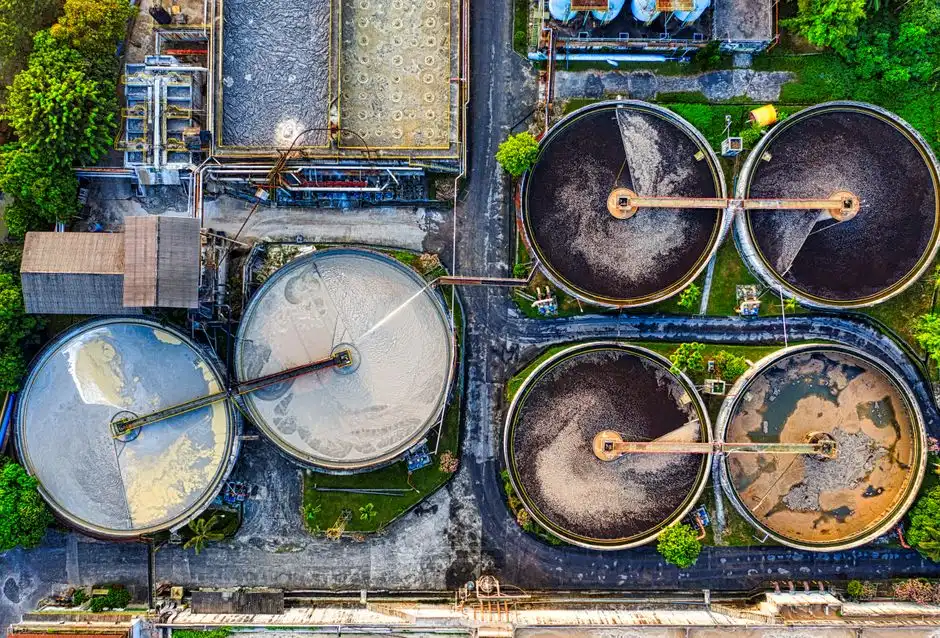
Retrofit is defensible only when measured flows and loads, hydraulic residence, treatment performance, redundancy and planned production fit the existing ETP’s demonstrated operating envelope. The 2026 acquisition guide warns that aeration capacity sized for historical loading may not support current or planned production (HydropureWater, 2026). If the existing plant has not demonstrated stable performance across relevant batches and loads, the buyer should not use nominal capacity as proof of adequacy.
| Decision test | Retrofit | New or materially expanded capacity |
|---|---|---|
| Hydraulic fit | Peak and batch flows remain within demonstrated equalization and treatment capacity. | Current or planned flow exceeds the demonstrated envelope. |
| Pollutant fit | Measured loads and treatment results meet permit, sewer or reuse requirements across representative operating conditions. | Existing performance depends on untested conditions, or pretreatment, biological or polishing capacity is inadequate. |
| Redundancy and maintainability | Equipment condition, membrane and pump redundancy, cleaning access and spare parts support reliable operation. | Major assets require replacement, expansion or a new treatment line to provide acceptable availability. |
| Sludge and reuse | Sludge can be dewatered and disposed of lawfully, and permeate can be reused where intended. | New sludge, concentrate or reuse infrastructure is required to complete the compliance route. |
For a 500 m³/day Hungarian retrofit covering screening, equalization, DAF, MBR, RO and sludge handling, the supplied 2026 estimate is approximately EUR 2.8–4.5 million (HydropureWater, 2026). This is a project-specific estimate, not a universal fab price. The same source states that a packaged skid approach may reduce capital cost by 10–15%, while electricity and membrane replacement represent approximately 18–25% of capital expenditure per year (HydropureWater, 2026). Obtain a quotation only after fixing flow, analysis, permit limits, reuse targets, sludge characteristics, site constraints and acceptance tests.
The acquisition timetable should include a go/no-go review after sampling and equipment inspection, a permit decision before final process lock, and a procurement review before long-lead orders are released. The outsourced wastewater plant operation guide is relevant when the buyer also needs an operating and maintenance model for the retained or expanded ETP.
Frequently Asked Questions
What will a 500 m³/day retrofit cost in Hungary?
The supplied 2026 estimate is approximately EUR 2.8–4.5 million for screening, equalization, DAF, MBR, RO and sludge handling at that flow scale (HydropureWater, 2026). It is not a quotation for the acquired fab. A buyer should request pricing based on measured flow, wastewater analysis, permit limits, reuse targets, sludge characteristics, site conditions and measurable acceptance tests.
How should the acquirer size the ETP?
Do not size from factory floor area or nameplate capacity alone. Compare measured and planned flows and loads with the ETP’s demonstrated operating envelope, including equalization residence, aeration, membrane performance, pretreatment, redundancy and sludge handling. The missing inputs are the legacy stream profile, production plan, peak and batch flows, permit limits and reuse specification.
What should a wastewater equipment supplier demonstrate?
Require bidders to map every proposed unit to a permit limit, measured contaminant, reuse specification, redundancy requirement and measurable acceptance test. For example, the proposal should show how fluoride, NMP, TMAH, metals, solids and nutrients are controlled, where sludge goes, and what performance tests are required before acceptance.
Can closing proceed while permit challenges remain unresolved?
Do not treat permit risk as post-closing administration. The 10 October 2025 Göd annulment demonstrates that public consultation and BAT assessment can affect operating legality (HydropureWater, 2026, citing Daily News Hungary, 2025-10). Before closing, obtain the complete permit and litigation record, identify any challenge within the stated two-year period from permit notification, and make the permit-transfer or replacement process an explicit transaction workstream.