Confirm the Pharmaceutical Sludge Application
A belt filter press is suitable for pharmaceutical wastewater sludge only when representative samples show predictable conditioning, filtration and cake-handling behavior. Before requesting a proposal, define feed solids, pH, COD, suspended solids, polymer response, required cake dry solids, filtrate solids capture and discharge conditions. The available 2024 case involved polymer sludge, not pharmaceutical wastewater, so it provides a scope warning rather than evidence of pharmaceutical performance. Background on pharmaceutical wastewater treatment processes should be used to define the upstream sludge duty, not to substitute for site testing.
Pharmaceutical sludge changes with production campaigns, cleaning operations, product recovery and chemical dosing. A single laboratory sample can hide the variability that determines belt drainage, polymer demand and cake discharge. Ask for a sampling plan that covers normal operation and relevant batch conditions rather than relying on one grab sample.
| Application input | Information the buyer must obtain | Selection implication |
|---|---|---|
| Feed solids | Dry-basis solids and representative production-period variation | Determines whether gravity thickening can precede dewatering and establishes hydraulic loading. |
| Sludge chemistry | pH, COD, suspended solids and relevant process additives | Shows whether the sludge resembles the application used in available evidence and identifies conditioning constraints. |
| Conditioning response | Polymer product, dose response, mixing method and required solids capture | Defines chemical demand and whether dosing can be integrated with feed and belt controls. |
| Filtration behavior | Filtrate rate, drainage response and tendency for solids to migrate beyond the belt | Supports architecture and gravity-zone selection. |
| Discharge outcomes | Required cake dry solids, filtrate solids capture, cake transportability and filtrate destination | Provides measurable acceptance criteria without assuming a universal pharmaceutical result. |
The indirect benchmark remains explicit. The 2024 Processes case described sludge containing approximately 9% solids on a dry basis, COD above 40,000 mg/L, TSS of 10,500 mg/L and pH 8.5. Those values characterize that polymer-effluent sludge only; they are not pharmaceutical design inputs (Processes, 28 March 2024).
Select the Dewatering Route
Equipment selection depends on the required operating pattern and sludge response rather than whether a machine can produce a visible cake. Continuous belt filtration suits a duty that supports steady feed, gravity thickening, belt washing and automated cake discharge. A plate and frame route may be more appropriate when batch treatment or a defined batch cycle is preferable.
Komline’s commercial information supports a three-belt design with an independent gravity zone, a two-belt design and an extended-gravity two-belt design. Selection of the basic machine depends on sludge type and feed solids. The commercial three-belt design can provide an optional pressure profile of up to 14 drums, giving progressively applied pressure and additional contact time (Komline-Sanderson, accessed 2026).
The 2024 industrial retrofit found that the selected filter press produced cake at 35% solids versus 19% from the vacuum belt filter, while its filtrate met local discharge regulations without further treatment (Processes, 28 March 2024). That comparison involved a vacuum belt filter, not a modern continuous belt filter press, and the feed was polymer sludge. The result belongs in a route-screening discussion, not a pharmaceutical performance guarantee.
| Decision point | Favor continuous belt filtration when | Favor a plate and frame filter press when |
|---|---|---|
| Feed pattern | Continuous or predictable feed can sustain steady belt operation. | Batch treatment and defined plate cycles are preferred. |
| Conditioning | Polymer dosing can be coordinated with feed rate and belt speed. | Batch conditioning and plate handling suit the process. |
| Dewatering route | A gravity thickening zone and progressive belt pressing fit the sludge response. | Plate-based pressure filtration provides a better route for the tested sludge. |
| Discharge | Continuous cake discharge and washing suit the operating concept. | Manual, hydraulic or automatic plate handling aligns with the plant. |
| Equipment scope | Feed pump, polymer system, wash system, PLC and cake conveyor can be integrated. | A [plate and frame filter press alternative](/product/9-plate-frame-filter-press.html) can offer filtration areas from 1 m² to 500 m² with manual, hydraulic or fully automatic PLC-controlled operation (HydropureWater verified product catalog, accessed 2026). |
Use both routes in early testing if the operating pattern is uncertain. The decision should be supported by measured cake solids, solids capture, filtrate quality, chemical consumption, wash-water demand and cake discharge.
Configure the Belt Filter Press
A belt press should be selected by sludge type, feed solids and drainage behavior before filter area is fixed. Two-belt, three-belt and extended-gravity architectures provide different combinations of drainage area, path length and pressure application. Komline states that basic-machine selection is a function of sludge type and feed solids; its commercial range includes a three-belt model with an independent gravity zone, a two-belt model and an extended-gravity two-belt model (Komline-Sanderson, accessed 2026).
The gravity zone requires attention in dilute-sludge applications. Komline states that its independent gravity zone can serve sludge with suspended solids below 1.5% and can also operate as a stand-alone gravity belt thickener. The supplier also offers an extended gravity arrangement for poorly draining or dilute sludge. These are vendor-stated application conditions, not independently validated limits for pharmaceutical sludge.
For the pressure section, the cited three-belt design offers a profile of up to 14 drums. Its first drum is intended to remove a high filtrate volume before the sludge enters the pressure and shear zone, after which progressively applied pressure supports further dewatering (Komline-Sanderson, accessed 2026). The required profile depends on the pilot pressure response, belt tension, drainage rate and cake release behavior.
| Configuration item | Procurement requirement | Evidence or decision input |
|---|---|---|
| Belt architecture | Select two-belt, three-belt or extended-gravity arrangement. | Sludge type, feed solids, drainage and required path length (Komline-Sanderson, accessed 2026). |
| Gravity zone | Define length, belt specification, drainage capacity and thickening objective. | Independent gravity zone can apply below 1.5% suspended solids according to Komline-Sanderson. |
| Pressure profile | Define drum arrangement, pressure development, belt tension and wedge setting. | Commercial three-belt design offers an optional profile of up to 14 drums (Komline-Sanderson, accessed 2026). |
| Controls | Specify PLC control, interlocks, operating displays and integration requirements. | Komline states that its electrical control panels are provided with PLCs. |
| Auxiliaries | Identify feed pump, polymer feed, cake conveyor, wash system and wear parts separately. | Komline offers polymer feed systems, cake conveyors and sludge feed pumps. |
| Conditioning | Integrate [automatic chemical dosing for sludge conditioning](/product/8-automatic-chemical-dosing-system.html) with sludge feed and belt operation. | The pilot must establish the dose-response relationship before automatic control criteria are fixed. |
Controls should coordinate polymer dose, feed rate, belt speed and relevant washing functions. Until representative-sludge testing establishes stable operating points, those controls should remain capable of adjustment and manual review.
Define Pilot Tests and Acceptance Criteria
Representative-sludge testing is the acceptance test because the supplied studies do not establish universal pharmaceutical belt-press performance. The pilot should demonstrate the complete conditioned system at the proposed feed rate and report feed solids, solids capture, cake dry solids, cake discharge behavior, filtrate quality and wash-water demand.
Komline offers laboratory testing with 5-gallon representative sludge samples to estimate belt-press performance. That route can support preselection, but the sample must represent the pharmaceutical sludge and the test method must disclose how conditioning, belt speed, hydraulic loading and solids loading are controlled (Komline-Sanderson, accessed 2026).
The 2024 retrofit provides a useful reporting format: compare the incoming mass balance, cake solids, solids capture and filtrate discharge performance against the existing route. Its 35% cake result, local-regulatory filtrate result and economic findings belong to polymer sludge and cannot be inserted into pharmaceutical acceptance criteria (Processes, 28 March 2024).
| Acceptance parameter | What the supplier must report | Buyer’s acceptance basis |
|---|---|---|
| Feed basis | Dry-basis feed solids and sample origin | Representative of the specified production and operating condition. |
| Mass balance | Feed, filtrate and cake solids with calculation method | Agreed calculation basis and documented measurement uncertainty. |
| Solids capture | Solids retained in cake relative to feed solids | Project-specific threshold tied to downstream solids handling and filtrate treatment. |
| Cake dry solids | Measurement method and result across the test | Threshold agreed for disposal or further processing; no universal value is supported by the supplied evidence. |
| Filtrate | Suspended solids and the parameters relevant to reuse or discharge | Applicable site requirement; the supplied evidence gives no universal pharmaceutical limit. |
| Process balance | Hydraulic and solids loading, belt speed, chemical dose, filtrate flow, wash-water flow and runtime | Stable operation at the proposed duty and no unacceptable flooding, carryover, blinding or cake-discharge failure. |
Define pass/fail conditions before the test and specify how deviations are handled. A visual inspection of cake discharge is insufficient: require continuous run time, recorded operating setpoints, representative samples and an agreed method for reconciling solids capture.
Build the Supplier Comparison Sheet
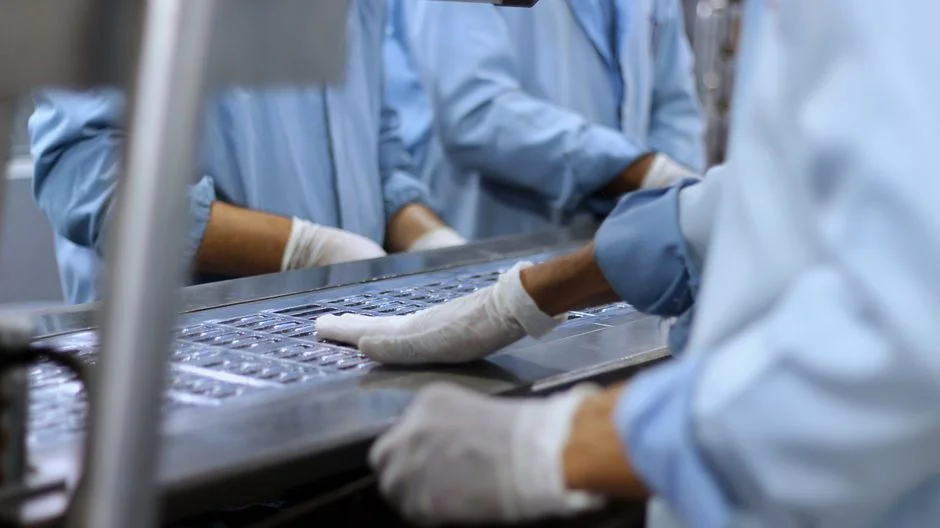
A comparable quotation must identify the complete dewatering system and the operating inputs used to support its performance claim. Equipment price alone obscures differences in auxiliary scope, conditioning, control responsibility, support and disposal risks.
Ask each bidder to state the duty limits for which its proposal is valid and to identify its laboratory test method. The proposed operating data should be tied to representative sludge rather than generic filter-area or throughput figures.
| Fillable comparison item | Supplier response required | Buyer review |
|---|---|---|
| Feed pump | Included or excluded; model, duty and utility requirements | Confirm compatibility with tested feed rate and solids loading. |
| Polymer feed system | Scope, controls and conditioning basis | Check dose range and integration with the selected test results. |
| Cake conveyor | Included or excluded; discharge interface | Confirm cake behavior, access and downstream handling. |
| PLC and wash system | Functions, interlocks, instrumentation and integration | Define operating control and site responsibilities. |
| Wear parts | Scope, expected replacement basis and supply arrangement | Identify exposure to the tested sludge and operating pattern. |
| Performance basis | Test method, sludge description and operating setpoints | Accept only evidence tied to representative pharmaceutical sludge. |
| Guarantees and support | Performance responsibility, spare parts, training and warranty terms | Locate unresolved responsibility in the contract. |
| Installation boundary | Civil works, utilities, connections and commissioning responsibilities | Resolve gaps before price comparison. |
| Operating inputs | Polymer consumption, wash-water demand, energy use and cake-discharge reliability | Compare project-specific inputs; no universal pharmaceutical cost benchmark is supplied by the sources. |
For additional operating context, compare the bid against the criteria used in this belt filter press selection guide, then replace application-specific assumptions with pharmaceutical sludge data. Require the quotation and final contract to use the same duty, acceptance values and system boundary.
Frequently Asked Questions
What will determine the cost of a belt filter press for pharmaceutical sludge?
The main cost drivers are the selected architecture, filter area, controls, pumps, polymer feed, wash system, cake conveyor, installation scope and operating inputs such as polymer consumption and wash water. The supplied sources provide no universal pharmaceutical price or annual cost benchmark. Request a project-specific quotation showing equipment, auxiliary equipment, utilities, labor, installation and acceptance-test inclusions. Then request the operating-cost basis used by the supplier for polymer, wash water, energy and cake disposal.
How should the supplier be selected for representative-sludge testing?
Select a supplier that can test the actual pharmaceutical sludge, disclose its laboratory method and report the complete operating balance. Komline states that it accepts 5-gallon representative
Frequently Asked Questions
Is a belt filter press suitable for pharmaceutical wastewater sludge?
Yes, belt filter presses are highly effective for pharmaceutical sludge, provided the sludge is properly conditioned. Because pharmaceutical waste often contains high concentrations of organic matter, proteins, and active pharmaceutical ingredients (APIs), the sludge typically requires chemical conditioning—often with cationic polymers—to achieve a solids content of 15% to 30% depending on the specific biosolid composition.
How much does a belt filter press for pharmaceutical wastewater cost?
Capital costs for a pharmaceutical-grade belt filter press typically range from $150,000 to $500,000, depending on the belt width (usually 1 to 3 meters), material construction, and level of automation. Operational costs generally fall between $50 and $150 per dry ton of sludge processed, accounting for polymer consumption, electricity, belt replacement, and specialized wash-water requirements necessary to prevent biological fouling.
What sludge data should I provide when sizing a belt filter press?
To ensure proper sizing, you must provide the feed sludge concentration (typically 1% to 4% solids), the organic-to-inorganic ratio, and the specific resistance to filtration (SRF). Additionally, engineers require the daily sludge volume in cubic meters, the target cake dryness percentage, and a complete chemical analysis to identify constituents that may require stainless steel 316L or specialized corrosion-resistant coatings on the press frame.
How do I compare a belt filter press with a plate and frame filter press?
The primary difference lies in the process continuity and dryness levels; belt filter presses offer continuous operation with lower labor requirements but typically achieve lower cake dryness (20%–30%) compared to plate and frame presses, which operate in batches and can reach 35%–50% solids. For pharmaceutical facilities, plate and frame presses are often preferred if the waste stream requires the highest possible volume reduction to minimize hazardous waste disposal costs.
How can I reduce compliance risk when procuring a pharmaceutical sludge dewatering system?
To mitigate risk, ensure the system design adheres to cGMP (current Good Manufacturing Practice) standards and includes full material traceability for all wetted parts. Procure systems with integrated PLC-based monitoring for real-time data logging of process parameters, which provides the necessary audit trail for environmental compliance and ensures that the dewatering performance consistently meets the discharge or disposal criteria mandated by local regulatory agencies.