
Confirm the effluent route before choosing equipment
Manufacturers in Beirut treating high-COD trade wastewater must confirm the receiving route, characterize the effluent, and reduce load at the factory rather than assuming a universal plant design. The supplied Lebanese references cite COD limits of 125 mg/l for sea or surface-water discharge and 500 mg/l for downstream sewer discharge, while a proposed marine standard lists COD at 100 mg/l. DAF recovers oil, FOG, and suspended solids; biological treatment reduces biodegradable COD; and membrane or advanced treatment provides polishing. Final equipment selection depends on verified permit conditions, flow and load variability, biodegradability, reuse requirements, and reliable operation with available utilities.
The receiving route defines the treatment objective before it defines the equipment list. Record whether the treated flow will enter a municipal sewer, reach a coastal or surface-water discharge point, or support a reuse application. The supplied research does not establish a universal Beirut factory route, so the project should not begin with an assumed plant arrangement.
| Route to document | Cited benchmark | Decision required |
|---|---|---|
| Sea or surface-water discharge | COD: 125 mg/l | Confirm whether the current permit adopts this value or a different requirement. |
| Downstream sewer network | COD: 500 mg/l | Confirm sewer-entry conditions, pretreatment requirements and any local prohibitions. |
| Proposed marine-discharge standard | COD: 100 mg/l | Use as a cited benchmark only until the applicable legal condition is verified. |
| Wastewater reuse | The CIHEAM paper states that, without national reuse standards, effluent may need to meet WHO agricultural guidelines. | Identify the intended reuse application and the receiving authority or buyer’s water-quality specification. |
The COD and other values reproduced in the CIHEAM source, Wastewater treatment and reuse in Lebanon: key factors for future development, are receiving-route benchmarks, not proof that a specific Beirut factory is legally subject to them. The same source presents the marine-discharge COD value of 100 mg/l as a proposed standard. Treat these as design references until the competent authority confirms the current permit and any sewer agreement.
Build the wastewater characterization request
An average COD result fails to establish biological loading, equalization needs, or DAF sizing conditions.
Issue the request before asking suppliers to size equipment. Request daily flow, COD, BOD, suspended solids, pH, temperature, oil and grease, and toxicity or industry-specific contaminants that may affect the receiving route or biological process. If the plant will be reused, state the intended application—agricultural irrigation, process water, or another use—and obtain the applicable water-quality requirements in writing.
| Fillable field | Supplier or laboratory entry | Why it affects the decision |
|---|---|---|
| Receiving route and legal destination | Enter sewer, surface water, coastal discharge or reuse | Determines the applicable target and whether on-site treatment is required. |
| Flow | Average, peak, minimum and sampling duration | Establishes hydraulic duty and equalization need. |
| COD and BOD | Range and operating-period results | Separates load variability from the average concentration. |
| Suspended solids and oil and grease | Concentration range and recovery potential | Indicates whether DAF or clarification should precede biological treatment. |
| pH and temperature | Operating range | Defines biological operating conditions and chemical-adjustment needs. |
| Toxicity and sector-specific contaminants | Test method, result and detection limit | Checks biological suitability and receiving-route constraints. |
| Reuse application | Specify intended use and applicable requirements | Adds the reuse acceptance criteria to the design basis. |
For biological treatment, request BOD as well as COD so the buyer can assess whether a meaningful fraction of the organic load is biodegradable. For DAF, characterize recoverable oil, FOG, colloids, and suspended solids, including how those fractions vary through the production cycle. The relationship between the wastewater and equipment is reviewed in this guide to methods for reducing industrial COD.
The CIHEAM source notes that reuse may need to satisfy WHO agricultural guidelines where national treated-wastewater reuse standards are absent. That statement does not remove the need to verify the current Lebanese and local authority requirements. Keep the sampling plan, laboratory methods, operating-period notes, and written receiving-route evidence together as the project’s design-basis package.
Match the process train to the wastewater
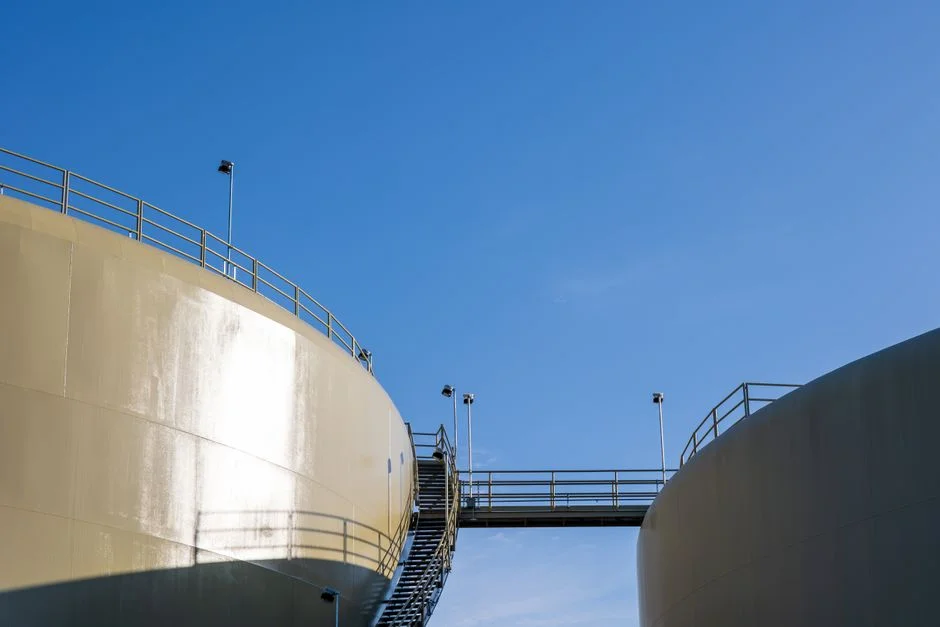
DAF, biological treatment, and membrane polishing solve different contaminant problems, so the selected train should follow the characterization rather than a preferred equipment type.
| Characterization finding | Process decision | Required scope and limits |
|---|---|---|
| Recoverable oil, FOG, colloids or suspended solids | Use DAF before biological treatment or sewer transfer. | The supplied HydropureWater product evidence lists a DAF range of 4–300 m³/h. The project must still establish the applicable duty. |
| Biodegradable COD with an operating range compatible with biological treatment | Use equalization, aeration, biological treatment, clarification and disinfection where required. | The supplied WSZ package combines anoxic/aerobic contact oxidation, sedimentation and disinfection at 1–80 m³/h. Its design basis must be checked against the characterization. |
| Required reuse or discharge quality and available footprint justify membranes | Consider an MBR as biological treatment with membrane separation, or use membranes for final polishing. | The supplied MBR system combines activated sludge with submerged PVDF filtration and covers 10–2,000 m³/day. |
For an oily or solids-rich high-COD effluent, a DAF system for high-COD effluent pretreatment can remove material before it interferes with downstream biological treatment or sewer transfer. The choice between DAF and a clarifier should follow the physical characteristics of the recoverable fraction, not COD alone; the technical comparison in DAF versus clarifier selection provides a screening basis.
When testing confirms biodegradable COD, an industrial biological treatment train should include equalization, aeration, sludge handling, and controls for stable operation. For tighter treatment objectives or a reuse application, an MBR system for biological treatment and membrane polishing may combine biological degradation with membrane separation. Membrane selection depends on the required treated quality, flow range, fouling risk, cleaning strategy, and utilities.
Where a sewer route remains feasible after pretreatment, document the rationale in writing. For a higher COD stream, biology may reduce load before sewer transfer, while DAF may be required to protect the sewer and downstream biological process from recoverable oils and solids. The broader high-COD trade wastewater treatment train illustrates why the process sequence should follow the waste profile rather than a universal recipe.
Convert the selected train into a procurement brief
A supplier must price and document the same design basis, including the receiving-route objective and the wastewater variability that the equipment must handle.
| Required submission | Bidder response | Buyer check |
|---|---|---|
| Design basis | Design flow, influent COD range, treated-COD target, hydraulic load and treatment objective | Does each value trace to the characterization and verified receiving route? |
| Utilities and consumables | Power, water, air, chemicals, cleaning agents and expected consumption | Are availability and continuity confirmed at the Beirut site? |
| Control and operating philosophy | Automation, alarms, interlocks, setpoints, sampling and local operating responsibilities | Can the plant hold the required duty without manual intervention beyond staffing limits? |
| Residual handling | DAF skimm, biological sludge and chemical residues | State storage, transport, dewatering and final-disposal arrangements. |
| Reliability and maintenance | Critical spares, redundancy, preventive maintenance and technical support | Identify failure modes, response times and local support responsibilities. |
Require bidders to state their design flow, influent COD range, treated-COD target, hydraulic load, and treatment objective in writing. Also request utility and consumables requirements, control philosophy, sludge or DAF-skimm management, redundancy, and maintenance support. The supplied product evidence does not establish local utility availability or supplier lead times, so those items must be confirmed rather than assumed.
If the selected train produces sludge requiring dewatering, the supplied plate and frame filter press range provides a downstream option, with available filtration areas from 1 m² to 500 m². Size it against sludge production, solids capture, cake-handling requirements, and the selected disposal route. Do not treat filter-press capacity as a substitute for a complete sludge-management plan.
Verify compliance, monitoring and operating resilience
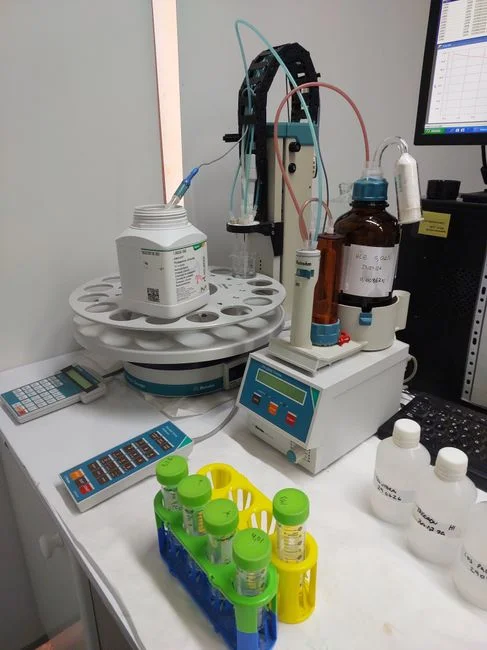
A cited benchmark is not a permit condition. The CIHEAM source describes a BWWEA monitoring program with weekly COD testing at 125 mg/l and pH monitoring at 6–9; confirm the frequency and limits that apply to the actual receiving authority and receiving route before ordering equipment.
The commissioning package should demonstrate the stated flow and COD duty, identify the sampling point and analytical method, and show how results trigger corrective action. Where reuse is contemplated, include the intended application and its applicable requirements in the acceptance tests. Do not infer a legally binding reuse or discharge condition from a proposal, benchmark table, or general national discussion.
Operating resilience also needs to be specified. Lebanon’s wastewater sector has faced electricity rationing and underfunded operations, according to the Lebanon Crisis Policy Support Platform’s 2025 sector review. That source documents disruption to pumping and treatment operations, dependence on diesel generation, and difficulties securing consumables and spare parts. The treatment brief should address redundant power, chemical availability, sludge handling, bypass controls, and an operating response plan.
The same LCPS review reports that approximately half of Lebanon’s wastewater treatment capacity had been reactivated to varying levels by 2025. This indicates recovery, but it also leaves plants at different operating stages and does not guarantee uninterrupted municipal service. A manufacturer should not make its own continuity plan depend on unverified network performance.
Frequently Asked Questions
When is DAF preferable to biological treatment for high-COD effluent?
Choose DAF when characterization identifies recoverable oil, FOG, colloids, or suspended solids that should be removed before biological treatment or sewer transfer. Choose biology when the remaining COD is demonstrably biodegradable and the train includes equalization, aeration, and sludge handling. In mixed streams, DAF may precede biological treatment; the decision should follow the physical and biological fractions measured in the wastewater.
What information does a supplier need to size a treatment system?
Provide the verified receiving route, design flow, flow variability, COD and BOD ranges, suspended solids, oil and grease, pH, temperature, relevant toxicity or sector-specific contaminants, and the required treated quality. For reuse, also provide the intended application and its water-quality requirements. A single average COD concentration is not enough to establish hydraulic or biological duty.
How should a buyer compare equipment cost without overlooking operating and sludge costs?
Request an installed-cost breakdown that separately prices equipment, civil works, utilities, chemicals, routine maintenance, DAF-skimm or biological-sludge handling, dewatering, and final disposal. Also request expected consumption and the operating labor needed to meet the monitoring and maintenance plan. The supplied research contains no equipment quotation, so a buyer should not rely on an invented price; instead, require each bidder to state assumptions and exclusions and compare them on the same duty.
Which supplier and compliance checks should be completed before ordering?
Ask each supplier to identify the proposed design flow, influent COD range, treated-COD target, utilities, consumables, redundancy, controls, maintenance responsibility, and delivery schedule in the offer. Before ordering, obtain written confirmation from the relevant Beirut authority of the current permit or sewer-entry conditions, applicable sampling frequency, and receiving-route limits. Also verify local service capability and lead times, as the supplied evidence does not establish them.