Separate the wastewater streams before selecting equipment
A Zahedan data center should segregate cooling-tower blowdown, humidification or process drain, sanitary sewage, and any glycol or generator-scrubber wastewater before selecting treatment equipment. The practical choice is between on-site reuse, sewer pretreatment and zero-liquid discharge. Start with cooling-cycle optimization and source-water chemistry, then size filtration, UF and RO for reuse; use pH adjustment, solids removal and disinfection if a permitted sewer accepts the flow; consider ZLD where freshwater scarcity, permit restrictions or brine disposal make reuse or discharge impractical. Zahedan-specific permit limits and influent testing are not supplied, so final selection requires local authority confirmation and representative samples.
Cooling-tower blowdown is not interchangeable with sanitary sewage. HOBI’s 2026 review identifies blowdown as containing concentrated minerals, treatment chemicals such as biocides and corrosion inhibitors, and metals released through corrosion. It also distinguishes glycol-bearing closed-loop water from ordinary blowdown: glycol is normally contained, but accidental releases and maintenance drains require separate controls. The regional cooling-blowdown engineering guide provides a general framework, but its geography is not a substitute for Zahedan evidence.
Create a separate sampling plan line for every stream. For each flow, obtain representative measurements of flow, temperature, pH, conductivity or TDS, hardness, silica, chlorides, sulfates, treatment chemicals and relevant metals. Also record the cooling design, tower count, operating temperature, cycles of concentration, chemical program, planned blowdown route and expected future IT load. Do not combine streams in the design basis until their chemistry and permitted destinations are known.
| Stream | Key engineering concern | Minimum design record | Permit or reuse route to verify |
|---|---|---|---|
| Cooling-tower blowdown | Concentrated minerals, biocide, corrosion inhibitor, metals, heat | Representative chemistry; tower count; cycles; chemical program; seasonal flow | Permitted sewer connection, approved reuse destination or ZLD brine route |
| Humidification or process drain | Potential reuse value and stream-specific contaminants | Flow, temperature, pH, TDS, metals, treatment chemicals | Return to make-up after treatment, subject to compatibility and authority approval |
| Sanitary sewage | Different organic and solids load | Peak and average domestic flows | Separate sanitary or controlled combined treatment route |
| Glycol-bearing closed-loop drain | Accidental release; high oxygen demand if released; glycol type | Glycol identity, concentration, volume, drainage and spill controls | Documented removal through an approved waste route; no uncontrolled discharge |
| Generator-scrubber wastewater | Possible ammonia and other scrubber contaminants | Scrubber chemistry, flow, temperature and operating frequency | Separate treatment before any biological or reuse train |
Choose reuse, sewer pretreatment or zero-liquid discharge
The receiving route, not an equipment catalogue, determines the first selection. HOBI’s 2026 review reports that local pretreatment programs may set discharge policies, while large new blowdown streams can strain a receiving wastewater plant through salinity or treatment chemicals. Confirm the route with the relevant Zahedan authority before the process train is fixed.
Choose on-site reuse when representative permeate can reliably return to cooling-tower or process make-up and the avoided freshwater cost supports collection, pretreatment, membranes, storage and distribution. Reuse should be checked against water chemistry, membrane compatibility, return temperature, treatment residual and the cooling system’s own scaling and corrosion controls. A data center wastewater commissioning guide can help structure testing and handover, while local chemistry remains the controlling evidence.
Choose sewer pretreatment only after the receiving utility confirms acceptance limits, connection capacity, monitoring requirements and the permitted treatment of pH, solids, chlorine, metals and heat. A wastewater industrial RO system for cooling-water reuse may form part of that route, but it should not be assumed to remove every constituent that a utility may regulate. The pretreatment skid may require solids removal, pH control, dechlorination or other unit operations depending on the analysis and permit.
Choose ZLD when direct discharge is not permittable, the residual brine has no acceptable route, or freshwater value supports evaporation and solids management. ZLD is not a substitute for an unresolved brine destination: the concentrate still requires an approved route. The supplied HydropureWater 2026 guide uses a 200 m³/day reuse threshold as an Isfahan-specific project rule, not a Zahedan regulatory threshold; it should not be copied into a Zahedan approval basis.
| Decision condition | Preferred route | Required proof before procurement | Main design risk |
|---|---|---|---|
| Treated permeate can return to a defined make-up demand | On-site reuse | Source and blowdown analysis; cooling compatibility; utility and authority confirmation; water balance | Membrane scaling, fouling, concentrate and storage sizing |
| Receiving sewer accepts the discharge | Sewer pretreatment | Utility limits, connection capacity, monitoring and sampling requirements | Uncontrolled pH, solids, chlorine, metals or heat |
| Discharge is restricted and brine can be lawfully managed | ZLD | Residual route, waste classification, solids handling and utility requirements | High capital and operating burden; no acceptable final residue route |
| Chemistry is hard or sulfate-rich | Route remains open pending analysis | Hardness, sulfate, silica, antiscalant and recovery assessment | Assuming conventional RO recovery without scaling analysis |
Size the treatment train around the blowdown chemistry
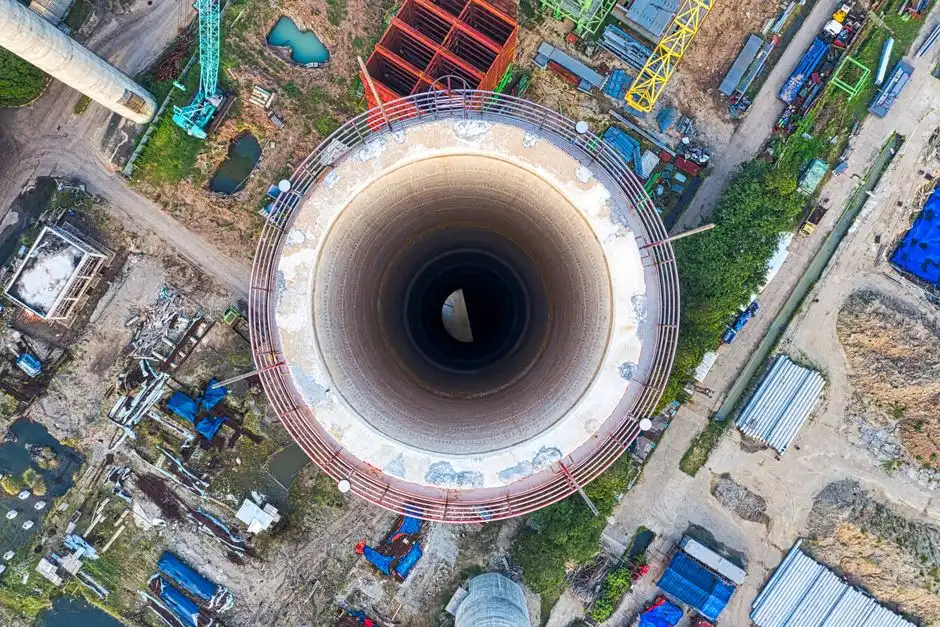
Match each unit operation to a contaminant and reuse objective, then size from the design flow and representative chemistry. Start with side-stream or granular filtration to remove suspended solids and protect downstream equipment. Add UF where finer pretreatment is needed to protect membranes. The Isfahan guide reports a filtration-plus-UF ladder for cooling-tower blowdown, but that sequence must be checked against the final Zahedan feed.
For make-up reuse, evaluate industrial RO around calcium carbonate, calcium sulfate, silica, antiscalant selection, membrane recovery and concentrate disposal. IDE Tech’s 2026 review states that conventional brackish-water RO commonly reaches about 75–80% recovery before scaling becomes difficult to control. This is a general design caution, not a Zahedan guarantee or source-water result.
The supplied HydropureWater 2026 Isfahan reference reports brackish-RO recovery of 50–85%, UF recovery of 90–95% and MVC recovery of 95–98%. These values are Isfahan-project evidence with an explicitly different site context; they should be used for comparison and vendor questions, not accepted as final Zahedan sizing values. Require the supplier to recalculate recovery against the submitted Zahedan analysis.
Use automatic chemical dosing for pH, antiscalant, biocide and cleaning controls only after defining the chemical program, storage, containment, duty/standby arrangement and local supply arrangements. An automatic chemical dosing skid should be specified as part of the complete treatment package, with alarms, calibration access and operator procedures rather than as an isolated chemical pump.
| Process step | Design basis | Supplier information required | Acceptance evidence |
|---|---|---|---|
| Filtration | Suspended solids and protection requirement | Design flow; particle rating; backwash or cleaning method; footprint | Representative-feed test and differential-pressure record |
| UF, if justified | Fine pretreatment and membrane protection | Recovery; transmembrane pressure; cleaning interval; chemical demand | Feed and permeate analysis during performance testing |
| Brackish RO | Make-up quality and scaling envelope | Recovery; permeate quality; antiscalant; cleaning; concentrate quantity | Guaranteed outlet parameters under documented conditions |
| Chemical dosing | pH, antiscalant, biocide and cleaning controls | Duty/standby configuration; storage; containment; alarms; calibration | Demonstration of setpoint control and chemical traceability |
| Biological treatment, if justified | Low-strength drains and temperature | Design load; temperature correction; sludge handling; footprint | Performance test with representative wastewater |
Optimize cooling operations and route the residual brine
Reducing blowdown volume before adding treatment capacity can change the economics and the size of every downstream unit. DOE guidance cited by HOBI in 2026 says that raising cooling-tower concentration cycles from three to six can cut make-up water by about 20% and blowdown by about 50%. That relationship must be confirmed for the actual Zahedan tower design, source water, climate and chemical program.
Evaluate increased cycles early, then size membranes, pumps and disposal equipment for the resulting blowdown and concentrate. At the same time, check the resulting saturation risk. The Isfahan guide warns that pushing cycles toward six to eight can move CTBD into a calcium-sulfate and silica scaling regime that conventional brackish RO cannot always handle, so anti-scaling control and cooling optimization must be evaluated together.
Define the residual brine route at concept design. Options to investigate with the relevant authority include sewer acceptance, controlled crystallisation, permitted surface-water discharge or another approved destination. Do not treat a crystalliser as a solution until the solid residue, handling method and disposal acceptance are confirmed. A data center wastewater treatment planning guide can support the wider planning sequence, but it does not establish Zahedan requirements.
Include monitoring and sampling points, automatic shutoff, chemical storage, secondary containment, spare membranes and operator training in the acceptance criteria. The operating plan should state how a failed permeate-quality or discharge-limit test changes the route: isolate the affected stream, stop the reuse return, or divert to the approved contingency destination. That decision must be developed with the authority rather than invented during commissioning.
Build a procurement-ready decision and acceptance sheet
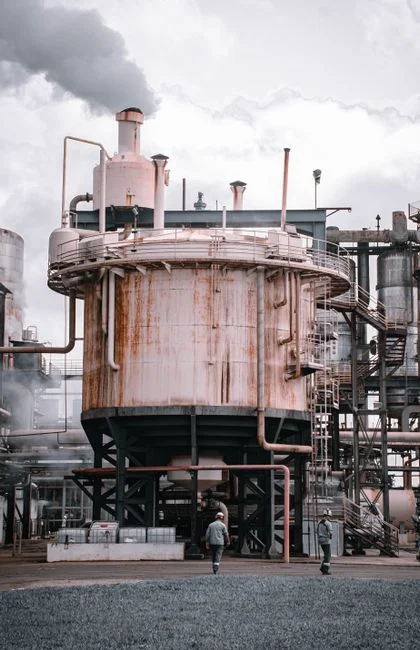
Turn the route decision into a package that suppliers, consultants and the relevant authority can review against the same inputs. The buyer should request a one-year and peak-season water balance covering tower evaporation, blowdown, humidification, process water, domestic sewage and glycol-bearing maintenance drains. This is the minimum basis for comparing reuse, sewer pretreatment and ZLD without transferring the risk of an incomplete water balance to the supplier.
Require each supplier to state design flow, feed-water range, recovery, permeate quality, concentrate quantity, utility demand, redundancy, chemical consumption and equipment footprint. Require the performance test to use representative influent and documented operating conditions, with membrane cleaning intervals and guaranteed outlet parameters stated separately from operating assumptions. A supplier should identify which components are local-content compliant, spare-part lead times and commissioning support before commercial offers are compared.
Make final sizing conditional on representative wastewater analysis, source-water analysis, utility acceptance or permit decision, cooling design and future-capacity plan. Until those documents are available, the buyer should leave Zahedan permit values and treatment prices open rather than treating another city’s figures as local facts.
| Decision sheet field | Information to fill or obtain | Responsible party | Release condition |
|---|---|---|---|
| Stream inventory and segregation | Source, flow, temperature, chemistry and discharge route | Project engineer and mechanical engineer | Before treatment skid selection |
| Cooling basis | Tower count, temperature, cycles, chemical program and future IT load | Mechanical engineer | Before RO and disposal sizing |
| Source and wastewater analysis | Representative samples, TDS, hardness, silica, chlorides, sulfates, chemicals and metals | Qualified laboratory and consultant | Before recovery and outlet guarantees |
| Route decision | Reuse, sewer pretreatment or ZLD; receiving authority decision | Owner, consultant and authority | Before final equipment order |
| Supplier technical schedule | Flow, recovery, permeate, concentrate, utilities, redundancy, footprint and chemicals | Equipment suppliers | Before commercial comparison |
| Acceptance criteria | Reference feed, test protocol, guarantees, cleaning intervals, monitoring and training | Owner and supplier | Before commissioning |
| Permit and residue route | Written acceptance, limits, monitoring, sampling and contingency destination | Relevant authority and owner | Before discharge or reuse |
Frequently Asked Questions
What wastewater and cooling blowdown treatment does a data center in Zahedan, Iran need?
The required treatment depends on stream chemistry, cooling design, reuse targets and the receiving authority’s decision. A practical starting point is segregated filtration for suspended solids, followed by UF where membrane protection requires it, and RO where treated permeate can return to cooling or process make-up. Sewer pretreatment requires confirmed utility acceptance; ZLD requires an
Frequently Asked Questions
What wastewater treatment system does a data center in Zahedan need?
Given Zahedan’s arid climate and high water scarcity, a data center requires a multi-stage system comprising pre-filtration, ultrafiltration (UF), and reverse osmosis (RO). Due to the high salinity of local groundwater sources often used for make-up water, the system must be designed to handle high total dissolved solids (TDS) levels, typically requiring antiscalant dosing and potentially ion exchange softening to prevent scaling in cooling tower heat exchangers.
Should a Zahedan data center reuse cooling blowdown or discharge it to a sewer?
Reusing cooling blowdown is highly recommended in Zahedan to minimize raw water withdrawal, which is critical in water-stressed regions. By implementing a side-stream softening process or high-recovery RO, you can reclaim up to 75-85% of blowdown water for reuse in the cooling loop, significantly reducing the environmental impact and avoiding the high costs associated with local sewage discharge fees or limited municipal sewer capacity.
How do I size an industrial RO system for cooling-tower blowdown?
Sizing is determined by the cooling tower’s cycle of concentration (COC) and the total evaporation rate. For a standard data center, the RO system capacity should be sized at 1.2 to 1.5 times the peak blowdown flow rate to account for membrane flux decline and periodic clean-in-place (CIP) cycles. Ensure the design flux does not exceed 15-20 liters per square meter per hour (LMH) to maintain membrane longevity in high-salinity conditions.
What does a data center wastewater treatment system cost in Iran?
The cost varies significantly based on capacity and the required degree of water purity, typically ranging from 3 billion to 15 billion Iranian Rials for a modular skid-mounted system. These costs are heavily influenced by the import of high-quality RO membranes and stainless steel piping components, which are subject to currency fluctuations, alongside local fabrication costs for tanks and control instrumentation.
Which local permits and water analyses should I require before ordering equipment?
Before procurement, you must obtain a wastewater discharge permit from the Sistan and Baluchestan Department of Environment and verify compliance with national effluent standards for agricultural irrigation or surface water discharge. Mandatory water analyses include testing for TDS, electrical conductivity (EC), alkalinity, silica (SiO2), and Langelier Saturation Index (LSI) to determine the specific scaling potential of the local water source.