What the Filter Press Actually Treats
A filter press for printing and dyeing wastewater is normally used as a sludge-dewatering step, not as the primary treatment process. Printing and dyeing wastewater has a complex composition, high refractory organic matter, high chroma, high alkalinity and poor biodegradability, so pretreatment and sludge conditioning are critical. A plate and frame filter press for sludge dewatering retains conditioned solids as cake while separating the liquid fraction. The usual application is sludge generated after biological, chemical or physical treatment rather than untreated production wastewater.
This distinction determines the entire equipment specification. The 2019 IOP review by Chen and colleagues identifies complex composition, refractory organics, high chroma, high alkalinity and poor biodegradability as defining difficulties in printing and dyeing wastewater. A press cannot remove dissolved color, refractory organics or alkalinity merely because its plates form a filter barrier. It can only separate solids that have already been generated, concentrated or conditioned.
The BRIN plate-frame study tested simulated sludge at 1–4% w/w calcium carbonate using cotton and drill cloth. Cotton cloth performed better than drill cloth, and the study reported a solids-removal efficiency of 56.00% at 4% w/w CaCO3 under its conditions. That comparison is useful for understanding media effects, but the simulated feed does not reproduce the dye, salt, polymer and auxiliary-chemical matrix of textile wastewater sludge.
Accordingly, equalization, front-end treatment and sludge conditioning usually determine press reliability more than the press model alone. Buyers should characterize the wastewater, identify the sludge source and define the required pretreatment before comparing filter areas or automatic controls.
Build the Wastewater-to-Sludge Process Route
The filter press belongs at the end of a defined solids-management route, not at the beginning of an unqualified wastewater-treatment train. The sequence should be selected in this order:
- Characterize wastewater flow, pH, color, salinity, temperature, COD, suspended solids, biodegradability and auxiliary chemicals.
- Apply equalization and the required biological, chemical or physical pretreatment.
- Identify and collect the sludge stream that will reach the press.
- Verify chemical conditioning through jar or pilot testing.
- Press the conditioned sludge, discharge the cake and route the filtrate.
The 2019 IOP review examines Fenton, photocatalytic, ozone, wet oxidation and electrochemical oxidation methods for addressing the refractory character of printing and dyeing wastewater. Where the plant needs to reduce persistent organics before biological treatment or solids separation, these methods may require evaluation; their selection cannot be inferred from a filter-press datasheet.
Suspended or floatable material can also be removed upstream through DAF pretreatment for printing and dyeing wastewater. DAF is a solids-removal choice, not a substitute for resolving dissolved contaminants. Chemical flocculant and pH-control products must be treated as design inputs: request the chemical identity, proposed dose, mixing method, contact conditions and expected residual, then verify them with the actual sludge.
The following process table distinguishes research evidence from a supplier-reported plant example.
| Process decision | Evidence or required input | Specification consequence |
|---|---|---|
| Characterize the wastewater and sludge | 2019 IOP review identifies complex composition, refractory organics, high chroma, high alkalinity and poor biodegradability. | Define pH, salinity, temperature, solids and chemical exposure before selecting materials. |
| Evaluate upstream solids removal | DAF is a potential pretreatment for floatable or suspended material. | Specify the DAF duty from plant wastewater and solids data. |
| Verify sludge conditioning | Chemical type, dose, contact method and residual require jar or pilot testing. | Do not select cloth or cycle time before conditioning is confirmed. |
| Integrate sedimentation and pressing | Filtrationpress.com reports 70% wastewater reuse and annual water-cost savings above 2 million yuan for one plant example. | Treat this as a supplier-reported case, not a guaranteed plant saving. |
Choose the Correct Press Configuration
Manual, hydraulic and fully automatic PLC-controlled presses serve different operating requirements. The appropriate choice depends on labor availability, batch frequency, control coverage and the reliability of the conditioned-sludge feed—not simply on a preference for automation.
The verified HydropureWater catalog covers filtration areas from 1 m² to 500 m² with manual, hydraulic and fully automatic PLC operation. This is an available configuration envelope, not a recommendation for every textile plant. A plate and frame filter press for sludge dewatering normally runs through feed, pressure filtration, cake washing where required, depressurization, cake discharge, cloth cleaning and return to service.
Hydraulic and automatic systems can reduce manual intervention, while PLC controls can monitor pressure, liquid level and temperature and identify deviations. Those functions still require defined operating limits, calibrated instruments and an agreed response for high pressure, low feed flow, excessive filtrate turbidity or failed cake release.
| Configuration | Best fit to evaluate | Key selection evidence |
|---|---|---|
| Manual | Low-frequency batches where labor is available and operators can manage opening, discharge and cloth handling. | Batch volume, cycle time and operator workload. |
| Hydraulic | Plants requiring controlled plate movement and pressure without a full automatic sequence. | Cycle repeatability, available labor and cake-discharge method. |
| Fully automatic PLC | Repeated operation with instrumented pressure, level and temperature monitoring. | Feed consistency, interlocks, maintenance access and control-scope definition. |
One filtrationpress.com example describes a 15 m² automatic plate-and-frame press processing a reported 15 m³ of concentrated sludge at 98% moisture in 10 hours per day. Its stated plant wastewater flow was 4,000 tons per day. Those figures belong to that example; the wastewater figure must not be converted into a generic sizing ratio or reused as a performance guarantee for another sludge.
Match Materials, Cloth and Pressing Conditions
Material selection must follow analysis of the actual conditioned sludge, including pH, salinity, temperature, dyes, auxiliary chemicals and solvent exposure. A corrosion-resistant filter press cannot be selected from a generic material label because compatibility depends on the complete aqueous and solids matrix.
The BRIN study offers a comparative cloth example rather than a direct textile-plant specification. Cotton cloth outperformed drill cloth, with reported solids-removal efficiency of 56.00% at 4% w/w CaCO3 under the study’s conditions. Because the feed was simulated, actual-sludge coupon, jar or pilot testing is required before fixing the cloth.
Filtrationpress.com reports diaphragm pressing at 1.6–3.0 MPa. This is an available supplier-reported pressing condition, not a universal recommendation. The same source states that epoxy-resin fiberglass is resistant to organic solvents, multi-port feeding improves filtration efficiency by 30%, and cloth regeneration can exceed 500 cycles. These claims require verification against the specified sludge, cloth, operating cycle and supplier test method.
| Selection item | Evidence available | Buyer verification |
|---|---|---|
| Filter cloth | BRIN study: cotton outperformed drill cloth; 56.00% solids removal at 4% w/w CaCO3. | Test candidate cloths with conditioned plant sludge and define the acceptance metric. |
| Pressing pressure | Filtrationpress.com: 1.6–3.0 MPa diaphragm pressing. | Establish an allowable pressure progression for the selected frame and cloth. |
| Wetted construction | Filtrationpress.com reports epoxy-resin fiberglass resistance to organic solvents. | Request compatibility confirmation for actual pH, salinity, temperature, dyes and solvents. |
| Feed arrangement | Filtrationpress.com reports a 30% filtration-efficiency improvement from multi-port feeding. | Ask for the comparison basis and test conditions. |
| Cloth regeneration | Filtrationpress.com reports regeneration exceeding 500 cycles. | Define cleaning chemistry, cycle count and replacement criteria. |
Cloth selection should therefore be linked to the available filter media, valves and related treatment parts, while the wetted-material schedule remains a separate, documented compatibility decision.
Size and Commission the Press with Plant Data
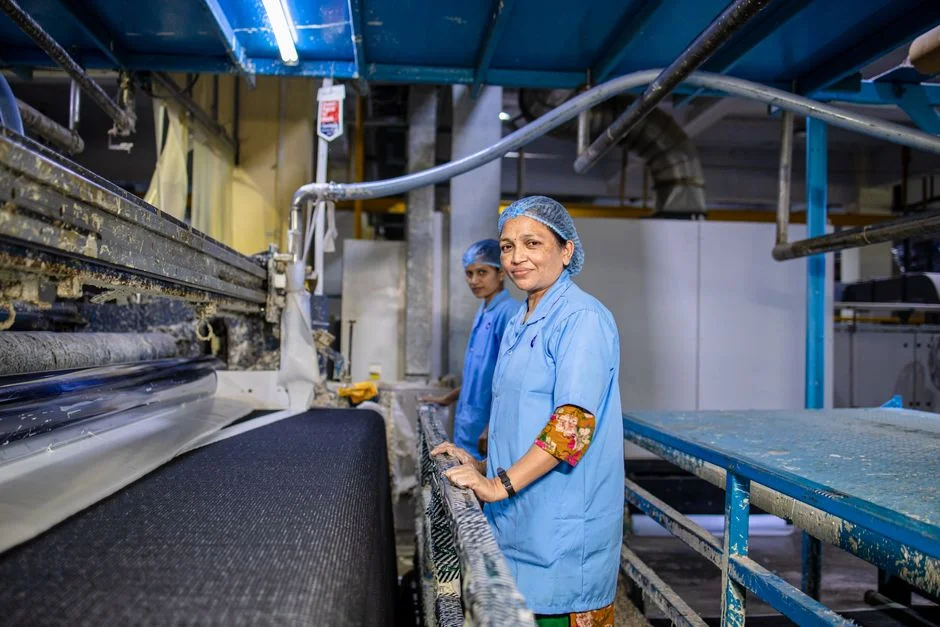
Filtration area should be derived from the plant’s solids load and operating schedule, not selected from a catalogue range or copied from another project. Required inputs are daily sludge volume, suspended-solids or dry-solids concentration, batch-cycle frequency, required cake moisture, available run hours, filtrate destination and cake-disposal method.
The sizing sequence is:
- Calculate sludge volume per cycle.
- Calculate dry-solids mass per cycle.
- Set the required solids-capture rate and target cake moisture.
- Calculate hydraulic loading from the selected cycle and available run time.
- Derive the required filtration area using the supplier’s validated duty method, then verify the result by test.
These variables remain symbolic because the supplied research does not establish a universal formula constant. HydropureWater’s catalog does confirm a 1–500 m² filtration-area range, but it does not make every area suitable for every feed.
Filtrationpress.com reports moisture of approximately 99.5% in sludge discharged from biochemical treatment and 90–95% after natural settling. These supplier-reported values indicate why a thickener may be evaluated before pressing, but the plant should verify the relevant solids concentration rather than rely on moisture figures from another installation.
| Commissioning stage | Required check | Recorded result |
|---|---|---|
| Feed qualification | Confirm solids, pH, temperature, chemistry and conditioning dose with actual sludge. | Approved feed sample and chemical record. |
| Cloth confirmation | Run the selected cloth under the intended feed and pressure sequence. | Filtrate quality, cake release and observed blinding. |
| Pressure progression | Verify feed pressure, holding behavior and any cake-wash requirement. | Approved operating curve and alarm settings. |
| Discharge and controls | Check cake release, cleaning, duration and PLC interlocks. | Commissioning record and operator sign-off. |
Contractual acceptance should use the plant’s actual sludge and an agreed test method. A generic moisture-removal percentage is not a meaningful acceptance criterion without feed and operating conditions.
Compare the Main Alternatives Before Ordering
No dewatering technology wins automatically; the comparison must follow the physical behavior of the conditioned sludge and the plant’s production, labor and disposal arrangements. Plate-and-frame presses provide adjustable batch separation, filtration-area flexibility and established cake discharge. Belt presses and screw presses offer different operating profiles and must be assessed against the same feed and acceptance targets.
The comparison table below is a decision framework, not a supplier-performance ranking.
| Option | Selection considerations | Questions to resolve |
|---|---|---|
| Plate-and-frame press | Adjustable batch dewatering, cloth options, controlled pressing and cake handling. | Will batch operation fit the available run hours and cake-discharge route? |
| Belt filter press | Continuous solids separation with an established continuous-dewatering configuration. | Is the conditioned sludge sufficiently uniform, and what continuous washing and maintenance access are required? |
| Screw press | Continuous dewatering with a compact mechanical configuration. | Does the feed rheology and required cake condition suit the selected screw arrangement? |
The supplied research contains no comparable prices, throughput guarantees or universal cost advantage among these options. A fair comparison requires the same conditioned sludge, throughput target, cake-moisture target, run-hour assumption, labor basis and filtrate-disposal cost. Readers comparing a belt filter press comparison for industrial sludge can use the same evidence checklist for continuous alternatives.
Where a plate and frame filter press for sludge dewatering is considered, verify that the proposed batch cycle fits production continuity and that the cake can be discharged and disposed of through the plant’s actual route.
Ask Suppliers These Questions Before Purchase
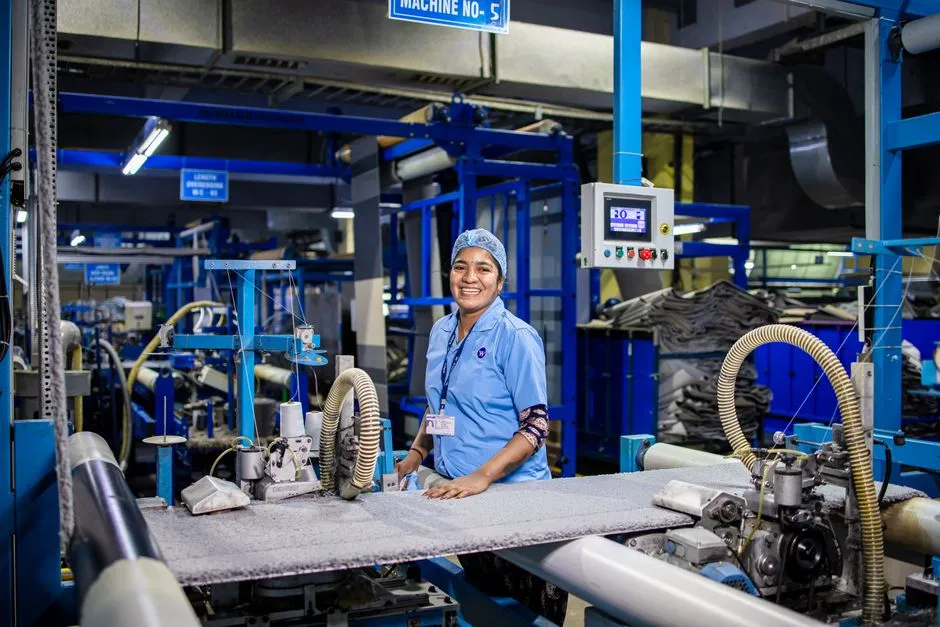
A filter-press quotation should expose the assumptions behind every performance claim. “One filter press for printing and dyeing wastewater” is not a sufficient duty specification unless it identifies the sludge, solids load, cycle, cake target and operating mode.
- Request a duty-based quotation stating sludge feed basis, solids concentration, batch size, cycle time, target cake moisture and the source of every performance claim.
- Confirm whether the quoted filtration area, operating mode and frame construction are available for the intended application and materials.
- Require a compatibility statement covering actual pH, salinity, temperature, dyes, auxiliary chemicals and solvent exposure.
- Request filter-cloth options, expected life under the specified sludge, cleaning method, replacement cost and included spare parts.
- Define commissioning scope, PLC controls, local service, spare-parts lead time, operator training and warranty terms.
- Ask for evidence under comparable conditions, using the BRIN cloth study and the supplier-reported 93–94% water-removal example as verification prompts.
The comparable supplier quotation table is the practical procurement gate.
| Quotation item | Minimum information required | Why it matters |
|---|---|---|
| Duty basis | Feed source, solids concentration, volume per cycle, cycle time and available run hours. | Prevents area and throughput claims from being transferred from unrelated sludge. |
| Performance evidence | Test conditions, feed identity, target metric and test method. | Separates measured results from generic claims. |
| Materials | Wetted-material schedule and compatibility confirmation for the actual effluent and sludge. | Addresses corrosion and premature component failure. |
| Cloth package | Cloth selection, expected life, cleaning method, replacement price and spares. | Connects operating cost to consumables and maintenance. |
| Commercial scope | Prices, delivery, commissioning, controls, service, training and warranty. | Allows complete offers to be compared on equivalent scope. |
The research provides no comparable supplier prices or lead times. Procurement should request quotations against one written duty sheet and require the supplier to identify which specifications are catalog capabilities and which are performance claims demonstrated under defined conditions.
Frequently Asked Questions
What size filter press does a printing and dyeing plant need?
Size the press from measured daily sludge volume, dry-solids concentration, selected cycle, target cake moisture and available operating hours. The verified catalog spans 1–500 m², but that range does not identify the required area. Provide these plant inputs to each supplier and require the area calculation, cycle assumptions and validation method to be shown.
Is a filter press suitable for raw printing and dyeing wastewater, or only for sludge?
Its normal role is sludge dewatering after biological, chemical or physical pretreatment. The 2019 IOP review identifies refractory organics, high chroma, high alkalinity and poor biodegradability in printing and dyeing wastewater, confirming that upstream treatment must address the wastewater chemistry. Direct filtration should be treated as a separate, tested duty rather than assumed equivalent to pressing conditioned sludge.
What is the difference between manual, hydraulic and automatic plate-and-frame presses?
Manual presses rely on operators for the major handling and discharge steps; hydraulic presses use powered plate movement and pressure control; fully automatic PLC-controlled presses coordinate the sequence and monitor parameters such as pressure, liquid level and temperature. Select according to labor availability, batch frequency, feed consistency, maintenance capability and control requirements.
How much does a filter press for printing and dyeing wastewater cost?
The supplied research contains no comparable supplier prices, so a defensible budget cannot be stated without a quotation. Give suppliers one common duty sheet covering filtration area, materials, cloth package, controls, cycle, cake target, commissioning, service and warranty, then compare the complete scopes. This cost check also prevents a low equipment price from hiding higher consumables, maintenance or labor costs.
Which filter cloth and operating pressure should be specified?
Do not specify a cloth from a generic catalogue entry. The BRIN study found cotton performed better than drill cloth in a 1–4% w/w CaCO3 simulated-sludge comparison, but actual conditioned sludge must be tested before selection. Filtrationpress.com reports 1.6–3.0 MPa for diaphragm pressing; treat that as a supplier-reported available condition and require the supplier to justify the selected cloth, pressure progression and acceptance method for the plant’s sludge.
Related Equipment
- DAF pretreatment for printing and dyeing wastewater — specifications, capacity range, and technical data