Can a Belt Press Handle Gelatin Sludge?
A belt filter press can be considered for gelatin wastewater, but it should receive conditioned, flocculated sludge rather than raw effluent. PHOENIX reports that most belt-press applications require polymer addition before dewatering. In operation, slurry enters a distribution head box, drains through moving belts, is compressed between converging belts in an adjustable wedge zone, and is discharged as cake by doctor blades. Because gelatin sludge contains sticky protein, fat and ossein-derived solids, the main risks are poor drainage, cloth blinding, uneven cake formation and difficult discharge. Final selection therefore depends on measured daily flow, feed solids percentage, solids specific gravity, polymer performance, target cycle time, target cake moisture and a pilot test using representative conditioned sludge.
That is a qualified yes, not a general endorsement. Gelatin sludge is not a free-draining mineral sludge. HydropureWater’s 2026 engineering guide describes protein, fat and ossein-derived solids as producing a sticky, gelatinous cake that resists the drainage behavior associated with mineral or municipal biosolids. A belt press removes free water mechanically; it does not remove emulsified fat, dissolve or destabilize protein, or correct defective upstream coagulation and flocculation.
The most credible application is therefore continuous belt sludge dewatering after the slurry has been conditioned into flocs that retain their structure, release predictably and do not form a sticky protein film. A vendor claiming suitability without feed characterization and representative-sludge testing has not answered the central engineering question. The supplied research includes PHOENIX’s belt-press process description, but no verified gelatin-specific belt-press performance dataset. Any capacity, moisture or blinding claim must consequently be established by a site pilot or supported by comparable plant data.
At the plant boundary, confirm whether the existing treatment train already removes fat and colloidal protein. If not, DAF pretreatment for FOG and colloidal protein may be needed before automatic chemical dosing establishes the required floc structure. Treat these as linked process decisions, not optional accessories.
How the Belt Filter Press Removes Water
PHOENIX defines the operating sequence as distribution, drainage, progressive compression and doctor-blade discharge, with each stage creating a different risk for gelatin sludge. Understanding those stages is necessary before asking a vendor to guarantee a cake moisture value or solids-capture rate.
- Polymer-conditioned slurry enters a specially designed head box, where it is distributed across the available filtering area.
- Free moisture drains through the moving filter belt as the solids advance.
- The upper and lower belts converge in an adjustable wedge zone, gradually applying pressure and forming a cake sandwich.
- The belts follow an S-shaped path through compression rollers, where belt tension applies surface pressure and removes additional moisture.
- Doctor blades separate the cake from the belts for discharge.
At distribution, an erratic or concentrated feed can produce uneven loading before filtration begins. At drainage, poor floc release and protein deposition can reduce permeability. During compression, a sticky cake may not move uniformly through the wedge zone. At discharge, cohesive deposits can remain on the belts, lift poorly or create tracking disturbances. A sudden feed change can therefore become a mechanical problem even when average feed conditions look acceptable.
Continuous operation also makes uninterrupted cake discharge and steady feed distribution more important than in a batch cycle. The press must be able to accept the selected cycle time without accumulating deposits that change drainage resistance. The plate-and-frame sludge dewatering equipment comparison is useful at this stage because it shows a different interruption pattern: plate opening, cake release and chamber reopening occur between batches.
| Process stage | What the stage must achieve | Gelatin-specific failure to verify |
|---|---|---|
| Head-box distribution | Even distribution over the filter area | Channeling, local overload and uneven cake formation |
| Drainage | Permeable flocs and progressive solids concentration | Protein-film blinding and declining filtrate quality |
| Adjustable wedge zone | Progressive compression as the belts converge | Non-uniform cake density or excessive squeeze without adequate drainage |
| S-path compression rollers | Consistent surface pressure from belt tension | Sticking, belt-speed disturbance and tracking problems |
| Doctor-blade discharge | Complete separation and reliable cake removal | Residual cake, blinding at the discharge point and buildup |
Condition the Sludge Before It Reaches the Belt
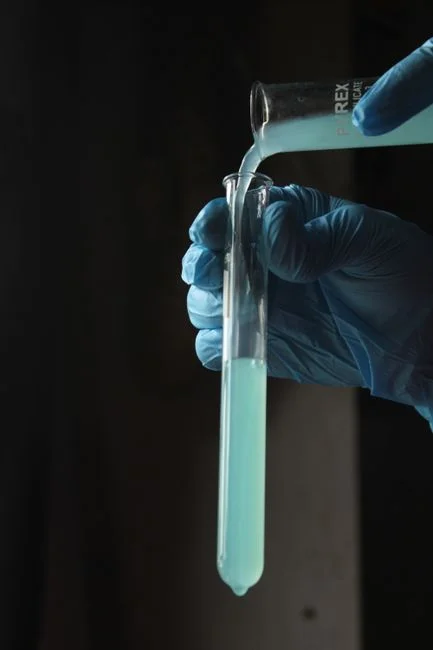
PHOENIX states that most belt-press applications require polymer addition to the slurry before dewatering, making chemical conditioning an explicit part of the mechanical process rather than an optional refinement.
For gelatin duty, HydropureWater’s 2026 process sequence places DAF pretreatment for FOG and colloidal protein before polymer dosing and pH adjustment. The sequence addresses different functions: DAF removes floatable and emulsified material upstream; pH adjustment and polymer conditioning then seek to destabilize or aggregate the remaining protein-rich solids. Understanding how DAF pretreatment works helps separate removal duties from flocculation duties in the process narrative.
Conditioning is successful only when the resulting flocs remain intact through drainage, do not smear across the cloth and release as a handleable cake. A high capture rate at the head box does not establish that outcome. During commissioning, compare feed and filtrate solids, observe floc structure, check filtrate clarity and inspect the cake at discharge. If the cake sticks to the cloth or filtrate quality deteriorates, investigate polymer type, dose, mixing, pH and residual FOG before changing belt pressure.
No universal polymer dose, pH setpoint or belt solids-loading rate can be stated from the supplied research. Run jar or pilot trials on representative gelatin sludge and vary the relevant chemical conditions. Record the selected condition together with the resulting drainage rate, cake release, filtrate quality and cloth condition. A chemical recommendation based only on total suspended solids or feed appearance is not defensible.
Include filtrate return and wash-water handling in the design review. The filtrate stream can carry soluble or colloidal material back into the process, while continuous media washing creates its own flow and treatment demand. Their routing, storage, treatment and reuse should be fixed before the mechanical guarantee is accepted. Further conditioning principles are covered in this guide to organic food-processing sludge conditioning.
Select the Right Filter Cloth for Protein-Rich Sludge?
Protein films can blind a filter cloth before the fabric suffers mechanical wear, so cloth selection must address both filtration behavior and cleanability.
The closest media evidence supplied is a BRIN study, as summarized in HydropureWater’s 2026 guide. It compared cotton with drill cloth on 1–4% w/w simulated CaCO₃ slurry. At 4% w/w, cotton produced 56.00% solute efficiency and outperformed drill cloth. This is a plate-frame analogue using simulated mineral slurry; it is not direct proof of performance with gelatin sludge and should not be transferred to a belt-press tender as though it were a gelatin acceptance result.
For gelatin duty, require the supplier to identify the polymer or fiber construction, weave, surface finish, seam design, pore or weave characteristics, tracking method and wash-cycle compatibility. The material must be compatible with the site’s cleaning chemistry and any applicable product-contact or hygienic requirements. “Food grade” alone is insufficient: the same fabric may have good initial capture but poor resistance to protein-film adhesion.
Yuwei reports that filter-cloth life is typically 3–6 months in heavy industrial use and that automated high-pressure cloth washing can extend life by up to 30% by preventing irreversible fiber blinding. These are heavy-industrial benchmarks, not a guaranteed gelatin-duty replacement interval. Protein-rich sludge can shorten useful life through surface deposition even where the fabric remains structurally intact.
Make media qualification part of pilot testing. Compare candidate belts under the same conditioned feed, belt tension, wash routine and cycle time; record drainage, cake release and blinding. Include spare media, rotation plans and replacement criteria in the procurement scope. That converts a generic fabric description into an auditable operating requirement.
Size the Press from Slurry and Performance Data
Yuwei requires five plant-side inputs for filter-press capacity calculations: daily slurry volume, feed solids percentage, solids specific gravity, desired cycle time and target cake moisture.
These inputs apply to sizing logic, but the supplied sources do not provide a verified belt-press sizing equation or gelatin-duty capacity range. Require the vendor to show how each input enters its calculation and identify the resulting belt width, filter area, number of sections, feed rate and expected operating sequence. A quote based only on daily volume is incomplete because cake moisture and solids properties determine the dewatering duty.
Keep operating weight separate from throughput. Yuwei notes that large 1250 mm or 1500 mm filter presses can exceed 10,000 kg of operating weight. This is a logistics, foundation and rigging consideration, not a capacity indicator. HydropureWater’s verified plate-and-frame catalog spans 1 m² to 500 m², but that range is comparative catalog context only and must not be used as a belt-press sizing range.
| Required input or measurement | Buyer must supply | Acceptance question |
|---|---|---|
| Daily slurry volume | Measured daily volume and relevant variability | Does the calculation address peak feed and the selected operating cycle? |
| Feed solids percentage | Representative solids concentration | Was the same conditioned feed used for the sizing and pilot data? |
| Solids specific gravity | Measured or validated value for the gelatin solids | Does the calculation state where this value enters? |
| Desired cycle time | Target continuous operating period | Can the equipment sustain that period without cleaning interruption? |
| Target cake moisture | Agreed moisture basis and test method | Is the guarantee measured on representative conditioned sludge? |
| Pilot observations | Feed and filtrate solids, filtrate clarity, cake moisture, belt tension, wash effectiveness, cycle consistency, cake release and shutdown condition | Do the results support routine operation rather than a single favorable pass? |
Make the acceptance test conditional on representative conditioned gelatin sludge. Simulated CaCO₃ results may help screen media, but they cannot establish plant cake moisture or operational suitability. Before detailed sizing, use the broader filter press selection for gelatin wastewater to define the shared feed, disposal and material requirements.
Belt Press or Plate-and-Frame Press?
A belt press offers continuous movement through drainage and compression zones, S-path belt tension and doctor-blade discharge, while a plate-and-frame press separates solids through discrete filtration, washing and cake-release cycles.
PHOENIX describes the continuous belt sequence: the belts carry conditioned solids through drainage, converge in the adjustable wedge zone and pass through compression rollers before doctor blades remove the cake. The advantage is continuous material transport and mechanical compression rather than repeated chamber opening and closing. Its limitation on gelatin duty is that every stage must tolerate sticky protein solids without progressive blinding or unstable cake discharge.
Yuwei identifies three plate configurations. Recessed chamber presses use feed-pump pressure alone. Membrane presses add a secondary squeeze using inflatable membranes. Plate-and-frame units use alternating solid plates and hollow frames and support washable filter paper or pads for fine depth filtration. Yuwei explicitly lists Gelatin among plate-and-frame applications; that configuration is the stronger fit when replaceable paper or pads and fine depth filtration are required.
| Decision criterion | Belt filter press | Plate-and-frame press |
|---|---|---|
| Operating mode | Continuous movement through drainage and compression zones | Batch filtration, washing and cake release |
| Compression mechanism | Converging belts and tensioned S-path rollers | Feed-pump pressure; membrane plates can add secondary squeezing |
| Cake release | Doctor-blade discharge | Plate separation releases cake from each chamber |
| Media behavior | Continuous belts require effective washing and stable tracking | Cloths, paper or pads are selected for the filtration duty |
| Best fit when | Representative pilot results show adequate drainage, release and washability | Fine depth filtration with replaceable paper or pads is required, especially for gelatin duty |
| Key risk on gelatin sludge | Protein-film blinding, sticky discharge and uneven loading | Slower cycles, consumable media and the need to assess secondary squeezing |
Choose the configuration around measured cake moisture, disposal route, feed variability, hygienic-material requirements and available space. Continuous operation does not by itself resolve poor conditioning, and a batch press does not by itself guarantee lower moisture. The decision should follow representative test results and the downstream handling requirement for the cake.
Build a Procurement and Acceptance Checklist

A defensible tender must connect the duty data, mechanical scope, hygienic construction and site-specific acceptance test in one document.
Yuwei identifies 304/316L stainless steel as the hygienic, corrosion-resistant baseline for food-grade processing, biotechnology and medical intermediates. Require the selected grade and exposed-part configuration to be confirmed against the plant’s chemistry, cleaning regime and documentation requirements rather than accepting a generic material statement.
| Procurement area | Minimum vendor response |
|---|---|
| Capacity basis | Show how daily slurry volume, feed solids percentage, solids specific gravity, desired cycle time and target cake moisture determine the proposed size |
| Materials and hygiene | Identify 304/316L construction where appropriate, exposed wetted materials, surface finish and applicable documentation |
| Mechanical scope | Specify belt tracking, tension adjustment, wash stations, sludge-feed distribution, doctor-blake discharge arrangement and filtrate handling |
| Electrical and controls | Define sequencing, interlocks, wash-cycle control, operating-hour records and condition monitoring |
| Pilot and acceptance | Test representative conditioned gelatin sludge and agree feed, filtrate, cake-moisture, release, wash and stability criteria |
| Site compliance | Confirm local permit requirements, chemical compatibility, cleaning validation and commissioning responsibilities |
| Commercial basis | Provide a budgetary quotation linked to the verified sizing inputs and stated scope |
Do not request a generic market price from the supplied evidence: it contains no published capital-cost range for a gelatin-duty belt press. Instead, give bidders the verified operating inputs, required materials, auxiliary systems and acceptance method. That allows each vendor to expose its design assumptions and allows the buyer to compare like-for-like scopes.
Also require the pilot report to state any deviations from representative feed chemistry. If the proposed polymer, pH, feed sequence or wash routine differs from the tested condition, the supplier must explain whether the performance guarantee remains applicable or must be revalidated.
Frequently Asked Questions
Is a belt filter press suitable for gelatin wastewater?
It can be suitable, but not as a raw-sludge application without site proof. PHOENIX states that most belt-press applications require polymer addition before dewatering, while HydropureWater’s 2026 guide identifies sticky protein, fat and ossein-derived solids as the principal dewatering challenge. Confirm suitability through a pilot using representative conditioned sludge and require satisfactory cake release, filtrate quality, washability and cycle consistency. A failure at this stage may indicate a conditioning or pretreatment problem rather than an inherent limitation of continuous belt sludge dewatering.
How should a belt press be sized for gelatin sludge?
Require the vendor to use Yuwei’s five sizing inputs: daily slurry volume, feed solids percentage, solids specific gravity, desired cycle time and target cake moisture. Also require the calculation method, proposed filter area and belt arrangement to be stated because the supplied research does not publish a gelatin-specific belt-press capacity range or sizing equation. A separate pilot should verify the selected configuration under representative conditioned feed before the capacity guarantee is accepted.
What drives the cost of a gelatin-duty belt press?
Separate the equipment scope from operating costs. Equipment scope should include the press frame, belts, wash stations, controls, feed distribution, discharge arrangement and required stainless construction. Operating costs include polymer and other chemicals, cloth replacement, wash-water treatment, labor and cake disposal. The supplied research provides no reliable capital-price range for this application, so request a budgetary quotation against the measured sizing inputs, material requirements and auxiliary-system scope rather than accepting a price per operating hour alone.
Which construction materials are appropriate for gelatin wastewater?
Yuwei identifies 304/316L stainless steel as the hygienic, corrosion-resistant baseline for food-grade processing, biotechnology and medical intermediates. The selected grade still requires confirmation against the site’s chemical compatibility, cleaning chemistry and required food-grade documentation. Polymer and filter media must also be identified by construction and cleanability; a generic “stainless” or “food-grade” label is not a complete material specification.
How can belt filter cloth blinding be reduced?
Qualify the media with representative conditioned gelatin sludge, control protein and FOG loading upstream, use an established wash cycle and inspect drainage and cake release routinely. Yuwei reports 3–6 months of cloth life in heavy industrial use and an extension of up to 30% from automated high-pressure washing by preventing irreversible fiber blinding. Those figures are benchmarks, not a gelatin-duty guarantee; effective conditioning and qualified media remain necessary to prevent protein films from becoming permanent blinding.