What must be decided before SK On selects wastewater equipment
Wastewater from SK On’s expanded German battery plant should be handled through source segregation, equalization, source-specific pretreatment and treatment justified by measured batch chemistry and flow—not a generic “battery wastewater” system. NMP-bearing streams should remain separate until recovery or a dedicated treatment route is defined. The project must also verify industrial wastewater, water abstraction, discharge, chemical-handling and waste-residue approvals before commissioning. Reference values such as 3.0 m³/h intermittent wastewater and 25% NMP in modeled cold-trap wastewater can inform planning, but they are not SK On operating data.
The first procurement decision is whether the evidence is strong enough to define a design basis. Request current flow records by source, cleaning schedules, batch volumes, line count, production-ramp assumptions, planned dry-room processes, water-reuse targets and historical abnormal-operation events. The information request should also cover pH, COD, TOC, NMP, metals, suspended solids, oils, conductivity and chemical-incompatibility data for each stream. A missing value must remain unresolved rather than be replaced by an assumed value.
Keep three evidence categories separate in the design package: verified SK On records, reference-plant assumptions and proposed design inputs. Do not transfer the CATL/Exyte facility history to SK On. The supplied German battery-plant expansion wastewater guide reports first test production in December 2022, production tests by the end of 2024, and waste-heat recovery and water recycling for the CATL Arnstadt project. Those facts do not establish a transferable wastewater sizing basis for SK On.
| Design-basis category | Required content | Permitted use |
|---|---|---|
| Verified SK On records | Source flows, batch volumes, cleaning schedules, chemistry, reuse targets and abnormal events | Primary input to sizing and compliance |
| Reference-plant assumptions | Modeled flow and composition from another plant | Risk screening and question development only |
| Proposed design inputs | Engineer or bidder assumptions with source and owner approval | Clearly labelled assumptions, not operating history |
The expansion should also trigger a formal review of existing approvals. Changed production lines, wastewater flows, chemicals, monitoring obligations and commissioning conditions may require a permit-change assessment before the equipment order is released.
Separate the wastewater before choosing a treatment train
Wastewater segregation determines whether the treatment train can be controlled and expanded. Map vacuum-drying cold-trap condensate, NMP-bearing cleaning wastewater, floor wash, sanitary wastewater, cooling and process-water blowdown, contaminated drainage, and acid or base streams as distinct sources before selecting equipment.
Keep NMP-bearing streams separate from sanitary, cooling and general wash streams until recovery or dedicated treatment is defined. The 2025 Communications Earth & Environment study reports 25% NMP for its modeled vacuum-drying cold trap. That value applies to that modeled stream; it is not a concentration for all SK On wastewater and cannot be used as a plant-wide design assumption.
Assess floor wash and process-cleaning wastewater separately because composition may differ by activity, batch and production condition. Evaluate water minimization, heat recovery, chemical recovery and reuse before purchasing a generic effluent train. Keep uncontaminated storm water separate where possible, while assessing contaminated-area drainage independently.
Create sampling points that identify the process unit, batch, collection vessel and any dilution or commingling before treatment. The sampling plan should cover routine cleaning, startup, shutdown, production changes and abnormal events so intermittent peaks are not lost from the design record.
| Wastewater stream | Segregation requirement | Data required before treatment selection |
|---|---|---|
| Vacuum-drying cold-trap condensate | Separate from general wash, sanitary and cooling streams | NMP concentration, flow profile, batch volume and recovery option |
| NMP-bearing cleaning wastewater | Separate by solvent concentration and reuse potential | Measured NMP, TOC/COD, batch chemistry and collection vessel |
| Floor wash and process cleaning | Assess each activity separately | pH, suspended solids, oils/FOG, metals and batch history |
| Sanitary wastewater | Keep separate from concentrated process streams | Flow, load profile and applicable discharge route |
| Cooling and process-water blowdown | Separate; assess heat and chemical recovery | Flow, temperature, conductivity, scaling constituents and additives |
| Contaminated-area drainage | Separate from uncontaminated storm water | Contaminant sources, rainfall exposure and collection conditions |
| Acid or base streams | Separate when chemistry varies or compatibility is unproven | Reagent inventory, pH range and chemical-compatibility data |
The practical rule is straightforward: sample before combining. A stream that is diluted in a common header can conceal both the solvent load and the batch size that the treatment equipment must handle. Segregation also preserves a later option for NMP recovery, reuse or a dedicated treatment route.
Build a treatment sequence that matches each stream
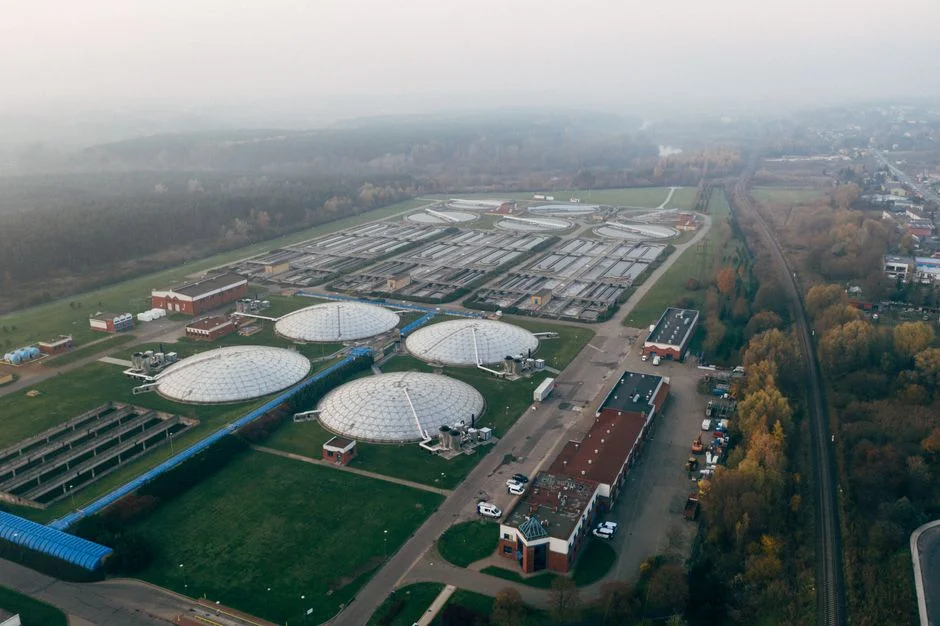
A source-specific train should begin with segregation and equalization, followed by NMP recovery or dedicated treatment where required, solids and oil/FOG removal, pH control, biological treatment where appropriate, reuse polishing and a zero-liquid-discharge branch only when justified by the mass balance. The order is not fixed for every stream; it follows the measured contaminant pathway and the required receiving or reuse route.
Do not assume biological treatment will remove dissolved NMP. Dedicated upstream control is required where that contaminant must be removed. The supplied research warns that biological treatment should not be expected to remove dissolved NMP without dedicated upstream control.
Characterize scaling constituents and additives before reverse osmosis or zero liquid discharge. Define the concentrate route, chemical demand, utility demand, cleaning sequence and standby configuration. A ZLD decision should compare the residual mass after source control, recovery and reuse with the mass that must be evaporated, crystallized and disposed of. ZLD does not eliminate wastewater generation; it changes the form in which residual water and its dissolved contaminants must be managed.
For conventional wastewater requiring biological treatment, compare an MBR membrane bioreactor with conventional activated sludge using actual biodegradability, footprint, reuse quality and intermittent-loading requirements. For streams containing suspended solids, oil, FOG or colloids, evaluate a DAF system for solids, oil and FOG removal as front-end protection rather than expecting downstream membranes to handle excessive solids.
Include dewatering in the scope for concentrated sludge or residues, then verify the legal classification and destination of the resulting cake. The equipment scope must distinguish process liquid, concentrate, sludge and final solid residue; they have different mass balances and legal pathways.
| Treatment function | Selection question | Evidence required |
|---|---|---|
| Source control and equalization | What batch, slug load or off-design stream must be received? | Maximum-hour flow, batch profile and operating history |
| NMP control | Can the stream be recovered or requires dedicated treatment? | Measured NMP, flow, TOC/COD and reuse assessment |
| Solids, oil and FOG removal | Does the stream require DAF or another front-end separator? | Suspended solids, oils, FOG and colloid measurements |
| Biological treatment | Are the applicable contaminants biodegradable and is loading intermittent? | Biodegradability, load profile, footprint and reuse criteria |
| RO or ZLD | What remains after source control and can the residue route be closed? | Scaling profile, additives, mass balance, utilities and destination |
| Sludge handling | What dewatering and classification route is required? | Solids generation, cake analysis, handling route and destination |
Size the system for cleaning peaks and production changes
Each bidder should receive the same sizing baseline: maximum and minimum flow, batch profile, contaminant range, required removal, recovery target, operating hours and future expansion envelope. Size equalization and control capacity for a cleaning batch, slug load or off-design stream, not annual average flow.
Specify automatic level control, batch recognition, diversion, slug-loading response and high-low alarms as standard controls for intermittent service. The system must also define what happens when a tank reaches a high level, when chemistry changes, or when a stream is diverted. These functions are more useful than a generic statement that the plant is “designed for peaks.”
The 2025 Communications Earth & Environment reference study’s 3.0 m³/h value, described as very intermittent cleaning wastewater, demonstrates the sizing problem. It is not an SK On flow and cannot set tank, pump or membrane capacity. The same restriction applies to the modeled 25% NMP cold-trap concentration.
Define redundancy against the consequence of an identified failure. A critical equalization, NMP-control or reuse component may need a defined standby strategy; duplicating every item is not a substitute for failure analysis. State whether the system must remain available during power interruption, chemical-delivery loss, power-quality events or return to service.
| Sizing input | Required definition | Owner or bidder responsibility |
|---|---|---|
| Maximum-hour flow | Maximum simultaneous flow by source and combined service condition | SK On to provide measured records and operating scenarios |
| Batch profile | Batch volume, frequency, duration and receiving sequence | SK On and bidder to agree during design review |
| Contaminant range | Normal, maximum and abnormal chemistry by stream | SK On to provide sampling data; bidder to identify design envelope |
| Recovery target | Water quality, destination and required availability | Owner to define; bidder to demonstrate compliance |
| Expansion envelope | Future lines, processes and anticipated load changes | Owner to provide basis; bidder to reserve, size or state exclusions |
| Redundancy and standby | Critical failure, power interruption and chemical-loss response | Bidder to submit consequence-based design |
Compare treatment options against the actual design basis
Treatment bids should be compared on source segregation, equalization, NMP control, solids and oil removal, biological treatment, polishing, reuse, ZLD, sludge handling, automation, utilities, maintenance, redundancy and final-residue disposal. The comparison should use measured source duty and chemistry—not the label “battery wastewater”—as the equipment-selection basis.
Do not justify RO or ZLD from a generic recovery percentage or energy figure. The supplied research provides neither a site-specific RO recovery value nor a defensible SK On energy value. Require each bidder to disclose the incoming salt profile, pretreatment limits, concentrate route, chemical demand, utility demand, cleaning sequence, standby configuration and performance guarantees.
Include civil works, chemicals, sludge, concentrate, final residue, services and replacement items in the comparison. If a bidder excludes a required disposal route or owner obligation, make that exclusion explicit rather than allowing it to disappear behind an equipment price.
| Bid comparison item | Question for every bidder | Acceptable evidence |
|---|---|---|
| Source segregation | Which streams are kept separate, and where? | Flow diagram, sampling plan and stream definitions |
| Equipment scope | Which unit handles each contaminant and operating condition? | Design basis linked to measured data |
| Utilities and chemicals | What consumption and delivery risk are included? | Calculations, assumptions and operating philosophy |
| Residues and concentrates | Where do sludge, concentrate and final solids go? | Analysis, classification, contract and destination evidence |
| Automation and standby | How are slugs, diversion, alarms and outages handled? | Control narrative, cause-and-effect list and standby configuration |
| Performance and scope | Can guarantees be tested under representative and abnormal conditions? | Test protocol, acceptance criteria, remedies and exclusions |
Use the same assumptions, exclusions and test conditions for every bidder. A comparison becomes misleading if one offer includes civil works and residue disposal while another prices only the treatment skid.
Coordinate permits, monitoring and residue classification
German compliance should be managed through separate workstreams for industrial wastewater, water abstraction and discharge, chemical handling and final waste residues. Qualified engineers and German environmental counsel should determine the applicable approvals and analyses for SK On’s site. A treatment proposal is not a permit and does not authorize commissioning.
Build a permit matrix containing process descriptions, flow and concentration limits, monitoring points, sampling frequency, reporting methods, incident obligations and expansion or commissioning conditions. Request approved process drawings, permits, discharge points, monitoring records, chemical inventories, accident-control measures, residue analyses, third-party test results and the expansion permit-change assessment.
Do not insert a universal German discharge limit into the specification. The supplied research does not establish one that can safely apply to SK On. It does, however, support the industrial pretreatment compliance workflow: verify the approved process, actual discharge route, monitoring evidence and applicable pretreatment conditions.
Distinguish manufacturing wastewater from battery waste and recycling residues. Germany’s BattDG entered into force on October 7, 2025, according to the GreenLi-ion 2025 Germany Battery Act summary, and the EU lifecycle framework addresses batteries. Neither creates a universal manufacturing-wastewater design. EWC, hazardous-waste and permit decisions remain site-specific.
| Compliance workstream | Documents to request | Approval gate |
|---|---|---|
| Industrial wastewater and discharge | Approved drawings, permit, limits, discharge points, sampling plan and monitoring records | Treatment train and discharge route match the authorization |
| Water abstraction and reuse | Abstraction records, water permits and receiving-process quality requirements | Source, destination and reuse quality are approved |
| Chemical handling | Chemical inventory, compatibility records, storage information and accident controls | New processes and chemicals are covered by the safety case |
| Waste residues | Sludge and concentrate analyses, classification, contracts and destinations | Every residue has a lawful route before commissioning |
| Expansion and commissioning | Permit-change assessment and modified-process description | No changed line starts before required approvals are confirmed |
Plan transparency around monitoring, deviations, corrective actions and credible incident data. The supplied research describes an German automotive-plant pretreatment capacity question as a separate capacity and compliance exercise; do not use that plant’s assumptions as SK On data.
Prove performance during representative and abnormal operations
Commissioning should test startup, shutdown, a representative cleaning peak, a solvent upset, power interruption and return to service. A clean-water demonstration is not evidence that the contracted treatment train can handle the specified chemical range.
Use agreed sampling points, analytical methods, acceptance criteria, test duration, sample frequency and calculation methods. Test the contracted chemical range and define remedies for non-compliance. If a bid cannot demonstrate these conditions, the guarantee should not be written as if it has been demonstrated.
Require evidence for chemical compatibility, leak containment, safe maintenance access, operator training, utility consumption, service response and replacement lead time. Verify that each performance claim traces to SK On source data or is clearly identified as an assumption.
| Commissioning test | Condition to reproduce | Required record |
|---|---|---|
| Startup and shutdown | Normal transitions and long idle periods | Flow, level, control response, influent and effluent results |
| Cleaning peak | Representative batch volume and chemistry | Batch duration, receiving capacity, removal performance and alarms |
| Solvent upset | Contracted NMP range and relevant stream segregation | Diversion, dedicated treatment response and recovery performance |
| Power interruption | Loss of power and defined utility failure | Safe state, retained volume and return-to-service sequence |
| Return to service | Restart after interruption or upset | Equipment integrity, calibration, sampling and acceptance results |
Do not accept a performance claim simply because it is written in the proposal. The acceptance record should show what was tested, with what chemistry, under which operating condition and by which analytical method.
Frequently Asked Questions
How much will wastewater treatment cost for SK On’s German expansion?
No defensible price or energy figure can be given from the supplied research because SK On’s source flows, batch profiles, chemistry, recovery target, utilities, residue route and required performance tests are not established. Ask every bidder to price the same scope, including civil works, chemicals, sludge, concentrate, final residue, services and replacement items, with exclusions stated separately.
Which wastewater treatment suppliers are qualified for the project?
There is no universal qualification based on being a battery-wastewater specialist. Check comparable source-specific treatment references, German project experience, commissioning and abnormal-operation capability, chemical compatibility evidence, operator training and a documented residue pathway. Ask each supplier to demonstrate how its proposed equipment handles the SK On design basis rather than relying on the project label.
Can the 3.0 m³/h reference flow from the 2025 study size SK On’s equipment?
No. The Communications Earth & Environment 2025 study reports 3.0 m³/h for a modeled four-line reference plant with very intermittent cleaning wastewater. It cannot replace SK On’s maximum-hour flow, batch-volume, chemistry and operating-profile data. Use it only to illustrate why average flow is an inadequate sizing basis.
Should SK On use biological treatment for all battery wastewater?
No. The same 2025 study identifies 25% NMP in modeled vacuum-drying cold-trap wastewater, and the supplied research warns that biological treatment should not be expected to remove dissolved NMP without dedicated upstream control. Segregate that stream and establish recovery or dedicated treatment before combining it with other wastewater.
What compliance risk should be checked before the expanded lines start?
Verify the applicable industrial wastewater, water abstraction and discharge, chemical-handling, monitoring, waste-residue and permit-change requirements with qualified engineers and German environmental counsel. Obtain approved drawings, permits, monitoring records, residue analyses and the expansion assessment. A treatment proposal alone does not authorize commissioning.
Related Equipment
- DAF system for solids, oil and FOG removal — specifications, capacity range, and technical data