Create a source-by-source wastewater register before choosing equipment
SK On should treat wastewater from a Mexican battery-plant expansion as a set of segregated streams, not one uniform effluent. The engineering basis is a source-by-source register that links each stream to its generation point, operating sequence, contaminants, peak flow and legally permitted destination. The US EPA’s battery-manufacturing process inventory is useful as a completeness check, but it does not establish SK On’s design loads or Mexican discharge requirements.
Start with electrode and cell production rinses, cleaning and coating operations, equipment and floor washing, laboratory drainage, cooling-water blowdown, oily wash water, contaminated stormwater where applicable, and domestic sewage. The US EPA identifies formation-area washdown, plate curing, product rinsing, cooling, equipment and floor-area washing, laboratory washing, hand washing, laundry, truck washing and wet scrubbers as water-using or wastewater-generating activities in battery manufacturing.
For every stream, request average flow, peak flow, batch size, operating frequency, seasonal factors, startup and shutdown flows, chemical inventory, temperature, pH, metals, suspended solids, oil and grease, COD, and any reuse target. Do not infer concentrations from the word “battery.” An October 2025 Elsevier review of lithium-ion battery recycling identifies heavy metals, fluorinated compounds and organic solvents as potential contaminants, but it does not establish which substances occur in SK On’s manufacturing streams. Project samples must establish that.
Separate streams at the point of generation where recovery, reuse, pretreatment or a different permitted destination is possible. This preserves evidence for design and prevents a dilute but large cooling or wash flow from masking concentrated process rinses. It also allows the buyer to compare filter press selection for battery manufacturing sludge with the upstream treatment route.
| Register field | Information required | Decision supported |
|---|---|---|
| Generation and operating sequence | Source, batch size, frequency, duration, startup and shutdown conditions | Peak concurrent flow and equalization needs |
| Hydraulics | Average and peak flow, seasonal factors and cleaning-cycle discharge | Pipe, pumping and treatment sizing |
| Chemistry | pH, temperature, metals, suspended solids, oil and grease, COD, and constituent-specific sampling | Segregation and process selection |
| Destination | Reuse, separate discharge, indirect discharge, on-site treatment or approved disposal route | Permitting and route definition |
| Residuals | Sludge, floated material and spent chemical streams | Filtration, dewatering and disposal scope |
Match each stream to its legal destination and treatment route
The permitted destination determines which treatment technologies can be evaluated; treatment selection cannot substitute for a legal discharge route. For each registered stream, document whether reuse, direct discharge, indirect discharge to a municipal system, treatment at an on-site industrial effluent plant, or an approved disposal route is being pursued.
Establishing these routes requires coordination with utility providers and technical specialists. Ask the receiving utility and qualified Mexican specialists whether a specific stream may be reused or discharged separately instead of entering the industrial effluent plant. The answer must follow project-specific chemistry, operations and permits, not a preference for a particular treatment package. A legacy ETP due-diligence checklist can help structure the review of existing infrastructure, but it cannot substitute for current site and utility confirmation.
Keep concentrated cleaning chemicals, solvent-bearing rinses, metal-bearing process water, oil and grease, cooling blowdown and sanitary sewage on controlled, segregated routes until characterization establishes the appropriate treatment path. This is a technical control against treating incompatible loads as if they had one chemical and hydraulic basis.
US 40 CFR Part 461 is a reference framework, not Mexican law. The US EPA states that the battery-manufacturing effluent guidelines were promulgated in 1984 and amended in 1986, and that coverage applies to direct dischargers and indirect dischargers subject to wastewater controls. Applying that rule directly to a Mexican facility would conflate US process coverage, US permit mechanisms and Mexican environmental authorizations, sewer rules and negotiated pretreatment requirements.
| Decision question | Required evidence | Engineering consequence |
|---|---|---|
| Can the stream be reused? | Water-quality target, process demand, treatment performance and site approval | Define pretreatment and final polishing before the reuse route is fixed |
| Can it discharge separately? | Current Mexican authorization, applicable limits and receiving-system confirmation | Design a dedicated route or retain the original destination |
| Can it enter the municipal system? | Utility acceptance and applicable sewer or pretreatment conditions | Establish flow, load and contaminant limits before bidding equipment |
| Should it use the industrial ETP? | Compatibility with each upstream treatment stage and confirmed hydraulic capacity | Route only compatible loads or add pretreatment |
Select treatment equipment from the wastewater profile
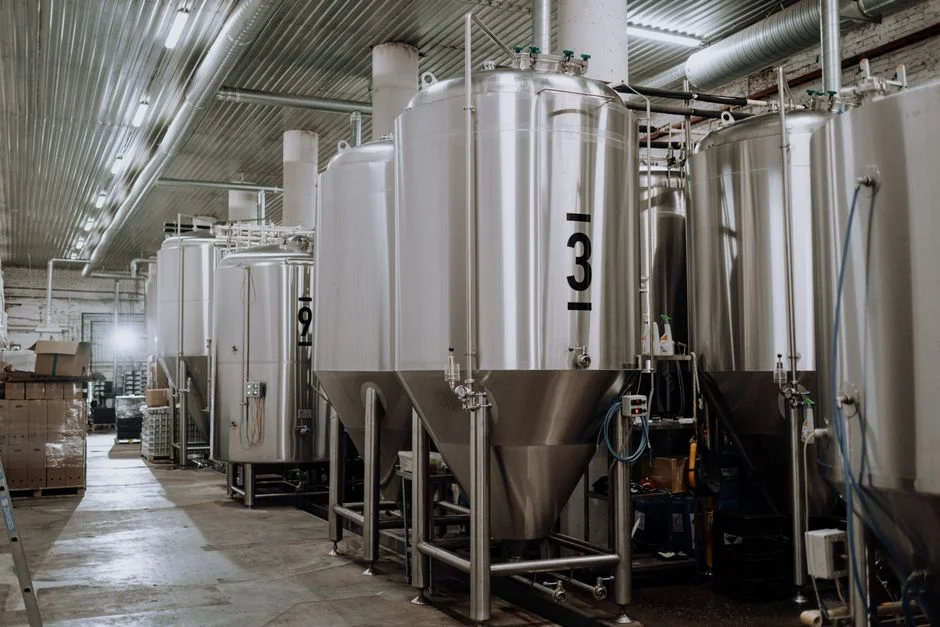
DAF is appropriate only where characterization supports removal of suspended solids, colloids, oil and grease or FOG; it is not a substitute for controlling metal-bearing or solvent-bearing process water. The specified DAF system for oil, solids and FOG separation range covers 4–300 m³/h across 13 standard models, according to the manufacturer. Select within that range only after the applicable stream flows, loads and treatment objectives are established.
Where compact biological treatment, solids separation and a reuse-oriented effluent target justify membrane requirements, evaluate an integrated membrane bioreactor. The manufacturer specifies an MBR range of 10–2,000 m³/day. That range is not a basis for assuming every battery-process rinse is biologically treatable; biodegradability, toxicity, treatment objectives and final destination remain separate design questions.
Evaluate sanitary sewage independently where its flow, chemistry and discharge route differ from industrial streams. The WSZ package sewage treatment plant combines anoxic and aerobic biological contact oxidation, sedimentation and disinfection in an underground package, with a stated capacity of 1–80 m³/h. Its documented process is suited to the stated sewage application, not concentrated industrial rinses.
For streams whose contaminants and operating conditions do not support a full flotation or biological process, consider filtration, heat exchange, pH correction or limited chemical treatment. Select automatic chemical dosing only after the wastewater chemistry, target parameter, dosing range and control response are defined. A dosing skid cannot correct uncontrolled segregation or an unsuitable legal route.
Treat filtration, disinfection and sludge handling as linked design questions. Clarified water may require polishing; sludge may require thickening and dewatering before its permitted route is known. The automatic chemical dosing system should therefore remain a defined control component, not a substitute for process design.
| Characterized need | Process to evaluate | Key qualification |
|---|---|---|
| Oil, grease, FOG, suspended solids or colloids | DAF with appropriate conditioning | Requires representative wastewater data and residual handling |
| Compact biological treatment and membrane solids separation | Integrated MBR | Requires a suitable reuse target and verified biodegradability |
| Segregated domestic sewage | WSZ package treatment | Applies to sewage within the stated package scope, not industrial rinses |
| Targeted contaminant removal | Filtration, heat exchange, pH correction or limited chemical treatment | Define the stream, endpoint and control response |
| Sludge or floated solids | Thickening and dewatering | Confirm destination and residual characteristics |
Size the system for peak concurrent flows and ramp-up
Hydraulic capacity must be based on measured and forecast peak concurrent wastewater flow, not annual-average effluent or an equipment nameplate used in isolation. A battery plant can discharge several streams at once: production cleaning, production rinses, equipment washing, laboratory drainage, cooling blowdown and sanitary flow may overlap even if each stream is intermittent.
Build a scenario schedule that identifies when those discharges coincide and whether equalization or storage is permitted. Include startup, commissioning, cleaning-cycle and ramp-up wastewater because stabilized production data will not describe those conditions. For a new or expanded SK On battery plant, ask each bidder to show its own hydraulic model rather than accepting a capacity statement without the underlying flow assumptions.
Beyond hydraulic loading, evaluate chemical consumption, sludge generation, energy use and control response during representative trial work. Those operating results can expose assumptions that a single nominal-flow calculation misses. They should feed back into the final treatment and residual-handling design.
Delivery uncertainty and underperformance should also be treated as commercial risks. A 2026 Elsevier academic review reports that infrastructure investment outcomes are weakened by delivery uncertainty, cost escalation, delay, underperformance and mismatch between promised and realized capability. The study is not a wastewater design criterion, but it supports requiring demonstrated treatment capability rather than accepting projected performance without contractual evidence. The peak-flow method for DAF sizing in Mexico provides a useful framework for this calculation.
Convert treatment performance into contractual evidence
A bid becomes technically comparable only when the supplier defines what it guarantees and how that guarantee will be tested. Require each bid to state guaranteed flow, load, effluent or reuse target, test method, guarantee condition, commissioning criterion, spare-parts scope, response time and exclusions.
Run trials using relevant wastewater, including batch cleaning wastewater. Measure removal performance, chemical consumption, sludge generation, energy use and control response. A trial on clean water or an unrepresentative averaged sample does not establish how the package will respond to the plant’s operating sequence.
Use the contractor’s specified test method and guarantee conditions to determine whether the proposed system addresses the actual wastewater inventory and legal destination. State whether sampling is composite or grab-based, how loads are calculated, which stream is covered, and what happens when an influent characteristic falls outside the guaranteed envelope.
Ask suppliers to document operating assumptions, startup provisions and the effect of sustained production and cleaning cycles on the guarantee. If water reuse or energy recovery is proposed, verify the claim against the actual stream and operating conditions. Neither is automatic evidence that the process suits battery-process rinses. The project should also define who owns performance risk during commissioning and how unresolved performance gaps are corrected.
Frequently Asked Questions
How much should SK On budget for wastewater treatment at its Mexican battery-plant expansion?
Request an itemized bid tied to the stream register: source-by-source flow and load assumptions, treatment scope, civil works, chemical supply, energy, controls, sludge handling, commissioning, trials, spares and exclusions. No researched quotation supports a plant-wide price for SK On’s expansion, so any budget total should require these inputs. Ask suppliers to identify which costs recur, which are tied to startup, and which depend on the final permitted route.
How should SK On select and size a wastewater-treatment supplier?
Require representative-wastewater trials, explicit guarantee conditions and a stream-by-stream basis of design. Size from peak concurrent flow and startup conditions, then verify the treatment route against current Mexican permits and utility requirements. A supplier should identify its exclusions and provide evidence that the proposed unit handles the applicable flow and load rather than only a generic process description.
Can sewage, cooling blowdown and battery-process rinses share one treatment train?
Do not assume they can share one train. Segregate them until project data establishes compatible chemistry, hydraulics, treatment objectives and legal destinations. Sewage may justify a packaged treatment route; cooling blowdown may require heat exchange or another defined treatment; concentrated process rinses may need pretreatment that a sewage package cannot provide.
Does the WSZ package’s 1–80 m³/h capacity make it suitable for industrial rinse wastewater?
No. The stated 1–80 m³/h capacity applies to the WSZ underground package sewage treatment plant and its documented anoxic/aerobic contact-oxidation, sedimentation and disinfection process. Use it as an option for segregated sanitary sewage only after discharge requirements and influent characteristics are confirmed; it is not evidence that concentrated industrial rinses can be treated by the same package.