
First Establish Whether an SK On German Plant Transaction Exists
Wastewater management following an SK On acquisition of a German battery plant requires a site-specific permit-transfer, treatment-asset and liability assessment rather than an application of generic battery-plant design. First confirm whether direct-discharge authorizations, indirect-discharge agreements, pretreatment obligations, monitoring commitments and reuse approvals can continue under the successor operator. Then map every process, cooling, sanitary, stormwater and contaminated-runoff stream to its discharge route, characterize actual flow and chemistry, and audit the installed treatment train against those requirements. No supplied source verifies an SK On acquisition of a German battery plant, so the affected facility, operator and permit status must first be established.
The transaction premise itself is unverified. None of the supplied research identifies an SK On acquisition of a specific German battery plant or establishes the identity of a successor operator. The available CATL/Arnstadt context cannot support an SK On inference: Exyte’s disclosure identifies CATT as the operator and reports waste-heat recovery and water recycling, not an SK On transfer.
Before commissioning engineering work, obtain the target legal entity, facility address, closing status, proposed operator, production plan and intended changes to wastewater composition, flow, cooling, reuse and treatment capacity. Publicly reported water recycling is a project feature, not proof of permit continuity, effluent performance, reuse quality or asset condition. If the transaction has not closed, this is conditional screening; if it has, it becomes retrospective compliance verification.
Build a Germany-Specific Wastewater Continuity File
German wastewater continuity cannot be inferred from an acquisition agreement because each authorization, approval, declaration, consent and sewer instrument requires its own transfer pathway. The controlling question is whether the instrument’s wording, status and operating conditions permit the proposed successor and future production profile.
Request the wastewater and groundwater permit register, direct-discharge authorizations, indirect industrial discharge agreements, municipal pretreatment permits or equivalent obligations, declarations, consents, inspection records, self-inspection reports, monitoring results and regulator correspondence. For every instrument, check the holder, operator wording, limits, monitoring plan, reporting history and change-of-control provisions.
Keep direct discharge, indirect discharge and reuse in separate workstreams. The supplied research warns against combining them under one request because each route has a different controlling instrument and evidence set.
| Control route | Documents to obtain | Continuity test | Evidence before closing |
|---|---|---|---|
| Direct discharge | Authorization, declarations, process description, limit tables, monitoring plan and inspection records | Identify the holder, successor wording, change-of-control clause and whether the proposed operator or production profile triggers approval, notification or modification | Effective authorization or written regulator determination |
| Indirect industrial discharge | Industrial discharge agreement, sewer-acceptance conditions, pretreatment duties and downstream capacity evidence | Test whether the successor, chemistry or flow remains acceptable to the sewer operator | Accepted or revised sewer terms |
| On-site reuse | Reuse approval, source and quality criteria, monitoring records and operating restrictions | Confirm the successor, intended use, treatment envelope and required revalidation | Current approval and an evidenced operating envelope |
| Monitoring and enforcement | Results, exceedances, corrective actions, declarations of compliance and regulator correspondence | Reconcile the permit register with actual compliance history and unresolved enforcement matters | Complete corrective-action record with accountable owners |
For an indirect discharge agreement, verify sewer-acceptance conditions, pretreatment duties, monitoring and downstream capacity; secure revised sewer terms if the successor or production profile changes. Reconcile monitoring results, exceedances, corrective actions and regulator correspondence rather than treating the permit register alone as proof of compliance.
Map Every Waste Source Before Sizing Equipment
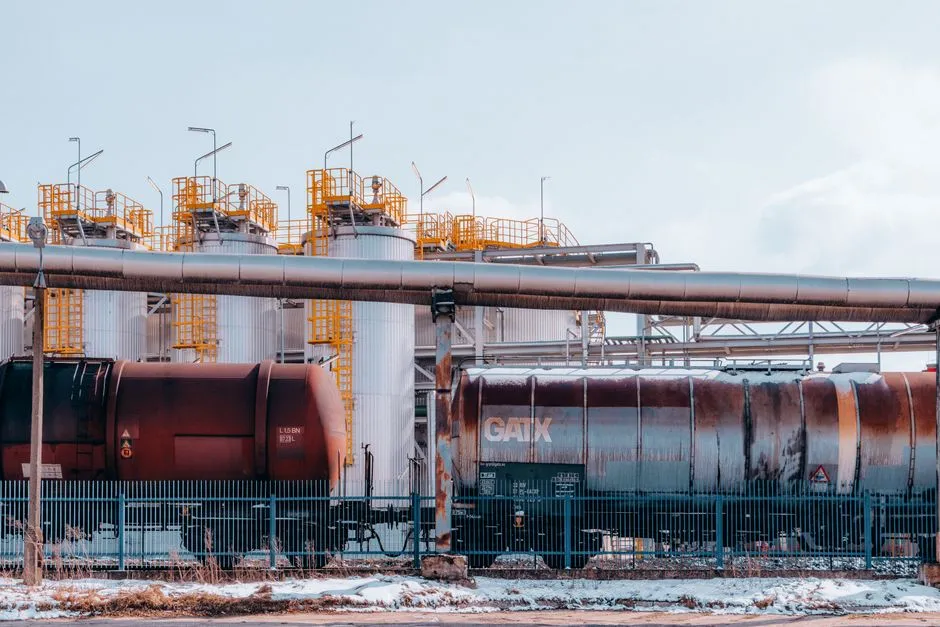
A plant-wide average cannot establish whether battery manufacturing effluent is segregable, treatable or compliant at the required operating condition. The first engineering deliverable should be a source map covering every drain, route, residual, destination and reuse point before equipment is valued.
The supplied treatment literature identifies NMP and PVDF binder residues in cathode coating wash water, CMC/SBR binder in an aqueous anode slurry, and fluoride and phosphate in electrolyte salt flush. These are literature-based characteristics, not verified findings at an acquired German plant.
| Source to investigate | Literature-based concern | Required site evidence | Treatment question |
|---|---|---|---|
| Cathode coating wash water | NMP and PVDF binder residues | Drain-level flow, batch chemistry, destination and reuse point | Can solvent-bearing wastewater be segregated and recovered without fouling downstream stages? |
| Anode coating wash water | CMC/SBR binder in an aqueous slurry | Flow, solids variability, discharge route and analytical records | Can binder and solids loads be controlled before biological or membrane treatment? |
| Electrolyte salt flush | Fluoride and phosphate | Representative analyses, generation frequency and destination | Which pretreatment and residual-management steps are required? |
| General plant effluent | Literature identifies boiler blowdown, HVAC condensate and domestic sewage within the general-effluent category | Separate flow and chemistry for each contributor | Can cooling, sanitary and process flows remain distinct? |
Separately examine cooling-tower blowdown, HVAC condensate, washdown, laboratory and water-treatment rejects, sanitary wastewater, stormwater, fire-water runoff and contaminated residuals. These sources may be intermittent or regulated through different routes, so they should not disappear into an average flow.
For every source, collect flow, chemistry, batch variability, monitoring frequency, destination, applicable permit condition, reuse point and responsible operator. Confirm whether each route is direct discharge, municipal sewer discharge or on-site reuse. Test whether any solvent-, fluoride-, metal- or solids-bearing stream can be segregated without bypassing, discharging or combining it with a stream whose treatment design is incompatible.
Audit the Installed Treatment Train Against the Real Flow
The installed treatment train is an acquisition asset only when its condition, design basis and operating history support the buyer’s intended flow, chemistry and reuse plan. Engineering audits must confirm the site-specific configuration rather than relying on published, indicative sequences.
The supplied research presents an indicative screening sequence: segregated collection; pH correction to 6–8; equalization for 8–24 hours; NMP recovery; heavy-metal and fluoride removal; biological treatment; MBR; RO; and MVR or crystallization where required. It identifies NMP vacuum distillation at 50–100 mbar and 80–120 °C. These are published design values from the supplied commercial treatment literature, not verified conditions at an acquired German facility.
Require a site-specific mass balance, recovery performance, downtime and product-return evidence before accepting that an NMP unit protects downstream biological or membrane stages. Review P&IDs, drain surveys, level controls, operating logs, representative batch data, stage-by-stage analyses, chemical-dosing records, sludge characterization, bypass controls, cleaning records and membrane-condition trends.
An integrated MBR membrane bioreactor may be relevant where biological treatment and low-solids reuse quality are required. Its published specification is below 1 μm filtration and 10–2,000 m³/day, but neither output nor capacity can be assumed for the acquired plant. The MBR process and equipment selection guide explains the technical screening points to apply.
An industrial RO treatment system may be relevant for demineralization and reuse. HydropureWater publishes recovery rates up to 95% for that product, but the buyer should require a guaranteed operating envelope, auxiliary-consumption guarantee, bypass restrictions, pilot evidence where appropriate and a destination for concentrate. Validate reuse through flow-meter reconciliation, utility records, water-quality data, the intended reuse point and residual-destination records.
Quantify Sludge, Concentrate and Historical Liabilities
Wastewater liabilities can remain after a permitted acquisition through sludge, sludge beds, lagoons, contaminated soil, groundwater, chemical inventories, release logs, waste manifests, remediation files, abandoned lines and former subsurface infrastructure. These matters belong in the environmental review, not only in the treatment-plant condition assessment.
The supplied process logic identifies heavy-metal hydroxide sludge requiring dewatering before a licensed disposal or metal-recovery route, while RO reject may require evaporation and crystallization. These are design pathways, not proof of what the acquired site generates.
A plate-and-frame filter press may be suitable for verified sludge dewatering. HydropureWater publishes filtration areas from 1 m² to 500 m² and manual, hydraulic or automatic PLC operation, but selection must follow representative sludge characterization and acceptance by the intended licensed disposal or metal-recovery route. The battery-manufacturing sludge dewatering guide provides a useful screening reference.
Check sludge beds, lagoons, contaminated soil, groundwater, chemical inventories, spill and release logs, waste manifests, remediation files, abandoned lines and former subsurface infrastructure. Reconcile historical records against current surveys and monitoring data. Require a Germany-specific investigation, material characterization and disposal study before assigning remediation value or setting an indemnity limit; unresolved historical releases should remain visible as transaction liabilities rather than disappear into an unpriced post-closing obligation.
Turn Wastewater Findings into Transaction Decisions
Every material wastewater finding needs a transaction mechanism, named owner, evidence requirement and completion milestone. The purchaser should not leave a permit gap, contamination issue or treatment shortfall as an unqualified post-closing action unless its impact is bounded and funded.
| Finding | Transaction mechanism | Evidence required | Completion milestone |
|---|---|---|---|
| Permit or sewer continuity unresolved | Closing condition | Effective authorization, successor determination or accepted sewer terms | Resolved before transfer |
| Historical contamination with uncertain scope | Condition, indemnity, escrow or price adjustment | Germany-specific investigation, material characterization and agreed remediation scope | Risk allocation executed at closing |
| Treatment asset cannot meet current obligations | Condition plus funded corrective plan | Verified mass balance, condition audit and enforceable remedy | Compliance demonstrated before operational reliance |
| Future production or reuse expansion | Post-closing capital commitment | Approved design basis, Germany-specific estimate and permit pathway | Funding and approval milestone |
If the treatment asset cannot meet current obligations, require a verified mass balance, condition audit and funded corrective plan before accepting operational risk. Keep future production or reuse expansion separate from immediate compliance and tie it to an approved design basis, Germany-specific estimate, permit pathway and milestone.
Request a current quotation based on verified flows, analyses, permit limits, sewer conditions, footprint, utilities, subsurface findings and intended future operation. The supplied research provides no transferable generic cost percentage, so immediate compliance work, asset rehabilitation and later upgrades must be costed separately.
Questions Buyers Should Ask Equipment Suppliers
Supplier quotations should be tied to the acquired site’s source-by-source mass balance, verified chemistry and enforceable operating conditions. Ask each supplier to state its guaranteed feed-water envelope, outlet performance, auxiliary consumption, bypass restrictions, utility demand and concentrate or sludge destination.
Require pilot evidence where appropriate and comparable battery or semiconductor references. Do not treat a generic treatment sequence as proof of cost or performance. For MBR and RO packages, request design calculations, membrane-fouling risk, cleaning requirements, controls, utilities and enforceable performance guarantees.
For sludge equipment, request representative solids-characterization results and compatibility with the site’s licensed disposal or metal-recovery route. Check whether the proposed dewatering method changes the residual’s classification, transportability or acceptance status.
Keep immediate compliance work, asset-rehabilitation work and future capacity expansion as separately priced scopes. Each quotation should identify exclusions, commissioning tests, performance retention tests, operator-training requirements and the documents required to release final payment. For industrial pretreatment interfaces, use the industrial pretreatment compliance guide as a technical reference, not as a substitute for the German sewer agreement and site data.
Frequently Asked Questions
Can SK On automatically take over the German plant’s wastewater permits after an acquisition?
No automatic conclusion should be drawn from the acquisition agreement. Each authorization, approval, declaration, consent and sewer instrument needs its own transfer pathway. Before closing, obtain written confirmation of successor approval, notification, modification or another applicable action for every direct-discharge, indirect-discharge and reuse instrument.
What treatment capacity should be purchased for the acquired plant?
No defensible capacity can be stated without verified source flows, chemistry, batch variability, permit limits, sewer conditions and the intended future production and reuse profile. Ask the supplier to calculate capacity
Frequently Asked Questions
Can SK On automatically use the German battery plant's wastewater permits after an acquisition?
No, wastewater discharge permits under the German Federal Water Act (Wasserhaushaltsgesetz - WHG) are tied to the specific operator and the site's environmental impact assessment. Upon acquisition, SK On must apply for a transfer or a new permit with the competent state environmental authority (Landesamt für Umwelt), which involves a re-evaluation of the plant's current discharge concentration levels against local water body quality standards.
How much does it cost to upgrade wastewater treatment after SK On acquires a German battery plant?
Upgrading a facility to meet modern battery-grade discharge standards typically ranges from 5 million to 15 million EUR, depending on the current plant infrastructure and the presence of complex pollutants like N-Methyl-2-pyrrolidone (NMP) or heavy metals. If the existing system requires a complete transition to Zero Liquid Discharge (ZLD) to meet stringent local groundwater protection ordinances, costs can exceed 20 million EUR due to the high energy requirements of thermal evaporators and crystallizers.
What treatment capacity and equipment does SK On need for a German battery plant?
A standard gigafactory requires a capacity ranging from 500 to 2,000 cubic meters per day, depending on the specific cathode and anode manufacturing processes used. Essential equipment includes Membrane Bioreactors (MBR) for organic load reduction, followed by multi-stage Reverse Osmosis (RO) systems to remove dissolved salts and trace metals to meet the specific conductivity limits mandated by the German regional authorities.
Which wastewater-treatment supplier should a battery manufacturer select for MBR and RO equipment?
Manufacturers should prioritize global engineering firms with established German service networks, such as Veolia Water Technologies, Suez/Solenis, or Xylem, as they possess the necessary certifications to comply with DIN (Deutsches Institut für Normung) standards. Selecting a supplier with a proven track record in hazardous chemical handling is critical to ensure that the MBR and RO membranes can withstand the high pH levels and chemical stressors common in battery electrolyte waste streams.
What compliance records should the buyer request before closing?
The buyer should request at least three years of continuous discharge monitoring data, including monthly reports submitted to the local water authorities (Wasserbehörde) detailing Chemical Oxygen Demand (COD), Total Nitrogen (TN), and heavy metal concentrations. Additionally, it is essential to review the most recent site-wide environmental audit, any past notices of violation regarding effluent limits, and documentation confirming that the existing treatment system holds a valid Betriebserlaubnis (operating permit) for the current production volume.