Al Wakrah's Industrial Wastewater Treatment Landscape: 2025 Requirements
Al Wakrah's industrial wastewater treatment landscape is defined by Qatar's $729M Al Wakrah and Al Wukair sewage treatment plant (150 MLD capacity) and strict Treated Sewage Effluent (TSE) standards. For industrial facilities, key requirements include COD removal ≥92%, TSS ≤10 mg/L, and compliance with Qatar's 2025 TSE reuse guidelines. This guide provides technical specifications, cost benchmarks ($0.80–$2.50/m³ for industrial systems), and equipment selection criteria for food processing, petrochemical, and manufacturing sectors in Al Wakrah.
The Al Wakrah and Al Wukair Public-Private Partnership (PPP) project serves as the regional benchmark for infrastructure, forcing private industrial operators to align their internal discharge quality with municipal recovery standards. By Q4 2025, the Qatar Ministry of Municipality and the Ministry of Environment (MoE) mandate that all industrial facilities within the Al Wakrah catchment area must implement advanced secondary or tertiary treatment to facilitate TSE reuse for irrigation or industrial cooling. This transition is driven by the National Vision 2030, which targets 100% wastewater reclamation.
Industrial facilities in Al Wakrah, particularly those in the food processing and petrochemical sectors, face increasingly stringent discharge limits. Non-compliance results in heavy surcharges or denial of discharge permits into the municipal network. Engineering teams must now design systems capable of handling high fluctuations in organic loading while maintaining effluent stability.
| Parameter | Qatar TSE Standard (2025) | Industrial Target (Reuse) | Compliance Deadline |
|---|---|---|---|
| Chemical Oxygen Demand (COD) | ≤ 50 mg/L | ≤ 40 mg/L | Q4 2025 |
| Biochemical Oxygen Demand (BOD) | ≤ 10 mg/L | ≤ 5 mg/L | Q4 2025 |
| Total Suspended Solids (TSS) | ≤ 10 mg/L | ≤ 2 mg/L (with MBR) | Q4 2025 |
| Fats, Oils, and Grease (FOG) | ≤ 5 mg/L | ≤ 2 mg/L | Q4 2025 |
| pH Level | 6.0 – 9.0 | 7.0 – 8.0 | Immediate |
Influent vs. Effluent Quality: Industrial Wastewater Parameters in Al Wakrah
Industrial influent in Al Wakrah varies significantly by sector, with food processing facilities exhibiting COD concentrations up to 3,500 mg/L and petrochemical plants showing high hydrocarbon loads. Designing an effective system requires a precise understanding of these influent characteristics to determine the necessary removal efficiencies. According to 2024 reports from the Qatar EPA, the high ambient temperatures in Al Wakrah accelerate biological activity, necessitating specific cooling or aeration adjustments in treatment design.
For food processing operations—including dairy and meat processing—the primary challenge is the high concentration of emulsified fats and organic nitrogen. A high-efficiency DAF system for FOG and TSS removal in Al Wakrah is typically required as a pretreatment step to reduce the organic load by 70-80% before biological treatment. Without this, downstream membranes or aerobic reactors face rapid fouling and failure.
In the petrochemical sector, influent often contains complex hydrocarbons and volatile organic compounds (VOCs). Treatment must focus on breaking down these refractory compounds. Manufacturing facilities, particularly those involved in metal finishing or textiles, must address heavy metal concentrations (Cr, Ni, Cu) and high Total Dissolved Solids (TDS), often requiring chemical precipitation or ion exchange to meet the 2025 reuse guidelines.
| Industry Sector | Avg. Influent COD (mg/L) | Avg. Influent TSS (mg/L) | Primary Pollutant | Effluent Target (COD) |
|---|---|---|---|---|
| Food Processing | 1,200 – 3,500 | 300 – 800 | FOG / Proteins | ≤ 50 mg/L |
| Petrochemical | 800 – 2,500 | 100 – 400 | Hydrocarbons / Phenols | ≤ 50 mg/L |
| Manufacturing | 500 – 1,500 | 200 – 600 | Heavy Metals / TDS | ≤ 50 mg/L |
| Textile/Dyeing | 1,000 – 2,000 | 150 – 300 | Color / Surfactants | ≤ 50 mg/L |
Treatment Technology Comparison: MBR vs. DAF vs. ZLD for Al Wakrah Industries
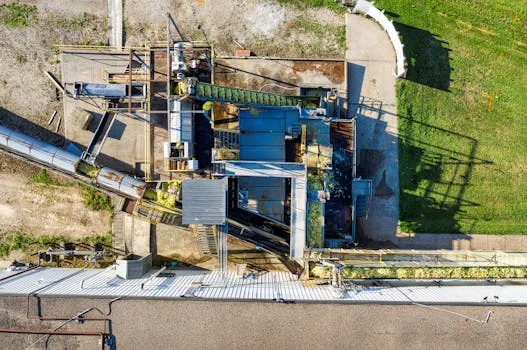
Membrane Bioreactor (MBR) technology has become the preferred secondary treatment method for Al Wakrah food processing plants due to its ability to achieve 99% pathogen removal in a compact footprint. While traditional activated sludge systems require large clarifiers, a compact MBR system for pathogen removal and TSE compliance in Al Wakrah integrates filtration directly into the bioreactor, saving up to 60% of land area—a critical factor for facilities located in the Al Wakrah Industrial Area where space is at a premium.
Dissolved Air Flotation (DAF) remains the industry standard for primary treatment in petrochemical and high-FOG applications. DAF systems utilize micro-bubbles to float suspended solids and oils to the surface for mechanical skimming. This technology is highly effective for removing non-polar hydrocarbons that would otherwise inhibit biological processes. For an in-depth comparison of DAF systems for industrial wastewater treatment, engineers must weigh the lower CAPEX against the ongoing cost of chemical coagulants and flocculants.
Zero-Liquid Discharge (ZLD) is increasingly mandated for heavy manufacturing facilities that produce high-salinity brine or toxic metal waste. ZLD systems utilize thermal evaporation and crystallization to recover 95-99% of water, leaving only solid waste for disposal. While energy-intensive, ZLD eliminates discharge fees and complies with the strictest environmental regulations under Qatar Law No. 30 of 2002.
| Technology | COD Removal % | CAPEX (100 m³/h) | OPEX ($/m³) | Best Use Case |
|---|---|---|---|---|
| MBR | 95% – 98% | $1.2M – $3M | $0.80 – $1.50 | Food / Dairy / TSE Reuse |
| DAF | 70% – 85% (Pretreat) | $200K – $800K | $0.30 – $0.80 | Petrochemical / FOG removal |
| ZLD | 99%+ | $3M – $10M | $2.00 – $4.00 | Heavy Mfg / High TDS |
| MBBR | 85% – 92% | $800K – $1.5M | $0.40 – $0.70 | Municipal / Low Footprint |
Cost Breakdown: Industrial Wastewater Treatment in Al Wakrah 2025
Total Cost of Ownership (TCO) for industrial wastewater systems in Al Wakrah is heavily influenced by energy tariffs and the increasing cost of freshwater, which currently ranges from $2.00 to $4.00/m³. For a typical 100 m³/h MBR-based system, CAPEX includes not only the membrane modules and bioreactors but also high-level automation required for Qatar's monitoring standards. Procurement managers should consult a detailed cost breakdown for wastewater treatment systems in Qatar to accurately budget for 2025 projects.
OPEX is driven by three main factors: energy consumption, chemical dosing, and membrane replacement. MBR systems consume between 0.8 and 1.2 kWh/m³, while DAF systems are more energy-efficient at 0.3 to 0.5 kWh/m³ but require higher chemical expenditures. In Al Wakrah, the ROI for these systems is typically realized within 3 to 5 years, primarily through the avoidance of municipal discharge penalties and the substitution of treated effluent for expensive desalinated water in non-potable applications.
Government incentives play a role in financial planning. The Qatar Ministry of Environment offers up to 30% subsidies for ZLD systems and other high-recovery technologies as part of its sustainability initiatives. avoiding the $50,000/month fines associated with non-compliance in the 2025 regulatory cycle makes advanced treatment a financial necessity rather than an optional upgrade.
| Cost Component | MBR System (100 m³/h) | DAF System (100 m³/h) | ZLD System (100 m³/h) |
|---|---|---|---|
| Equipment CAPEX | $1,200,000 - $1,800,000 | $200,000 - $500,000 | $3,000,000 - $6,000,000 |
| Civil Works & Install | $500,000 - $1,200,000 | $100,000 - $300,000 | $1,000,000 - $4,000,000 |
| Annual OPEX | $700,000 - $1,300,000 | $260,000 - $700,000 | $1,700,000 - $3,500,000 |
| Payback Period | 3.5 - 4.5 Years | 2 - 3 Years | 5 - 7 Years |
Compliance Checklist: Qatar's 2025 TSE Standards for Industrial Discharge
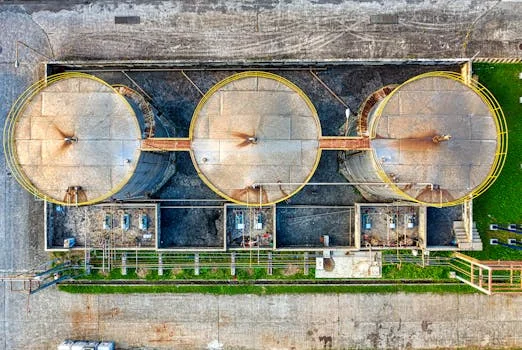
Compliance with Qatar’s Law No. 30 of 2002 and the 2024 Ministry of Municipality guidelines requires rigorous monitoring and documentation. Industrial facilities must submit detailed engineering drawings and effluent quality guarantees to the Ministry of Environment for approval, a process that typically takes 6 to 12 months. Implementing PLC-controlled chemical dosing for pH adjustment and coagulation in Al Wakrah is essential for maintaining the narrow pH range (6-9) required for legal discharge.
The 2025 standards emphasize continuous monitoring. Facilities processing more than 50 m³/h are required to install online sensors for pH, TSS, and flow, with data logs accessible to municipal inspectors. Tertiary disinfection is also mandatory for any water intended for reuse. A chlorine dioxide generator for wastewater disinfection is often preferred over traditional chlorine gas due to its superior efficacy against biofilms and lower residual toxicity.
- Mandatory Effluent Limits: COD ≤50 mg/L, BOD ≤10 mg/L, TSS ≤10 mg/L, FOG ≤5 mg/L.
- Monitoring: 24/7 online monitoring for flow and pH; weekly lab analysis for COD/BOD.
- Disinfection: E. coli must be ≤10 CFU/100 mL for any reuse applications (irrigation/cooling).
- Sludge Management: All sludge must be dewatered to ≥20% dry solids before transport to approved landfills.
- Permitting: Valid Environmental Clearance (EC) from the Ministry of Environment is required for all system upgrades.
Equipment Selection Guide for Al Wakrah's Key Industries
Selecting the correct equipment requires matching specific industrial contaminants with proven removal technologies. For food processing facilities in Al Wakrah, the process train should begin with a GX Series rotary mechanical bar screen for primary solids removal to protect downstream pumps. This is followed by a DAF for grease removal and a high-flux MBR membrane bioreactor module for organic degradation.
Petrochemical facilities require specialized oil-water separators and chemical dosing units to handle variable chemical loads. In manufacturing, particularly where metal plating occurs, a high-pressure plate and frame filter press is necessary for sludge dewatering, significantly reducing the volume and cost of hazardous waste disposal. For facilities targeting 100% water recovery, a multi-stage reverse osmosis (RO) system for industrial water reuse serves as the final polishing step to remove residual TDS.
| Industry | Primary Equipment | Secondary Equipment | Tertiary/Sludge |
|---|---|---|---|
| Food & Beverage | Rotary Screen + DAF | MBR System | UV or ClO2 Disinfection |
| Petrochemical | API Separator + DAF | Activated Sludge/MBBR | Multi-Media Filter |
| Manufacturing | Chemical Precipitation | ZLD / RO System | Filter Press (Dewatering) |
| Textiles | Fine Screens | MBR + Color Removal | Activated Carbon Filter |
For procurement managers evaluating vendors, a comparison of Qatar's top wastewater treatment equipment suppliers can provide insights into local service availability and spare parts support, which are critical for maintaining the 2025 compliance uptime.
Frequently Asked Questions
What are the penalties for non-compliance with Qatar's TSE standards in Al Wakrah?
Under Qatar Law No. 30 of 2002, industrial facilities can face fines up to $50,000 per month for repeated violations. the Ministry of Environment has the authority to shut down operations if effluent quality poses a risk to the $729M Al Wakrah municipal infrastructure.
How much does an industrial DAF system cost for a 50 m³/h food processing plant in Al Wakrah?
A skid-mounted DAF system for this capacity typically costs between $150,000 and $300,000. This includes basic automation and installation. OPEX for chemical dosing generally adds $0.08–$0.20 per cubic meter treated.
What is the typical payback period for an MBR system in Al Wakrah?
The typical payback period is 3 to 5 years. This is calculated based on the savings from reusing treated water (avoiding freshwater costs of $2.50/m³) and the avoidance of discharge surcharges which can exceed $0.50/m³ for high-COD effluent.
Is ZLD mandatory for all industrial facilities in Al Wakrah?
No, ZLD is not mandatory for all. However, it is required for manufacturing plants that discharge heavy metals or have a TDS concentration exceeding 1,000 mg/L if they cannot meet municipal sewer standards. Most food processing plants can comply using MBR without ZLD.
What are the maintenance requirements for a DAF system in a petrochemical plant?
Maintenance includes weekly inspection of skimmer blades and air saturation systems, monthly lubrication of motors, and quarterly calibration of chemical dosing pumps. For DAF systems integrated with membranes, annual cleaning or replacement of air diffusers is recommended to maintain efficiency.