Define the treatment duty before selecting equipment
An effluent treatment plant in Sihanoukville should be selected as a treatment train, not as a single machine. Sewage treatment handles domestic wastewater from hotels, residential developments and commercial facilities, while industrial wastewater treatment may require pretreatment for oil, grease, suspended solids, colloids or process-specific contaminants. The design basis must establish design flow, peak flow, operating hours, wastewater composition, discharge point, receiving water, reuse requirements and electrical-service constraints. Only then can WSZ, MBR and DAF systems be compared on a defensible basis.
The documented AnnAik Ochheuteal Beach case provides a useful local reference profile, but it is not a design template for every Sihanoukville project. The influent contained COD 600 mg/L, BOD5 180 mg/L, TSS 280 mg/L, NH3-N 20 mg/L and oil and grease 30 mg/L, as reported in the AnnAik case study published in 2019. A hotel or factory may have a substantially different flow, composition or discharge regime, so laboratory analysis and site verification are required before equipment selection.
Use the decentralized sewage treatment options in Cambodia as a starting point for technology questions, but require the supplier to convert the wastewater profile into a mass balance and a named treatment objective. “Treat the wastewater” is not a sufficient specification.
Match the discharge standard to the receiving environment
Effluent compliance must be assessed against the project permit and receiving environment, not a generic brochure value. HydropureWater’s 2026 Sihanoukville guide cites Cambodia’s Sub-Decree on Water Pollution Control (2015) as setting 100 mg/L COD and 50 mg/L TSS for industrial discharges. The current permit and confirmation from the relevant Cambodian authority govern the project; the cited figures are benchmarks, not automatic approval for every site.
The same guide reports a municipal COD limit of 120 mg/L and notes that port facilities may face stricter local requirements, including an illustrative 80 mg/L COD benchmark. These values are context-dependent and should not be treated as universal Sihanoukville limits. For a facility discharging to a sensitive receiving water, the permit, port-area conditions and reuse specification should be checked together.
| Reference point | Documented value | Procurement interpretation |
|---|---|---|
| Industrial discharge benchmark | COD 100 mg/L; TSS 50 mg/L | Cited by HydropureWater’s 2026 guide from Cambodia’s Sub-Decree on Water Pollution Control (2015) |
| Municipal benchmark | COD 120 mg/L | Reported in HydropureWater’s 2026 guide; verify against the project permit |
| Port-area context | Illustrative COD benchmark of 80 mg/L | Reported as potentially stricter in the 2026 guide; obtain written confirmation for the specific location |
| AnnAik case effluent | COD 50 mg/L; BOD5 30 mg/L; TSS 80 mg/L; NH3-N 5 mg/L; TN 15 mg/L; TP 1 mg/L | AnnAik case study, 2019; useful benchmark, not a permit determination |
Check the complete parameter schedule rather than COD alone. The AnnAik case separately tracked COD, BOD5, TSS, ammonia, total nitrogen, total phosphorus, LAS, oil and grease, coliform and pH. For non-potable reuse or sensitive receiving waters, additional polishing may be required. University of Twente research describes nanofiltration for polishing wastewater treatment plant effluent to EU Water Framework Directive standards, while Wageningen University research addresses constructed wetlands for micropollutant removal.
When evaluating an ultrafiltration system as a polishing step, first establish the specific reuse application and the contaminants that must be removed. A membrane’s nominal pore size does not establish compliance with a reuse requirement.
Choose between WSZ, MBR and DAF treatment
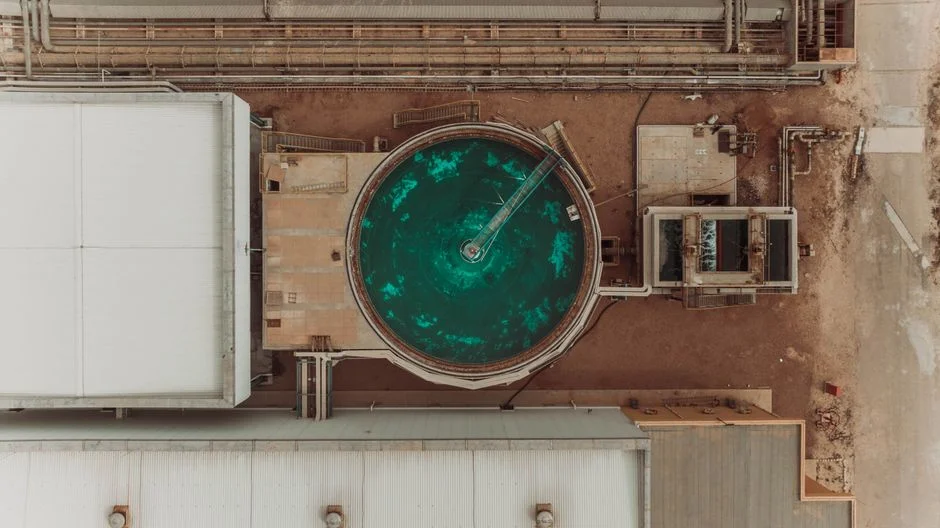
WSZ, MBR and DAF have different process roles. WSZ is a compact biological treatment package; MBR combines activated sludge with membrane separation; DAF is primarily a solids-and-floating-material pretreatment step. The correct selection follows from wastewater character, required effluent quality, available footprint, reuse targets and operating resources.
| System | Documented configuration and range | Appropriate role | Main procurement check |
|---|---|---|---|
| WSZ | Anoxic/aerobic contact oxidation, sedimentation and disinfection in a buried package; 1–80 m³/h | Residential communities, hotels, hospitals, factories and rural sites with relatively predictable organic loading | Confirm hydraulic and organic loading, sludge removal and effluent guarantees against the permit |
| MBR | Activated sludge with submerged PVDF membrane filtration; 10–2,000 m³/day; below 1 μm filtration and a footprint described as 60% smaller than conventional systems | Projects requiring compact treatment, high-quality effluent or defined reuse applications | Test membrane compatibility, source-water characteristics, cleaning, fouling and replacement provisions |
| DAF | Micro-bubbles and automatic skimming; 4–300 m³/h across 13 standard models | Pretreatment for suspended solids, FOG, oil and grease, and colloidal matter | Identify recoverable floating material and confirm whether skimming and sludge handling are adequate |
HydropureWater’s 2026 guide provides the equipment descriptions and ranges above. The AnnAik train demonstrates how unit operations can be combined: grease traps remove oil particles, a grit chamber removes larger suspended impurities, an anaerobic compartment supports hydrolysis and acidification, contact oxidation provides aerobic treatment, a high-loading constructed wetland further reduces pollutants, and ultraviolet disinfection controls pathogens before discharge or non-potable reuse.
That sequence should not be copied automatically. A buried WSZ sewage treatment plant may suit a site where biological treatment, clarification and disinfection can be packaged together. An integrated MBR wastewater treatment system separates solids within the biological process and requires attention to membrane compatibility and fouling. A DAF pretreatment system is more appropriate before biological treatment when recoverable floating material must be removed. Constructed wetlands and membrane polishing solve different problems; no technology should be claimed to meet every reuse standard without source-water testing and a defined application.
Size the plant from measured and contracted flows
Plant capacity should be based on measured wastewater flow, load and discharge peaks, not nominal water use or a catalogue average. Request current flow measurements by shift, seasonal high-flow records, peak-factor assumptions, operating hours and the expected expansion schedule. For an industrial wastewater treatment plant in Cambodia, prepare a mass and concentration balance for COD, TSS and oil and grease, and identify batch-discharge peaks separately from the daily average.
The AnnAik case calculated a treatment capacity of 10 m³/day for human sewage and kitchen wastewater at a low-lying coastal site approximately 40 meters from the high-water mark. The case also reported influent COD of 600 mg/L, BOD5 of 180 mg/L, TSS of 280 mg/L, NH3-N of 20 mg/L and oil and grease of 30 mg/L. These figures explain why flow and load must be considered together, but the case does not establish a universal sizing rule for Sihanoukville.
Require each bidder to state design flow, peak flow, hydraulic-retention assumptions, sludge-production basis, standby strategy and the effect of equipment downtime on permit compliance. The Cambodia hotel and resort wastewater treatment guide provides a useful site-specific checklist, including future expansion and electrical constraints.
Also reconcile the treatment duty with the facility’s water use. A hotel’s guest occupancy and laundry flows can produce a different hourly profile from a factory’s batch discharge. Metering should cover the actual wastewater-generating operations, not only incoming potable water.
Compare capital and operating costs without losing site costs
Capital-cost comparisons are useful only when the scope boundary is identical. HydropureWater’s 2026 Sihanoukville guide cites indicative capital costs of US$50–300/m³ for municipal projects and US$100–500/m³ for industrial projects. These are broad guide ranges, not quotations, and they do not eliminate project-specific uncertainty.
The guide also cites energy at US$0.10–0.50/m³, chemicals at US$0.05–0.20/m³ and annual maintenance of US$5,000–20,000. It cites MBR membrane replacement at US$10,000–30,000 every 5–7 years. Aeration, membrane condition, cleaning and replacement intervals therefore belong in the lifecycle evaluation, not just the initial equipment price.
| Cost element | 2026 guide benchmark | What the bidder must confirm |
|---|---|---|
| Capital cost | Municipal: US$50–300/m³; industrial: US$100–500/m³ | Equipment, civil works, installation, pumping, power, odor control and sludge handling included or excluded |
| Energy | US$0.10–0.50/m³ | Design duty, tariff assumptions, aeration load and backup-power requirements |
| Chemicals | US$0.05–0.20/m³ | Consumption assumptions, dosing strategy and local supply arrangements |
| Annual maintenance | US$5,000–20,000 | Scope, frequency, operator level and whether membrane work is included |
| MBR membrane replacement | US$10,000–30,000 every 5–7 years | Warranty, replacement basis, spare availability and performance criteria |
Request separate pricing for equipment, civil works, installation, commissioning, pumping, power upgrades, odor control, sludge handling, membranes, chemicals, operator training, spares and remote monitoring. The guide’s illustrative examples—a 200 m³/day WSZ at US$40,000–60,000 and a 500 m³/day DAF plus MBR at US$250,000–500,000—should be used only as budgetary reference points, not quotations. Where sludge dewatering is required, clarify whether a plate-and-frame filter press is included in the proposed scope.
Build a supplier brief that tests local execution
A supplier should demonstrate engineering completeness and local delivery capability, not merely provide a product catalogue. Request a process flow diagram, duty basis, guaranteed effluent values, civil and equipment drawings, electrical load list, control philosophy, O&M manual and commissioning protocol. Guaranteed values should identify the parameter, test method, sampling point and operating condition.
Ask for a comparable project or pilot report using wastewater with similar characteristics. The AnnAik case study, published in 2019, reports more than 5,000 decentralized wastewater treatment projects and describes systems that produce no odour and very little noise. Those statements are not substitutes for evidence from the proposed supplier’s actual configuration; ask for local operating records, test results and maintenance history.
Clarify manufacturing location, shipping terms, installation responsibility, commissioning milestones, operator training, spare-parts availability and response time for Sihanoukville. Identify who holds construction risk, who performs utility connections and who remains responsible for performance testing after handover.
Compare modular WSZ, MBR and pretreatment skids against one procurement schedule. HydropureWater’s 2026 guide reports illustrative lead-time differences among supplier types, but those differences are not project commitments. A bidder should provide a project-specific schedule covering drawing approval, manufacturing, shipment, civil works, installation, testing, training and permit-support documentation. The Cambodia hotel and resort wastewater treatment guide remains a useful source for the site-execution questions to include in the brief.
Plan commissioning, monitoring and permit evidence
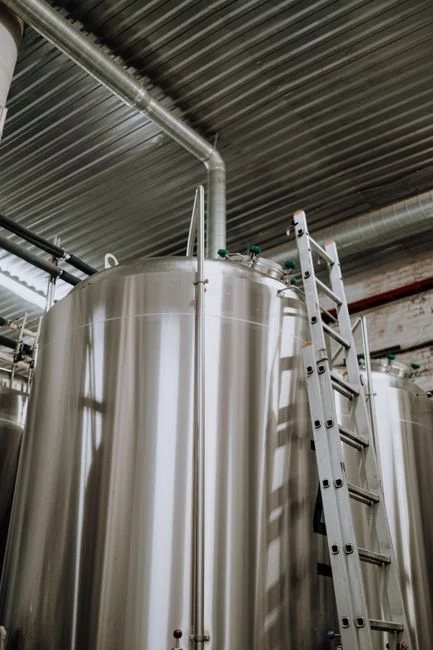
Commissioning should verify that the complete treatment train works with representative wastewater, not merely that individual equipment starts. The plan should define influent and effluent sampling points, flow measurement, instrument calibration, alarm strategy, power-failure response, sludge removal and operating-log requirements.
Test the full parameter list required by the permit and reuse application. The AnnAik case separately tracked COD, BOD5, TSS, ammonia, total nitrogen, total phosphorus, LAS, oil and grease, coliform and pH. Depending on the project, include additional contaminants identified during site characterization. A COD-only demonstration cannot demonstrate effluent quality compliance.
Specify biological startup, membrane or media conditioning, disinfection verification and a performance test using representative wastewater before final handover. For MBR, record membrane flux, cleaning history and differential-pressure trends. For constructed wetlands, document startup and hydraulic distribution. If disinfection is included, confirm the operating status of the relevant UV disinfection system through validated performance evidence.
Agree at contract stage how laboratory results, calibration certificates, operating logs, non-conformance reports and corrective actions will be handed over. These records form the evidence trail for demonstrating compliance to the relevant Cambodian authority and the facility permit.
Frequently Asked Questions
What is the indicative cost of an effluent treatment plant in Sihanoukville?
HydropureWater’s 2026 guide cites broad capital ranges of US$50–300/m³ for municipal projects and US$100–500/m³ for industrial projects, but these are not quotations. Request itemized pricing for equipment, civil works, installation, utilities, commissioning, sludge handling, training, spares and annual O&M. The decentralized sewage treatment options in Cambodia provides budget context.
Should a hotel or factory choose WSZ, MBR or DAF?
Use WSZ for a compact biological treatment package where its documented duty matches the wastewater. Use MBR where compactness, membrane separation or a defined high-quality reuse application justifies added membrane controls. Use DAF upstream where recoverable oil, grease, FOG, solids or colloids require removal. For a factory with variable batch discharges, obtain source testing before selecting a train.
How should an effluent treatment plant be sized for Sihanoukville?
Size from measured average and peak flows, seasonal records, wastewater loads and future expansion—not daily water consumption alone. The AnnAik Ochheuteal Beach case used 10 m³/day for human sewage and kitchen wastewater, but that value applies only to its documented case. Require the supplier to state design flow, peak flow, hydraulic retention, sludge production and standby provisions.
Which documents should a wastewater equipment supplier provide?
Require a process flow diagram, duty basis, guaranteed effluent schedule, equipment and civil drawings, electrical load list, control philosophy, O&M manual, commissioning protocol and comparable performance evidence. Also request the manufacturing and shipping schedule, installation responsibility, training scope, spare-parts plan and local technical-support arrangements. The Cambodia hotel and resort wastewater treatment guide can support this supplier brief.
Which permit limits apply to industrial effluent in Sihanoukville?
HydropureWater’s 2026 guide cites Cambodia’s Sub-Decree on Water Pollution Control (2015) as setting 100 mg/L COD and 50 mg/L TSS for industrial discharges. It also reports a municipal COD limit of 120 mg/L and an illustrative 80 mg/L COD benchmark for potentially stricter port-area requirements. The project’s current permit and written authority confirmation must determine the applicable limit.