What DAF capacity can be estimated for BMW's Malaysian plant
No supplied public source establishes the actual dissolved air flotation capacity required for BMW's new auto plant in Malaysia. A defensible planning estimate can nevertheless be developed: at 1,200 vehicles/day, 3.25 m³ of wastewater per vehicle, and a 1.5 peak factor, the calculated design flow is 244 m³/h. That is an engineering benchmark—not BMW's confirmed requirement. Final sizing requires measured automotive wastewater flows, paint-shop dump schedules, TSS/FOG data, hydraulic loading, retention time, recycle duty, and the applicable Malaysian discharge or reuse limits.
The BMW automotive-plant DAF capacity methodology explicitly separates a conditional estimate from a plant specification. Its production rate, wastewater intensity and peak-flow factor are engineering assumptions; they are not VDA, VDI, published BMW, or Malaysian site data.
The research also does not disclose BMW Malaysia's production schedule, area-by-area water balance, wastewater-flow record, DAF nameplate capacity, discharge permit, or internal reuse criterion. Those gaps prevent an exact capacity claim. They also prevent a defensible decision on whether paint-shop wastewater should be treated alone or combined with assembly drainage, cooling blowdown, domestic wastewater, and stormwater.
For procurement, treat 244 m³/h as the auditable planning number. Convert it into a purchasable DAF specification only after replacing the assumptions with production schedules, measured flows, wastewater characterization, treatment objectives, and verified equalization or tank-storage data.
Worked DAF flow calculation and sensitivity range
The worked calculation produces a 244 m³/h design flow from a 162.5 m³/h planning-average flow and a 1.5 peak factor. Each input must remain visible because production volume, wastewater intensity, and peak timing can change the answer independently.
- Average wastewater flow: 1,200 vehicles/day × 3.25 m³/vehicle = 3,900 m³/day, equivalent to 162.5 m³/h.
- Peak design flow: 162.5 m³/h × 1.5 = 243.75 m³/h, rounded to 244 m³/h.
- Sensitivity case: 2,000 vehicles/day × 3.25 m³/vehicle × 24 hours/day × 1.5 = 400 m³/h.
| Planning input or case | Benchmark value | Result | Evidence status |
|---|---|---|---|
| Base production | 1,200 vehicles/day | 162.5 m³/h average | Assumption in HydropureWater's 2026 Germany-plant methodology |
| Wastewater intensity | 2.5–4.0 m³/vehicle; 3.25 m³/vehicle midpoint | 162.5 m³/h at midpoint | Engineering benchmark, not BMW operating data |
| Paint-shop peak factor | 1.5 | 244 m³/h | Planning assumption requiring challenge |
| Higher-production sensitivity | 2,000 vehicles/day | 400 m³/h | Conditional case retaining the same intensity and peak factor |
Do not apply the peak factor without constructing an hourly timeline. Place each tank dump, rinse discharge and continuous process stream on that timeline, then add stormwater events and any cooling or domestic flows that will actually enter the selected DAF. The BMW automotive-plant DAF capacity methodology specifically requires production schedules, area-by-area water balances, runoff coefficients, tank-dump frequencies, and a 15-minute flow record.
Equalization storage can lower the equipment peak only after its usable volume, turnover time, control response and emergency capacity have been verified. Otherwise, a nominal storage tank does not justify deleting the raw peak from the calculation.
Which wastewater streams drive the Malaysian DAF duty
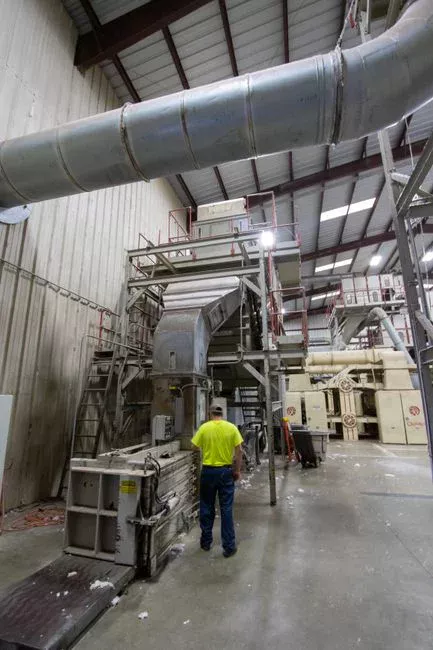
DAF duty should be built stream by stream because automotive wastewater can combine high-volume dilute drainage with concentrated, intermittent discharges. The Malaysia JORSUN source supports the technical relevance of lamella-plate DAF with micro-bubbles and integrated flocculation for oils, suspended solids, COD/BOD and FOG, but it supplies no BMW Malaysia flow or loading data and therefore cannot size the plant.
| Wastewater stream | Planning question | DAF implication |
|---|---|---|
| Paint-shop, phosphate-rinse and electrocoat wastewater | What are the tank-dump volumes, frequencies, pH, FOG, phosphate and COD? | Likely controls the intermittent peak and may require equalization and chemical conditioning. |
| Assembly and leak-test drainage | Which drains contain oil, suspended solids or sealants, and are they continuous or batch discharges? | Determine whether this stream enters the same DAF and how its load overlaps the paint-shop peak. |
| Domestic wastewater | What flow and organic load will enter the plant? | Do not combine it with automotive DAF sizing without an explicit treatment-train decision. |
| Cooling blowdown | What are its flow, chemistry, temperature and reuse route? | Evaluate separately because its flow and required water quality may differ from flotation duties. |
| Stormwater | Which areas are contaminated, and which events are permitted to enter the treatment plant? | Apply an event-based hydraulic profile rather than including all rainfall by default. |
Draftset's industrial-treatment source describes DAF as a clarification step that removes remaining FOG and suspended material after earlier treatment stages, with coagulation and flocculation used to create particles capable of attaching to bubbles. It also notes that stable colloids require charge neutralization and formation of larger cohesive flocs. Accordingly, the HydropureWater DAF system should be selected for the characterized duty rather than for combined plant flow alone.
Metals, dense particles, stable emulsions and very high-strength streams may require pretreatment, separate handling, or another solids-removal route. Stream segregation must follow sampling; it cannot be decided from an automotive label.
Four variables that turn flow into a DAF design
Nominal throughput does not establish flotation performance because flotation area, solids loading, separation time and recycle performance are selected together. The DAF engineering specifications and sizing guide identifies hydraulic loading rate, air-to-solids ratio, retention time and recycle ratio as the four coupled variables.
- Hydraulic loading rate: The guide lists 0.5–1.5 m³/m²·h for general industrial wastewater and 1.0–2.0 m³/m²·h for high-solids applications as sizing benchmarks. The selected rate establishes required flotation surface area.
- Air-to-solids ratio: Calculate TSS mass loading as Q in m³/h × C in mg/L × 1,000 = kg/h. Multiply that load by the selected air-to-solids ratio to obtain required air mass rate. The guide's benchmarks are 0.5–1.5% for low TSS, 1–3% for medium TSS and 2–4% for high TSS; jar or pilot testing must select the value.
- Retention time: Krofta technical literature reviewed by the guide identifies approximately 3-minute circular Supracell configurations and 20–30-minute rectangular Multifloat configurations. The guide also gives 5–15 minutes as a lamella-clarification benchmark.
- Recycle ratio: Krofta reports air saturation at 2–3 bar with an 8–12% recycle rate and gives a minimum cross-flow velocity of 0.6 m/s in the guide's engineering checks. These are comparison checks, not universal nameplate guarantees.
| Design variable | Calculation or benchmark | What the supplier must demonstrate |
|---|---|---|
| Hydraulic loading rate | 0.5–1.5 m³/m²·h general industrial benchmark; 1.0–2.0 m³/m²·h high-solids benchmark | Active flotation area selected for the peak flow and selected loading rate |
| Air-to-solids ratio | 0.5–1.5%, 1–3% and 2–4% for low, medium and high TSS benchmarks | TSS mass load, selected ratio, air mass rate, saturation conditions and compressor duty |
| Retention and geometry | 20–30 minutes for rectangular DAF; 5–15 minutes for lamella clarification | Usable separation volume, flotation surface area and hydraulic profile |
| Recycle and cross-flow | 8–12% recycle at 2–3 bar; 0.6 m/s minimum cross-flow check | Recycle pump, saturated-pressure basis, flow controls and velocity verification |
These figures come from the supplied HydropureWater 2026 guide and Krofta literature reviewed by it. Jar tests, site sampling and pilot data must replace generic benchmarks. The flotation area, recycle pump, compressor, retention volume and flow-distribution geometry must therefore appear in one coherent design rather than as separate catalogue selections.
Matching the estimate to equipment configuration
The 244 m³/h estimate sits near the upper end of HydropureWater's 4–300 m³/h catalogue range, placing it in the models 11–13 selection bracket. That is an initial envelope only: active area, retention time, recycle duty, air capacity and hydraulic performance still have to fit the characterized wastewater.
| Flow case | Configuration decision | Procurement basis |
|---|---|---|
| 244 m³/h planning estimate | Assess an upper standard model; verify whether one train or a parallel arrangement provides better balance and availability. | Model selection remains conditional on area, retention, recycle and air-duty calculations. |
| 400 m³/h sensitivity case | It exceeds the 300 m³/h catalogue limit. HydropureWater's 2026 sizing guide prefers parallel standard trains above 300 m³/h when characterization permits hydraulic balancing; a custom rectangular arrangement remains an option. | Compare independently metered parallel trains against a custom layout using the same wastewater and performance criteria. |
For parallel trains, request each train's design flow, active flotation area, recycle rate, manifold-loss calculation, metering, control sequence and duty/standby philosophy. Unequal inlet distribution can overload one train while another remains underloaded, so a single combined nominal flow is insufficient.
Float removal and sludge treatment also affect the complete package. HydropureWater's plate-and-frame filter-press catalogue covers filtration areas from 1–500 m², but the final press area must follow measured float-solids volume, solids concentration and dewatering results; the filter press cannot be sized from the DAF flow alone. Chemical conditioning should be defined from jar-test results using the PLC-controlled automatic chemical dosing skid and the measured flow and dose envelope.
Data and performance terms required in the RFQ
An approvable RFQ must convert the planning calculation into guaranteed flow, treatment performance and priced system boundaries. Ask the supplier to identify which information remains missing rather than filling gaps with generic automotive assumptions.
- Design basis: Provide production schedules, area-by-area water balances, runoff coefficients, tank-dump frequencies, equalization data and a 15-minute flow record.
- Wastewater characterization: Submit measured TSS, FOG, phosphate, COD, pH, temperature and oil-and-grease emulsion data for each relevant stream, including composite and event-based samples.
- Process design: Require guaranteed design flow, selected hydraulic loading rate, retention time, air-to-solids calculation, recycle duty and the proposed flotation area.
- Performance and compliance: State the test basis, performance guarantee, Malaysian permit or indirect-discharge conditions, BMW reuse criteria, sampling plan and treatment-chain boundary.
- Commercial scope: Price equipment, civil works, installation, commissioning, controls, chemical dosing, recycle and compressed-air systems, float handling and sludge dewatering separately.
| RFQ item | Required content | Acceptance evidence |
|---|---|---|
| Guaranteed design flow | Base flow and agreed peak basis | Capacity tied to the submitted site flow record and selected configuration |
| DAF process calculation | Hydraulic loading, retention, A/S ratio, recycle ratio, air rate and active area | Calculation linked to measured wastewater characteristics and selected utilities |
| Performance guarantee | Krofta-reported benchmarks of 80–95% TSS removal, 80–99% FOG removal and clarified-water TSS commonly below 20 mg/L with proper conditioning | These are reported process ranges, not evidence of Malaysian permit compliance; require an agreed guarantee and test protocol. |
| Parallel-train balance | Flow, area, recycle, manifold losses, metering, controls and standby philosophy | Hydraulic calculation demonstrating acceptable distribution. |
| Cost boundaries | Separate equipment, civil, installation, commissioning, controls, chemicals, air and recycle, float handling and dewatering | Comparable quotations with exclusions and assumptions stated. |
The Krofta performance ranges were reviewed in the supplied HydropureWater 2026 research. The supplied sources contain no automotive-specific Malaysian discharge limits, BMW Malaysia reuse specification or site permit. Request those documents; do not infer compliance from a 244 m³/h nameplate or from a supplier's generic removal benchmark.
Frequently Asked Questions
What DAF capacity does BMW's new Malaysian auto plant need?
Use 244 m³/h as a conditional planning benchmark, not a confirmed plant requirement. Final selection must replace the assumed production rate, wastewater intensity and peak factor with production schedules, measured flows, tank-dump timing, wastewater characterization and treatment objectives.
How much does a DAF system for this application cost?
The supplied research provides no defensible 2026 price for a BMW Malaysia DAF package. Request separate budgetary prices for the DAF, recycle and air systems, controls, chemical dosing, float handling, sludge dewatering, civil works, installation and commissioning so exclusions can be compared directly.
How should a DAF supplier be evaluated?
Require a guaranteed flow basis, hydraulic loading calculation, retention time, A/S calculation, recycle duty, performance guarantee and demonstrated flow-balancing method for parallel trains. Also request the proposed test protocol and evidence that the equipment addresses the applicable discharge or reuse criteria.
Can Malaysian compliance be guaranteed from capacity alone?
No. Capacity establishes hydraulic treatment opportunity, not effluent quality. Obtain the Malaysian permit, indirect-discharge requirements, BMW internal reuse criteria and sampling plan, then test the characterized wastewater against those conditions.
Is a rental or skid-mounted DAF pilot worthwhile?
Yes, where temporary duty, bypass or commissioning needs make it practical. The Krofta literature reviewed in the HydropureWater 2026 research describes containerized or skid-mounted rental DAFs for pilots, temporary bypasses and commissioning, where they can collect flow data and optimize chemical dosing before final selection.
Related Equipment
- HydropureWater DAF system — specifications, capacity range, and technical data