
What Helsinki Manufacturers Must Control Before Designing Treatment
An Industrial Wastewater Agreement is a legal prerequisite for facilities generating non-domestic wastewater in Helsinki, according to HydropureWater’s 2026 Helsinki article. It defines pollutant limits, self-monitoring and laboratory reporting, so design should begin with the site’s current agreement rather than a generic equipment catalogue. HSY and the municipality must then confirm the applicable conditions.
The characterization package should cover average and peak flow; COD and BOD; TOC; TSS; FOG; pH; nutrients; metals; temperature; toxicity; and variability within each stream. These data determine whether the project needs source control, pretreatment for sewer acceptance or a complete treatment train.
Streams should remain separate until their compatibility and required removal steps are understood. HELCOM Recommendation 23/11, adopted on 6 March 2002, calls for separating process water from cooling water, pretreating hazardous-substance streams separately, reusing process water and recovering materials where practical. It also prohibits mixing treated process water with cooling water merely to comply with effluent limits.
The same HELCOM wastewater-discharge requirements emphasize minimizing wastewater volume and pollutant load through source control. A Helsinki design should therefore test whether production cleaning, material recovery or hazardous-substance substitution can reduce the load before equipment is purchased.
The HSY Discharge Target That Drives the Treatment Choice
Centralized HSY discharge limits reported in HydropureWater’s 2026 Helsinki article are COD at or below 125 mg/L and TSS at or below 35 mg/L. These are sewer-acceptance targets, not raw influent design criteria: treatment equipment must still handle the incoming flow, COD mass loading, hydraulic variability and reliability required by the Industrial Wastewater Agreement.
The same article reports centralized sewer fees of €1.20–€2.50/m³ and surcharges of €3.50–€10.00/m³ when COD exceeds 500 mg/L, based on the HSY 2024 fee schedule. Those figures make load reduction an economic decision as well as a permitting requirement, particularly where a stable discharge has a high COD mass load.
However, the article’s fee references are not a substitute for a current quotation. Buyers should confirm limits, surcharge formulas, sampling requirements and permit conditions directly with HSY and the municipality. The comparison between pretreatment and sewer-acceptance limits illustrates why discharge conditions must be established before equipment is configured.
Once the target is known, calculate both daily pollutant mass and the treatment duty between normal and peak operation. A dilute discharge can satisfy a concentration limit while still imposing a substantial load on the municipal biological process; the permit and agreed surcharge calculation must control the final decision.
A Staged Treatment Train for High-COD Trade Waste
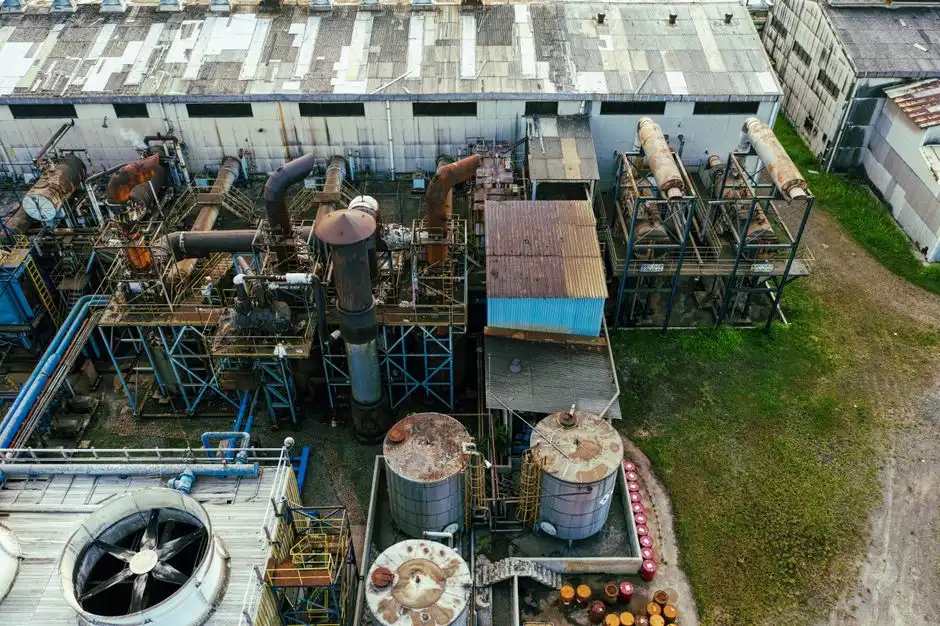
A defensible high-COD treatment train normally progresses from stream segregation and equalization through solids and FOG removal, biological COD reduction, final separation where required, chemical control and sludge handling. Each operation should have a defined contaminant-removal duty rather than being selected from a generic flow range.
- Segregate and equalize. Keep incompatible process streams separate until characterization establishes their combined effect. Equalize variable flows and loads before biological treatment.
- Remove screenings, solids and FOG. Physical pretreatment and dissolved air flotation protect downstream equipment and biological organisms from material that should not enter the biological stage.
- Reduce biodegradable dissolved COD. Biological treatment addresses dissolved organics that can be metabolized under controlled conditions.
- Separate solids if required. An MBR combines biological treatment with membrane separation where compact construction or membrane-quality separation is needed.
- Control chemicals and residual solids. pH adjustment, metal precipitation where necessary, disinfection where required and sludge dewatering complete the operating and residuals plan.
DAF is appropriate where characterization shows significant FOG, oil, suspended solids or colloidal material. HydropureWater’s 2026 catalogue lists 13 DAF models with flow envelopes from 4 to 300 m³/h and automatic micro-bubble skimming; these are catalogue limits, not a Helsinki equipment selection. An industrial DAF pretreatment system primarily protects downstream biological systems. It should not be treated as complete treatment for high dissolved COD without process-specific evidence.
Biological treatment is the appropriate next stage when the remaining COD is biodegradable and the process is not inhibitory. An integrated MBR wastewater treatment system is relevant where membrane-quality separation, a compact footprint or reuse is required. HydropureWater’s 2026 catalogue gives an MBR envelope of 10–2,000 m³/day and filtration below 1 μm; the MBR versus conventional activated-sludge comparison explains the design distinction.
Pharmaceutical effluent requires a specific assessment. The Helsinki and SYKE research reported by the University of Helsinki found oxidation, membrane filtration and adsorption suitable for pharmaceutical removal. Reverse osmosis was the most effective tested option but also the most expensive in investment and operating costs, while combinations of methods could be more cost-effective.
| Process stage | Principal contaminant addressed | Design basis |
|---|---|---|
| Segregation and equalization | Flow and load variability; incompatible contaminants | Stream inventory, peak flow, variation and compatibility |
| Screening and physical pretreatment | Screenings and removable solids | Solids character and protected equipment |
| DAF | FOG, oil, suspended and colloidal matter | FOG, TSS, peak flow and temperature-corrected hydraulic duty |
| Biological treatment | Biodegradable dissolved COD | COD and BOD mass loading, nutrients, temperature and inhibition |
| Membrane separation | Residual solids and fine particulates | Hydraulic and organic loading, membrane area and effluent target |
| Chemical control and sludge treatment | pH, precipitated pollutants and residual solids | Permit targets, chemical demand and disposal route |
Sludge generation belongs in the process design from the outset. DAF skum and biological or chemical sludge require a quantified dewatering and disposal route; otherwise expected operating savings can be undermined by handling costs.
Which Treatment Route Fits the Wastewater?
Measured wastewater characteristics should determine the route: high COD concentration alone does not justify an MBR. Separate the decision according to FOG, soluble biodegradability, inhibition and the required quality of the final discharge.
| Wastewater case | Preferred process route | Key decision |
|---|---|---|
| High FOG and solids with moderate soluble COD | Equalization, DAF, biological treatment and sludge dewatering | Use DAF to protect biological treatment; confirm soluble COD remains biodegradable |
| Soluble biodegradable COD | Expanded biological capacity or an MBR train | Compare footprint, membrane maintenance, effluent quality and reuse value |
| Non-biodegradable or inhibitory COD | Source substitution or removal, toxicity assessment and specialist process design | Do not assume biological treatment will meet the COD target |
| Pharmaceutical or discharge-sensitive effluent | Assessment of oxidation, adsorption and membrane processes | Match treatment to the compound and required residual quality |
For high-FOG streams, DAF followed by biological treatment is defensible when the soluble COD is biodegradable. For predominantly soluble biodegradable waste, increased biological capacity may be sufficient; an MBR becomes more relevant when membrane-quality separation, compact construction or reuse has measurable value.
Non-biodegradable or inhibitory COD requires source substitution, selective removal, toxicity testing and specialist design before a biological route is committed. The pharmaceutical study supports combinations rather than assuming one technology solves every case.
HydropureWater’s 2026 catalogue claims an MBR can occupy 60% less footprint than a conventional activated-sludge system. That is a catalogue comparison, not a guaranteed Helsinki outcome: site layout, basin depth, transfer equipment, maintenance access and pretreatment requirements must be evaluated separately. A DAF engineering guide for oily wastewater and the MBR assessment for petroleum wastewater illustrate why contaminant-specific review precedes selection.
How to Size DAF and MBR Equipment Without Guessing
Equipment sizing begins with measured mass and hydraulic loads, not the COD limit at the sewer. For DAF, request hourly peak flow, FOG and TSS characterization, the required removal duty and temperature-corrected hydraulic-loading data. HydropureWater’s 2026 catalogue range is 4–300 m³/h across 13 standard models, but that envelope only provides an initial screen.
For an MBR, request average and peak flow, influent COD, BOD, TSS, FOG, temperature, nutrient requirements, biodegradability and the required effluent quality. HydropureWater’s catalogue envelope is 10–2,000 m³/day. The data-driven DAF capacity calculation shows the type of load calculation needed before comparing catalog units.
Require each supplier to state the design flow, peak-factor basis, hydraulic and organic loading rates, membrane area, aeration demand, sludge production and expected cleaning frequency. DAF and MBR capacities serve different design questions: DAF is primarily hydraulic and contaminant-removal equipment, while an MBR must satisfy hydraulic, organic, solids and membrane-fouling constraints together.
The supplier should also identify the pretreatment duty assumed upstream. If FOG or grit is left to the MBR, the biological and membrane systems will not be evaluated on the wastewater they will actually receive. Temperature, equalization and chemical control must be included in the operating envelope.
HydropureWater’s 2026 Helsinki article highlights monitoring of flow, pH and oxygen concentration and the need for precise chemical control. These are design inputs, not a substitute for the site’s permit: the final monitoring plan, sampling regime and reporting frequency must follow the current Industrial Wastewater Agreement and HSY requirements.
When On-Site Treatment Is the Better Business Case
On-site MBR investment is significant: HydropureWater reports capital cost of €500,000–€2,000,000 for a 50–200 m³/day facility. Its 2026 Helsinki article states that total cost of ownership generally favours on-site treatment when raw COD exceeds 1,000 mg/L, although this is an article finding rather than a universal Helsinki rule.
The cited worked example uses a 200 m³/day discharge with COD of 2,500 mg/L. HydropureWater reports annual sewer fees and surcharges exceeding €400,000, an on-site saving of approximately €250,000 per year and payback under three years. These values are scenario-specific and must be recalculated with current HSY tariffs, measured flow, load and permit conditions.
| Economic item | Evidence available | Buyer action |
|---|---|---|
| On-site MBR capital cost | €500,000–€2,000,000 for 50–200 m³/day, reported by HydropureWater in 2026 | Request a site-specific quotation and scope |
| Sewer fees and surcharges | €1.20–€2.50/m³ and €3.50–€10.00/m³ above 500 mg/L COD, based on HSY’s 2024 fee schedule as reported in 2026 | Confirm current tariffs and surcharge formula |
| Worked high-COD case | 200 m³/day at 2,500 mg/L COD; more than €400,000 annual fees and surcharges, approximately €250,000 annual saving and payback under three years, reported by HydropureWater in 2026 | Rebuild the calculation with current site data |
| Other operating costs | The supplied research does not separately quantify power, chemicals, membrane replacement, sludge handling, monitoring, maintenance, downtime or inflation | Price each item and include it in total cost of ownership |
Compare complete treatment routes rather than sewer fees alone. Include power, chemicals, membrane replacement, sludge dewatering and disposal, monitoring, maintenance, downtime and inflation. Also assign value to reuse only where the site has a confirmed demand and quality requirement.
Implementation Risks That Cause Permit and Cost Overruns
Stream variability can overwhelm equalization and turn a nominal design flow into an overload. Require continuous or logged flow measurement, define the peak-factor basis and base equipment selection on representative operating data.
High COD is not automatically biodegradable. Require BOD-to-COD characterization, toxicity testing and inhibition assessment before assigning biological loading rates. Without these inputs, the system may fail to meet the discharge target while still generating substantial sludge.
FOG also needs explicit management. If characterization supports significant FOG loading, include DAF or another removal step; allowing oil and grease to reach biological treatment can impair sludge properties and destabilize the process.
Residual solids must be included in the investment decision. Specify sludge generation, dewatering performance, storage, transport and the permitted disposal route. A low-cost treatment train with an undefined sludge solution is not a complete proposal.
Finally, dilution is not source control. HELCOM Recommendation 23/11 prohibits mixing treated process water with cooling water for the purpose of meeting limit values. A source-control approach to metal-bearing wastewater illustrates the technical logic: remove the pollutant and reduce the load rather than conceal its concentration.
Frequently Asked Questions
What does an on-site MBR cost for high-COD treatment in Helsinki?
HydropureWater reports an on-site MBR capital cost of €500,000–€2,000,000 for a 50–200 m³/day facility. Compare that investment with current sewer fees, applicable COD surcharges and avoided operating costs. Before approval, require a quote based on measured flow and load, with power, chemicals, membrane replacement, sludge handling, monitoring, maintenance and downtime included in the total-cost model. The reported range is an article estimate, not a site quotation.
How should a buyer select a wastewater-treatment supplier in Helsinki?
Require a wastewater mass balance, proposed hydraulic and COD-mass load calculations, performance guarantees, monitoring scope, sludge plan, maintenance assumptions and permit-specific compliance evidence. Check whether each guarantee refers to influent conditions, effluent concentration, hydraulic throughput and operating availability. The supplier should also identify assumptions that require site testing, rather than presenting a catalog capacity as a complete Helsinki design.
Should DAF or MBR capacity be used to size a Helsinki installation?
Neither catalog envelope is a substitute for load calculation. DAF screening starts with hourly peak flow, FOG, TSS, temperature and required removal duty; the HydropureWater 2026 catalog range is 4–300 m³/h across 13 models. MBR screening also requires COD and BOD mass loading, nutrients, biodegradability, temperature and effluent quality; the catalog range is 10–2,000 m³/day. Final sizing must also address peak factors, pretreatment and fouling controls.
Why is COD alone insufficient for sewer-discharge compliance?
COD does not show how much flow carries the load, whether the organics are biodegradable, or whether FOG, metals, nutrients, pH or toxicity will impair the receiving system. The current Industrial Wastewater Agreement and HSY requirements govern final acceptance. Use them to establish the concentration, sampling and monitoring conditions, then verify that the proposed treatment train remains effective across the plant’s actual flow and load variation.