
Where a Filter Press Fits in Denim Washing Wastewater Treatment
A filter press for denim washing wastewater normally dewateres sludge generated by upstream treatment; it does not directly remove dissolved dyes, heavy metals or toxic compounds. Conditioned sludge enters the press chambers, liquid passes through filter cloth, and solids form a transportable cake. The 2025 ECORFAN Journal Bolivia systematic review, based on 34 Scopus articles, identifies dyes, heavy metals and toxic compounds among the difficult constituents of denim jeans-washing effluent, so those pollutants must be addressed before dewatering. Conventional recessed chamber presses typically operate to about 7 bar, while membrane presses can use up to 15 bar or more. Generic sources report 30 to 45 percent dry solids for conventional presses and more than 50 percent for membrane presses on favorable sludges.
A denim treatment train should therefore be read in this order:
- Collect the denim laundry effluent and remove screenings and other coarse material.
- Equalize the wastewater and apply upstream processes appropriate to its dye, metal and organic load.
- Generate and collect the resulting textile wastewater sludge.
- Condition the sludge to improve filtration.
- Feed the conditioned sludge to the filter press.
- Discharge the cake for transport or further treatment.
- Return the filtrate to a suitable process location or treat it further.
The upstream liquid-treatment train may include a DAF system for denim washing wastewater or an installed dissolved air flotation unit, but their suitability must be established from plant data rather than assumed.
Filtrate is not automatically equivalent to final effluent. It may contain suspended solids and contaminants released from the sludge, so its destination should follow measurement of solids, COD, color, metals and other relevant parameters. Depending on the results, the route may be headworks return with upstream treatment or a separate filtrate-treatment step.
Characterize the Denim Sludge Before Selecting Equipment
Representative sludge testing is more useful than raw wastewater flow or COD for selecting a filter press because dewaterability depends on the solids entering the chambers. Samples should cover the production and treatment cycle and the blend presented to the press, including any waste-activated-sludge fraction. The reviewed filter-press guidance identifies sludge origin as highly influential and treats waste activated sludge as the most difficult common municipal sludge because of its fine particles, bound water and extracellular polymeric material. A changing blend ratio is therefore a design variable, not an operating detail.
Request a solids mass balance and the following laboratory results:
- Dry-solids concentration and dry-solids production rate.
- Sludge pH and particle-size distribution.
- Viscosity, settleability and filtration-resistance testing.
- Capillary suction time and specific resistance to filtration.
- Conditioner compatibility and an assessment of the resulting cake’s release and filtrate clarity.
The chamber filter press engineering and selection guide identifies capillary suction time and specific resistance to filtration as standard bench tests before equipment selection. Jar tests with candidate conditioners should then be followed by a full-scale trial where feasible.
| Buyer input | Why it affects selection | Required evidence |
|---|---|---|
| Dry-solids concentration and production | Defines the daily solids load and cake quantity. | Representative measurements across operating conditions |
| Particle size, viscosity and settleability | Indicates filtration behavior, floc fragility and feed-pump requirements. | Laboratory analysis of actual blended sludge |
| Capillary suction time | Provides a bench comparison of sludge filterability. | Results before and after conditioning |
| Specific resistance to filtration | Helps characterize resistance and compare operating conditions. | Laboratory filtration test |
| Blend composition | Changes cake solids and cycle performance. | Measured blend ratio and sampling record |
A National Research and Innovation Agency plate-and-frame study tested simulated activated sludge containing CaCO₃ at 1 to 4 percent w/w. Cotton cloth outperformed drill cloth, including 56.00 percent solids-removal efficiency at 4 percent w/w. This was a simulated study, not a denim-specific performance guarantee; it shows why filter-media selection and actual-sludge testing matter.
Match the Press Configuration to the Cake and Labor Strategy
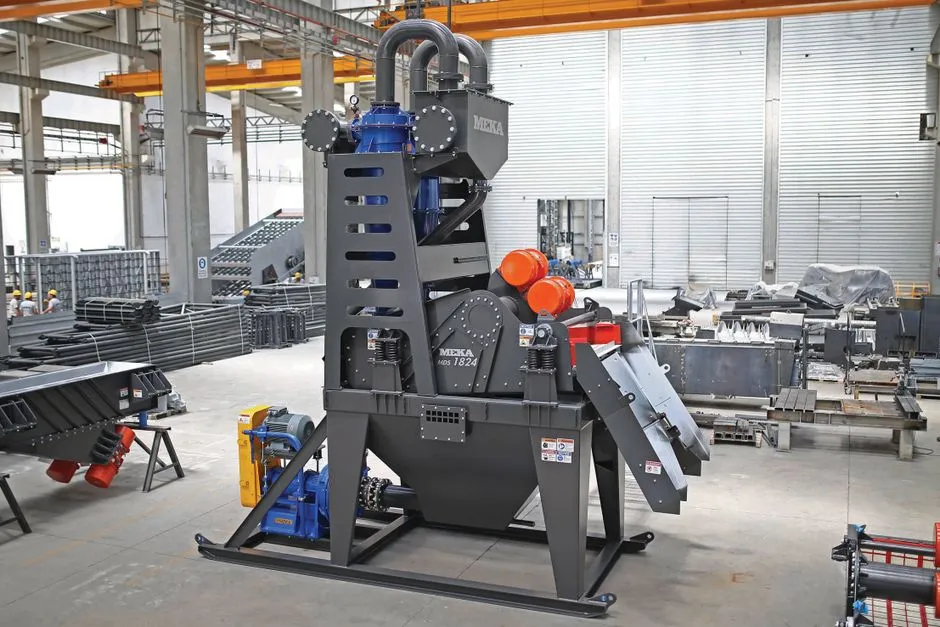
Plate-and-frame, recessed chamber and membrane presses perform the same basic liquid-solid separation but impose different labor and maintenance demands. The selection should begin with the cake required for transport or disposal and the staffing available during each cycle, not with nominal filtration area.
Plate-and-frame presses remain common at smaller installations and where cake washing, controlled cake thickness or manual discharge is important. Recessed chamber presses are the conventional batch option: Water & Wastewater reports typical terminal pressure around 7 bar and cake dry solids of 30 to 45 percent. Membrane squeeze presses add an inflated membrane stage and can operate at up to 15 bar or more; the same source reports more than 50 percent dry solids on favorable sludges. These are planning references rather than guarantees for denim sludge.
Belt presses operate continuously through gravity, wedge and high-pressure roller zones. Their lower labor per tonne is traded against continuous cake solids of 15 to 25 percent and a significant belt-wash and filtrate-return load. A batch press requires operator involvement during feed, squeeze, blowdown and discharge unless automatic cake discharge is included. Membrane presses can reduce wet-cake tonnage, but membrane integrity becomes an important maintenance item.
| Configuration | Operating pattern | Dry-solids reference | Main procurement issue |
|---|---|---|---|
| Plate-and-frame | Batch | No generic value established by the supplied research | Cake washing, thickness control and often manual discharge |
| Recessed chamber | Batch | 30 to 45 percent on favorable sludges | Operator attention for each cycle unless discharge is automated |
| Membrane squeeze | Batch | More than 50 percent on favorable sludges | Higher capital and energy demand; membrane integrity |
| Belt press | Continuous | 15 to 25 percent | Belt washing, tracking, solids capture and return-flow burden |
The source figures above are from Water & Wastewater’s sludge dewatering equipment cost and supplier selection framework. HydropureWater’s verified product catalog lists filtration areas from 1 m² to 500 m² and manual, hydraulic or fully automatic PLC-controlled operation for its plate-and-frame filter press for sludge dewatering. Those are available configurations, not universal performance claims.
Design the Feed, Conditioning and Filtrate-Return System
The press is one element of a conditioned sludge-dewatering system. The system boundary should include a feed pump, pressure control, sludge-conditioning stage, feed tank, filtrate collection or return arrangement and cake-discharge provisions. Omitting conditioning, pressure control or the filtrate route makes the equipment rating incomplete.
Pressure filtration frequently uses lime and ferric chloride because inorganic conditioners can form a rigid, permeable cake that withstands pressure without becoming an impermeable layer. Water & Wastewater reports typical reference dosing of 15 to 30 percent lime and 4 to 8 percent ferric chloride relative to dry solids. These values are sludge-dependent and require confirmation through conditioning trials.
The trade-off is mass. Inorganic conditioners increase the dry solids entering the press and therefore affect wet-cake tonnage. A comparison that reports only filter-cake dry solids, while excluding added conditioner solids, is incomplete. The business case must calculate dry solids after conditioning and the wet cake produced from that adjusted mass.
An automatic chemical dosing system should be selected against the tested conditioner, required dose range and actual control sequence. Where chemical incompatibility or blend changes remain unresolved, the upstream treatment arrangement should be reviewed; a lamella clarifier configuration affects the solids and conditioning properties delivered to the press.
Base the filtrate-return route on measured solids and pollutant concentrations. Do not assume that return to the headworks is acceptable merely because the filtrate is clear. Measure the return flow and its contribution to organic, color, metal and solids loads, then confirm the receiving process has adequate capacity.
Size the Filter Press by Daily Solids and Available Cycle Time
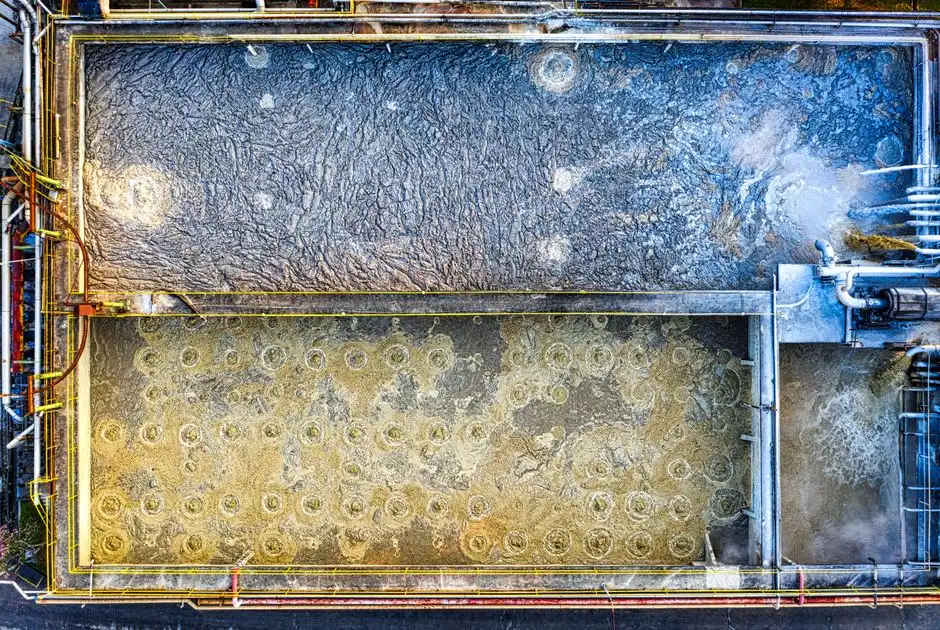
Start with the dry solids generated per operating day. Divide that load by the expected dry-solids yield per cycle and by the number of cycles the plant can complete. Raw wastewater flow alone does not establish filter-press capacity because the press handles concentrated sludge, not the full liquid stream.
Chamber depth directly affects batch volume and cycle time. Water & Wastewater identifies a typical range of 25 to 35 millimeters: deeper chambers accept more slurry but take longer to fill and drain because filtration resistance rises with cake thickness. The same source gives 1.5 to 4 hours as a typical cycle-time planning range, depending on sludge characteristics, conditioning, pressure and the selected endpoint.
| Sizing step | Required calculation or decision | Buyer input |
|---|---|---|
| 1. Establish solids load | Dry solids generated per operating day | Representative sludge mass balance |
| 2. Set yield basis | Expected conditioned dry-solids yield per cycle | Jar test and, where feasible, trial results |
| 3. Determine cycle allowance | Effective cycles per operating day | Feed, fill, wash, squeeze, blowdown and discharge time |
| 4. Select chamber volume | Volume needed for the required solids per cycle | Chamber depth and press geometry |
| 5. Check filtration area | Cycle rate and pressure compatible with the endpoint | Filtration resistance and trial flow data |
| 6. Confirm availability | Scheduled cycles against daily load | Operating hours, cleaning and maintenance allowance |
Do not count feed time alone as production time. Plate shifting, cake washing, blowdown and cake discharge reduce the number of usable cycles. Manual discharge also adds labor; automatic discharge changes the operating model and must be evaluated as a complete package rather than a press accessory.
HydropureWater’s catalog covers filtration areas from 1 m² to 500 m², but final selection still requires the plant’s solids loading, cycle data and operating schedule. Use the supplier’s geometry and cycle data to verify the calculation, not to replace the plant-specific inputs.
Compare Total Cost Instead of Purchase Price Alone
Wet-cake tonnage sent for disposal is usually the principal cost driver because the dry-solids mass stays constant while transport weight falls as cake dryness rises. The equipment purchase price must therefore be compared with disposal savings and the operating costs required to achieve them.
Water & Wastewater provides a worked example: 1,000 kg of dry solids at 18 percent cake solids produces 5.56 tonnes of wet cake, compared with 3.13 tonnes at 32 percent. At the cited $80 per wet tonne, the difference is approximately $71,000 in annual disposal savings before added costs. This is an illustrative source calculation, not a denim-plant quotation or guaranteed saving.
| Cost category | What must be included | Common omission |
|---|---|---|
| Capital and integration | Press, feed pump, dosing, controls, tanks, discharge and filtrate system | Quoting only the press frame |
| Disposal | Wet-cake transport and disposal at the contracted rate | Comparing dry solids rather than wet tonnes |
| Conditioning | Chemical dose, added solids and chemical handling | Ignoring mass added by inorganic conditioners |
| Operations | Electricity, labor, cloth replacement, maintenance and washwater | Comparing headline cake dryness alone |
| Filtrate return | Additional treatment or impact on upstream capacity | Assuming clear filtrate can return without assessment |
A recessed chamber press offers higher batch cake dryness than a belt press but requires more operator attention per cycle. A membrane press can improve dryness further but adds capital complexity, higher-pressure electricity and membrane maintenance. A belt press reduces batch labor and can support continuous operation, but its lower cake solids increase hauling and its washwater return burden. Odor containment must also be compared because an enclosed batch press has a different site and ventilation requirement from a continuous machine.
Build the business case as a sensitivity analysis using actual daily dry solids, disposal price, achievable conditioned cake solids, operating days, chemical dose and filtrate-return treatment. Do not transfer generic performance ranges directly into the financial model. The supplier decision framework provides the useful decision sequence: characterize the sludge, quantify the disposal driver, establish the staffable operating pattern and compare total cost per dry tonne.
Commission, Operate and Troubleshoot the Filter Press
Commissioning should begin with a documented mass and chemistry balance, not with a full press cycle. Before startup, confirm the sludge characterization, tested conditioner, feed-pump capacity, pressure-control settings, filtrate destination, cake-discharge method and emergency operating limits. Verify that the control sequence includes feed, pressure regulation, optional washing, squeeze, blowdown and discharge.
During every cycle, record feed pressure, filtrate flow, cycle duration, cake thickness, cake release and filtrate clarity. A declining filtrate flow is expected as cake resistance increases, but the endpoint should be selected from the measured flow curve rather than from a fixed timer inherited from another sludge.
Use the observations to diagnose the cause:
- If solids capture is poor or the cake is weak, recheck conditioner dose, charge compatibility and sludge blending before increasing pressure.
- If cycles end prematurely or the cloth blinds rapidly, inspect for excess conditioner, unsuitable filter media and ineffective upstream pretreatment.
- If filtrate flow collapses unexpectedly, check feed consistency, pressure control, blinding and conditioning quality.
- If cake release is poor, review filter-cloth selection and the blowdown or discharge sequence.
Trend the operating data against the representative-sample results. Dewaterability is sludge-specific, so catalog information cannot substitute for plant measurements. If the sludge origin, blend or chemical formulation changes, repeat the comparison rather than assuming the original cycle settings remain valid.
Frequently Asked Questions
What size filter press does a denim washing plant need?
Size it from daily dry-solids production, representative sludge properties, expected conditioned cake yield and achievable cycles per operating day. Do not size from raw wastewater flow alone. Require the supplier to show that the selected chamber depth and filtration area can process the calculated solids load within the plant’s available cycle time.
Is a filter press enough to treat denim washing wastewater?
No. A filter press is primarily a sludge-dewatering unit. Upstream treatment must address the relevant dye, metal, chemical and organic load identified in the denim wastewater, while the filtrate needs an approved return or further-treatment route based on measured pollutant concentrations.
How much does a denim wastewater filter press cost?
The supplied research contains no universal equipment price. Request a quotation covering filtration area, plate-and-frame or membrane configuration, metallurgy, automation, feed pump, chemical dosing, controls, cake discharge and site integration. For the budget case, use the reviewed disposal mechanism—wet-cake reduction—but subtract added conditioner mass, electricity, labor, cloth replacement, maintenance and filtrate-return costs.
Should a buyer request a pilot test before purchasing a filter press?
Yes. The reviewed guidance states that sludge origin is highly influential and recommends jar testing followed by a full-scale trial where feasible. Require the supplier to demonstrate cake solids, cycle duration, filtrate clarity, cake release and conditioner consumption on actual denim-plant sludge under the proposed operating sequence.
Which filter press configuration produces the driest cake?
Membrane squeeze presses can exceed 50 percent dry solids on favorable sludges, compared with 30 to 45 percent for conventional recessed chamber presses, according to Water & Wastewater. That advantage must be tested on actual sludge and compared with membrane maintenance, conditioning, energy use and capital cost; belt presses are lower at 15 to 25 percent cake solids but provide a different continuous operating and labor model.