What Treatment System Does a Hotel or Resort in Panama Need?
Hotel resort wastewater treatment in Panama requires a property-specific train selected after the wastewater streams, final destination, reuse goals, site constraints, and treatment objectives are defined. A packaged biological plant can combine anoxic and aerobic treatment, sedimentation, and disinfection in a buried unit, while MBR is appropriate where compact footprint and high-quality effluent are priorities; grease, solids, or industrial flows may need separate pretreatment. Panama’s capital-city plant shows the national importance of biological treatment, collectors, pumping stations, and sewer connections, but it is not a resort design template. Current discharge limits, sewer-acceptance rules, reuse approvals, groundwater restrictions, and prices must therefore be confirmed for the specific property.
The correct sequence is to identify the wastewater streams, establish where water will go, determine whether reclaimed water will be reused, check the available space and installation conditions, and only then compare equipment. Domestic sewage, restaurant grease, laundry effluent, pool backwash, cooling-water blowdown, cleaning chemicals, and septic-sludge receiving streams should not be assumed to have the same treatment requirements. A comparison of decentralized, package, and MBR sewage treatment systems provides useful process context, while this packaged sewage treatment plant selection guide shows why the flow and site basis must precede model selection.
The capital-city example provides infrastructure context, not a decentralized resort specification. The supplied research does not establish current Panama-specific discharge limits, sewer-acceptance rules, reuse approvals, groundwater-risk zones, or project costs. A resort engineer should obtain those requirements from the relevant authority and a qualified local professional before issuing an equipment enquiry.
Panama's Wastewater Context and What the Capital-City Plant Shows
The Panama City wastewater plant has a stated capacity of 238,000 m³/day and treats effluent associated with one million city inhabitants, according to the SUEZ water handbook.
In September 2009, SUEZ signed a contract with Panama’s Ministry of Health to design, build, and operate for four years the capital city’s first urban wastewater treatment plant. The project was delivered in consortium with Odebrecht and formed part of a broader environmental program initiated around the turn of the millennium that also included wastewater collectors, pumping stations, and connecting sewers. SUEZ describes biological treatment and sludge digestion at the plant, with cogeneration and heat recovery intended to address energy costs.
These features demonstrate that Panama’s metropolitan wastewater strategy combines biological treatment with managed solids and energy considerations. They do not establish the required process, footprint, or equipment capacity for an individual resort. The handbook also notes that the facility was located in a seaside mangrove area and designed to integrate with its surroundings, confirming that siting and environmental constraints are part of wastewater infrastructure design rather than afterthoughts.
| Capital-city plant fact | Documented scope | Implication for a resort |
|---|---|---|
| Treatment capacity | 238,000 m³/day | Metropolitan context only; it is not a property-level design flow. |
| Population served | Effluent associated with one million city inhabitants | A resort population factor should come from project-specific operating records. |
| Core treatment | Biological treatment and sludge digestion | A decentralized system must define its own solids-management route. |
| Associated infrastructure | Collectors, pumping stations, and connecting sewers | A remote property may require a complete collection and pumping arrangement. |
| Energy features | Cogeneration and heat recovery | Energy demand should be evaluated separately for each proposed train. |
Map the Wastewater Before Choosing Equipment
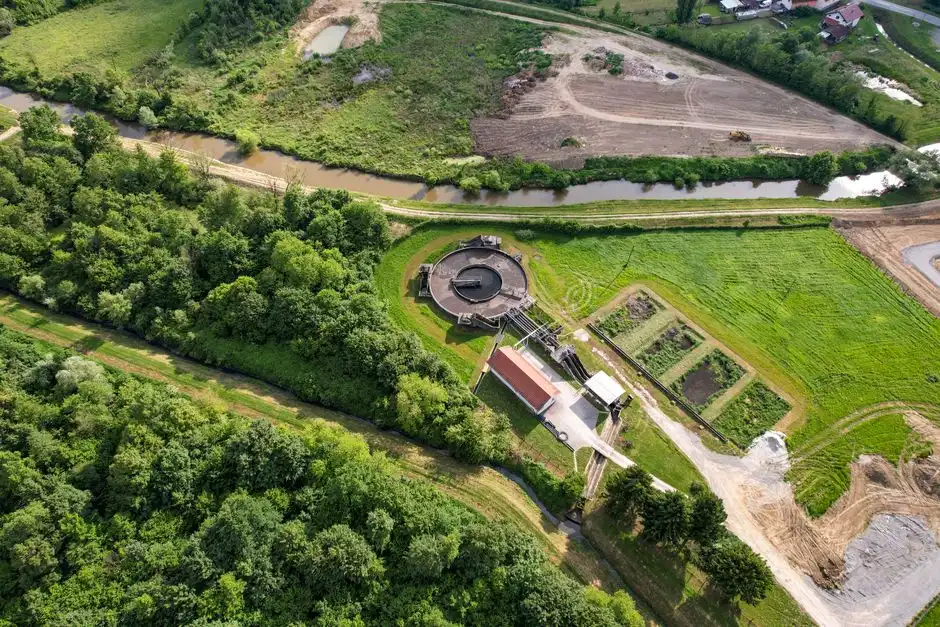
A resort wastewater inventory must separate continuous domestic sewage from episodic and non-sewage streams because each stream has a different contaminant load, flow pattern, and treatment route.
Build the inventory as a stream-by-stream mass balance rather than a single “sewage flow” estimate. The property should provide representative flow and wastewater data covering daily and peak flows, seasonal occupancy, wastewater characteristics, and the intended reuse or discharge route. For every stream, record whether it is continuous, seasonal, intermittent, or shock-loaded. Hotel occupancy changes and short-duration events can affect both hydraulic and organic loading, so an average flow alone is not a defensible sizing basis.
The map should continue from collection through treatment to final use or discharge. It should identify available footprint, burial depth, maintenance access, power supply, odor constraints, and proximity to sensitive areas. Separate foul drains from grease, laundry, pool, cooling, process, and chemical streams where practical; otherwise document how an accidental discharge or bypass would affect the biological process.
Do not calculate a final design flow or pollutant load without project-specific records. The supplied research contains no occupancy-based conversion factors, Panama hotel wastewater ranges, or resort flow measurements. Before requesting quotations, the buyer should collect metering data, operating occupancy and event records, laboratory results, chemical inventories, drainage plans, and the intended reuse or discharge pathway. A facility-specific limits and treatment-basis review illustrates why the receiving route and applicable requirements must be established before equipment is fixed.
| Input to collect | Evidence needed | Decision affected |
|---|---|---|
| Hydraulic flow | Representative daily flow, peak flow, seasonal occupancy, and event-driven flows | Treatment capacity, equalization, pumps, and collection design |
| Wastewater characteristics | Representative laboratory data for the contaminants relevant to the proposed process | Biological loading, pretreatment, sludge production, and treatment guarantees |
| Stream behavior | Continuous, seasonal, intermittent, or shock-loaded classification | Equalization, hydraulic response, and process resilience |
| Final route | Sewer, surface-water discharge, irrigation, toilet flushing, or another approved reuse | Treatment target, disinfection, monitoring, and approval scope |
| Site constraints | Footprint, burial depth, access, power, odor, and sensitive-area distances | Package layout, installation method, maintenance, and odor control |
Compare Package Biological Treatment, MBR, and Pretreatment
The supplied equipment catalogue distinguishes a buried package biological plant from an MBR configuration, while DAF, mechanical screening, and disinfection address specific stream or effluent requirements rather than replacing biological treatment.
The underground package sewage treatment plant combines anoxic/aerobic biological contact oxidation, sedimentation, and disinfection in one buried package unit. Its catalog capacity is 1–80 m³/h, and hotel applications are identified as intended uses. It is fully automated and specified as requiring no operator; it can be installed below grade with landscaping above or mounted on a trailer for mobile deployment. These are catalog statements from the supplier, not project-specific performance guarantees.
The MBR membrane bioreactor system combines activated sludge treatment with submerged PVDF membrane filtration. The supplier describes its effluent as near-reuse-quality at filtration below 1 μm, states a 60% smaller footprint than conventional systems, and gives a catalog capacity of 10–2,000 m³/day. Those specifications support an initial technology screen, but the selected configuration still requires a flow and wastewater design basis.
Use dissolved-air flotation conditionally when suspended solids, FOG, oil and grease, or colloidal matter warrant it. The supplied catalogue covers 4–300 m³/h across 13 DAF models. Use rotary mechanical screening when incoming wastewater contains rags, plastics, fibrous debris, or other solids that could damage pumps or interfere with biological treatment. For disinfection, the catalogue lists chlorine dioxide generators, UV sterilizers, and ozone systems, but the research does not establish which method Panama will approve for a particular reuse route.
The MBR versus conventional activated-sludge comparison is useful for understanding process differences, while the packaged sewage treatment plant selection guide provides a useful check on space and operating constraints.
| Option | Documented configuration | Catalog capacity | Primary selection issue |
|---|---|---|---|
| WSZ package plant | Anoxic/aerobic contact oxidation, sedimentation, and disinfection in a buried package | 1–80 m³/h | Confirm flow, soil, installation, access, power, odor, and solids handling |
| MBR system | Activated sludge with submerged PVDF membrane filtration | 10–2,000 m³/day | Confirm required effluent quality, reuse route, controls, membrane maintenance, and footprint |
| DAF | Physical removal of suitable suspended solids, FOG, oil and grease, and colloidal matter | 4–300 m³/h across 13 models | Use only where the wastewater characteristics justify pretreatment |
| Rotary mechanical screening | Removal of rags, plastics, fibrous debris, and other incoming solids | Not stated in the supplied research | Use where debris could damage pumps or downstream biological processes |
| Disinfection | Chlorine dioxide, UV, or ozone options in the catalogue | Not stated in the supplied research | Select after confirming the regulated route and required performance |
Size the Treatment Train from Documented Inputs
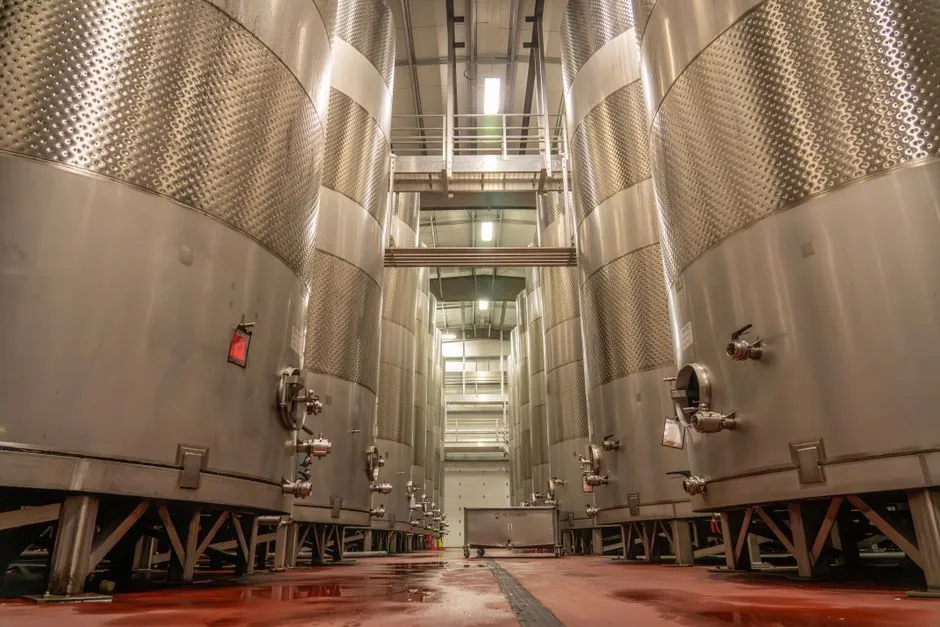
Preliminary sizing starts with measured and documented flow, not an assumed flow per guest or room, because the supplied research provides no Panama-specific occupancy factor.
Establish hydraulic capacity from representative average and peak wastewater flows, then assess seasonal occupancy and episodic hotel flows separately. Biological capacity and pretreatment requirements should follow the actual wastewater characterization and the treatment objectives. Do not use a generic “hotel wastewater flow” multiplier unless it is supported by records for the property or a validated local basis.
For a WSZ package system, compare the documented design flow with the catalog range of 1–80 m³/h. For MBR, express the project flow per day and compare it with the catalog range of 10–2,000 m³/day. Those comparisons establish whether a documented flow can fall within a catalogue envelope; they do not prove that a unit is correctly sized for peak loading, site conditions, or reuse requirements.
Confirm the physical and operating constraints next: buried installation and landscaping versus above-ground deployment, controls and automation, maintenance access, available power, odor control, and the route for solids and sludge. Where water reuse is contemplated, decide whether the project needs treatment alone, treatment plus disinfection, or advanced treatment and polishing. Obtain the applicable approval requirements before adding equipment. A treatment-train engineering guide for challenging wastewater reinforces the need to match each unit to the actual contaminant and reuse objective.
| Sizing step | Input | Output |
|---|---|---|
| Hydraulic sizing | Average flow, peak flow, seasonal occupancy, episodic flows | Documented design flow and peak-event assessment |
| Biological sizing | Representative wastewater characterization and treatment objective | Indicative process duty and loading review |
| Pretreatment selection | Grease, FOG, solids, fibrous debris, and separate-stream data | Need for screening, DAF, equalization, or segregation |
| Equipment screening | Design flow and project constraints | Catalogue comparison, then project-specific design |
| Reuse assessment | Intended application and authority requirements | Treatment, disinfection, polishing, and approval scope |
Build a Supplier Request for Quotations That Can Be Compared
Comparable quotations require the same design basis, treatment objective, scope boundaries, and supporting performance commitments from every bidder.
The request for quotations should require each supplier to state the design basis, confirmed flow basis, treatment objective, process diagram, equipment duty, and exclusions. Ask how the proposal handles separate grease, solids, laundry, pool, or industrial streams, and whether additional pretreatment is required. A technically comparable proposal makes these assumptions visible rather than leaving them implicit in a package price.
Request details on controls, automation, installation method, buried or above-ground arrangement, commissioning, operator training, maintenance, spare parts, and solids handling. Include lifecycle scope: delivered equipment, civil works, installation, commissioning, operating support, consumables, and access for maintenance. The supplied research contains no Panama-specific prices, so any comparison must request written itemized pricing rather than infer costs from incomplete quotations.
Ask each bidder to distinguish catalogue specifications from claims requiring project-specific design or written guarantees. This distinction is especially important for effluent quality, footprint, automation, reuse performance, and operating labor. The water-service provider comparison framework provides a broader procurement structure that can be adapted to compare treatment suppliers on engineering completeness rather than headline price.
| Quotation item | Information required | Buyer check |
|---|---|---|
| Design basis | Flow, wastewater characteristics, treatment objective, final route | All bids use the same confirmed project inputs |
| Process scope | Diagram, equipment duty, separate-stream handling, exclusions | No hidden pretreatment or civil-work assumption |
| Delivery and installation | Supply boundary, civil works, installation method, utilities, access | Responsibilities and site obligations are explicit |
| Controls and support | Automation, commissioning, training, maintenance, spare parts | Support requirements match the resort operating model |
| Performance | Catalogue specification, design calculation, and written guarantee distinguished | Measured outcomes and test methods are defined |
| Price | Itemized equipment, works, services, consumables, and lifecycle costs | Compare complete scopes rather than package totals |
Plan for Monitoring, Maintenance, and Compliance Risk
A decentralized resort system needs a defined monitoring, maintenance, and solids-management plan from the start because automation does not remove the need for asset management.
Define monitoring points before procurement. Depending on the process design, these may include influent flow, visual condition, biological-process indicators, effluent quality, control-system status, and sludge accumulation. Establish how each parameter will be checked, how results will be recorded, and who will respond when a limit is exceeded. Also plan maintenance access and consumable replacement without assuming that any automated package plant can operate indefinitely without service.
Keep discharge approval, sewer-connection approval, irrigation approval, and reuse approval distinct. The responsible authority and the evidence required may differ by route, so one generic statement that the water is “treated” is not enough for a compliance assessment. Obtain current Panama-specific requirements from the relevant authority and a qualified local engineer; the supplied sources describe national infrastructure but do not provide resort discharge limits or reuse rules.
The capital-city plant’s biological treatment and sludge-digestion features are useful context, not a decentralized operating template. A resort system must define its own sludge collection, removal, storage, transport, or disposal route. The decentralized wastewater standards review provides a useful reminder that local regulatory confirmation should precede final equipment selection.
Frequently Asked Questions
How much does a hotel wastewater treatment system in Panama cost?
No Panama-specific price can be stated from the supplied research. A buyer should request itemized quotations covering treatment equipment, separate-stream pretreatment, civil works, installation, controls, commissioning, training, consumables, maintenance, and solids disposal. Each quotation should use the same documented flow, wastewater characteristics, installation method, treatment objective, and final discharge or reuse route so that scope differences do not distort the price comparison.
Should a Panama hotel choose a WSZ package plant or an MBR system?
Choose the WSZ package plant when a buried, integrated biological configuration with catalog capacity from 1–80 m³/h fits the documented flow, available space, installation method, and operating plan. Consider MBR when the required effluent quality or compact footprint justifies a submerged PVDF membrane system, whose supplied catalog capacity is 10–2,000 m³/day. This is a screening comparison, not a final selection; both require project-specific design and confirmation of reuse, maintenance, and solids-handling requirements.
What information is needed to size treatment for a resort?
Provide representative average and peak flows, seasonal occupancy, episodic-flow records, wastewater laboratory data, stream classifications, and the intended final route. The engineering brief should also document available footprint, burial depth, power, maintenance access, odor constraints, chemical inputs, and sludge-management arrangements. Without those records, a generic flow per room or guest would be an unsupported sizing assumption.
How should a resort evaluate a wastewater treatment supplier?
Evaluate the engineering completeness of each proposal rather than comparing headline package prices. Check that every bid identifies the design basis, process diagram, equipment duty, pretreatment needs, installation arrangement, commissioning scope, maintenance requirements, exclusions, and written performance commitments. Request proof that the proposed capacity has been checked against the documented average and peak flows and that catalog claims are distinguished from project-specific guarantees.
What compliance and reuse issues should be confirmed before installation?
Confirm the applicable sewer-connection conditions, discharge limits, groundwater restrictions, irrigation requirements, and reuse approvals with the relevant Panamanian authority and a qualified local engineer. Confirm whether the proposed destination requires treatment alone, disinfection, or advanced polishing, and which monitoring and operating records must be retained. Keep each approval pathway distinct because the responsible authority and required evidence may differ.