Determine Which Rules Apply to the Indianapolis Plant
Fabricated metals plants near Indianapolis generally meet sewer pretreatment limits by identifying whether 40 CFR Part 433 applies, characterizing each discharge stream, and designing to the stricter applicable requirement in the receiving POTW’s sewer permit. A defensible sequence is to inventory regulated metal-finishing operations, compare the applicable categorical standard with POTW local limits, match contaminants to unit operations, and verify final performance through approved monitoring. Equipment selection alone does not establish compliance.
The first review is the process inventory, not the equipment list. Record forming, finishing, forging, foundry, metal-spraying, machining-wash, plating and anodizing operations, including any on-site zinc, nickel or chromic-acid tanks. A stamping operation that ships dry parts to a separate finisher is generally outside 40 CFR Part 433, while a facility operating its own plating or anodizing line is generally inside the category, according to the fabricated metals wastewater compliance guide.
Two categorical concepts must not be conflated. Pretreatment Standards for Existing Sources (PSES) apply to qualifying facilities operating before August 1982; Pretreatment Standards for New Sources (PSNS) apply to facilities established after that date, according to the Industrial Wastewater Research Center’s metal-finishing summary, last updated April 2024. The sewer permit must establish which standard and which version apply to the plant.
For each pollutant, compare the categorical requirement with the POTW’s local limit under 40 CFR 403.5. The more stringent requirement controls. The Industrial Wastewater Research Center also identifies the local POTW as the Control Authority when it has an approved pretreatment program. Federal pretreatment standards, the local limits and the site-specific sewer permit must therefore be reviewed together.
| Review item | Engineering question | Compliance consequence |
|---|---|---|
| Process inventory | Does the plant perform regulated plating, anodizing or co-located covered operations? | Determines whether 40 CFR Part 433 is the starting point. |
| Source status | Was the regulated operation established before or after August 1982? | Identifies PSES or PSNS applicability. |
| POTW limits | Which parameter-specific local limit is stricter than the categorical standard? | Sets the design envelope for each pollutant. |
| Discharge authorization | What monitoring, sampling, reporting and prohibition conditions appear in the sewer permit? | Defines the enforceable operating and testing obligations. |
Characterize the Wastewater Before Fixing the Equipment
A short composite that misses a production batch cannot support defensible equipment sizing. The HydropureWater 2026 metals-wastewater guidance specifically warns that a four-hour composite missing a Friday afternoon dump can undersize the equalization basin. For an Indianapolis procurement, request a full-week characterization that captures production cycles, batch dumps and clean-in-place discharges.
Keep the initial streams separate: floor drains, process rinses, cleaning washes, oily condensate and storm-derived flow. Their hydraulic and contaminant behavior differ, and combining them before characterization can conceal the batch loads that control tank and treatment capacity.
HydropureWater’s 2026 field-data ranges provide screening context for mixed floor-drain wastewater: oils at 50–500 mg/L, total dissolved metals at 5–200 mg/L, TSS at 100–1,000 mg/L, and pH swings between 2 and 12 across batch dumps. These are screening ranges from the supplied source, not substitute limits for a site-specific study.
| Wastewater stream | Contaminants to investigate | Design use |
|---|---|---|
| Machining or stamping drains | Free and emulsified oils, suspended solids | Oil removal and solids separation duty |
| Plating rinses | Zinc, nickel, copper, chromium and other regulated metals | Metals precipitation and sludge capture |
| Chromic-acid rinse dumps | Hexavalent chromium and extreme acidity | Reduction before precipitation |
| Alkaline cyanide rinses | Cyanide and dissolved metals | Oxidation before metals removal |
| Grinding or casting solids | TSS and settleable solids | Solids removal and sludge-volume calculation |
| Oily condensate | Oil and grease | Segregated oil removal |
The laboratory scope should be written around the POTW’s pollutant list and applicable categorical parameters, including any analyte-specific monitoring instructions. Ask the Control Authority whether composite sampling, monitoring frequency and analytical methods differ from the federal baseline.
Do not treat one representative sample as proof of compliance. The Industrial Wastewater Research Center, last updated April 2024, describes baseline monitoring before discharge, an initial compliance report and recurring semiannual compliance reports. Composite wastewater sampling must therefore be incorporated into commissioning and permit administration, not left to a single acceptance test.
Build a Treatment Train for Each Contaminant
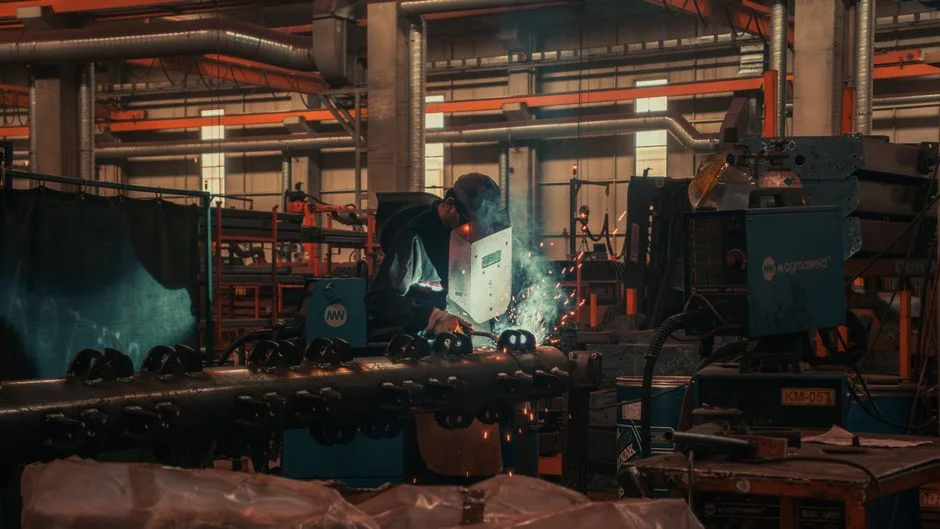
A compliant metal-finishing treatment train separates physical removal, incompatible chemical reactions and final clarification. The order matters because equalization controls the load presented to dosing, oil interferes with floc formation, cyanide must be destroyed before metal precipitation, and hexavalent chromium must be reduced before it can be precipitated as trivalent chrome.
- Equalize the wastewater. HydropureWater’s 2026 technical article describes plating shops as batch operations. An industrial DAF system for metals wastewater cannot be sized reliably until the equalization basin captures the complete flow and batch profile.
- Remove free and emulsified oil. Physical separation or chemical break must precede precipitation so residual oil does not interfere with floc formation and solids capture.
- Reduce hexavalent chrome. HydropureWater’s 2026 article specifies sodium metabisulfite or ferrous sulfate at pH 2–3, with ORP controlled at roughly 250–300 mV.
- Oxidize cyanide. The same source explains that cyanide must be destroyed first because it can keep metals soluble downstream.
- Precipitate metals and separate the solids. After reduction, trivalent chrome can precipitate at pH 8.5–9.5. Hydroxide precipitation removes dissolved metals, while DAF or lamella clarification captures the resulting metal-hydroxide floc.
- Adjust final pH and divert failures. High TSS, pH excursion or ORP outside the operating range should automatically divert flow to the equalization header rather than continue toward discharge.
Use a PLC-controlled chemical dosing skid with flow-paced feed and pH or ORP feedback. Each pump needs a calibration column and stroke-count totalizer. A skid-mounted arrangement also allows the integrator to bench-test interlocks before shipment and gives operators a defined local control point.
| Contaminant or failure mode | Required function | Key operating condition | Verification point |
|---|---|---|---|
| Batch flow and pH variation | Equalization | Complete weekly flow profile | Equalized influent sample and level trend |
| Hexavalent chrome | Reduction | pH 2–3; ORP roughly 250–300 mV | Reduction-stage sample |
| Cyanide | Oxidation | Destroy before metals precipitation | Oxidation-stage sample |
| Dissolved metals | Hydroxide precipitation | Chrome precipitation at pH 8.5–9.5 | Precipitation-stage sample |
| Metal-hydroxide floc | DAF or lamella clarification | Model-specific hydraulic and air duty | Final TSS and pollutant samples |
| Chemical upset | Automatic diversion | pH, ORP and high-TSS interlocks | Simulated trip and diversion test |
Do not add polishing by default. HydropureWater’s 2026 article says many plants do not need it, while tighter POTW limits, reuse objectives or a future rule can justify MBR, RO, anion exchange or granular activated carbon. These technologies address different duties: the MBR versus conventional treatment comparison distinguishes organic removal and reuse potential from the broader metal-finishing treatment train.
Select DAF, Clarification and Sludge Handling Equipment
DAF is appropriate when the solids-removal duty includes oils, FOG, colloidal material and precipitated metal-hydroxide solids. HydropureWater’s product catalog lists DAF capacities from 4–300 m³/h across 13 standard models and identifies metalworking as an application. That range supports preliminary equipment screening, but model selection still requires the verified wastewater flow, batch profile and contaminant loading.
Three operating variables govern the DAF design. HydropureWater’s 2026 technical article lists hydraulic surface loading of 4–20 m/h depending on model and floc density, an air-to-solids ratio of 0.005–0.060 with 0.02 as a typical design point, and recycle of 10–30% of forward flow. These are screening values from that article, not universal design settings.
A higher air-to-solids ratio can produce a drier float but increases blower power and may damage fragile floc. More recycle can improve TSS capture while diluting treatment chemistry and increasing equalization demand. The DAF versus clarifier guide for transportation-equipment wastewater provides the broader equipment comparison: DAF is suited to oil and floatable solids, while lamella clarification supports sludge recirculation, flocculation and inclined-plate separation.
| Selection issue | DAF | Lamella clarification | Procurement input required |
|---|---|---|---|
| Primary separation duty | Oil, FOG and floatable precipitated solids | Settled or recirculated solids | Measured oil, TSS and floc-settling behavior |
| Hydraulic basis | Model-specific surface loading and recycle | Catalog-stated surface loading of 20–40 m/h | Complete flow and batch profile |
| Operating consequence | Blower power and recycle affect floc and equalization duty | Sludge recycle and flocculation affect solids capture | Vendor calculation and control narrative |
| Solids handling | Float removal | Sludge withdrawal | Expected solids concentration and disposal route |
Sludge handling must be included in the process scope. HydropureWater’s 2026 article states that floated metal-hydroxide sludge typically runs at 2–5% dry solids and can reach 25–35% dry solids with plate-and-frame filtration. Install a mechanical bar screen upstream when rags, wipes or tramp metal could enter the sludge train; the article identifies these materials as a common cause of premature filter-press cloth failure.
Automate Dosing and Verify Compliance Before Discharge
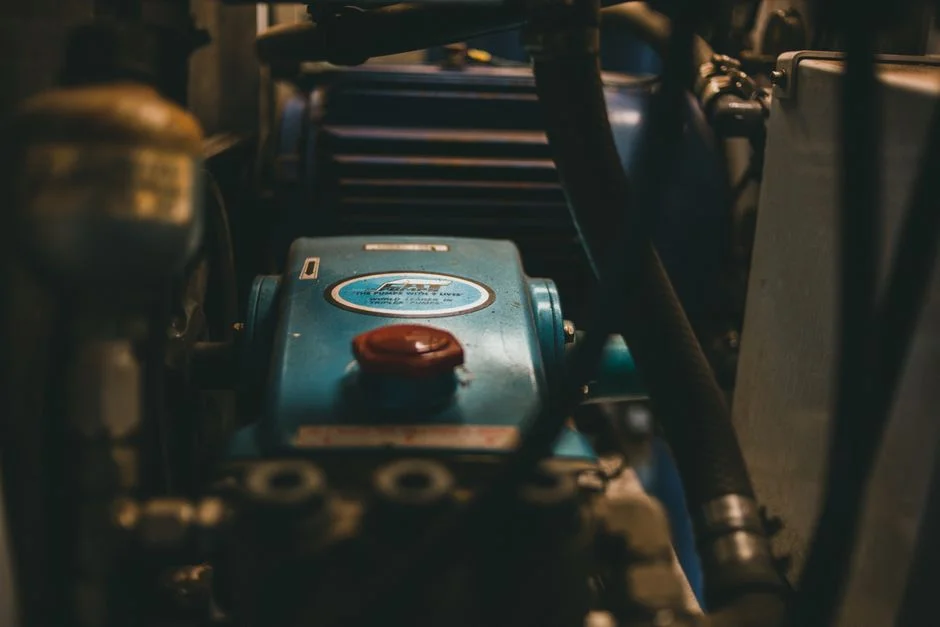
The treatment skid should produce an auditable operating record, not simply automate reagent pumps. Require calibrated pumps, PLC interlocks, operator lockout controls, chemical-tank level alarms and a record of every dose. Commission the control narrative using simulated high flow, pH excursion, ORP deviation, high TSS and power-loss conditions.
Provide sampling points for equalized influent, each treatment stage and final discharge. Define flow-proportional composite sampling before commissioning so the protocol corresponds to the permit rather than being reconstructed after a discrepancy.
The analytical program must follow the permit’s pollutant list, local limits, monitoring frequency and approved methods. The Industrial Wastewater Research Center’s metal-finishing summary, last updated April 2024, states that a regulated facility must submit a baseline monitoring report 90 days before wastewater discharge, an initial compliance report within 90 days of the compliance date, and periodic reports semiannually, typically in June and December. It also states that wastewater records should be maintained for at least three years.
Build an escalation procedure for exceedances, prohibited discharge conditions or interference with POTW operations. The same summary states that a facility must immediately notify its POTW when a pollutant release could interfere with normal operation.
PFAS planning must remain separate from current numeric compliance. The 2026 discussion of PFAS and polishing treatment reports an EPA rulemaking for chrome-finishing facilities but no current numerical PFAS limit for chrome finishers. Reserve space, utilities and interfaces for a future anion-exchange or GAC skid without representing it as required by a present numerical limit.
Ask These Questions Before Ordering a Pretreatment System
A defensible vendor proposal begins with the permit and wastewater evidence, not with a packaged equipment price. Ask each supplier to provide a written process basis, equipment-sizing calculation, control narrative, materials-of-construction list and performance guarantee tied to the agreed influent and final-effluent duties.
Require a piping and instrumentation diagram showing equalization, chemical storage, dosing, solids separation, sludge withdrawal, sampling and automatic diversion. Verify that the proposed tank, DAF, dosing skid and filter press suit the wastewater chemistry and corrosion environment. The 2026 industrial wastewater equipment buyer guide identifies stainless steel, carbon steel, aluminum and nickel alloys as common fabricated-metals options, but selection remains application-specific.
Before acceptance, confirm factory testing, PLC or DCS integration, spare-parts availability, operator training, commissioning support and maintenance access. Verify how the vendor will support calibration, chemical consumption records, diversion tests and permit reporting.
Compliance cost and lead-time estimates should be based on the actual sewer permit, flow characterization and solids-generation calculation. If those inputs are missing, request them before accepting a firm price or delivery commitment; generic web pricing will not establish either the treatment duty or the enforceable compliance basis.
Frequently Asked Questions
Does every Indianapolis fabrication plant fall under 40 CFR Part 433?
No. The process inventory must establish whether the plant performs regulated metal-finishing operations, including its own plating or anodizing. A stamping shop shipping only dry parts to a separate finisher is generally outside the category, while a facility with regulated on-site finishing is generally inside it, according to HydropureWater’s 2026 article.
Are PSNS limits automatically stricter than the POTW’s local limits?
No. PSNS are tighter than PSES for applicable parameters according to the Industrial Wastewater Research Center summary, last updated April 2024. POTW local limits are at least as stringent as categorical standards and may be stricter still. Compare each parameter and use the controlling requirement.
How should a buyer size a DAF for fabricated-metals wastewater?
Use the complete flow, batch and wastewater profile, then verify hydraulic surface loading, air-to-solids ratio and recycle against HydropureWater’s 2026 screening values and verified floc behavior. Do not select a model from average flow alone.
Is polishing equipment mandatory for every metal-finishing plant?
No. HydropureWater’s 2026 article states that many plants do not need polishing. Tighter POTW limits, reuse objectives or a future rule can justify MBR, RO, anion exchange or GAC, but these units serve different purposes and should not be treated as interchangeable.
What records should be retained before discharge begins?
The Industrial Wastewater Research Center summary, last updated April 2024, states that wastewater records should be retained for at least three years. Maintain baseline-monitoring results, analytical reports, flow data, calibration records, operating logs, compliance reports and diversion events, and provide required reports to the Control Authority.