Start with the Sewage Source, Flow and Destination
Domestic sewage treatment in Panama should be selected from verified flow, wastewater characteristics, land, sludge handling, reuse objectives and discharge requirements—not population alone. For projects within the published 100–5,000 m³/day scale, HydropureWater’s Panama guide reports CAPEX of $3,000–$8,000/m³/day for conventional activated sludge and $6,000–$15,000/m³/day for MBR. Package plants commonly serve 1–500 m³/day sites, subject to current permits and the cited DGNTI-COPANIT 35 screening values of BOD5 35 mg/L and TSS 35 mg/L.
The design brief should first identify the source: homes, a hotel, hospital, school, rural community or mixed-use development. The WSZ Series is explicitly marketed for residential communities, hotels, hospitals, factories and rural areas, but its suitability depends on actual flows and loadings.
Prepare an hourly and daily flow profile, including the timing and magnitude of peak flows. The supplied research does not provide Panama-specific peak factors, so the buyer must obtain them from project records, metering, occupancy data or site-specific engineering rather than inserting an assumed factor.
Request wastewater characterization covering BOD5, TSS, COD, fats, oils and grease, pH, temperature and any industrial contaminants before selecting a biological process. Define the receiving route—sanitary sewer, receiving water, reuse system or land application—and confirm the authority and permit with the receiving point before ordering equipment.
The BOD5 and TSS values reported in the HydropureWater Panama guide are screening benchmarks only. Verify current permit conditions, monitoring requirements and receiving-water classification with the responsible authority.
| Design-brief input | Evidence the buyer needs | Selection consequence |
|---|---|---|
| Source and occupancy | Use type, connected population or rooms, operating hours and expansion plans | Defines treatment capacity and load; population alone is insufficient |
| Flow profile | Average daily flow plus verified hourly peaks | Sets hydraulic capacity and equalization or pumping requirements |
| Wastewater characterization | BOD5, TSS, COD, FOG, pH, temperature and contaminants | Determines process suitability and pretreatment needs |
| Discharge or reuse route | Authority, permit, sampling points and receiving-water classification | Sets treatment targets and reuse criteria |
A regional comparison of decentralized, WSZ and MBR sewage treatment systems provides a process-selection reference, while Panama’s permit and receiving-point requirements remain the controlling inputs.
Compare Package Biological Treatment, MBR and Decentralized Options
The treatment architecture must align with the discharge objective and operating constraints. A buried package biological plant may suit decentralized sites where compactness and limited daily attendance are prioritized; an MBR may suit compact urban sites or higher-quality reuse; decentralized alternatives require evidence matched to the local wastewater and operating arrangement.
The WSZ process combines anoxic/aerobic biological contact oxidation, sedimentation and disinfection in a single buried package unit. The HydropureWater verified product catalog states a capacity of 1–80 m³/h. It also describes automated operation without a required operator, below-grade installation, and trailer mounting for mobile deployment. These features affect installation and staffing but do not remove the need for site-specific civil design, maintenance access and permit verification.
The MBR option combines activated-sludge treatment with submerged PVDF membrane filtration. The verified catalog gives a 10–2,000 m³/day range, filtration below 1 μm and a footprint 60% smaller than conventional systems. Compactness and filtration below 1 μm do not establish regulatory compliance. The buyer must still verify discharge targets, pretreatment, solids handling, membrane cleaning and reuse quality.
For decentralized alternatives, the IntechOpen study Application of Vermifiltration for Domestic Sewage Treatment describes vermifiltration as efficient, viable and capable of decentralized operation. It used domestic septic-tank sewage water, so selection should depend on project-specific performance evidence and the final discharge requirement.
| Option | Process and published scope | Where it merits evaluation | Items to verify before selection |
|---|---|---|---|
| WSZ package plant | Anoxic/aerobic contact oxidation, sedimentation and disinfection; 1–80 m³/h | Residential, hotel, hospital, factory or rural applications where a buried package configuration is appropriate | Hourly and peak flow, excavation, access, buoyancy, lifting, pretreatment and sludge handling |
| MBR | Activated sludge with submerged PVDF membranes; 10–2,000 m³/day; filtration below 1 μm | Compact installations and applications requiring a higher level of solids separation | Fouling control, cleaning, standby strategy, solids removal, controls and reuse quality |
| Vermifiltration | Filtration combined with earthworms; studied on domestic septic-tank sewage water | Decentralized sites where project evidence supports operation and maintenance | Comparable references, operator capability, reliability, odors, land, climate and final-discharge suitability |
Use the underground WSZ package sewage treatment plant and MBR membrane bioreactor for domestic sewage specifications as vendor-provided screening data, then require the selected supplier to confirm the final design basis.
Match the Treatment Process to Site Constraints
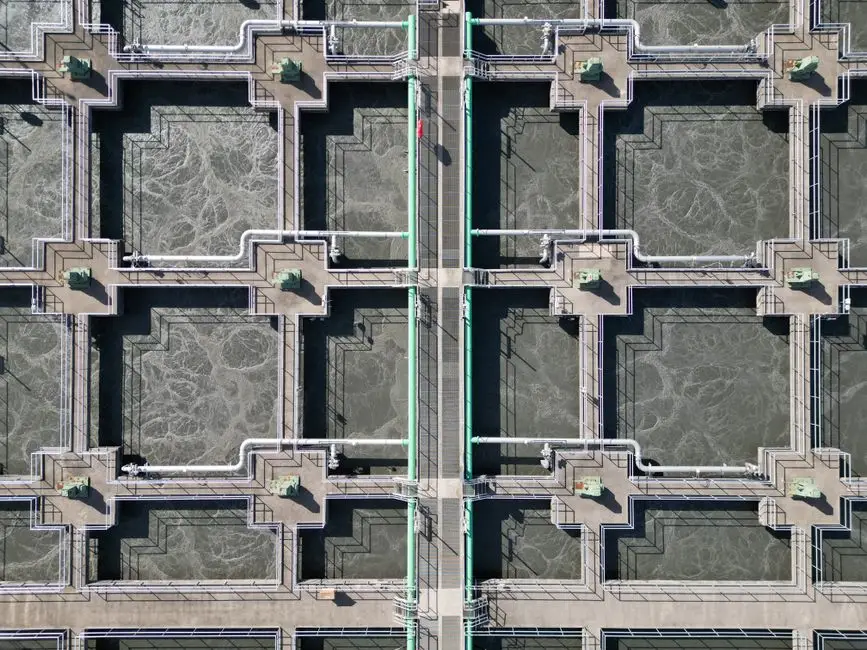
Land availability, odor control, maintenance access, sludge handling and reuse requirements often eliminate one architecture before capital cost becomes the deciding factor. The first question is whether the preferred installation can be built, operated and serviced at the site.
For limited surface area or a preference for landscaping above the treatment unit, evaluate the buried WSZ configuration. Confirm excavation depth, access arrangements, buoyancy protection, lifting provisions, ventilation and odor control with the supplier. Automated operation does not mean maintenance-free; screens, biological process performance, sludge accumulation, disinfection and electrical components require planned service.
For high-quality reuse or compact urban installations, evaluate the MBR route. Require a fouling-control strategy, defined cleaning method, membrane replacement assumptions, standby arrangement and solids-handling route. Confirm whether the reuse claim concerns treatment at the outlet or water quality suitable for the intended application.
For decentralized sites, compare conventional package treatment with the academically studied vermifiltration route using operator capability, reliability evidence, land, climate, odor management and final-discharge requirements. Request project-specific evidence rather than general claims of decentralized suitability.
Sludge production, storage, stabilization and dewatering belong in the treatment train. If the project cannot manage residuals safely, that limitation should be carried into the supplier’s scope. A plate-and-frame filter press may be relevant where dewatering is required, but suitability depends on sludge properties and the disposal route.
The Structural Concrete literature review Concrete production with domestic and industrial wastewaters supports evaluation of treated wastewater reuse in concrete production, while warning about impurities and contaminants. Each reuse stream needs its own suitability assessment rather than a general assumption that treated sewage is acceptable.
Build a Panama-Specific Cost and Procurement Basis
Published unit rates can frame a budget, but they are not fixed quotations for a specific site. The HydropureWater Panama guide reports CAPEX benchmarks of $3,000–$8,000/m³/day for conventional activated sludge, $4,500–$12,000/m³/day for DAF and $6,000–$15,000/m³/day for MBR at 100–5,000 m³/day scale. These figures indicate relative cost bands for screening; they do not define what a buyer receives for each dollar.
The excerpt identifies treatment-process CAPEX at the stated scale. It does not establish that every figure includes land, civil works, sewer connections, sludge disposal, permitting, taxes or commissioning. The incomplete OPEX excerpt of $0.25–$0.… should not be used as a complete benchmark.
The same Panama guide reports that package wastewater treatment plants typically serve 1–500 m³/day industrial and municipal sites. That range is useful for comparing pre-engineered packages with a custom MBR design, but it is not a sizing rule for every application.
| Published CAPEX benchmark | Reported capacity scope | Correct procurement use |
|---|---|---|
| $3,000–$8,000/m³/day | Conventional activated sludge within the guide’s 100–5,000 m³/day comparison scale | Budget screening followed by site-specific scope and quotation |
| $4,500–$12,000/m³/day | DAF within the guide’s 100–5,000 m³/day comparison scale | Benchmark only; confirm whether pretreatment, civil works and residuals are included |
| $6,000–$15,000/m³/day | MBR within the guide’s 100–5,000 m³/day comparison scale | Budget screening followed by membrane, controls, solids and commissioning review |
Issue the same request for quotation to shortlisted suppliers. It should separate incoming sewer works, pretreatment, treatment, disinfection, pumping, controls, civil works, installation, commissioning, training, sludge handling, consumables and warranty. Also define power, utilities, access roads, odor controls, performance tests, exclusions, taxes, delivery and site conditions. The municipal wastewater engineering and cost guide illustrates the wider equipment-selection context, but Panama suppliers should quote against Panama-specific site and permit requirements.
Verify Compliance, Reliability and Supplier Performance
Compliance verification must be tied to the proposed receiving point and current permit. Ask the authority responsible for that point to confirm applicable discharge limits, sampling points, compliance monitoring and permit conditions in writing before design freeze.
The BOD5 35 mg/L and TSS 35 mg/L values cited in the HydropureWater Panama guide come from a commercial source. Compare them with the proposed permit, but do not treat them as proof of compliance; current official requirements and receiving-water classification must take precedence.
Supplier evidence should cover the process guarantee, duty and standby arrangement, automatic controls, alarm handling, remote supervision, maintenance intervals and spare-parts support. Request reference projects under comparable flow, wastewater characteristics, climate and operating arrangements. A residential or industrial reference is not automatically transferable to a hotel, hospital or rural community.
Include climate-sensitive checks for rainfall infiltration, odor control, corrosion protection, electrical resilience and equipment access. Also request the supplier’s proposed performance test, commissioning criteria, training scope and response times for critical spares.
For a detailed architectural comparison, use the technical comparison of MBR and activated-sludge performance as a prompt for process questions, while keeping the final selection tied to domestic sewage and the project’s permit.
Choose the Next Project Step
The next step is to complete the design brief before requesting a fixed equipment price. The brief should state the source, verified average and peak flows, wastewater characteristics, receiving route, permit basis, land constraints, sludge route and reuse objective.
Where the brief supports alternatives, develop two process scenarios: one value-focused package solution and one higher-performance MBR or reuse solution. Compare them using the same hydraulic basis, treatment objectives, civil scope, controls, residuals, commissioning tests and commercial conditions.
Issue one RFQ to shortlisted suppliers and separate equipment price from site-specific civil, installation, commissioning, sludge handling and lifecycle commitments. Do not accept a catalog capacity or treatment claim as a complete project design.
A desktop design should establish flow and process requirements, followed by site-specific engineering, permitting and commissioning. The engineering roadmap for wastewater plant development provides a sequence for those deliverables. For a Panama-specific equipment discussion and local benchmark context, review the Panama wastewater treatment guide.
Frequently Asked Questions
What size domestic sewage treatment system does a property in Panama need?
Size the system from verified daily flow, peak flow, wastewater characteristics, discharge
Frequently Asked Questions
What size domestic sewage treatment system does a property in Panama need?
System sizing is determined by the Panamanian technical standard DGNTI-COPANIT 35-2000, which calculates flow based on the number of bedrooms and occupancy. For a standard residential dwelling, design flows typically range from 150 to 200 liters per person per day.
Engineers must calculate the total daily hydraulic load based on the maximum capacity of the property. A typical single-family home generally requires a system rated for 600 to 1,200 liters per day, ensuring the hydraulic retention time (HRT) remains sufficient to allow for proper biological settling or aeration.
How much does domestic sewage treatment cost in Panama in 2026?
For a standard residential installation, equipment costs for a prefabricated polyethylene or fiberglass aerobic system range from $2,500 to $5,000 USD. This price typically includes the reactor tank, air blower, and basic internal piping.
Total project costs, including excavation, civil works, electrical installation, and mandatory environmental permitting fees (MiAmbiente), generally range between $6,000 and $12,000 USD. Specialized systems like Membrane Bioreactors (MBR) can increase these costs by 40% to 60% due to the complexity of the filtration modules and control instrumentation.
Should I choose an underground WSZ package plant or an MBR system?
An underground Wastewater Stabilization Zone (WSZ) or extended aeration plant is the standard choice for residential properties due to lower maintenance requirements and the absence of complex membrane cleaning protocols. These systems rely on gravity settling and are effective for standard soil absorption fields.
An MBR system should only be chosen if the property has significant space constraints, requires high-quality treated water for irrigation, or is located in a sensitive environmental zone where discharge standards are stricter than the national baseline. MBR systems require specialized chemical cleaning of membranes every 3 to 6 months and carry higher operational costs.
What should I check before ordering sewage treatment equipment from a supplier in Panama?
Verify that the supplier provides a formal "Certificado de Cumplimiento" or technical datasheet that aligns with MiAmbiente requirements. Ensure the equipment is constructed from UV-stabilized, high-density polyethylene (HDPE) or reinforced fiberglass to withstand Panama’s high humidity and soil corrosivity.
Confirm the availability of local spare parts, specifically the air blower diaphragm kits and control panel components. A system is only as reliable as its maintenance schedule, so request a verified list of local technicians capable of servicing the specific make and model of the aeration pump provided.
Do BOD5 35 mg/L and TSS 35 mg/L guarantee compliance for a Panama discharge permit?
While 35 mg/L for Biological Oxygen Demand (BOD5) and Total Suspended Solids (TSS) meets the basic requirements of the COPANIT 35-2000 standard for most discharge scenarios, it does not guarantee automatic permit approval. Compliance also mandates testing for Fecal Coliforms, which must typically be under 1,000 MPN/100 mL, and pH levels between 6.0 and 9.0.
Additionally, the discharge point must be approved by the Ministry of Environment (MiAmbiente) based on the receiving body of water. If discharging into sensitive coastal areas or protected watersheds, local authorities may impose more stringent "Special Discharge Limits" that require tertiary treatment or UV disinfection, regardless of the BOD5/TSS levels.