
Which Rules Control Discharge Near Temple?
Fabricated metals plants near Temple generally meet sewer pretreatment limits by first confirming whether 40 CFR Part 433 metal-finishing standards apply, then comparing PSES or PSNS requirements with the receiving POTW’s site-specific local limits under 40 CFR 403.5. A typical train uses equalization, oil and grease removal, hexavalent chromium reduction, cyanide oxidation, metal hydroxide precipitation, and DAF or lamella clarification before pH adjustment and optional polishing. The permit and a full-week wastewater characterization should define the final design; federal tables do not supply Temple-specific local limits.
The governing requirement depends on what the plant actually does and where the wastewater enters the sewer. 40 CFR Part 433 covers specified Metal Finishing operations, including forming, finishing, forging, foundry, metal-spraying, and machining-wash activities co-located with plating or anodizing lines. A stamping operation that ships only dry parts to a separate finisher is generally outside that category, while a plant operating zinc, nickel, or chromic-acid plating lines is within the described scope.
PSES apply to existing sources, while PSNS apply to new sources. The commercial pretreatment source reviewed in 2026 states that PSNS are tighter and that conservative POTW programs often use PSNS-equivalent values for industrial users. That practice does not make the POTW’s own permit optional. EPA states that local limits are site-specific, may be numeric or narrative, and are imposed at the industrial user’s end-of-pipe connection to the POTW collection system.
No Temple-specific numeric sewer limits appear in the supplied research. Obtain the receiving POTW’s sewer-use ordinance, industrial discharge permit, local-limit table, monitoring requirements, and approved pretreatment work plan before sizing equipment. The design rule is to apply the stricter limit for each pollutant while also satisfying applicable pH, oil and grease, TSS, prohibited-discharge, monitoring, and reporting conditions.
| Requirement | Decision use | Evidence a buyer must obtain |
|---|---|---|
| 40 CFR Part 433 Metal Finishing | Determines whether categorical PSES or PSNS requirements apply to the covered process. | Process inventory, plating and anodizing lines, machining-wash practices, and floor-drain routing. |
| PSES or PSNS | Sets the applicable categorical benchmark for covered pollutants. | Current federal tables, source status, and the applicable production-category definition. |
| 40 CFR 403.5 local limits | Controls site-specific POTW discharge conditions at the point of connection. | POTW ordinance, industrial discharge permit, approved local-limit table, and monitoring conditions. |
| Permit and work plan | Defines compliance, monitoring, reporting, and approved-equipment expectations. | Current permit, approved pretreatment work plan, sampling method, and reporting schedule. |
The permit-driven approach used for fabricated metals wastewater pretreatment near Clanton is transferable to Temple, but it cannot substitute for the receiving POTW’s approved requirements.
Classify the Plant Before Sizing Equipment
Equipment scope should follow the plant’s process profile and drain-by-drain wastewater inventory, not a generic metals-treatment sequence. Document stamping, machining, drawing, grinding, pickling, plating, anodizing, hard chrome, and outsourced finishing. For each operation, identify its chemicals, wastewater generation, batch timing, discharge frequency, floor drain, and connection to the combined treatment system.
HydropureWater’s 2026 field data provide useful characterization benchmarks rather than assumed design loads for mixed floor-drain batch dumps: oils at 50–500 mg/L, total dissolved metals at 5–200 mg/L, TSS at 100–1,000 mg/L, and pH from 2 to 12. These values establish why concentration alone is insufficient for sizing. A plant may have modest average metals but a large short-duration dump that determines equalization volume and treatment capacity.
| Plant activity | Likely wastewater characteristics | Required characterization |
|---|---|---|
| Stamping, machining, drawing | Free and emulsified oils; suspended solids where machining or grinding is included. | Oil and grease, emulsification test, TSS, flow, batch schedule. |
| Acid pickling | Acidity and dissolved metals; possible high TSS. | pH, total and dissolved metals, TSS, flow. |
| Zinc, nickel, or chromic-acid plating | Dissolved metals and hexavalent chromium from applicable bath processes. | Total and dissolved metals, hexavalent chromium, pH, flow. |
| Alkaline cyanide plating | Cyanide, dissolved metals, and variable alkalinity. | Weak-acid dissociable cyanide, metals, pH, alkalinity, flow. |
| Grinding and foundry support | High suspended solids, including swarf, casting sand, and treatment floc. | TSS profile, grit and tramp-material assessment, settleability. |
Separate alkaline cyanide streams before the main metals-precipitation stage because cyanide must be destroyed before precipitation to prevent downstream resolubilization of metal precipitates, as noted in the 2026 commercial pretreatment source. Conversely, hexavalent chromium requires its own reduction step; it cannot be addressed by adding more precipitation chemical.
Require a full week of equalization and composite-flow characterization before equipment specification. A short composite can miss a significant batch release and underestimate both hydraulic and chemical demand. The comparison with MBR versus conventional activated sludge for fabricated metals wastewater also starts with a defensible wastewater profile; biological polishing should not be selected before that profile exists.
Build the Pretreatment Train in the Right Order
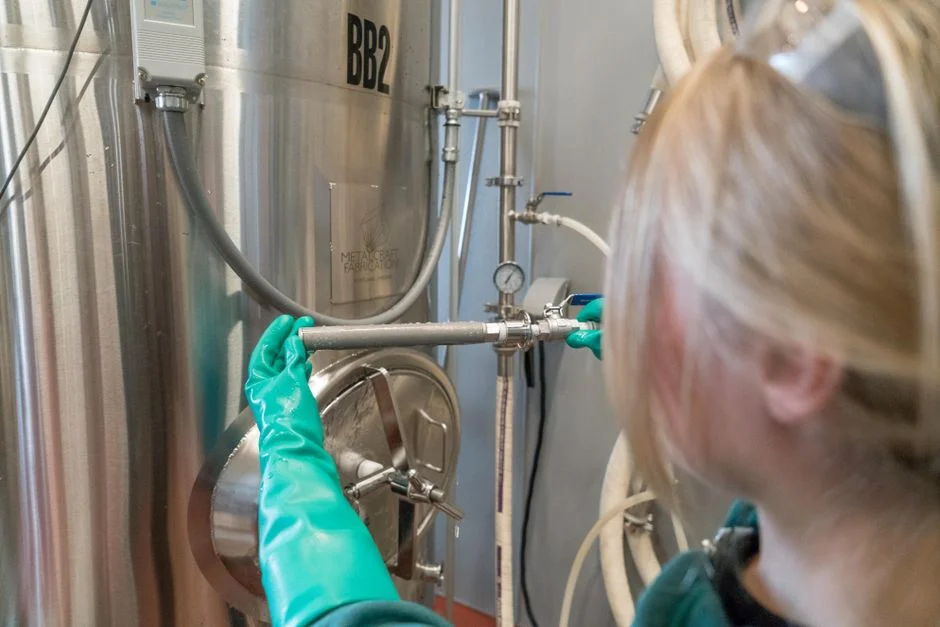
The treatment sequence must separate incompatible contaminant responses rather than place them in one general-purpose reaction tank. A defensible sequence starts with mechanical protection, equalization, oil removal, source-specific chemical treatment, metal precipitation, solids separation, and final pH control.
- Protect the downstream train. Install a rotary mechanical bar screen before equalization and sludge handling to remove rags, wipes, and tramp metal. The 2026 commercial pretreatment source identifies this material as a common cause of premature filter-press cloth failure.
- Blend and stabilize batch dumps. Equalization should accommodate actual dump volumes and timing while smoothing flow and chemistry. HydropureWater’s 2026 field data document pH swings from 2 to 12 across mixed floor-drain batch dumps, directly demonstrating the need for this function.
- Remove oils. Separate free oil through physical separation and address emulsified oil through chemical breaking or another verified oil-removal method, depending on characterization.
- Reduce hexavalent chromium. Use sodium metabisulfite or ferrous sulfate at pH 2–3 and ORP of approximately 250–300 mV. The resulting trivalent chromium can then precipitate in the pH 8.5–9.5 metals-precipitation stage.
- Destroy cyanide. Oxidize cyanide before hydroxide precipitation so it does not interfere with downstream metal removal.
- Precipitate dissolved metals. Adjust pH under controlled conditions, add flocculation chemicals, and separate the resulting hydroxide floc.
- Remove solids and trim pH. Use an industrial DAF system for fabricated metals wastewater or lamella clarification before final pH adjustment and discharge monitoring.
Each step has a different failure mode. Oil left in the system can foul equipment and interfere with separation. Unreduced hexavalent chromium requires a dedicated reaction. Untreated cyanide can compromise subsequent precipitation. Dissolved metals require pH-driven chemical removal rather than solids filtration alone.
Use flow-paced feedforward with pH or ORP feedback through a PLC-controlled automatic chemical dosing skid. Fixed manual dosing is not an auditable design basis when the wastewater varies by batch and the permit requires defensible control of the final effluent.
Size Equalization and Solids Separation from Real Data
Equalization and DAF sizing must use full-week flow, chemistry, and batch-timing data, including individual dump volumes. The design should show how the largest relevant batch, daily flow variation, and treatment-recovery strategy combine to determine the required equalization volume.
HydropureWater’s DAF sizing guidance identifies hydraulic surface loading of 4–20 m/h depending on model and floc density, an air-to-solids ratio of 0.005–0.060 with 0.02 as a typical design point, and recycle of 10–30% of forward flow. These are design parameters, not Temple discharge limits and not substitutes for measured influent characterization.
| DAF design variable | Guidance in HydropureWater’s 2026 sizing source | Engineering consequence |
|---|---|---|
| Hydraulic surface loading | 4–20 m/h, depending on model and floc density. | Select the lower or upper portion of the guidance only after evaluating the actual solids and selected equipment. |
| Air-to-solids ratio | 0.005–0.060; 0.02 is the typical design point. | Higher ratios can produce drier float but raise blower demand and may break fragile floc. |
| Recycle rate | 10–30% of forward flow. | Higher recycle may improve TSS removal but dilutes chemistry and increases equalization demand. |
Evaluate DAF against lamella clarification using actual settleability, floc fragility, footprint, recovered-sludge density, hydraulic variation, and the need to capture metal hydroxide floc. Do not choose a clarifier solely from its nominal flow capacity. The engineering comparison summarized in DAF versus clarifier for metals wastewater illustrates why application-specific solids behavior matters.
Metal-bearing residuals are a waste stream, not a harmless by-product. HydropureWater’s 2026 commercial source describes floated hydroxide sludge at 2–5% dry solids and plate-and-frame dewatering to 25–35%, compared with a belt-press ceiling around 22% dry solids. If a plate-and-frame filter press is considered, compare moisture at disposal against cycle time, labor, cloth consumption, and hauler charges. Include the eventual disposal route in the equipment basis.
Automate Chemistry and Preserve Compliance Evidence
Compliance evidence begins with controls that record what the system did, not merely with a chemical skid that can change a setpoint. The control narrative should define feedforward, feedback, alarms, interlocks, manual overrides, and diversion logic for each contaminant-specific stage.
- Provide feedforward tied to measured flow and feedback tied to pH or ORP, depending on the reaction.
- Provide sodium metabisulfite or ferrous sulfate for chromium reduction, an oxidant such as sodium hypochlorite for cyanide destruction, pH-adjustment chemicals, and the selected polymer for flocculation.
- Include pump calibration columns, stroke-count totalizers, chemical-tank level controls, and a preventive maintenance program.
- Alarm on pH excursion, out-of-range ORP, and high TSS; provide automatic diversion back to the equalization header where the system and permit basis permit it.
- Record sampling frequencies, analytical methods, sample locations, flow-paced composites where required, daily maxima, monthly averages, and chain of custody.
Map the monitoring plan to both the POTW industrial discharge permit and applicable categorical standards. EPA explains that local limits may be numeric or narrative and may include best management practices, so the permit must control the exact monitoring and evidence requirements. The PLC-controlled automatic chemical dosing skid should retain an auditable record of setpoints, feedback, alarms, and chemical consumption.
Commissioning records should include startup testing, demonstrated operating stability, chemical-use logs, calibration records, sludge handling, and chain-of-custody documentation. For each permit parameter, identify the sampling point, frequency, method, acceptance criterion, responsible operator, and corrective-action record.
Decide Whether Polishing Is Necessary
Polishing should solve a defined permit or reuse requirement, not compensate for an incomplete pretreatment train. Clarification normally provides the primary solids-removal function. Add advanced treatment when the POTW limit is stricter than the applicable federal requirement, the plant has a defined reuse objective, or a foreseeable requirement justifies the scope.
| Decision condition | Potential treatment step | Evidence required before selection |
|---|---|---|
| Lower suspended solids or biological treatment for reuse | Submerged PVDF MBR. | HydropureWater’s 2026 source describes filtration below 1 μm; influent BOD/COD, flow, reuse target, and pretreatment performance are still required. |
| Sub-ppm TDS or a specified low metal concentration | Reverse osmosis, potentially with upstream multi-media filtration. | The cited reuse example is nickel below 0.1 mg/L; the source specifies upstream SDI15 below 3. |
| PFAS source-control requirement | Anion exchange or granular activated carbon. | Specific PFAS analytes, current permit language, state or POTW requirements, and treatment-validation data. |
| No current advanced-treatment requirement | Future polishing connection point. | Hydraulic and electrical interface, sampling locations, space, and future capital estimate. |
PFAS requires a distinction between enforceable requirements and emerging risk. The supplied 2026 PFAS source states that EPA has not established PFAS-specific industrial wastewater discharge limits under the Clean Water Act, while state programs and POTW source-control expectations continue to develop. The same source notes that permits may require monitoring and best management practices before numeric limits exist.
If future PFAS treatment is justified, compare anion exchange and granular activated carbon against the actual contaminant profile and disposal route. An MBR integrated wastewater treatment system addresses filtration and reuse-related biological treatment; an industrial reverse osmosis system addresses dissolved-solids and specific metal objectives. Neither should be installed merely because advanced treatment is available.
Closed-loop zero-liquid-discharge systems are generally uneconomic for fabricated metals plants unless water scarcity or a specific reuse-economics case justifies the capital, according to HydropureWater’s 2026 commercial source. Preserve that decision for a quantified reuse assessment rather than embedding it in the base pretreatment scope.
Procure an Evidence-Ready Equipment Package

The request for quotation should carry the permit, measured wastewater basis, and treatment objectives so bidders price the same compliance problem. Generic contaminant ranges cannot support an auditable equipment promise.
- Request a process flow diagram, equipment list, material specification, electrical drawings, PLC narrative, chemical storage plan, O&M manual, spare-parts list, commissioning protocol, and performance guarantee tied to the actual permit and influent data.
- Identify permanently installed equipment and future tie-ins. Require sample taps, monitor points, diversion piping, and control interlocks to appear on the drawings.
- State the operating hours, batch-dump profile, full-week characterization results, applicable limits, sampling method, utilities available, and sludge-disposal route.
- Require each supplier to reconcile its proposed equipment with the receiving POTW permit and measured wastewater. Reject a guarantee based only on generic contaminant ranges.
- Compare lifecycle consequences alongside purchase price, including chemicals, compressed air, sludge moisture, filter-cloth replacement, controls maintenance, operator workload, and the effect of an upset.
| RFQ package component | Minimum information | Buyer check |
|---|---|---|
| Regulatory basis | Applicable category, PSES or PSNS status, POTW permit, local limits, monitoring requirements. | No unsupported Temple-specific limit appears in the bid. |
| Influent basis | Full-week flow, batch timing, analytical results, operating hours, and dump volumes. | Proposal sizing reconciles with measured data rather than generic ranges. |
| Equipment scope | Permanent equipment, future tie-ins, sample points, monitors, diversion piping, and interlocks. | Every treatment function has a defined outlet and failure response. |
| Performance and commissioning | Permit-linked acceptance criteria, startup protocol, calibration, stability records, and O&M deliverables. | Evidence requirements are testable and assigned to responsible parties. |
| Residuals and lifecycle | Sludge characteristics, dewatering route, chemicals, utilities, consumables, and maintenance. | Disposal cost and operating effort remain visible after purchase. |
Before issuing the package, verify the process boundary, receiving authority, approved local limits, measured wastewater, proposed sampling method, treatment train, controls, sludge route, and commissioning evidence with the plant’s engineering, operations, and procurement teams. That document set is the auditable bridge between regulatory review and equipment acceptance.
Frequently Asked Questions
What sewer limits apply to a fabricated metals plant near Temple?
The receiving POTW’s approved industrial discharge permit and local-limit table control the site-specific discharge requirements. The supplied research contains no Temple-specific numeric sewer limits. 40 CFR Part 433 PSES or PSNS values may apply categorically, but they must be compared with—not substituted for—the POTW’s requirements. Request the sewer-use ordinance, permit, local-limit table, monitoring conditions, and approved pretreatment work plan.
How much should treatment equipment cost?
The supplied research provides no capital or operating cost figures, so an invented price would not support a budget decision. Request itemized quotations using the measured wastewater basis, permit, equipment scope, available utilities, chemical consumption, sludge moisture, disposal route, controls, commissioning, and O&M requirements. Compare lifecycle cost rather than purchase price alone.
How should equalization and DAF capacity be sized?
Use a full week of flow and contaminant characterization, including batch timing and dump volume. HydropureWater’s 2026 DAF guidance identifies hydraulic surface loading of 4–20 m/h, an air-to-solids ratio of 0.005–0.060 with 0.02 as a typical design point, and recycle of 10–30% of forward flow. The selected supplier must reconcile these parameters with the measured wastewater and selected floc characteristics.
How should a treatment supplier be selected near Temple?
Select against the same compliance and evidence package, not generic flow capacity. Require the supplier to show its treatment sequence, influent basis, permit-linked performance criteria, PLC and diversion logic, sample locations, sludge route, commissioning protocol, and operating documentation. Confirm that the equipment scope addresses each measured contaminant family and that proposed performance is reconciled with the receiving POTW permit.