Why Cuenca Projects Need a Decentralized Treatment Strategy
Domestic sewage treatment in Cuenca is best approached as a decentralized system when homes or small facilities are dispersed and long sewer connections would be impractical. The 2024 review in Sustainability notes that rural wastewater is difficult to collect because it is widely distributed and would require many pipelines and long-distance transport. Practical options include conventional biological processes, constructed wetlands, vermifiltration and integrated package plants. Final selection should follow an influent assessment, effluent and reuse objectives, available land and the operating capacity of the local service provider.
This is a site-specific engineering decision, not a generic product comparison. For a household cluster, rural development, hotel or small community, the buyer should compare the scale of the domestic load, distance to a collection network, available land, discharge route and intended reuse. A long collection network may add pipe, manhole, pumping and maintenance obligations that a local treatment system can avoid, although decentralized operation also transfers more responsibility to the owner or local operator.
The 2024 Sustainability review reports that decentralized systems can support non-potable reuse, including firefighting, toilet flushing and landscape irrigation. Those uses should not be confused with drinking-water production; any reuse application requires its own treatment objectives and local confirmation. The same review identifies artificial wetlands, stabilization ponds, soil-percolation systems and combined configurations as decentralized alternatives, so an Ecuador domestic sewage treatment systems guide should not be treated as a substitute for project design.
The sanitation context is material: the 2024 Sustainability review states that nearly 80% of wastewater flows back into the environment without treatment or reuse, while nearly 946 million people lack adequate sanitation facilities. Its decentralized systems also involve multiple governance levels and may combine public infrastructure with private ownership and operation. That operating structure should be addressed before equipment is ordered.
Start With the Wastewater Design Basis
Final equipment selection should begin with verified project data: wastewater flow, loading, effluent objectives, site conditions and maintenance capability. The 2024 Sustainability review describes rural sewage as dispersed, generally strongly biodegradable, and containing nitrogen and phosphorus, while also noting substantial quality fluctuations. Generic capacity ranges cannot replace measurement or a documented design basis.
- Characterize the domestic wastewater and establish the average daily flow and relevant peak flow.
- Define the intended discharge or non-potable reuse objective.
- Survey the site, including groundwater, soil, access, burial depth, flood exposure and drainage routes.
- Confirm who will operate, inspect, maintain and repair the system, and where spare parts will come from.
- Select the process only after the treatment objectives and applicable local requirements are established.
The design request should ask suppliers for the flow profile, retention requirements, expected organic and nutrient loading, groundwater and soil conditions, drainage route and reuse demand. Equipment dimensions and civil works must then be checked against the site rather than accepted from a catalog alone. Preliminary selection and final design are separate steps: a manufacturer still needs a defined duty, treatment targets and installation constraints to size a unit.
| Design-basis item | Information to obtain | Why it changes the decision |
|---|---|---|
| Hydraulic and organic load | Average flow, peak flow, retention need, wastewater characterization | Determines biological capacity, equalization and peak treatment requirements |
| Effluent objective | Discharge route and intended non-potable reuse | Sets the required treatment stages and disinfection or reuse provisions |
| Site conditions | Groundwater, soil, access, flood exposure, burial depth and drainage | Controls excavation, installation, corrosion protection and maintenance access |
| Operations | Local operator capability, inspection route, spare-parts supply and responsibility | Determines whether an automated package remains dependable in service |
| Local requirements | Applicable discharge, construction and reuse conditions confirmed with the relevant authority | Prevents a technically plausible system from becoming non-compliant |
Additional engineering context for land-based systems, including constructed-wetland energy considerations, is covered in this constructed-wetland energy-consumption engineering guide.
Compare the Main Treatment Architectures
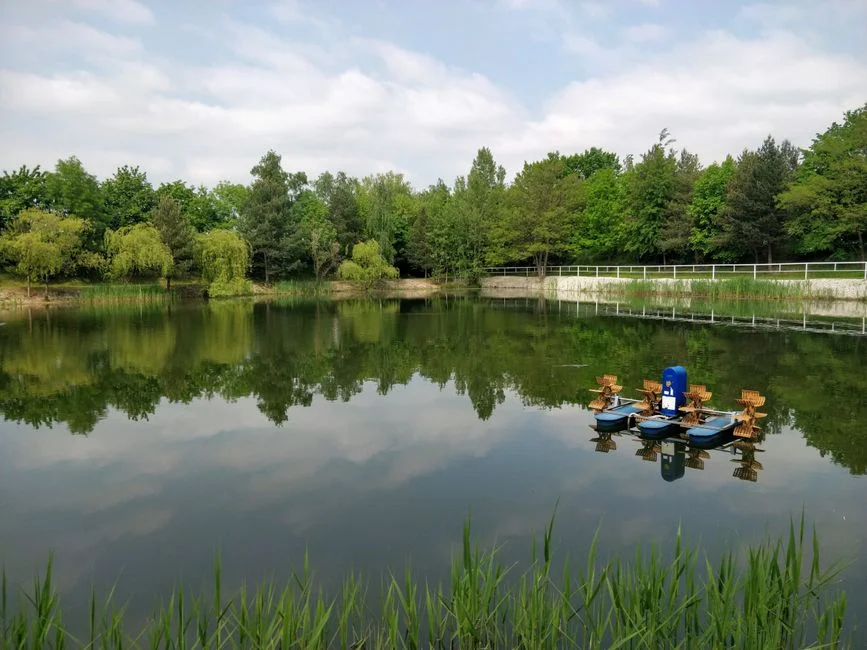
Conventional biological treatment, membrane bioreactors and nature-based systems use different mechanisms and should be compared by treatment objective, footprint and operating model. The 2024 Sustainability review groups conventional processes into activated-sludge categories—OD, A/O, A/A/O and SBR—and biofilm categories including MBBR and biological contact oxidation. It also identifies surface-flow, vertical-flow and horizontal-submerged artificial wetlands; slow, fast and subsurface soil-percolation systems; stabilization ponds; and combined treatment trains.
An MBR combines activated sludge with submerged membrane filtration. The HydropureWater verified product catalog reports effluent below 1 μm, a 60% smaller footprint than conventional systems, and capacities from 10 to 2,000 m³/day. These are catalog claims for that system, not project-specific guarantees. Membrane separation may be relevant where compact equipment and fine solids separation are priorities, but the offer must still state the duty basis, pretreatment, controls, solids handling and maintenance requirements.
Vermifiltration is another decentralized biological alternative. The 2024 IntechOpen review describes it as combining filtration with earthworms and identifies it as efficient, viable, less expertise-intensive and suitable for decentralization. Constructed wetlands with microbial fuel cells represent a combined-treatment and electricity-production concept, not a default solution for every Cuenca site.
No architecture should be selected on process name alone. The 2024 Sustainability review warns that independent technologies may not satisfy tightened discharge or reuse requirements, making integrated configurations increasingly important where the project objective cannot be met by one stage.
| Architecture | Principal treatment approach | Selection issue |
|---|---|---|
| Conventional activated sludge or biofilm | Biologically removes organic matter; process configuration determines nitrogen handling | Requires a defined process train, settled-sludge route and operating control |
| MBR | Activated sludge followed by submerged membrane filtration | Fine solids separation and compact equipment must be justified against project targets and O&M capability |
| Artificial wetland | Media, vegetation and microbial pathways provide natural biological treatment | Land, hydraulic distribution, vegetation maintenance and climate exposure must be included |
| Soil percolation or stabilization pond | Natural or engineered treatment through soil interaction or pond processes | Land requirements, groundwater separation and local environmental acceptance need verification |
| Vermifiltration | Filtration combined with earthworm activity | Application-specific performance and biological maintenance must be demonstrated |
| Hybrid or integrated process | Combines treatment stages to meet discharge or reuse objectives | Higher complexity must be justified by a treatment requirement that one process cannot meet |
The integrated MBR membrane bioreactor page provides the relevant product configuration and scope for preliminary comparison.
Why a WSZ Package Plant Suits Many Small Sites
The WSZ series combines anoxic/aerobic biological contact oxidation, sedimentation and disinfection in one buried package unit, according to the HydropureWater verified product catalog. This configuration integrates biological treatment, solids separation and disinfection without requiring the buyer to assemble separate package stages.
The catalog states a capacity of 1–80 m³/h for the WSZ series. That range must remain attached to the product scope; it should not be converted into an assumed daily loading for a particular Cuenca site. The same source describes fully automated operation with “no operator required.” In procurement language, that claim should be translated into defined responsibilities: automatic operation does not remove the need for local inspection, maintenance access, sludge management, emergency response or compliance monitoring.
Installation flexibility is another stated feature. The WSZ can be installed below grade with landscaping above or mounted on a trailer for mobile deployment. A below-grade arrangement can reduce visible above-ground infrastructure, but the project still needs verification of excavation, groundwater, flotation and access conditions. Trailer mounting may suit temporary or mobile deployment, but the site must support the load, utilities and servicing arrangement.
The catalog identifies residential communities, hotels, hospitals, factories and rural areas as use cases. Those labels should be treated as screening applications rather than proof of suitability. Each project needs a process calculation, hydraulic assessment and performance basis.
| WSZ catalog item | Verified scope | Project information still required |
|---|---|---|
| Process configuration | Anoxic/aerobic biological contact oxidation, sedimentation and disinfection in one buried package | Project-specific process sizing and treatment objectives |
| Capacity | 1–80 m³/h for the WSZ series | Verified average and peak duty, equalization and downstream reuse demand |
| Operation | Fully automated; catalog states no operator required | Inspection regime, controls interface, alarm response and operator training |
| Installation | Below grade with landscaping above, or trailer-mounted for mobile deployment | Ground, groundwater, flood, utility, access and structural conditions |
| Support | Application catalog includes communities, hotels, hospitals, factories and rural areas | Commissioning scope, media replacement assumptions, solids route, spares and warranty |
Buyers should request the WSZ underground integrated sewage treatment plant data against the verified design basis, not simply accept the catalog capacity or automation statement.
Choose Between WSZ, MBR and Nature-Based Treatment
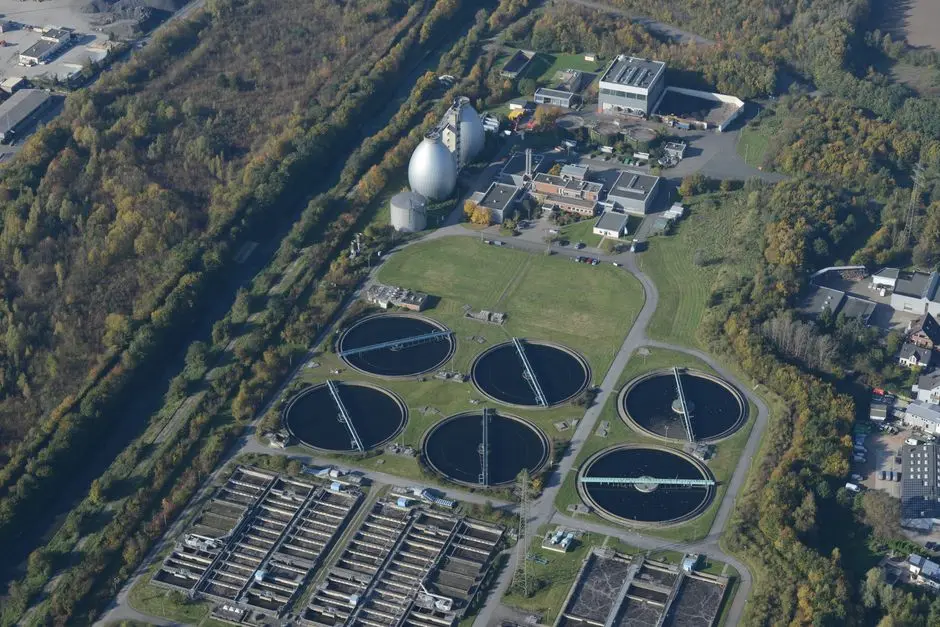
Choose WSZ when the priority is an integrated biological, settling and disinfection train in a compact buried package. Its verified catalog scope is 1–80 m³/h. Choose MBR when membrane separation and reduced footprint are important; the catalog reports capacities from 10 to 2,000 m³/day, filtration below 1 μm and a 60% smaller footprint than conventional systems. Neither capacity should be matched to a site without verified hydraulic and organic duty data.
Choose constructed wetlands, soil percolation, stabilization ponds or vermifiltration when the site can accommodate their land, hydraulic and operating requirements. The 2024 Sustainability review expressly categorizes the natural systems, and its 2024 IntechOpen companion review describes vermifiltration as decentralizable. An integrated or hybrid process becomes more credible where a single technology cannot satisfy the project’s discharge or reuse objectives, consistent with the 2024 review’s warning about tightening requirements.
Make the comparison at project level. WSZ emphasizes an integrated buried package and automated operation; MBR emphasizes membrane separation and a reported footprint reduction; nature-based systems depend more heavily on land and site management. Reuse potential, operator interface, maintainability and civil work should be scored against the project’s verified requirements rather than treated as universal rankings.
| Decision condition | Preferred starting point | Check before selection |
|---|---|---|
| Compact buried package, integrated biological treatment, settling and disinfection are priorities | WSZ | Verified duty, excavation and groundwater conditions, access, controls and media assumptions |
| Membrane separation and reported footprint reduction are priorities | MBR | Effluent target, feed quality, pretreatment, membrane maintenance and solids handling |
| Land and natural-process operation can be accommodated | Constructed wetland, soil percolation, stabilization pond or vermifiltration | Land area, hydraulic distribution, seasonal effects, vegetation or biological maintenance |
| No single process is expected to meet the required discharge or reuse quality | Hybrid or integrated treatment | Treatment-stage objectives, performance testing and whole-system O&M responsibility |
Use the packaged sewage treatment plant sizing guide to structure hydraulic screening, and the containerized MBR sewage treatment sizing guide for membrane-specific questions. Final approval should follow confirmation of local discharge, reuse and construction requirements with the relevant authority and service providers.
Build the Supplier and Commissioning Checklist
Comparable technical offers reduce procurement risk by defining the same design basis, boundaries and performance obligations. The 2024 Sustainability review notes that decentralized systems can involve multiple levels of governance and infrastructure ownership, so responsibility for operation and maintenance should be explicit rather than assumed.
- Request a process flow diagram, duty basis, equipment dimensions and a complete civil-works scope.
- Require the electrical supply, controls interface, commissioning tests, acceptance criteria, spare-parts list, maintenance schedule and warranty terms.
- Ask each supplier to state the design flow, treatment objectives, sludge or solids handling route, disinfection method and provisions for reuse.
- Confirm installation conditions for buried and trailer-mounted configurations, including access for inspection and maintenance.
- Record local operator capability, response arrangements, spare-parts logistics and ownership of routine and corrective work.
The WSZ catalog identifies sedimentation and disinfection, but it does not provide project-specific performance guarantees. A supplier should therefore demonstrate how its proposed unit meets the buyer’s verified design basis. That basis must include the actual flow and load, the receiving-water or reuse requirements, and the applicable local approvals.
Do not accept unsupported universal prices, removal efficiencies or regulatory limits in a quotation. Request a project-specific price breakdown, test method, guarantee boundary and compliance evidence. Controls and remote monitoring should also be covered in the offer; the SCADA systems guide for wastewater plants provides useful questions about alarms, data access and operational responsibility.
Frequently Asked Questions
How much does a domestic sewage treatment plant cost in Cuenca?
The supplied research contains no defensible Cuenca price range. Request itemized offers covering equipment, civil works, excavation, installation, electrical supply, controls, commissioning, solids management, initial commissioning consumables, maintenance and spare parts. Ask suppliers to state exclusions and warranty conditions so that alternatives can be compared on the same scope.
Which system is cheapest for a rural property or small community?
No system is universally cheapest. Total cost depends on flow, treatment objectives, available land, excavation, local construction, operating responsibility and maintenance. For screening, the WSZ catalog covers 1–80 m³/h, while the MBR catalog covers 10–2,000 m³/day; request project-specific lifecycle-cost comparisons rather than inferring price from these ranges.
Should a Cuenca project choose WSZ or MBR?
Choose WSZ when an integrated anoxic/aerobic contact-oxidation, sedimentation and disinfection train in a buried package is the priority. Choose MBR when membrane separation and the catalog-reported footprint reduction are important. The MBR catalog reports effluent below 1 μm, but project suitability still depends on the verified effluent objective, feed quality, pretreatment and maintenance capability.
Can decentralized sewage treatment reuse the treated water?
Yes, where the treatment objective and local approval support it. The 2024 Sustainability review identifies firefighting, toilet flushing and landscape irrigation as non-potable uses, but it does not authorize them automatically in Cuenca. Confirm the intended reuse, required water quality and applicable local requirements before including reuse in the performance specification.
What data is required before selecting a supplier?
Provide the flow profile and load basis, effluent and reuse objectives, groundwater and soil conditions, installation constraints, drainage route, local approval requirements and maintenance capability. Ask the supplier to return its process selection, duty calculation, equipment schedule, civil and electrical scope, commissioning tests and O&M plan against those inputs.