
What Treatment Train Fits High-COD Trade Waste?
In 2026, manufacturers in Rio de Janeiro generally treat high-COD trade waste with a treatment train rather than one reactor: characterize and equalize the wastewater, remove oil, solids or toxic compounds as needed, reduce the organic load biologically, and polish the effluent when the sewer permit or reuse target requires it. For food-processing wastewater, the supplied Rio de Janeiro benchmark reports COD of 3,000–8,000 mg/L and UASB removal of 70–85%; DAF then addresses residual oils and solids, while MBR provides a more stringent biological and filtration stage. The final train must be based on site testing and the current discharge authorization, because treatment performance does not by itself establish discharge compliance.
The defensible sequence is: characterization → equalization → screening or DAF → biological reactor → polishing → monitoring. Chemical dosing and sludge dewatering are supporting elements, not substitutes for the underlying process design.
COD concentration alone cannot determine equipment capacity. The engineer also needs biodegradability, suspended solids, oils and grease, pH, toxicity, temperature, nutrients, metals and the final discharge or reuse destination. These variables affect biological loading, chemical demand, membrane operation and the amount of polishing required.
For example, the supplied Rio de Janeiro benchmark describes food-processing wastewater with COD of 3,000–8,000 mg/L, TSS of 500–2,000 mg/L and pH of 4.5–6.5 (HydropureWater, 2026 industrial wastewater treatment blueprint). Equalization should precede biological treatment because variable pH and organic loading can destabilize the reactor. DAF is suitable upstream when free oil, fats, oils and grease or floatable solids would interfere; an industrial DAF pretreatment system addresses that separation step but should not be presented as the sole biological COD reducer.
Where the endpoint requires low suspended solids, a membrane bioreactor can combine biological treatment with solids separation. The integrated MBR wastewater treatment system is therefore a downstream option, not an automatic replacement for characterization and protection of the biological process. The current permit and intended reuse application determine the required train.
Match the Waste Profile to the Treatment Technology
The correct technology is determined by the contaminant that each stage must remove and by the risk posed to downstream biology. DAF, UASB and MBR perform different functions, so comparing them as interchangeable “high-COD units” leads to weak process selection.
| Technology | Primary function | Supplied performance benchmark | Design parameter | Suitable waste profile | Output limitation | Position in the train |
|---|---|---|---|---|---|---|
| DAF | Remove free oil, FOG and floatable solids | 90–98% removal of oils and suspended solids | Surface-loading rate of 2–5 m/h; air-to-solids ratio of 0.02–0.06 | Streams with oils, suspended matter or floatable contaminants, including slaughterhouse-type profiles | Does not provide biological COD reduction | Equalization followed by DAF before biological treatment |
| UASB | Reduce biodegradable organic load anaerobically | 70–85% COD removal | Loading rate of 0.5–1.5 kgCOD/m³·d | High-organic-load streams such as food processing, breweries and distilleries | Residual COD, solids and treatment variable require downstream polishing | After equalization and removal of protectants |
| MBR | Combine biological treatment with membrane solids separation | 95–99% COD removal | Flux of 10–25 LMH; MLSS of 8,000–12,000 mg/L | Streams requiring a stringent outlet, a compact installation or validated non-potable reuse | Application-specific reuse quality still requires validation | After pretreatment; biological stage and solids separation are combined |
The benchmarks in this table come from HydropureWater’s supplied Rio de Janeiro industrial wastewater article, dated 2026 in its title and described as using 2025 planning inputs. They are comparison benchmarks, not equipment guarantees or Rio-specific permit limits.
For metalworking wastewater, the same source reports COD of 500–2,000 mg/L, TSS of 200–1,000 mg/L and chromium of 10–50 mg/L. A practical sequence may combine equalization, DAF and chemical precipitation before biological treatment, because metals and suspended solids can inhibit biology or contaminate sludge. Any chemical dosing package, including an automatic chemical dosing system, must be based on jar tests and the selected metals-removal chemistry.
Textile wastewater presents a different profile: COD of 1,500–4,000 mg/L, color of 500–1,500 Pt-Co and TSS of 300–800 mg/L, as reported by HydropureWater in its Rio de Janeiro article. Color may require dedicated treatment rather than simple biological degradation. The process designer should establish whether dyes, sizing agents or other chemicals inhibit the selected biological reactor.
Require a jar test or treatability study before fixing the final train, especially where metals, dyes, disinfectants, solvents or inhibitory chemicals may affect biology. For food-processing streams, the source also suggests a UASB–DAF hybrid arrangement; that is a candidate architecture, not a substitute for site testing or a verified mass balance.
Size the System from Verified Site Data
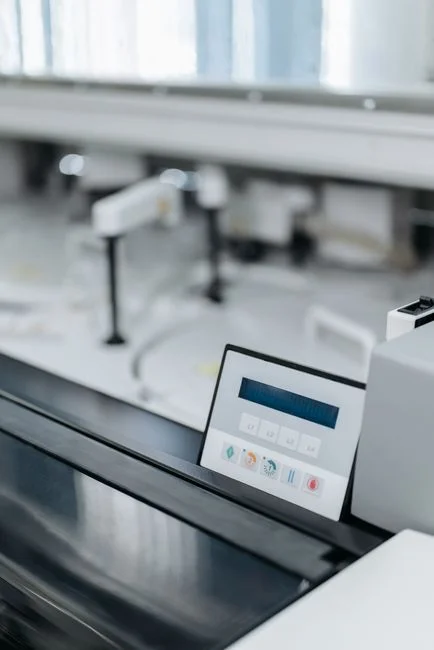
Sizing should begin with the plant’s own flow and wastewater data, not a published concentration range. The RFQ should request average and peak flow; influent and effluent COD; BOD; TSS; oil and grease; pH; temperature; dissolved oxygen; nutrients; metals; toxicity indicators; and the required discharge or reuse endpoint.
| Input or calculation | Evidence available for comparison | Why the buyer must verify it |
|---|---|---|
| Influent COD and flow | Food-processing comparison envelope of 3,000–8,000 mg/L COD | Production changes, batching, washdown and seasonal operation can shift both concentration and flow |
| Suspended solids and oils | Food-processing comparison envelope of 500–2,000 mg/L TSS | DAF loading, chemical demand and sludge production depend on actual solids and grease characteristics |
| DAF hydraulic loading | 2–5 m/h surface-loading benchmark | The final rate must be checked against recovered solids, rise behavior and the selected equipment geometry |
| UASB organic loading | 0.5–1.5 kgCOD/m³·d benchmark | Biodegradability, temperature, pH, reactor configuration and shock loads affect the viable design rate |
| MBR membrane duty | 10–25 LMH flux and 8,000–12,000 mg/L MLSS | Manufacturer guarantees must state the tested feed-water basis, cleaning strategy and recovery assumptions |
| Equalization, downtime and future growth | No universal sizing formula is supplied in the research | These require the measured flow profile, production schedule, redundancy philosophy and expansion plan |
The supplied ranges are useful for an initial comparison envelope, not for ordering a vessel. The engineer must examine hydraulic and organic peak loads together with equalization volume, production batching, downtime provisions and future capacity changes.
Equipment such as a rotary mechanical bar screen can protect downstream equipment from gross solids, but its selection still depends on the wastewater solids profile and flow regime. It is not an automatic substitute for fine screening or DAF.
Ask each bidder to provide a guaranteed design basis, hydraulic profile, process calculations, equipment guarantees and a sampling and monitoring plan. If those documents are absent, the proposed capacity is an estimate rather than a commitment.
Verify Discharge, Reuse and Operating Requirements
The legal destination of the treated water controls the design basis. A permitted municipal sewer connection, direct discharge to a receiving water and non-potable reuse are not interchangeable.
HydropureWater’s supplied Rio de Janeiro article reports a permitting duration of 90–120 days as a planning indication. That range should not be treated as a 2026 schedule commitment: the current permit, authorization and receiving-body requirements determine the actual approval route and timetable.
The same source refers to quarterly self-monitoring reports. Flow, pH, COD, TSS and sector-specific parameters should therefore be included in the compliance monitoring plan, but each parameter, frequency and reporting obligation must be checked against the current authorization.
A sewer-discharge design may emphasize pretreatment and control of substances harmful to the municipal system. Direct discharge may require a more stringent effluent specification and additional evidence. A non-potable reuse project must also address the intended application, storage, disinfection, public-health controls and the quality needed by the receiving process.
For reuse, HydropureWater reports that its MBR system can produce near-reuse-quality effluent with filtration below 1 μm. This is a technology claim in the supplied source, not evidence that every MBR effluent is suitable for a specific industrial reuse. Validation must cover the intended application and any applicable current reuse requirements. If disinfection is required, equipment selection should define its performance basis and control sequence; a UV sterilizer for water treatment is one potential stage, not a substitute for permit review.
Claims about a Guanabara Bay prohibition, numerical reuse limits or universal COD thresholds should not be used without checking the current applicable authorization. Process performance establishes what the equipment can achieve under defined conditions; authorization establishes whether and where that effluent may be discharged.
Compare Capital and Operating Cost Without Guessing
Technology comparisons are meaningful only when the functional scope, duty basis and exclusions are the same. The available figures below are indicative planning benchmarks from HydropureWater’s Rio de Janeiro industrial wastewater article, using 2025 inputs in a 2026-titled blueprint. They are neither quotations nor guaranteed 2026 prices.
| Technology | Indicative CAPEX | Indicative OPEX | Budget items requiring quotation |
|---|---|---|---|
| DAF | US$500–1,200 per m³/hour | US$0.50–1.50/m³ | Coagulants, flocculants, air supply, sludge handling, controls, maintenance and installation |
| UASB | US$800–1,500 per m³/day | US$0.30–0.80/m³ | Reactor internals, gas handling, heating where required, sludge dewatering, controls and commissioning |
| MBR | US$1,500–3,000 per m³/day | US$1.20–2.50/m³ | Membranes, pumps, aeration, cleaning chemicals, controls, membrane replacement and pretreatment |
The source also identifies permitting, labor and sludge-disposal costs as material budget categories. Those figures are not used here because a current site-specific quotation is the appropriate basis for them. A bidder should identify whether the price includes equalization, screening or DAF, biological treatment, polishing, automation, sludge handling, controls, commissioning, chemicals, energy, membrane or wear-part replacement, civil works and disposal fees.
The MBR benchmark has the highest stated capital and operating figures because its quoted scope includes a more demanding biological and membrane-separation configuration, while UASB is an organic-load reducer and DAF is principally a solids and oil separator. For reuse or tighter discharge, that comparison must include footprint, reliability, reuse value and downstream consequences rather than CAPEX alone.
Use the buyer formula: annual avoided compliance and reuse value minus annual OPEX, divided by incremental CAPEX. The avoided values must come from the plant’s verified exposure and a defensible water-reuse calculation; they should not be imported from an illustrative payback scenario.
Sludge can materially change the lifecycle comparison. A plate and frame filter press may be considered where dewatering is required, but the RFQ must define cake solids, filtrate quality, cycle time, wash requirements and disposal route.
Build the 2026 Equipment and Supplier RFQ
A comparable RFQ should require the bidder to demonstrate the process basis, not merely list equipment. Request a process narrative, P&ID, mass balance, hydraulic calculations, sizing basis, duty cycles, materials of construction, controls philosophy and complete equipment list.
Performance guarantees should be tied to an agreed influent envelope and effluent targets. The envelope should identify the flow range, COD, TSS, oils, pH, temperature and toxicity parameters on which the guarantee depends. Ask for guarantees covering energy consumption, sludge production and membrane or wear-part life where applicable, along with the test method and acceptance period.
Local execution documentation should include commissioning procedures, operator training, commissioning chemicals, spare-parts recommendations, remote-support arrangements and a proposed compliance and discharge-monitoring plan. For membrane equipment, specify membrane warranty conditions, expected cleaning frequency and replacement pricing assumptions. For anaerobic systems, require start-up support, gas-management details and the proposed sludge-handling sequence.
Each bidder must state its exclusions explicitly. Civil works, power supply, chemicals, permits, disposal fees, membrane replacement, sludge transport and off-site waste can otherwise appear outside the price. A transparent exclusions schedule prevents the apparent low bid from becoming a larger lifecycle cost.
For sludge, the supplied product information covers plate and frame filter-press filtration areas from 1 to 500 m². That is a configuration range, not a sizing conclusion: final selection depends on sludge rheology, solids content, compressibility, batch size and required cake dryness. The same principle applies to treatment parts, valves and filter media—compatibility and duty must be established against the selected process.
Before award, the engineering team should reconcile the bidder’s mass balance with the vendor’s equipment list and guarantees. Any parameter left outside the guaranteed envelope should remain visible as a procurement risk rather than being hidden in a footnote.
Frequently Asked Questions
Which treatment train should a high-COD factory select?
Start with the waste profile and endpoint. Use equalization and oil or solids removal before biological treatment where required; select UASB for a suitable high-organic-load stream after protectants are controlled; and use MBR where the outlet requires tighter solids separation or validated non-potable reuse. The selection still requires site testing and current permit review.
What data is needed to size DAF, UASB or MBR equipment?
Request measured average and peak flow, COD, BOD, TSS, oils and grease, pH, temperature, dissolved oxygen, nutrients, metals and toxicity data, plus the final effluent or reuse target. The published benchmark ranges are comparison references; they cannot replace the plant’s influent envelope or hydraulic profile.
How much should a high-COD treatment system cost?
For initial planning, HydropureWater’s supplied Rio de Janeiro article gives DAF CAPEX of US$500–1,200 per m³/hour and OPEX of US$0.50–1.50/m³; UASB CAPEX of US$800–1,500 per m³/day and OPEX of US$0.30–0.80/m³; and MBR CAPEX of US$1,500–3,000 per m³/day and OPEX of US$1.20–2.50/m³. These are not quotations. Buyers should request current bids with one common scope, including pretreatment, sludge handling, utilities, commissioning and replacement costs.
How should a buyer evaluate suppliers and discharge-compliance risk?
Require a signed design basis, P&ID, calculations, equipment guarantees, commissioning plan, operator training, local support, spare parts and a written exclusions schedule. Separately, obtain the current permit and written acceptance from the sewer authority or receiving body; equipment performance alone does not authorize the discharge route.