Why Rural Sewage Treatment in Ecuador Starts at the Receiving Water
Rural sewage treatment in Ecuador must be designed around the receiving environment, verified wastewater flow and load, available land, reuse goals, and the applicable approval route—not population alone. A WIT Transactions on Ecology and the Environment case study documents households across 47 hectares in El Rosario discharging domestic wastewater into a stream flowing into the Daule River, which the study identifies as the primary drinking-water source for more than 4 million people in Guayas Province. For practical projects, a buried WSZ package plant combines anoxic/aerobic biological contact oxidation, sedimentation, and disinfection, while an MBR adds membrane filtration and a smaller footprint. Equipment selection should follow site data and a supplier quotation that clearly defines design flow, civil works, controls, commissioning, training, spares, and discharge requirements.
The receiving-water question comes first because an apparently satisfactory plant discharge can still create downstream health and environmental risks. The El Rosario case establishes a concrete local concern: untreated domestic wastewater was reaching a stream connected to a major drinking-water source. The engineering response therefore has to protect community health, the receiving water and downstream users while preserving the long-term operability of the broader Ecuador sewage-treatment systems guide.
The Inter-American Development Bank’s January 2025 account provides wider context. It reports that, in 2010, two million rural residents lacked drinking-water services and 2.5 million lacked sanitation systems. That historical gap does not specify equipment demand, but it shows why sanitation infrastructure cannot be treated as an isolated facility: collection, treatment, operation and community ownership have to be considered together.
Before selecting a treatment route, identify the receiving water, exact discharge or reuse point, downstream users, sensitive uses and applicable Ecuadorian approval requirements. A supplier should then demonstrate how its proposed process addresses those project-specific conditions. Equipment capacity and treatment claims cannot substitute for the receiving-water assessment.
Build a Project-Specific Design Basis Before Selecting Equipment
A defensible quotation starts with verified flow and load data, not a population figure alone. The supplier must state the design flow, hydraulic peak assumption, wastewater characteristics, treatment objectives and outlet basis used to select the equipment.
Obtain measured average and peak flows, current service information and projected demand. Request wastewater characterization covering BOD5, COD, TSS, pH and fecal indicators, together with any parameter relevant to the proposed process or discharge. Population projections may support demand planning, but the quotation must identify the actual wastewater flow used for sizing.
Site information should include drawings, soil and groundwater conditions, access constraints, available land, burial-depth requirements, power availability and intended reuse. Record operator capability, local maintenance support, electricity reliability, sludge-removal arrangements and the required commissioning date. These inputs determine whether a package unit can be maintained under local conditions.
| Design-basis item | Information the buyer must obtain or require | Why it affects procurement |
|---|---|---|
| Hydraulic basis | Verified average flow, peak flow, current demand and projected demand | Defines equipment capacity and equalization or pumping needs |
| Wastewater characterization | BOD5, COD, TSS, pH, fecal indicators and other relevant parameters | Determines biological loading, solids separation and disinfection needs |
| Site and installation | Drawings, soil, groundwater, access, land, burial depth and utility information | Controls package layout, civil works, installation and maintainability |
| Outlet and reuse | Receiving water, discharge point, reuse objective and approval route | Sets the required treatment objective and acceptance basis |
| Operations | Operator resources, maintenance capability, sludge handling, power and commissioning schedule | Tests whether the proposed system is operable after handover |
The source limitation must remain visible: the supplied research does not provide Ecuador-specific equipment prices or a universal national effluent-limit table. The broader Ecuador sewage-treatment systems guide supports project-specific characterization and quotation requirements, but neither missing dataset can be replaced with generic values or an assumed national standard.
Compare WSZ Package Plants and MBR Systems
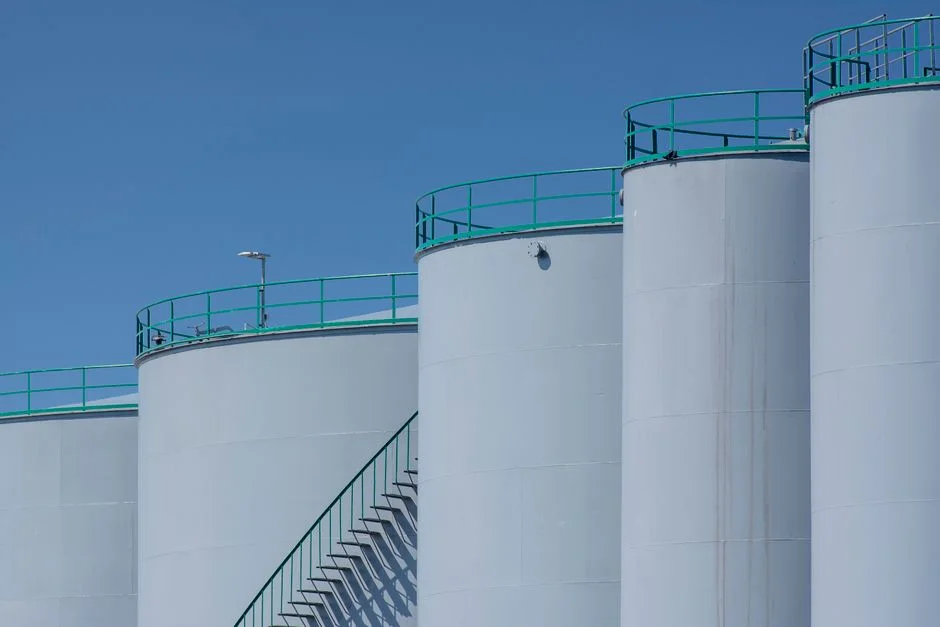
A WSZ package plant and an MBR serve different site and reuse conditions rather than forming a universally superior ranking. The decision should follow land availability, outlet sensitivity, reuse objectives, hydraulic variation, sludge handling, operator resources, energy demand and local technical support.
The buried WSZ package sewage treatment plant combines anoxic/aerobic biological contact oxidation, sedimentation and disinfection in one integrated unit. The verified product catalog describes it as fully automated, requiring no operator, with a capacity of 1–80 m³/h. It can be installed below grade with landscaping above or mounted on a trailer for mobile deployment.
The MBR membrane bioreactor system combines activated sludge with submerged PVDF membrane filtration. The product catalog specifies filtration below 1 μm and states that its footprint is 60% smaller than conventional systems, with a capacity range of 10–2,000 m³/day.
| Decision factor | WSZ package plant | MBR system |
|---|---|---|
| Core treatment train | Anoxic/aerobic biological contact oxidation, sedimentation and disinfection | Activated sludge followed by submerged PVDF membrane filtration |
| Verified catalog characteristics | Fully automated; no operator required; 1–80 m³/h; below-grade or trailer-mounted deployment | Filtration below 1 μm; stated footprint 60% smaller than conventional systems; 10–2,000 m³/day |
| Strongest fit to evaluate first | Sites where land is available and the outlet is intended for subsurface irrigation | Sites where land is severely restricted or high-quality discharge or non-potable indoor reuse is required |
| Procurement focus | Burial conditions, access, power, controls, maintenance and outlet study | Membrane scope, hydraulic variation, fouling controls, energy demand, sludge handling and technical support |
These are selection rules, not guarantees of discharge compliance. The HydropureWater Ecuador guide recommends WSZ or conventional activated-sludge package equipment where land is available and subsurface irrigation is planned, and MBR where land is severely constrained or higher-quality discharge and non-potable indoor reuse are required. It does not establish that MBR is automatically superior, so quotations should be evaluated against the same wastewater, site and outlet data.
Follow the Treatment Process from Inlet to Accepted Effluent
Acceptance depends on a defined process sequence: inlet protection, biological treatment, solids separation, disinfection, and sampling against the project’s approval requirements. The actual configuration depends on the wastewater study and outlet assessment.
- Inlet protection: Screening removes debris such as plastic wrappers, toys, animal fragments and personal-care products. Grit removal captures particles including coffee grounds and sand. Pumps transfer wastewater to the treatment stages. An appropriate mechanical inlet-protection approach should be selected only after confirming the incoming debris and grit characteristics.
- Biological treatment: Aeration supplies oxygen for biological treatment. The WSZ uses anoxic/aerobic biological contact oxidation, with sludge and biomass separation included in the integrated treatment train.
- Solids separation: Sedimentation allows sludge to separate for removal and processing. Sludge removal, storage, transport and final disposal are operational responsibilities and must appear in the supplier’s scope and the project’s operating plan.
- Disinfection: The WSZ package includes disinfection within the integrated unit. The final configuration and performance objective still depend on the verified outlet requirement and the applicable approval route.
- Sampling and acceptance: Test a representative effluent sample for the parameters established in the applicable Ecuadorian approval route, including BOD5, TSS, pH and fecal coliforms where required.
The acceptance protocol should define sampling points, sample handling, analytical methods, test conditions, required results and who resolves a nonconforming result. A visible sample at the plant boundary is not enough if the discharge point, reuse destination or receiving-water study establishes different requirements.
Plan the Permit, Community, and Long-Term Operating Model
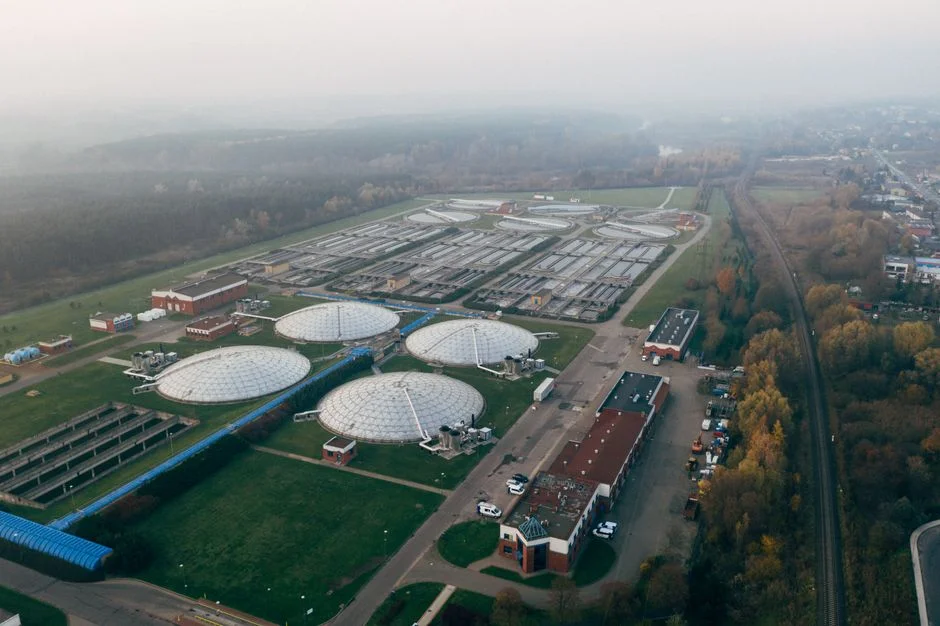
The approval route must be identified before equipment purchase because the receiving water, discharge or reuse plan, project owner and responsible authority determine the applicable requirements. The supplied research does not support a complete national effluent-limit table, so a generic limit schedule cannot substitute for project-specific confirmation.
The IDB’s January 2025 account of the Rural Sanitation and Water Infrastructure Program shows why community participation belongs in the operating model. The program included sanitation education and rational water use, trained more than 100,000 residents, and prepared more than 1,000 community-organization members involved in operating systems. These figures describe PIRSA activities, not a staffing standard for each treatment plant, but they demonstrate the value of assigning maintenance and ownership responsibilities early.
For each project, allocate responsibility for sanitary-sewer upkeep, plant operation, laboratory sampling, sludge removal, spare parts, electricity and recordkeeping. Confirm who responds to alarms and power interruptions. If sludge is dewatered before removal or disposal, define the required equipment and disposal route; a plate-and-frame dewatering arrangement should not be included without confirming sludge characteristics and handling needs.
Sludge is a treatment stream, not an incidental by-product. The International Plasma Technology Center’s Sewage and Wastewater Sludge-to-Power page, © 2024, reports that biosolids from anaerobic digesters have a calorific value of about 12 MJ/kg. That figure does not establish that energy recovery is technically or economically feasible at a particular rural site; it only shows why calorific content should not be confused with a ready-made energy-recovery solution.
Schedule training, commissioning, performance validation and acceptance testing before handover. Agree a maintenance-support arrangement, spare-parts source, local support responsibility and recordkeeping system as part of the operating model rather than as post-delivery additions.
Make the Equipment Quotation Comparable
A comparable quotation must expose the design basis, scope boundary and operating assumptions used to price the system. Without these elements, a lower equipment number may conceal additional civil works, controls, utilities, commissioning or sludge-handling costs.
Require each quotation to state design flow, peak-flow basis, wastewater characteristics, treatment objectives, outlet requirements and process guarantees. Define the civil-works boundary, including inlet works, screening, grit removal, pumping, foundations or burial, electrical installation, sludge handling, sampling points, controls and site restoration.
Equipment schedules should identify dimensions, materials, membrane or media life, automation, alarms, local controls, communications, power requirements, utilities and included accessories. The commercial terms should cover commissioning, validation, operator training, documentation, performance testing, warranty, spare-parts availability and technical support.
| Quotation area | Information to require | Commercial question it answers |
|---|---|---|
| Design basis | Design flow, peak assumption, wastewater characteristics, outlet and guarantees | Are all bids solving the same verified project? |
| Civil and electrical scope | Inlet works, pumps, foundations or burial, power, controls, sludge handling, sampling and restoration | Which site works and utilities are included? |
| Equipment | Dimensions, materials, membrane or media life, automation, alarms, utilities and accessories | What is actually being supplied? |
| Delivery and handover | Commissioning, validation, training, documents, testing, warranty, spares and support | What support is required after delivery? |
| Commercial exclusions | Allowances, installation duration, shipping and import assumptions, taxes and local-partner duties | Where are costs and responsibilities hidden or omitted? |
| Operating response | Response to seasonal flow, power interruption, sludge accumulation and local maintenance capability | Will the system remain operable in its actual setting? |
Suppliers should also explain how the proposed configuration responds to seasonal flow variation, power interruption, sludge accumulation and the community’s maintenance capability. For MBR bids, request the additional process detail set in the MBR versus conventional activated-sludge comparison; for containerized systems, the containerized MBR wastewater-treatment sizing guide provides a useful structure for checking hydraulic and implementation assumptions.
Do not substitute a generic equipment price. The supplied research contains no Ecuador-specific pricing, so a defensible budget requires a project quotation based on the verified flow, wastewater, site, treatment objectives and outlet requirements.
Frequently Asked Questions
How much does a rural sewage treatment plant cost in Ecuador?
The supplied research provides no Ecuador-specific equipment prices, so a credible cost cannot be stated without a quotation. Ask each supplier to price the same design flow, peak-flow basis, wastewater characteristics, treatment objectives, civil works, controls, utilities, commissioning, training, spares and outlet requirements. Then record exclusions, shipping and import assumptions, taxes, installation duration and local-partner responsibilities separately.
Should we choose a WSZ package plant or an MBR system in rural Ecuador?
Choose against documented site constraints rather than technology preference. A WSZ package plant merits priority where land is available and subsurface irrigation is intended; an MBR merits evaluation where land is severely restricted or high-quality discharge and non-potable indoor reuse are required. Compare sludge handling, hydraulic variation, energy demand, operator resources and local technical support before selecting.
How should a sewage treatment system for a rural Ecuadorian community be sized?
Require verified average and peak flow, current and projected demand, and wastewater analysis covering BOD5, COD, TSS, pH and fecal indicators. The supplier’s quotation must identify its design flow and hydraulic-peak assumptions, together with the treatment and outlet criteria used. Population alone is not a sufficient sizing basis.
Which Ecuadorian approvals are required for a rural sewage treatment plant?
The exact approval route depends on the receiving water, discharge or reuse plan, project owner and responsible authority. Confirm the applicable discharge, construction and operating requirements with the relevant authority and, where required, the receiving-water study. The supplied research does not support a complete national effluent-limit table, so generic limits should not be used as a substitute for project-specific confirmation.
What should a supplier include when quoting sewage treatment equipment?
Require a documented process, design flow, peak-flow basis, wastewater characteristics, outlet requirements, guarantees, equipment schedule, civil and electrical boundaries, utilities, automation, commissioning, validation, training, performance testing, maintenance support, warranty, spares and local support. Also require explicit exclusions and a documented response to seasonal flow, power interruption, sludge accumulation and the community’s available maintenance capability.