What 'containerized MBR STP' means in a Vienna procurement context
A containerized MBR (membrane bioreactor) sewage treatment plant packages the full biological and membrane treatment train inside one or more ISO 20' or 40' high-cube (HC) shipping containers, with insulated walls, a seaworthy frame, and pre-wired power so the unit can be delivered, craned onto a prepared slab, and commissioned in days rather than months. The Pure Aqua MBR-C reference train starts with coarse screening followed by a drum screen with 1.5 mm perforation, then an anoxic zone for denitrification, an aeration tank with fine-bubble diffusers, and a submerged membrane tank where coarse-bubble air scour keeps the membrane surface clean (Pure Aqua, containerized MBR product description, accessed 2026). The membrane step delivers a filtrate that is typically <1 µm class, which is what makes the containerized MBR package attractive for both sensitive municipal discharge and on-site reuse.
Two membrane standards dominate the containerized MBR product category. The Pure Aqua MBR-C uses hollow-fiber (HF) ultrafiltration membranes with a nominal pore size of 0.04 µm, built from thermally induced phase separation (TIPS) PVDF (Pure Aqua, 2026). The DF series PVDF flat-sheet MBR modules are offered in 80–225 m² cassettes with a 0.1 µm pore size and a per-cassette throughput range of 32–135 m³/day. Both are submerged modules; both deliver a filtrate that is essentially free of suspended solids and most bacteria. The choice between them is not about filtrate quality — both meet reuse-class filtrate standards — but about cassette geometry, air-scour demand, and clean-in-place logic, which the engineer should confirm against the supplier's verified flux curve rather than a brochure number.
The packaging constraint is what defines the product. A "containerized MBR STP" is a category, not a size: the hydraulic capacity of any quotation is set by how many 20' or 40' HC containers and how many membrane cassettes are deployed. A typical Pure Aqua MBR-C reference unit ships in a 40' HC container at 460V/3Ph/60Hz, with an operating envelope of 20–30 °C and a design temperature of 20 °C (Pure Aqua, 2026) — for a Vienna project the engineer should specify a 400V/3Ph/50Hz variant up front and derate the membrane flux for the colder winter months. The complete HydropureWater integrated MBR membrane bioreactor system arrives with standby pumps, remote monitoring, an anoxic zone, and built-in membrane cleaning already wired in; the engineer's task is to size how many of those containers the site actually needs.
Inputs the engineer must collect before any sizing calculation
Five inputs drive every downstream number: design population, per-capita wastewater flow with peaking factor, influent BOD and nitrogen load, target effluent quality, and a verified membrane flux at the project's lowest operating temperature. Collecting them in a single datasheet before any supplier call avoids the most common rework cycle — being quoted a container count that is then redone once the operator's actual occupancy pattern is known. The table below is a copy-paste template the engineer can issue to the client or camp operator.
| Input | Reference / source | Value the engineer should confirm locally |
|---|---|---|
| Design population | Project-specific | Residential units × occupants; camp beds × 0.85 occupancy factor for transient workforce camps — document the basis |
| Per-capita wastewater flow | Pure Aqua MBR-C reference, 50 gpd per capita (Pure Aqua, 2026); ÖWAV-Regelblatt 2 framework for Austria | Confirm against the local district value; Pure Aqua uses 50 gpd per capita (≈ 190 L/capita/day) as the sizing reference |
| Daily peaking factor | Standard practice for residential / camp | Confirm the local value; residential projects typically use a higher factor, large steady-shift camps a lower one |
| Influent BOD | Project-specific | Residential feed typically around 200 mg/L; camp feeds with canteens and showers run higher — confirm with a composite sample |
| Influent NH4-N | Project-specific | Typical domestic range; confirm with composite sampling for the specific population |
| Influent temperature | Project-specific | Vienna annual range; use the winter low to set the membrane flux derating |
| Effluent targets | 1. AEV for direct discharge to Wiener Kanal; reuse target (toilet flushing, irrigation) if any | Obtain the exact 1. AEV parameter list and the Indirekteinleitervertrag limits from Wien Kanal before sizing |
The per-capita flow is the single most variable input. The Pure Aqua reference sizing is built on 50 gpd per capita (Pure Aqua, 2026); in Austrian practice the engineer should cross-check against the local value because residential water-use habits and camp shift patterns can shift this number materially. The influent BOD is what sizes the biological stage; the temperature is what derates the membrane flux in winter, because cold mixed liquor is more viscous and fouls faster. The effluent target is the compliance anchor: a discharge to the Wiener Kanal with a standard Indirekteinleiter contract is one envelope, a reuse target for toilet flushing or landscape irrigation adds a polishing step, and a sensitive reuse envelope adds a disinfection residual. Each of those adds a different downstream unit and a different operating cost, so the engineer needs the answer in writing from Wien Kanal and from the client before the first calculation.
Step-by-step hydraulic and biological sizing
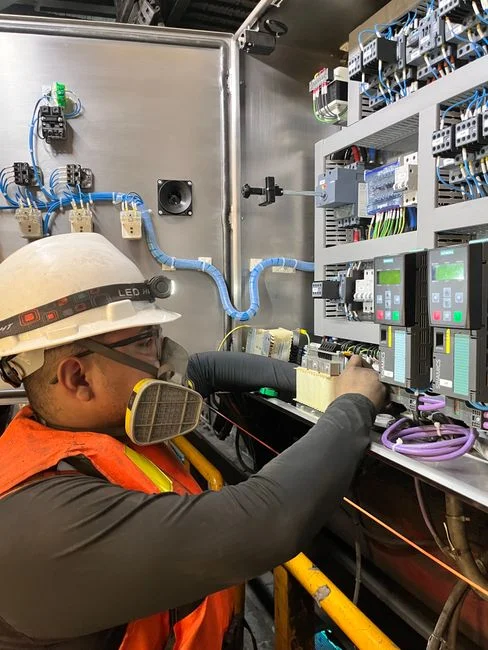
Once the inputs above are pinned down, the sizing chain is a five-step calculation. The table after the steps shows the output each step produces and the unit the engineer writes into the datasheet.
Step 1 — Design flow. Qavg = population × per-capita flow. Qpeak = Qavg × daily peaking factor, with a separate 2-hour peak factor used to size the equalization volume. Express both in m³/day and m³/h. The IDA Water Security Handbook sets the unit conventions the rest of this calculation relies on: 1 m³ = 1,000 L, 1 MIGD = 4,546 m³/d, 1 MGD = 3,785 m³/d (IDA Water Security Handbook 2020–2021, unit conversion table, p. ii). Those conversions are the cross-check every time a vendor sends an imperial datasheet.
Step 2 — Equalization. The equalization tank absorbs the 2-hour peak and dampens diurnal swings from the residential block or camp. The target retention is several hours of Qavg; the exact figure depends on the peaking factor and the operator's willingness to ride through a peak. A packaged equalization tank sized at a defined retention fraction of Qavg is normally integrated into the front of the MBR container or delivered as a separate bolted tank on the same slab.
Step 3 — Biological volume. The anoxic zone is sized for denitrification; the aerobic volume is sized from BOD loading at the target mixed liquor suspended solids (MLSS) concentration. The anoxic-to-aerobic ratio is a design choice the engineer sets; the aerobic Food-to-Microorganism ratio is the operating target. Cold Vienna winters mean the engineer should size the aerobic volume with margin, because nitrification rates drop at low temperature and the MLSS band is a conscious trade-off between reactor volume and membrane fouling tendency.
Step 4 — MBR membrane area. Required membrane area (m²) = Qpeak (m³/h) ÷ design flux (L/m²·h). For the DF series PVDF flat-sheet MBR modules, the per-cassette throughput range of 32–135 m³/day sets the cassette count. Use the lower end of the flux band in cold Vienna winter conditions to avoid fouling — a clean cassette at 25 °C and a cold cassette at 8 °C are not the same operating point. The 0.04 µm hollow-fiber alternative in the Pure Aqua MBR-C is sized the same way, against that supplier's verified flux curve at the project's lowest temperature.
Step 5 — Container count. Sum the equalization, anoxic, aeration, and membrane tank volumes plus the pre-treatment drum screen and the control / blower room, and pack them into 20' or 40' HC containers. For typical residential or camp flows, a single 40' HC container handles up to roughly 200 m³/day; larger projects step to two or three parallel containers rather than a single oversized one, which gives the operator redundancy during membrane maintenance. The complete HydropureWater integrated MBR membrane bioreactor system ships with this internal packing already engineered, so the engineer's job at this step is to confirm the container count, the electrical interface, and the shipping envelope against the site's crane and access constraints.
| Step | Calculation | Output written to datasheet |
|---|---|---|
| 1. Design flow | Qavg = population × per-capita flow; Qpeak = Qavg × peaking factor | Qavg and Qpeak in m³/day and m³/h |
| 2. Equalization | Volume sized from 2-hour peak retention target | Equalization tank volume (m³) |
| 3. Biological volume | Anoxic + aerobic volume from BOD loading at target MLSS | Anoxic and aerobic volumes (m³), F/M ratio |
| 4. Membrane area | Area (m²) = Qpeak (m³/h) ÷ design flux (L/m²·h) | Cassette count for the chosen module family |
| 5. Container count | Sum of all process tanks + control room, packed into ISO containers | Number of 20' or 40' HC containers, electrical interface, shipping envelope |
For the exact flux and cassette-throughput values the engineer must request the supplier's verified performance curve at the project's lowest operating temperature, because the Pure Aqua MBR-C reference design temperature of 20 °C (Pure Aqua, 2026) is warmer than a Vienna winter and the DF series per-cassette range of 32–135 m³/day assumes a flux band that the engineer needs to anchor at the actual design point. A worked example of this five-step chain for a comparable camp application is in the containerized MBR STP sizing methodology for camp projects guide, and the underlying membrane module math is in the MBR membrane module design criteria guide.
Vienna and Austrian compliance envelope for a packaged MBR plant
The technical sizing is only half the job. A containerized MBR for a Vienna site has to satisfy Austria's 1. Abwasseremissionsverordnung (1. AEV) for municipal wastewater parameters, plus the local Indirekteinleitervertrag with Wien Kanal and the Wasserrechtsbescheid issued by the Magistratisches Bezirksamt. The 1. AEV sets the parameter set any discharge to a Wiener Kanal collector must meet, and the Indirekteinleiter contract typically requires flow-proportional sampling and access for the municipal inspection authority. The engineer should obtain the exact 1. AEV parameter list and the contract terms from Wien Kanal before the first container count is locked in, because contract-specific limits on flow, sampling location, or discharge timing can change the equalization design.
A containerized MBR with either the 0.04 µm hollow-fiber (Pure Aqua MBR-C) or 0.1 µm flat-sheet PVDF membrane is normally capable of meeting the 1. AEV municipal parameters (BOD, COD, TSS, NH4-N) on a residential or camp feed without tertiary polishing, because the membrane step retains essentially all suspended solids and the biological stage is designed for nitrification. Where the project gets more demanding is reuse. If the client wants to reuse the MBR filtrate for toilet flushing, landscape irrigation on the same site, or greywater make-up, the engineer needs a downstream polishing and disinfection step. A UV sterilizer is the chemical-free option for a reuse loop without residual; a chlorine dioxide generator is the option when the reuse loop needs a residual to control biofilm in the distribution pipework.
For temporary construction or workforce camps, the engineer also needs to confirm the gewerberechtliche and wasserrechtliche Bewilligung with the Magistratisches Bezirksamt before ordering. A packaged containerized plant is faster to permit than a cast-in-place concrete plant because there is no excavation and no wet civil works, but a Wasserrechtsbescheid for the discharge point is still required, and the camp schedule has to allow for the permit lead time. The earlier this is flagged to the client, the less likely the camp opening is delayed by an approval the supplier quotation never covered.
Containerized MBR vs buried package STP vs containerized UF for reuse
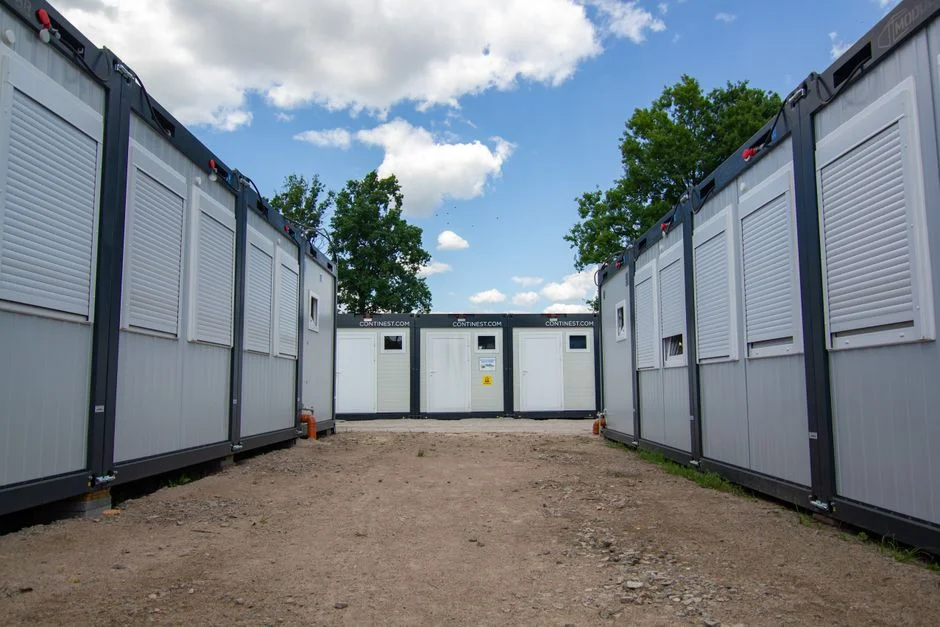
For a Vienna residential or camp project, the realistic alternatives to a containerized MBR are a buried package sewage treatment plant (WSZ series) and a containerized UF polishing train. Each is the right answer in a different envelope, and the engineer's defence to a cost-conscious client rests on naming the envelope explicitly. The table below sets the trade-off out for procurement.
| Option | Best-fit envelope | CAPEX posture | OPEX posture | Reuse capability |
|---|---|---|---|---|
| Buried WSZ underground A/O package sewage treatment plant | Site can be excavated, discharge to municipal collector only, operator is the building caretaker, no reuse target | Lower CAPEX (no container, no membrane cassettes) | Lower aeration and air-scour power than MBR | No reuse-class filtrate; discharge only |
| Containerized MBR | Tight effluent for 1. AEV, no excavation room, short schedule, or reuse on the table | Higher CAPEX (membrane cassettes, container, pre-wired controls) | Higher power for aeration and membrane scour; membrane replacement reserve | Reuse-class filtrate with UV or ClO₂ polishing |
| Containerized UF alone | Polishing an existing biological effluent for non-potable reuse | Lower than full MBR, but not a complete treatment train | Driven by feed water quality | Polishing only — does not replace the bioreactor |
The decision rule of thumb that holds for most Vienna residential and camp projects: a buried WSZ is the right answer for small residential flows where excavation is feasible and there is no reuse target, a containerized MBR is the right answer once the project steps above that flow, or once the site rules out excavation, or once reuse enters the scope. Containerized UF is not a treatment train on its own; it is a polishing step on top of an existing biological effluent, useful when the engineer is upgrading an older works for reuse. An industrial pretreatment compliance case study shows the same decision logic in a different envelope, where the pretreatment limits rather than reuse drive the MBR selection.
Frequently Asked Questions
What per-capita wastewater flow should I use to size a containerized MBR for a Vienna residential or camp project?
The Pure Aqua MBR-C reference sizing uses 50 gpd per capita (≈ 190 L/capita/day) (Pure Aqua, 2026). For a Vienna project the engineer should request the local per-capita figure from the client or the operating utility, because the Austrian per-capita framework (ÖWAV-Regelblatt 2) and the specific district's water-use profile can shift the number. Until the local value is confirmed, use the 50 gpd reference as the upper bound for residential and a lower figure for steady-shift camps with no canteen or shower load, then re-run Step 1 of the sizing chain once the local figure is in writing.
Should I specify a 0.04 µm hollow-fiber or a 0.1 µm flat-sheet PVDF MBR membrane?
Both are submerged PVDF modules and both deliver <1 µm class filtrate; the difference is cassette geometry, air-scour demand, and clean-in-place logic rather than filtrate quality. The Pure Aqua MBR-C uses 0.04 µm hollow-fiber (Pure Aqua, 2026); the DF series flat-sheet cassettes are offered in 80–225 m² sizes with a per-cassette throughput of 32–135 m³/day. The right answer depends on the supplier's verified flux curve at the project's lowest operating temperature and on the operator's experience with cassette handling — request the cold-weather flux curve from both suppliers and compare on the same basis before ordering.
What is the realistic capital cost band for a containerized MBR STP at this scale, and what inputs drive it?
The supplier quotation is the only defensible answer, because container count, membrane area, electrical interface (400V/3Ph/50Hz for Vienna rather than the 460V/3Ph/60Hz Pure Aqua MBR-C reference, Pure Aqua 2026), and the reuse-polishing scope all move the number. The engineer should request a quotation with the five sizing inputs from this article pinned down — design population, per-capita flow, peaking factor, influent BOD, target effluent — and ask the supplier to break out container cost, membrane cassette cost, blower and control cost, and any reuse-polishing skids as separate line items so the client can see what drives the total.
What is the Vienna approval pathway and the realistic lead time for a containerized MBR?
Three approvals sit in the path: the Indirekteinleitervertrag with Wien Kanal (which sets the discharge parameter list and sampling regime), the 1. AEV compliance demonstration against the Austrian municipal wastewater parameter set, and the Wasserrechtsbescheid from the Magistratisches Bezirksamt. The packaged containerized form factor shortens the on-site construction phase compared with cast-in-place, but the permit lead time is independent of the supplier and must be flagged to the client at the quotation stage. The engineer should also confirm the camp or residential operator's procurement lead time for the MBR unit itself, because factory build slots for ISO container skids are typically quoted in weeks from order and that is on the critical path alongside the permit.