What treatment strategy do Melbourne manufacturers use for high-COD effluent?
Melbourne manufacturers treat high-COD trade waste through a staged process: characterise the effluent, obtain approval under the relevant sewer agreement, remove oil, grease, solids and inhibitory contaminants, then use biological treatment or suitable anaerobic digestion for biodegradable organic load. Greater Western Water, for example, limits BOD and suspended solids to 400 mg/L unless a trade-waste agreement specifies otherwise, and prohibits discharges that inhibit microbiological treatment by more than 20%. DAF supports solids and FOG removal, while chemical dosing supports pH and coagulation control. In 2026, Melbourne research also applied machine learning to COD and total-nitrogen analysis, highlighting the value of reliable effluent data.
Trade waste is liquid waste generated by an industry, business, trade or manufacturing process and excludes domestic wastewater, according to the national Guidelines for Sewerage Systems Acceptance of Trade Waste (Industrial Waste) (November 1994). That guidance also states that conforming waste should generally discharge to an available sewer with the local sewerage authority’s approval.
The defensible sequence is:
- Reduce waste at source and segregate incompatible streams.
- Sample the actual discharge during production, cleaning and dumping periods.
- Confirm the responsible sewer authority and negotiate the trade-waste agreement.
- Remove gross solids, oil, grease, FOG and inhibitory contaminants.
- Apply biological treatment or anaerobic digestion to the biodegradable load.
- Separate and dewater residual solids, then monitor and commission the train.
COD is only one design variable. Flow, five-day biochemical oxygen demand, suspended solids, pH, oil and grease, nutrients, metals, salinity and biological inhibition can change the appropriate technology and required capacity. The national guidance warns that industrial wastewater can corrode assets, cause blockages, overload treatment hydraulically, release toxic gases and contaminate sludge.
A 2026 study in Frontiers in Environmental Engineering, “Green machine learning assisted analytics for wastewater valorisation,” benchmarked machine-learning and deep-learning models for predicting COD and total nitrogen from a Melbourne municipal wastewater dataset. That supports better data analytics, but a model prediction is not a plant performance guarantee. The comparison of high-COD trade-waste treatment approaches should be read as a process-selection reference, not as a substitute for site testing.
Which Melbourne sewer limits determine the treatment target?
Greater Western Water’s published criteria apply only to its service area and do not replace the requirements of Melbourne Water or another participating sewer authority; confirm the authority and obtain the site-specific trade-waste agreement before designing the discharge train.
Under the Greater Western Water Trade Waste Acceptance Criteria, version 4.0 dated 17 January 2023, BOD and suspended solids must each be no greater than 400 mg/L unless otherwise specified in the trade-waste agreement. The agreement can impose different or additional conditions, so these concentrations are not universal Melbourne limits.
| Greater Western Water criterion | Published requirement | Engineering implication |
|---|---|---|
| BOD concentration | No greater than 400 mg/L unless otherwise specified in the trade-waste agreement | Determine the treatment target from the executed agreement, not from a generic removal percentage. |
| Suspended solids | No greater than 400 mg/L unless otherwise specified in the trade-waste agreement | Clarification and solids capture must be specified against the final discharge condition. |
| Gross solids | Must pass a bar screen with 13 mm spaces and have a settling velocity no greater than 3 m/h | Fit screening and grit-handling arrangements before the biological or recovery stage. |
| Biological inhibition | A 5% solution with sewage must not inhibit microbiological treatment by more than 20% | Perform the prescribed toxicity assessment even when COD is acceptable. |
| Organic load | Five-day BOD mass load above 1,000 kg/day is prohibited unless concentration is no greater than 4,000 mg/L | Check concentration and daily mass load together. |
| Cyanide | No greater than 10 mg/L | Segregate the source and assess dedicated treatment where relevant. |
| Acrylonitrile | No greater than 1.0 mg/L | A particular hazardous stream may require treatment before it joins the general trade-waste flow. |
The biological-inhibition rule addresses a different failure mode from COD. A stream can meet the concentration limit yet still impair the receiving biological treatment process. The test must therefore use the specified dilution with sewage and assess process inhibition rather than infer toxicity from COD alone.
The cyanide and acrylonitrile limits also show why a general treatment train cannot substitute for source segregation. Dedicated treatment or controlled discharge may be necessary where a particular contaminant exceeds its acceptance criterion.
Most importantly, concentration compliance does not prove that the sewer can accept the flow or daily organic mass. The Greater Western Water mass-load rule demonstrates the distinction: an acceptable concentration does not override the separate daily-load condition. Hydraulic capacity, trade-waste agreement terms and receiving-system suitability remain separate approval questions.
How high-COD trade waste is characterised before equipment selection
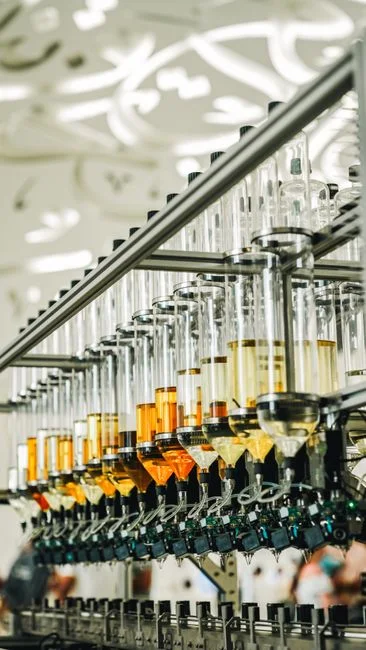
Representative sampling is the minimum basis for equipment selection because a single grab sample cannot establish the flow, concentration and contamination envelope entering a treatment train.
Request composite samples covering production, cleaning and dumping periods, with the sampling points and operating conditions recorded. The sample should represent the stream proposed for discharge, not a diluted or averaged sample that conceals intermittent dumps.
| Input to obtain | Why the supplier needs it | Decision enabled |
|---|---|---|
| Average flow and diurnal profile | Defines hydraulic capacity, equalisation and peak treatment duty. | Select the treatment train and its flow-handling arrangement. |
| COD and five-day BOD | Distinguishes total chemical oxidation demand from biodegradable oxygen demand. | Compare biological load and establish the required organic-removal duty. |
| Suspended solids | Indicates solids capture, sludge production and clarification requirements. | Specify DAF, clarification and solids handling. |
| pH and oil and grease | pH affects coagulation and biology; FOG can interfere with treatment and sewer operation. | Set equalisation, chemical dosing and pretreatment requirements. |
| Salinity, nutrients and metals | Can affect biological activity, recovery routes, effluent quality and sludge contamination. | Choose biological or anaerobic treatment and manage downstream risks. |
| Volatile or toxic compounds | May create worker-safety hazards or inhibit sewer biology. | Identify source control, dedicated treatment and safety controls. |
| Biological inhibition | Tests compatibility with the receiving biological treatment process. | Determine whether the proposed discharge is acceptable. |
| Proposed discharge point and authority | Determines which local criteria and agreement terms apply. | Set the enforceable final-effluent target. |
COD and flow must be considered together. The Greater Western Water organic-load provision in its 17 January 2023 criteria is a clear example: concentration and daily BOD mass load can each affect acceptance. A supplier selecting equipment from COD alone cannot establish whether the sewer will accept the resulting discharge.
Use the hazard categories in the national November 1994 trade-waste guidance to structure the source-control review: corrosive waste, grease and suspended matter, hydraulic overload, volatile or toxic waste, metals, pesticides and persistent organic compounds. Each category requires a control or treatment decision; it should not be hidden inside a generic “high-COD package”.
The supplier should map each proposed stage to the parameter it removes and state the residual concentration required before the next stage. That process logic is more useful than a generic removal-efficiency percentage because it exposes whether oil, toxicity or solids would overload the downstream biological stage.
Which treatment technologies fit each stage of the process?
DAF is a front-end solids and oil-removal option, not a substitute for treatment of soluble biodegradable organic load.
An industrial DAF system for solids and FOG pretreatment can be evaluated where suspended solids, oil and grease, FOG and colloidal material need removal before biological treatment. HydropureWater states that its DAF equipment covers 4–300 m³/h across 13 standard models; those figures are supplier selection references, not evidence that any model will perform adequately on an untested Melbourne effluent.
Automatic chemical dosing supports pH correction, coagulation, flocculation and feed preparation. A PLC-controlled chemical dosing system should be selected around the required chemical, measured flow or control signal, duty range, containment and site-specific control requirements. Chemical consumption must be based on jar or pilot testing rather than inferred from COD.
Anaerobic digestion is a chemical oxygen demand reduction and biogas-recovery route for biodegradable streams that do not contain prohibitive inhibitors or unsuitable salinity. The 2023 Heliyon study “Investigations into valorisation of trade wastewater for biomethane production” reported biomethane yields of up to 357 mL/gVS from raw effluent and 287 mL/gVS from treated effluent. These laboratory-scale findings support screening, not a guarantee for a full-scale reactor.
Electrocoagulation can be investigated for difficult mineral-processing streams. The 2023 MDPI AG electrocoagulation study examined wastewater with an initial COD of 424.29 mg/L from a Pb/Zn sulfide flotation plant and investigated anode material, current density, initial pH and additives as operating variables. It is a targeted option requiring stream-specific testing, not a generic substitute for DAF or biological treatment.
Aerobic or membrane biological processes can be selected where the objective is a polished discharge or reuse-quality effluent. Their suitability still depends on site-specific loading, membrane fouling where relevant, soluble salts and the required final quality; the cited research does not establish a generic COD removal result for these processes.
| Treatment stage | Primary role | Main downstream limitation |
|---|---|---|
| Equalisation and segregation | Stabilise flow and loading; keep incompatible streams separate. | Does not remove contaminants by itself. |
| Screening | Remove gross solids before pumps and treatment equipment. | Requires screenings handling and disposal. |
| DAF or clarification | Recover suspended solids, FOG, oil and grease, and some colloidal material. | Leaves soluble organic load for subsequent treatment. |
| pH and chemical dosing | Support coagulation, flocculation, feed preparation and biological suitability. | Chemical demand and residual ions require verification. |
| Biological or anaerobic treatment | Remove biodegradable COD; anaerobic treatment can recover biogas. | Requires compatible loading, inhibition and salinity controls. |
| Solids separation | Produce a managed sludge stream and clarify treated liquid. | Sludge still requires dewatering and a compliant destination. |
| Disinfection where required | Address the authority’s pathogen condition, where applicable. | Must fit the final treatment and monitoring sequence. |
| Monitored discharge | Verify the agreement condition and operating performance. | Requires sampling and retained records. |
When does high-COD treatment become a resource-recovery project?
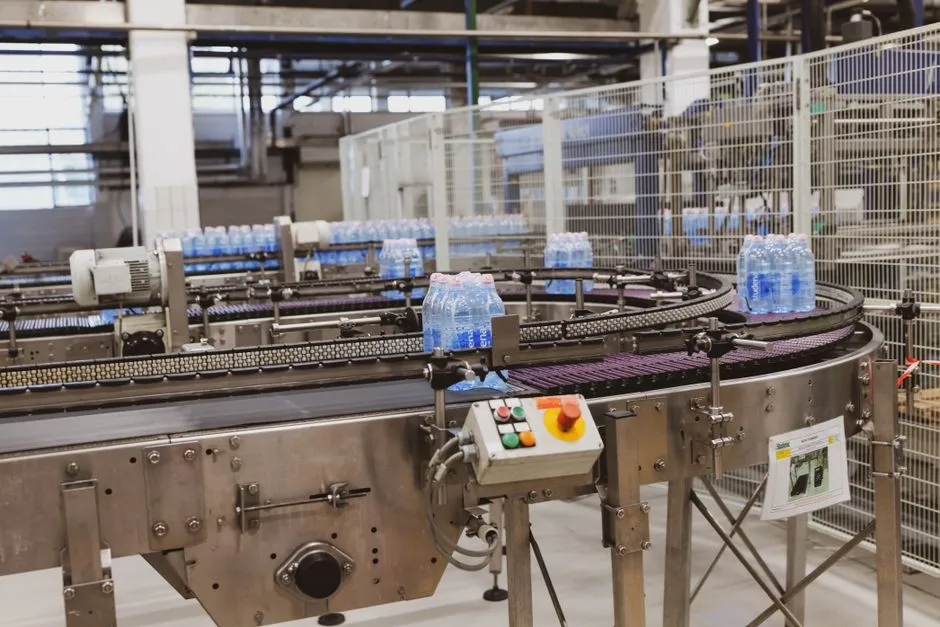
Anaerobic treatment becomes a credible resource-recovery option when the stream contains substantial degradable substrate and screening shows that inhibitors, salinity and variability will not undermine stable digestion.
The 2023 Heliyon biomethane study evaluated raw and treated industrial effluent and found that the top four prospects could produce more than 4,690 GJ of methane, save $47,000 in natural-gas costs and offset 490 tonnes of carbon dioxide equivalent annually. These values belong to the study’s four-stream scenario; they are not a forecast for an individual Melbourne generator.
The same study identified high sodium concentration as a parameter suitable for discounting potential biogas production. Screening must therefore examine more than COD: degradability, inhibitory compounds and sodium can all affect the route’s technical viability.
Resource recovery does not remove the downstream treatment obligation. Anaerobic reactors generate residual solids that require appropriate dewatering and disposal, while the trade-waste program must address contamination risks. An industrial sludge-dewatering process flow can be evaluated for solids handling, but dewatering does not make contaminated solids compliant by itself.
The 2026 Melbourne machine-learning study provides a complementary analytical tool because COD and total-nitrogen data support assessment of carbon and nutrient-recovery pathways. Its benchmarking of FFNN, RNN, CNN and XGBoost models does not replace site-specific anaerobic testing, mass-balance design or confirmation of the trade-waste agreement.
A practical decision is therefore:
- If compliance is the primary objective, select the least complex train that reliably meets the agreed discharge conditions.
- If the stream is demonstrably degradable and the recovered energy has a credible destination, develop anaerobic treatment with solids management and operating controls.
- If either condition is uncertain, test the stream before committing the project to a recovery-based business case.
How to select and size a compliant treatment train
Size the treatment train from the most representative simultaneous dataset, then convert the sewer agreement into pass/fail gates for every supplier.
The design basis should include the flow range, hydraulic peaks, COD, five-day BOD, suspended solids, pH, oil and grease, toxicity and relevant contaminants. Concentration and mass-load rules belong in the acceptance criteria; they must not be presented as assumed plant removal efficiencies.
Match each stage to a defined contaminant or process function. Obtain a guaranteed duty point based on verified feed characteristics and the required final effluent quality. Ask each supplier to distinguish laboratory data, pilot results and contractual guarantees at the site’s final effluent and flow conditions.
| Procurement check | Evidence required | Reason it matters |
|---|---|---|
| Regulatory basis | Responsible authority, applicable criteria and draft trade-waste agreement. | Prevents compliance against the wrong sewer requirements. |
| Design basis | Representative simultaneous flow, COD, BOD, solids, pH, FOG and toxicity data. | Stops a COD-only comparison of unsuitable equipment. |
| Stage performance | Parameter removed, residual limit and measured duty point for each stage. | Makes the treatment train logically verifiable. |
| Solids management | Expected sludge volume, dewatering duty, cake destination and contamination controls. | Prevents the liquid treatment promise becoming a residual-solids problem. |
| Operating burden | Chemical consumption, energy use, odour controls, maintenance and access. | Supports whole-life operating-cost assessment. |
| Automation and resilience | Controls, automatic skimming or backwash, bypass arrangements and safe shutdown response. | Limits upset propagation and uncontrolled discharges. |
| Commissioning acceptance | Hydraulic test, stable COD performance, solids capture, pH control, inhibition compliance and discharge monitoring. | Confirms the installed train rather than relying on catalogue claims. |
For comparison, the sewer-limit treatment approach for mining and metals plants near Easton and the 2026 comparison of MBR and conventional activated sludge are useful technical references, but neither replaces Melbourne-specific characterisation or the applicable trade-waste agreement.
Before accepting equipment, require confirmation that the plant handles the verified hydraulic peak, maintains the agreed final conditions, captures solids, controls pH, satisfies the inhibition requirement and provides repeatable monitoring at the discharge point. A supplier that cannot map its guarantees to those site conditions has not supplied a defensible performance claim.
Frequently Asked Questions
Are Greater Western Water’s 400 mg/L BOD and suspended-solids limits equipment removal guarantees?
No. The Greater Western Water Trade Waste Acceptance Criteria, version 4.0 dated 17 January 2023, states that BOD and suspended solids must each be no greater than 400 mg/L unless otherwise specified in the trade-waste agreement. These are discharge acceptance criteria. A plant guarantee must separately state the verified feed conditions, treatment duty, final effluent condition and applicable flow.
What information is required before requesting a treatment-system price?
Request representative flow and diurnal data, COD, five-day BOD, suspended solids, pH, oil and grease, biological-inhibition results, relevant contaminants, the proposed discharge point and the applicable trade-waste agreement. Without these inputs, neither a defensible price nor a treatment capacity can be established. Ask for the pricing basis, included civil works, chemicals, commissioning tests, exclusions and performance guarantees.
When should DAF be specified for high-COD trade waste?
Specify DAF when suspended solids, oil and grease, FOG or colloidal material would interfere with downstream biological or recovery treatment. It should normally be positioned as clarification and pretreatment, not represented as the sole solution for soluble biodegradable COD. A cavitation air flotation process-flow diagram can help map equipment placement, but the selected duty must be confirmed against representative waste.
Why is a supplier’s COD removal percentage insufficient for supplier selection?
A percentage does not state the feed COD, feed flow, operating conditions or required final effluent condition. Two suppliers can quote the same percentage for incompatible feeds. Require a guaranteed duty point tied to the simultaneous site dataset and final discharge requirements, with laboratory results, pilot evidence and contractual guarantees clearly separated.
When is anaerobic digestion worth considering instead of compliance-only treatment?
Consider it when the stream has substantial degradable substrate, no prohibitive inhibition or unsuitable salinity, and a credible use or market for recovered energy. The decision must also include residual-solids dewatering, contamination control and the full trade-waste agreement. A belt filter press process flow addresses only the solids-dewatering part of that obligation.