What Rural Sewage Treatment in Myanmar Must Solve
Rural sewage treatment in Myanmar should begin with a decentralized, site-specific system rather than an assumed connection to a central sewer. A 2023 Yangon case study found that YCDC’s centralized system handled only 7% of city wastewater, although Yangon is urban and its figures should not be applied automatically to every rural site. For rural projects, confirm collection and discharge requirements, sample wastewater for at least 10 days, and check average and wet-weather peak flow, power reliability, access, groundwater and sludge removal. HydropureWater’s WSZ package covers 1–80 m³/h, while its MBR system covers 10–2,000 m³/day; both require project-specific process and performance verification.
The 2023 MDPI Yangon case study provides regional context rather than a universal rural design rule. YCDC’s centralized system served Dagon, Latha, Lanmadaw, Pabedan, Pazundaung, Botahtaung and Kyauktada, while the Greater Yangon Project included 14 centralized plants, a 3 million m³/day daily peak wastewater volume, a 49% interim population-coverage target and an 80% service-coverage goal by 2040. These urban infrastructure figures cannot be transferred to an off-network estate, camp, clinic or hotel without site evidence.
The buyer must establish whether sewage is already collected, where the treated effluent can lawfully go, and who will remove the residual sludge. Monsoon inflow, unstable power, restricted vehicle access, groundwater, odour and maintenance capability can control the design more strongly than nominal plant capacity. A 2026 domestic sewage treatment guide for Myanmar provides further procurement context, but the governing rule remains simple: do not select a package plant from occupancy or population estimates alone, and do not treat a centralized network plan as proof of an available connection.
Build the Design Basis Before Choosing Equipment
The design basis must be complete enough to audit before aeration tankage and process equipment are finalized. The supplied 2026 residential methodology requires a 10-day composite sampling campaign; it does not permit a manufacturer to substitute a generic design flow for the wastewater actually received by the plant.
Collect current flow, occupancy, fixture-count information and composite wastewater characterization. Separate average flow from organic loading and wet-weather peak flow. The supplied 2026 comparison reports that peak wet-weather flow can reach 3× average, so equalization and headworks must be checked against a project-specific wet-weather basis rather than dry-weather flow alone. Identify whether kitchen, laundry, clinical or other high-strength streams enter the same sewer, because dilution by domestic flow does not remove the need to characterize those loads.
Confirm the current project-specific permit or applicable guidelines, intended reuse, receiving-water sensitivity, land availability, groundwater, power reliability, access, odour controls and monsoon drainage. Where groundwater can create uplift risk, require an engineered flotation check. Specify anti-buoyancy anchoring or concrete ballast for a buried unit instead of assuming that the package can be installed directly.
The 2023 MDPI Yangon study reports that a centralized sewer network may cost five times as much as the treatment plant. That supports separate assessment of treatment procurement and any future sewer extension, not omission of site investigation. A rotary mechanical bar screen should be evaluated from the influent survey and access arrangements, not added by default.
| Design input | Evidence required before selection | Decision affected |
|---|---|---|
| Wastewater flow and quality | 10-day composite characterization, current flow, occupancy and fixture count | Biological loading, tankage, equalization and pretreatment |
| Hydraulic variation | Average duty and project-specific wet-weather peak basis | Pumping, equalization and headworks |
| Approval and reuse | Current project-specific permit, intended reuse and recipient requirements | Treatment, disinfection and monitoring |
| Site constraints | Land, groundwater, power, access, odour and monsoon drainage | Layout, anchoring, backup power and installation method |
WSZ or MBR for a Rural Myanmar Site
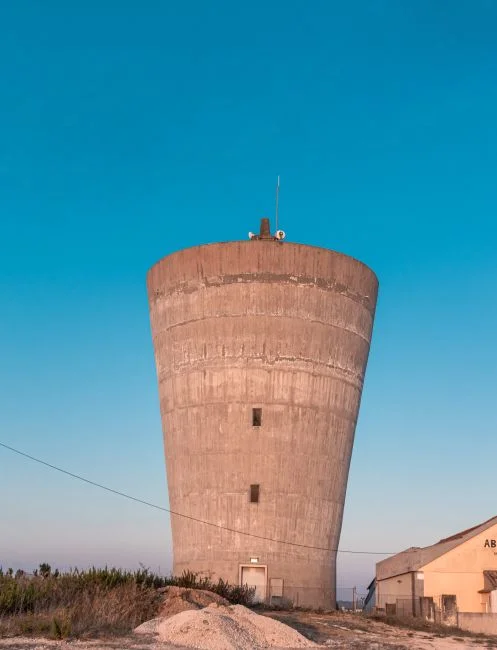
WSZ and MBR should be compared at the same duty point against the sampled wastewater, available footprint and operating resources. Neither should be labelled compliant before the supplier demonstrates performance against the current project-specific discharge requirement.
The HydropureWater WSZ Series combines anoxic/aerobic biological contact oxidation, sedimentation and disinfection in one buried package. Its verified catalog capacity is 1–80 m³/h, and it is fully automated for residential communities, hotels, hospitals, factories and rural areas; it can also be trailer-mounted for mobile deployment. This architecture fits a site where the measured duty falls within that range, underground installation saves surface space, and the supplier can demonstrate the complete biological, solids-separation and disinfection train.
The HydropureWater MBR combines activated sludge with submerged PVDF membrane filtration below 1 μm. Its verified catalog capacity is 10–2,000 m³/day, and the manufacturer states that the footprint is 60% smaller than conventional systems. It merits consideration where the duty falls within the verified range, a small occupied footprint or reuse-oriented application is important, and the buyer accepts a membrane maintenance and replacement commitment. The MBR membrane bioreactor wastewater system should be evaluated through membrane specifications, replacement planning and demonstrated performance at the agreed duty.
For a site that may eventually connect to a sewer, preserve accessible connection or diversion points, retain hydraulic capacity and maintain independent operation until the trunk sewer is demonstrably available. A future network plan is not an operating discharge route.
| Selection issue | WSZ | MBR |
|---|---|---|
| Verified catalog duty | 1–80 m³/h | 10–2,000 m³/day |
| Process architecture | A/O contact oxidation, sedimentation and disinfection in one buried package | Activated sludge with submerged PVDF membrane filtration below 1 μm |
| Installation consideration | Compact underground deployment; trailer mounting is available | Compact installation; manufacturer states 60% smaller footprint than conventional systems |
| Operational commitment | Media or consumable maintenance, inspection and sludge removal | Adds membrane inspection, cleaning and replacement to blowers and routine maintenance |
| Acceptance evidence | Proposed duty, process flow diagram, project-specific test data and contractual criteria | Same, plus membrane specifications and duty-based performance evidence |
The WSZ underground package sewage treatment plant and MBR membrane bioreactor wastewater system provide the product facts; the project documents must provide the acceptance evidence.
Protect Treatment from Rural Site Risks
Protection starts before the biological stage because rags, plastics and solid waste can impair pumps, aeration, membranes and the downstream solids-handling train. Where the influent survey justifies it, evaluate a rotary mechanical bar screen designed to remove suspended solids, rags, plastics and fibrous debris while protecting downstream equipment. Its maintenance access and waste-retrieval route must fit the rural site.
Check equalization, pumping and backup power against monsoon inflow and credible interruptions. The control narrative should state the blackout response, alarm escalation, automatic restart logic and manual operating procedure. A buried package reduces the occupied surface area, but it does not remove the need for routine inspection, desludging, residual transport or effluent monitoring.
For WSZ installations, resolve groundwater-driven flotation through a structural calculation and a specified anchoring or ballast detail before excavation or installation. For MBR installations, put membrane inspection, aeration, cleaning and replacement into both the operating plan and total-cost comparison. The footprint claim alone is not an operating advantage if maintenance capability is absent.
Assign named parties for inspection, alarm response, desludging, residual transport, monitoring and final disposal. Automation does not transfer legal or operational responsibility. Residual handling must be documented because a treatment process can meet its effluent objective while still creating an unresolved sludge route.
Where the selected process produces sludge that requires stabilization or volume reduction, assess dewatering against the actual residue characteristics and disposal destination. A plate-and-frame sludge filter press is relevant only when those conditions justify its addition; it is not automatically part of every package plant.
Compare Budget, Energy and Lifecycle Commitments
Equipment price is only one component of the rural treatment commitment, and the available figures are market indications rather than quotations. The supplied 2026 market indications place a turnkey residential WSZ package plant at USD 350–650 per m³/day and a turnkey residential MBR package plant at USD 600–1,100 per m³/day. These are not guaranteed project prices for Myanmar because treatment scope, civil works, power infrastructure, automation, commissioning and local installation conditions can change the total.
The supplied 2026 energy indications are 0.2–0.4 kWh/m³ for WSZ and 0.4–0.8 kWh/m³ for MBR. Do not convert these indications into contractual guarantees. Ask the supplier to guarantee consumption at the agreed design flow and wastewater load, then price that commitment using the applicable electricity tariff.
Request quotations in the contract currency. Show civil works, equalization, headworks, power, commissioning, controls, sludge handling and training as separate items, and refresh currency treatment at quotation date. Compare media or consumables, chemicals, sludge hauling, power, training and operator time for WSZ; for MBR, add membrane replacement, blowers and related maintenance. Include insurance, backup power, remote monitoring and the handover-to-replacement cycle.
Use a warranty and performance-guarantee comparison to check what is actually contractually covered. If residual volume reduction is justified, include the applicable dewatering option and its operating consequences rather than treating it as an unpriced accessory.
| Cost element | WSZ assessment | MBR assessment |
|---|---|---|
| Package indication | USD 350–650 per m³/day | USD 600–1,100 per m³/day |
| Energy indication | 0.2–0.4 kWh/m³ | 0.4–0.8 kWh/m³ |
| Major operating items | Media or consumables, chemicals, sludge hauling, power, training and operator time | Membrane replacement, blowers, chemicals, sludge hauling, power, training and operator time |
| Commercial status | 2026 market indication, not a quotation | 2026 market indication, not a quotation |
The buyer should require a current site-specific quotation and guaranteed energy consumption at the accepted duty before approving either option.
Procure, Commission and Prove Performance
A controlled procurement sequence converts equipment claims into documented guarantees. The supplied 2026 residential methodology identifies five core submittals: the design basis, a process flow diagram with mass balance, the O&M manual, an effluent-compliance plan and the 10-day monitoring report. Request these together with structural and hydraulic drawings, permit basis, commissioning scope, warranty terms, reference projects and evidence of local service capability.
The supplied 2026 source identifies the Pollution Control & Cleansing Department for operational and discharge-compliance review and the Engineering Department for process design, hydraulic loading and structural drawings. Obtain written confirmation of the current review route for the specific project rather than assuming that a document list remains unchanged.
Use a stage-gated process:
- Evidence gate: accept the measured design basis, 10-day report, current flow data and confirmed site constraints.
- Technical gate: review the process flow diagram, mass balance, hydraulic calculations, structural details and proposed duty point.
- Commercial gate: align the quotation, guarantees, warranty, exclusions, civil scope, power provision and service capability.
- Commissioning gate: complete installation checks, biological acclimation and membrane tests where applicable.
- Acceptance gate: complete a 30-day test at design load with monitoring records and written transfer of operating ownership.
The handover package should record baseline operating costs, training delivered, monitoring frequency, maintenance schedule, spare-parts availability, escalation contacts and responsibility for any future sewer tie-in. Tie disinfection selection to the approved process, safety requirements and permit. A chlorine dioxide generator or automatic dosing system should not be selected independently of the treatment design.
Preserve any future connection or diversion point during layout and procurement, but continue testing independent operation until a trunk sewer and accepted discharge route are actually available. The project is not complete merely because the equipment starts; acceptance requires the agreed performance records and a named operating owner.
Frequently Asked Questions
How much does rural sewage treatment cost in Myanmar?
The supplied 2026 market indications are USD 350–650 per m³/day for a turnkey residential WSZ package plant and USD 600–1,100 per m³/day for a turnkey residential MBR package plant. These are market indications, not site-specific quotations. Ask each shortlisted supplier for a current quotation in the contract currency, with civil works, equalization, headworks, power, commissioning, controls, sludge handling and training itemized separately.
Should a rural project in Myanmar choose WSZ or MBR?
Choose WSZ when the verified duty is 1–80 m³/h, a compact buried installation is valuable and its A/O contact oxidation, sedimentation and disinfection train can be demonstrated for the sampled wastewater. Consider MBR when the verified duty is 10–2,000 m³/day, a small occupied footprint or reuse orientation justifies membrane-based solids separation, and the owner can support membrane inspection, cleaning and replacement. In both cases, require project-specific test data against the current discharge criteria.
What is the correct way to size a rural sewage treatment plant?
Size from measured wastewater evidence, beginning with the 10-day composite sampling campaign and current flow records. Separate average flow, organic loading and wet-weather peak flow, then check equalization, pretreatment and process loading at the proposed duty. The supplied 2026 comparison notes that wet-weather peak flow can reach 3× average, so the hydraulic design must use a project-specific wet-weather basis.
Can a packaged sewage treatment plant be installed where no sewer connection exists?
Yes, in principle. A decentralized wastewater treatment package can operate independently when the design basis, discharge route, access, power, groundwater, sludge route and future tie-in requirements are resolved. Confirm the applicable approval route, protect against monsoon inflow and power interruptions, and preserve connection or diversion points if a sewer may become available later.
What evidence should a supplier provide before purchase?
Request verified capacity, a process flow diagram with mass balance, structural and hydraulic drawings, project-specific performance data, contractual guarantees, commissioning scope, warranty terms, reference projects, local service capability, spare-parts availability and operator training. A general claim that a system is automated or compliant is not acceptance evidence. Tie the selected unit to the measured duty, current discharge requirement and completed commissioning record.