What treatment train is typical for high-COD factories in Thiès?
Manufacturers in Thiès generally treat high-COD trade waste with a staged train: screening and source control, equalization, DAF or comparable solids and FOG removal, anaerobic or biological COD reduction, membrane or tertiary polishing where reuse is required, and targeted chemical dosing for pH, color, or metals. Senegalese Decree 2022-1234 requires COD below 125 mg/L, TSS below 30 mg/L, BOD below 30 mg/L, and pH of 6.5–8.5. For a public-sewer discharge within 60 m, ONAS connection is the default path. Equipment selection must be based on representative peak-sample data, not flow alone.
The sequence separates distinct contaminant loads. Screening protects pumps, while equalization reduces hydraulic and organic shocks. An industrial DAF pretreatment system is appropriate where suspended solids, oil, grease, colloids, textile color, or floatable petrochemical contaminants could overload downstream biological equipment. It is not a substitute for biological degradation of dissolved COD.
For attached-growth biology, a 2024 Juniper Publishers MBBR study tested influent COD of 1,000–3,500 mg/L. Eight hours of hydraulic retention time, or HRT, produced more than 80% COD removal, while 12 hours produced about 86%; the researchers selected 8 hours because the additional refinement increased removal by only about 3 percentage points. These are lab-scale results, not a guarantee for a Thiès plant.
Electrocoagulation is an alternative or polishing route to investigate for high-COD mineral-processing streams. The MDPI AG study examined one Pb/Zn sulfide flotation wastewater with initial COD of 424.29 mg/L, so it does not establish universal plant performance. A factory-specific paint and coating wastewater COD removal guide should be used only where the effluent has similar contaminants and process conditions.
What effluent data must a Thiès manufacturer collect before buying equipment?
The design basis must cover representative production, cleaning, and discharge cycles because average samples can conceal the shock load that determines equipment capacity. Request COD, BOD, TSS, FOG, pH, temperature, applicable metals and color, with each analytical result linked to its associated flow.
- Sample normal production, cleaning, batch dumping, and upset periods.
- Measure average and peak flow in m³/h, and record when each flow occurs.
- Test COD and BOD at both average and peak loads.
- Measure FOG, TSS, pH, temperature, color, and sector-specific metals.
- Identify whether domestic sewage is mixed with trade waste or segregated.
HydropureWater’s 2025 Senegal guidance recommends designing for at least 20% overcapacity. Its textile example—50 m³/h peak flow requiring about 60 m³/h installed capacity—is an illustration, not a Thiès default. Ask each bidder to size hydraulic equipment, biological volume, sludge handling, and controls against the same peak condition.
| Design input | Minimum information to request | Why it changes the train |
|---|---|---|
| Hydraulics | Average and peak m³/h; production and cleaning cycle | Sets equalization, pumping, and treatment capacity |
| Organic load | Average and peak COD and BOD | Sets biological loading and polishing demand |
| Solids and FOG | TSS, oil and grease, settleable solids | Determines screening, grease control, or DAF scope |
| Process conditions | pH, temperature, color, metals | Controls biological sensitivity and chemical dosing |
| Discharge or reuse | Route, applicable limits, intended reuse | Determines whether polishing and disinfection are required |
Do not use the GGGI Tivaouane fecal-sludge installation as factory evidence. GGGI described natural decantation, biological treatment, three-week drying beds, and infiltration basins for fecal sludge in 2023; it is not a basis for sizing high-COD trade effluent. Also distinguish trade waste from domestic flows because hydraulic and contaminant loads change the treatment basis.
For access protection, evaluate a mechanical bar screen for the inlet works. Ask the supplier whether each performance claim is third-party validated, taken from a brochure, or guaranteed at the proposed peak influent condition. For pH or metal control, require the dosing basis for an automatic chemical dosing system, including chemical strength, metering range, control logic, and containment.
When does a Thiès factory connect to ONAS instead of treating its own discharge?
According to the summarized 2025 ONAS guidance in HydropureWater’s Senegal article, connection to the public sewer is the default path where a discharge point is within 60 m. A manufacturer should therefore establish the available sewer route before buying a full standalone treatment train.
Sewer connection does not necessarily remove pretreatment obligations. Depending on the connection requirements and the industrial effluent, the factory may still need equalization, solids removal, FOG control, pH correction, or contaminant segregation. The technical proposal should distinguish pre-treatment required for ONAS acceptance from treatment needed for the factory’s own environmental and reuse objectives.
| Decision point | Public-sewer route | Own-outfall route |
|---|---|---|
| Applicable objective | ONAS connection conditions and accepted pretreatment | National discharge standard and receiving-water risk |
| Typical treatment scope | Equalization and contaminant removal required before connection | Complete treatment and polishing train |
| Compliance evidence | Connection documentation, testing reports, and required pretreatment records | Permit, design, environmental assessment, monitoring, and final effluent compliance |
| Sludge and reuse | Confirm hauler and disposal requirements; define any internal reuse | Define sludge discharge route and final reuse or discharge objective |
For an own outfall, facilities must meet the national discharge standard. Decree 2022-1234 limits cited in the 2025 HydropureWater source are TSS below 30 mg/L, COD below 125 mg/L, BOD below 30 mg/L, and pH 6.5–8.5.
The ONAS submission package comprises effluent testing reports, treatment-system designs, and an environmental impact assessment, with quarterly self-reporting. Facilities discharging more than 50 m³/day face mandatory annual third-party audits. Reported enforcement under Law No. 2022-01 includes fines of 1–5% of annual revenue, temporary shutdowns, or criminal liability for severe damage.
If DAF float or biological sludge will be dewatered, include a plate-frame sludge dewatering press and define cake storage and haulage within the project scope.
How do DAF, MBBR, MBR, and electrocoagulation compare for high-COD effluent?
DAF, MBBR, MBR, and electrocoagulation solve different problems, so their suitability must be judged against contaminant load, hydraulic peaks, temperature, footprint, reuse target, operator capability, sludge route, and acceptable OPEX. A headline removal percentage cannot replace that comparison.
| Technology | Primary role | Evidence and operating boundary | Decision questions |
|---|---|---|---|
| DAF | Remove suspended solids, FOG, oil, colloids, and floatable contaminants before biology | HydropureWater’s 2025 DAF range covers 4–300 m³/h | Are peaks and sludge handling defined? Can gravity or pressure filtration downstream prevent DAF solids carryover? |
| MBBR | Attached-growth biological COD reduction | 2024 Juniper Publishers lab study: influent COD 1,000–3,500 mg/L; more than 80% removal in parts of the range; 8-hour selected HRT | Does the effluent contain biodegradable COD? How will temperature and shock loads affect biomass? |
| MBR | Combined biological treatment and membrane solids separation | HydropureWater’s 2025 MBR range is 10–2,000 m³/day | Is reuse or limited land area worth membrane cleaning, replacement, and operator burden? |
| Electrocoagulation | Chemical-assisted removal and reuse investigation | 2024 MDPI AG study used one Pb/Zn sulfide flotation wastewater at initial COD of 424.29 mg/L | Do site tests support performance with the selected anode, current density, initial pH, and additives? |
DAF is the upstream guard for biology when oil, grease, fine solids, colloids, or floatable color are present. It creates sludge that must be collected and dewatered. It does not, by itself, establish that the dissolved COD will meet the discharge limit.
MBBR provides flexible attached-growth treatment and can be considered where biological COD reduction is the main requirement. The 2024 Juniper Publishers study found COD removal rose from about 70% to approximately 90% as temperature increased from 20°C to 25°C, and reported 94% at 32°C. Those results came from a lab system and must not be transferred to Thiès without a temperature and loading check. A high-strength fermentation wastewater COD treatment guide may help frame site-specific testing.
MBR is appropriate where compact treatment, solids retention, or near-reuse-quality effluent justifies membrane maintenance. A compact MBR wastewater treatment system can provide the biological stage and membrane separation in one package. A separate MBR membrane bioreactor module should be evaluated for an existing biological footprint or phased expansion.
Electrocoagulation remains site-specific for mineral-processing streams because anode material, current density, initial pH, and additives affect the result. Use it as an alternative or polishing route only after effluent-specific testing. For a broader pretreatment decision, the 2026 DAF versus clarifier comparison helps distinguish the selection basis for petroleum wastewater.
How should the biological stage handle peak COD and temperature changes?
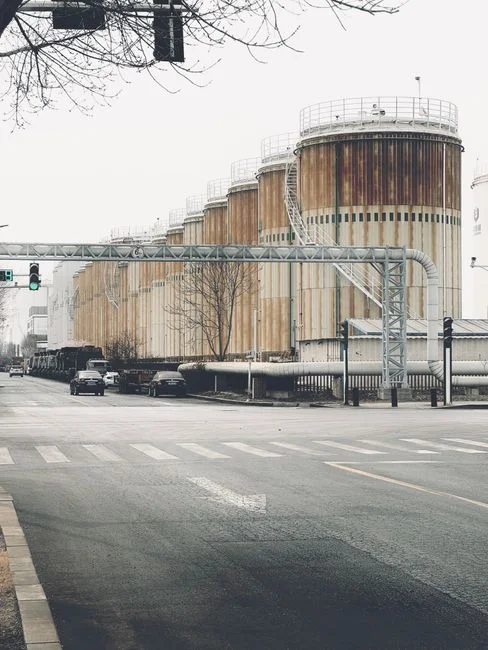
Equalization reduces shock loading, biomass retention supports biological degradation, and controlled temperature and pH protect microbial activity. These controls determine whether a biological stage remains effective when production or cleaning cycles create an organic peak.
The 2024 Juniper Publishers MBBR study provides a sensitivity warning. COD removal improved sharply between 20°C and 25°C, increasing from about 70% to approximately 90%, and the study reported 94% at 32°C. A Thiès design should therefore record wastewater temperature through the production cycle and avoid relying on warm-season performance to justify year-round capacity.
Removal efficiency must be converted against the measured peak influent COD and verified at the final effluent. A reported percentage does not itself demonstrate COD below 125 mg/L under the complete train. The design should calculate the necessary reduction from representative peak data, then verify it after pretreatment, biological treatment, and polishing.
Poor primary treatment creates a predictable operating problem: solids and FOG overload biological tanks, while inadequate hydraulic or organic equalization can wash out biomass. Operators also need to distinguish a rising organic load from a loss of solids separation, temperature stress, pH excursion, or chemical toxicity.
- Monitor equalization for flow, COD, pH, and temperature; record the accumulation and release pattern.
- Monitor the biological stage for COD, BOD, suspended solids, pH, temperature, dissolved oxygen where applicable, and biological activity.
- Monitor the final effluent for COD, BOD, TSS, pH, and sector-specific metals or color.
- Trend the relationship between peak influent COD, treatment removal, temperature, and final compliance.
Where site layout constrains surface treatment, an underground integrated biological treatment package may preserve production space after appropriate pretreatment. Its biological basis and acceptance test must nevertheless match the actual trade effluent.
Which polishing steps are needed for discharge or factory reuse?
Polishing should follow from the final water-quality objective. Coagulation addresses selected color, suspended-solids, or metal problems; filtration and membranes address residual solids and dissolved constituents; disinfection addresses the pathogen risk associated with the discharge or reuse route.
| Objective | Potential step | Design evidence or limitation |
|---|---|---|
| Color, TSS, chromium, or lead | Automatic chemical dosing followed by solids separation | HydropureWater’s 2025 source cites coagulant dosages of 50–200 mg/L and flocculant dosages of 1–5 mg/L for chromium and lead; confirm with jar tests |
| Basic compliant discharge | DAF or clarification, biological treatment, filtration, and compliance monitoring | Confirm final COD, BOD, TSS, and pH against the applicable route |
| Non-potable reuse | MBR plus multi-media filtration, with further membrane treatment where required | The 2025 source states that stable MBR plus RO can produce reuse-grade water below 1 NTU turbidity and under 500 mg/L TDS |
| Pathogen control | Disinfection selected by the reuse and receiving-water risk | The 2025 source cites chlorine dioxide at a 99.9% bacterial kill rate; UV and ozone may suit other duties |
| Residual sludge | Collection, dewatering, storage, and authorized haulage | DAF float and biological sludge require a complete disposal route |
For metal-bearing streams, specify an automatic chemical dosing package with metering, mixing, and control alarms. Do not transfer the cited chromium and lead dosages directly to another effluent; they require jar and pilot confirmation.
For reuse beyond a basic compliant effluent, consider multi-media filtration before RO. A multi-media filtration system can protect downstream membranes by removing residual suspended material. Potable reuse requires a project-specific design and validation and cannot be inferred from non-potable reuse results.
Disinfection should be matched to risk. A chlorine dioxide generation system is one option where the design case supports it, while UV or ozone may suit other applications. Include sludge handling in the polishing decision because cleaner water does not remove the need to treat DAF float and biological residuals; a plate-frame dewatering press can be included where batch cake handling and storage justify it.
What will a high-COD treatment system cost in Thiès in 2026?
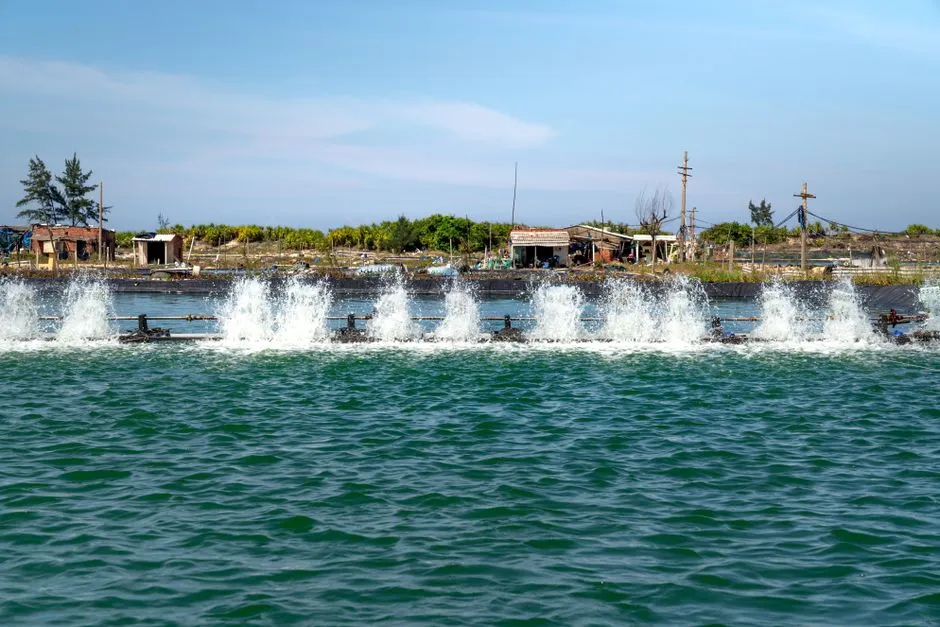
Reported modular-system CAPEX provides a screening range, not a Thiès quotation. HydropureWater’s 2025 Senegal article cites $50,000–$300,000 for modular systems at 10–100 m³/h and $50,000–$500,000 for modular DAF and MBR packages at 10–300 m³/h.
The same source reports modular DAF and MBR operating costs of $0.10–$0.30/m³, compared with $0.20–$0.50/m³ for conventional aeration. The broader industrial-treatment OPEX range is $0.10–$0.50/m³. MBR energy is reported at 0.8–1.2 kWh/m³, while DAF is about 0.3–0.5 kWh/m³ before chemicals. These are planning figures from the 2025 source and require vendor and site validation.
| Cost component | Reported planning basis | Items requiring site-specific quotation |
|---|---|---|
| Modular CAPEX | $50,000–$300,000 for 10–100 m³/h; broader DAF/MBR range $50,000–$500,000 for 10–300 m³/h | Treatment train, tankage, controls, duty/standby equipment, and performance guarantees |
| Modular OPEX | $0.10–$0.30/m³ | Power, chemicals, sludge hauling, membrane replacement, labor, and disposal fees |
| Conventional aeration OPEX | $0.20–$0.50/m³ | Actual organic load, aeration regime, sludge route, and maintenance scope |
| Packaged-equipment import duty | 10–15% in the 2025 source | Origin, Incoterms, customs classification, freight, and port charges |
Omitted costs can determine the landed project price: civil works, installation, commissioning, sludge hauling, membrane replacement, sensors, pumps, import duty of 10–15% on packaged equipment, and ONAS connection fees. Also clarify whether the quotation includes chemicals, initial fill, operator training, spares, waste transport, and a performance test at peak influent.
Require every bidder to quote the same peak flow, final discharge limits, sludge-disposal assumption, reuse target, commissioning boundary, and validation protocol. For context, the 2026 DAF versus clarifier comparison and the 2026 DAF system guide for detergent wastewater can inform scope preparation, but neither replaces a site-specific bid.
How should a manufacturer verify performance before accepting equipment?
Acceptance should test the complete treatment train under representative peak influent conditions, not isolate a unit on an easy feed. Normalize quotations by design flow, COD load, TSS and FOG load, pH, temperature, discharge limits, sludge handling, and reuse target.
Require guaranteed final COD, TSS, BOD, pH, and any sector-specific metal or color limits. The acceptance values must use the cited Decree 2022-1234 criteria: COD below 125 mg/L, TSS below 30 mg/L, BOD below 30 mg/L, and pH 6.5–8.5. For chromium and lead, the 2025 source cites limits below 0.1 mg/L and below 0.5 mg/L respectively, with analytical testing needed to demonstrate compliance.
- Approve a design basis containing peak and average flow, COD, BOD, TSS, FOG, pH, temperature, metals, and color.
- Fix the acceptance protocol, sampling points, laboratory method, test duration, and treatment of production variability.
- Witness startup, controls, alarms, chemical delivery, sludge withdrawal, and emergency operation.
- Test the final effluent during the agreed peak-condition campaign.
- Record deviations and require correction before final acceptance.
Keep as-built drawings, chemical safety data sheets, validation reports, operating procedures, and the latest third-party effluent laboratory reports together for ONAS inspection and operator handover. Membrane-based reuse packages also require a defined cleaning, replacement, and spare-parts plan; RO and UF membrane elements should be specified within that maintenance strategy.
Frequently Asked Questions
What will a modular high-COD treatment system cost in Thiès?
HydropureWater’s 2025 Senegal source reports $50,000–$300,000 CAPEX for modular systems at 10–100 m³/h and $0.10–$0.30/m³ for modular DAF and MBR OPEX. Request a site-specific landed quotation that states civil works, installation, commissioning, import duty, electricity, chemicals, sludge disposal, membrane replacement, training, and ONAS connection fees separately. The published band is a comparison baseline, not a price for an unspecified Thiès factory.
What inputs determine the required treatment capacity?
Peak flow is only one input. Average and peak COD, BOD, TSS, FOG, pH, temperature, production variability, reuse target, and the required reserve must be included. HydropureWater’s 2025 guidance recommends at least 20% overcapacity, while the 2024 MBBR study shows why temperature and influent COD sensitivity must be considered. Ask bidders to size each unit against the same measured peak condition.
Does an ONAS sewer connection remove the need for factory pretreatment?
No. The 2025 ONAS guidance summarized by HydropureWater identifies sewer connection as the default path within 60 m, but the factory may still need equalization, solids removal, FOG control, pH correction, or contaminant segregation under its connection requirements. An own-outfall design must demonstrate the national limits: COD below 125 mg/L, TSS below 30 mg/L, BOD below 30 mg/L, and pH 6.5–8.5.
How should local specialists, packaged-equipment suppliers, and EPC contractors be compared?
Compare them using the same technical scope and commercial boundary. Check validation at the proposed peak influent condition, ONAS documentation experience, service coverage, membrane support, sludge handling, installation schedule, training, and spare-parts availability. Do not compare a local specialist’s pretreatment bid with an EPC contractor’s complete-train price without identifying what each quote excludes.
How do DAF, MBBR, MBR, and electrocoagulation fit into one treatment train?
DAF protects the biological stage by removing solids and FOG; MBBR provides attached-growth COD reduction; MBR combines biological treatment with membrane solids separation; electrocoagulation should be selected only after effluent-specific testing. The appropriate combination depends on measured contaminant loads, hydraulic peaks, temperature, footprint, reuse objective, sludge route, and OPEX—not on one headline removal percentage.