Industrial wastewater treatment in Senegal in 2026 is shaped by Dakar’s Hann Bay depollution program and stronger enforcement of the polluter-pays principle for factory discharges. Plants typically need primary plus secondary treatment to reach TSS removal of 90–95% and COD reduction of 80–90% against local limits. Modular dissolved air flotation (DAF) and membrane bioreactor (MBR) packages for 10–300 m³/h commonly fall in the $50,000–$500,000 CAPEX range. This guide covers discharge parameters, process trains, cost bands, and selection steps for factories in Dakar, Rufisque, and Thiès.
Why industrial wastewater treatment in Senegal is urgent in 2026
Hann Bay concentrates most of Senegal’s factory discharges into Dakar’s coastal waters, and untreated effluent still drives pollution and fisheries losses for nearby communes. Plants that skip pretreatment face connection fees, audits, and shutdown risk as ONAS finishes collectors and the Petit Mbao works. Primary solids and FOG removal plus secondary COD control are now baseline requirements for industrial sites.
Water quality surveys cited for the bay have reported TSS levels consistently above 500 mg/L in untreated streams, well above receiving-water targets. Earlier public-health reporting linked contaminated coastal water to a roughly 20% rise in waterborne disease burden in Dakar in 2024. Fisheries losses around the bay have been estimated near $12 million per year. Those drivers sit behind the national push to stop raw industrial discharges into the bay and adjacent canals.
According to ONAS industrial-sanitation guidance summarized in 2025, the Hann Bay program pairs a roughly 14 km interceptor with a Petit Mbao works near 26,000 m³/d. About 70% of that design flow is industrial and 30% domestic. Secondary networks serve plants and households, and a marine outfall sits about 3 km offshore. The same guidance restates Senegal’s national wastewater discharge standard NS 05-061 and the polluter-pays fee framework for industrial connections. Where a discharge point sits within 60 m of the public sewer, connection to ONAS is the default path. Otherwise plants must meet the national discharge standard on their own outfall.
Textiles (color and high COD), food processing (FOG and soluble organics), and petrochemicals (metals and complex organics) remain the priority sectors. Most plants we size for coastal West African food and textile sites start with screening plus FOG or DAF pretreatment before any biological step. Grease and solids overload sinks biological tanks fast if that order is reversed. Secondary industrial zones in Rufisque and Thiès are seeing the same enforcement pattern as Dakar once collectors come online.
Senegal’s Wastewater Treatment Standards: Compliance Checklist for Industrial Facilities
Senegalese Decree 2022-1234 sets specific discharge limits for industrial effluents before release. Those limits include total suspended solids (TSS) less than 30 mg/L, chemical oxygen demand (COD) less than 125 mg/L, biochemical oxygen demand (BOD) less than 30 mg/L, and a pH range of 6.5–8.5. Heavy metal concentrations are tightly controlled, with chromium (Cr) below 0.1 mg/L and lead (Pb) below 0.5 mg/L. Facilities should also track Senegal’s national standard NS 05-061, which ONAS guidance still cites as the country reference while industrial discharge norms undergo revision under the Hann Bay program.
To obtain a discharge permit from the National Office for Sanitation of Senegal (ONAS), industrial facilities must follow a multi-step permitting process. Operators submit effluent testing reports, treatment system designs, and an environmental impact assessment. Ongoing monitoring includes quarterly self-reporting of effluent quality. Facilities discharging more than 50 m³/day also face mandatory annual third-party audits. Non-compliance under Law No. 2022-01 can mean fines of 1–5% of annual revenue, temporary shutdowns, or criminal liability for severe damage. The Hann Bay cleanup program is tightening enforcement in Rufisque and Thiès as well as Dakar.
| Parameter | Senegalese Discharge Limit (Decree 2022-1234) |
|---|---|
| Total Suspended Solids (TSS) | < 30 mg/L |
| Chemical Oxygen Demand (COD) | < 125 mg/L |
| Biochemical Oxygen Demand (BOD) | < 30 mg/L |
| pH | 6.5 – 8.5 |
| Chromium (Cr) | < 0.1 mg/L |
| Lead (Pb) | < 0.5 mg/L |
| Fats, Oils, and Grease (FOG) | < 10 mg/L |
Selection checklist before you buy equipment:
- Lab-characterize TSS, COD, BOD, FOG, pH, and metals on peak-day samples.
- Confirm ONAS connection versus direct discharge under NS 05-061 / Decree 2022-1234 limits.
- Size for peak m³/h plus ≥20% headroom.
- Reserve footprint for sludge handling, not only process tanks.
- Budget quarterly sampling and annual third-party audits above 50 m³/day.
- Verify chemical supply and spare-parts lead times into Dakar.
- Document energy kWh/m³ and sludge kg/m³ for OPEX models.
Engineering Specifications for Process Trains Serving Senegalese Factories
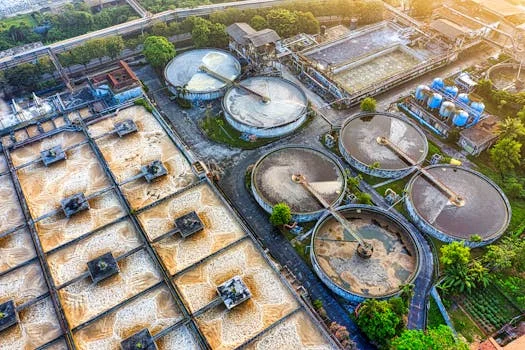
Effective treatment for Senegalese industrial effluent typically begins with robust primary treatment to remove large solids and FOG. Food-processing and textile streams carry the highest solids and grease loads. Rotary mechanical bar screens (HydropureWater GX Series) achieve 95% efficiency for particles larger than 6 mm, protecting pumps and downstream membranes. Grease traps then cut FOG by 80–90%. That cut reduces pipe blockages and keeps biological reactors from going anaerobic under oil load.
For secondary treatment, facilities often choose between high-efficiency DAF systems or compact MBR technology. High-efficiency DAF systems for Senegal’s industrial effluents (HydropureWater) achieve 92–97% TSS removal and 85–90% FOG removal at hydraulic loading rates of 4–8 m/h (per EPA 2024 benchmarks). Most plants we size for FOG-heavy food sites run nearer the lower end of that 4–8 m/h band when influent temperature swings. These units fit food processing and textile effluents where emulsified oils and fine solids dominate. Alternatively, compact MBR systems for water reuse in Senegalese factories (HydropureWater DF Series) deliver 99% pathogen removal and 95% COD reduction in a footprint about 60% smaller than conventional activated sludge. MBRs suit high-strength organic waste from slaughterhouses and breweries when reuse or tight urban land is the driver.
Plot space in Dakar industrial yards is often tight at modest flows. An Underground Package Sewage Treatment Plant (WSZ Series) can house biological treatment below grade after DAF or grease pretreatment, keeping surface area free for production. Chemical dosing systems remain essential for metals and pH control. Precise chemical dosing for heavy metal removal in Senegal uses automatic coagulant/flocculant injection. Typical dosage rates are 50–200 mg/L for coagulants and 1–5 mg/L for flocculants to precipitate chromium and lead. Tertiary polishing closes the train. Chlorine dioxide disinfection for industrial effluents via generators (HydropureWater) achieves a 99.9% bacterial kill rate, while multi-media filters reduce turbidity to less than 2 NTU. A typical Senegal industrial train is screening → DAF → biological treatment (MBR or package plant) → targeted chemical dosing → disinfection.
| Treatment Stage/System | Key Performance Indicator | Typical Performance for Senegalese Effluents | Applications |
|---|---|---|---|
| Rotary Mechanical Bar Screens (GX Series) | Solids Removal Efficiency | 95% for particles >6 mm | Primary removal of large debris |
| Grease Traps | FOG Removal Efficiency | 80–90% | Food processing, restaurants |
| Dissolved Air Flotation (DAF) | TSS Removal Efficiency | 92–97% | Food processing, textiles, high FOG |
| DAF | FOG Removal Efficiency | 85–90% | Food processing, textiles, high FOG |
| DAF | Hydraulic Loading Rate | 4–8 m/h | Space-efficient primary/secondary treatment |
| MBR Membrane Bioreactors (DF Series) | COD Reduction | 95% | High-strength organic waste, water reuse |
| MBR Membrane Bioreactors (DF Series) | Pathogen Removal | 99% | High-quality effluent, water reuse |
| MBR Membrane Bioreactors (DF Series) | Footprint Reduction | 60% smaller than conventional | Space-constrained urban facilities |
| Chemical Dosing Systems | Heavy Metal Precipitation | Effective for Cr, Pb (dosage: 50–200 mg/L coagulants) | Petrochemicals, metal finishing |
| Chlorine Dioxide Generators | Bacterial Kill Rate | 99.9% | Final disinfection for discharge |
| Multi-Media Filters | Turbidity Reduction | <2 NTU | Final effluent polishing |
Cost Breakdown: Modular vs. Conventional Wastewater Treatment Systems for Senegalese Factories
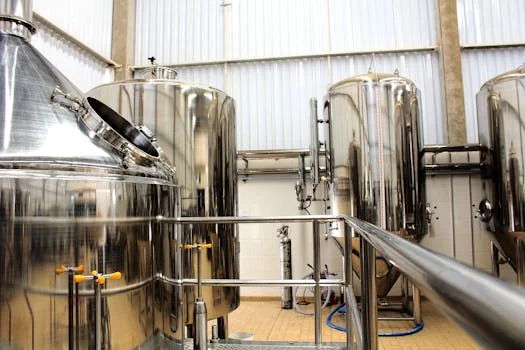
The capital expenditure (CAPEX) for modular wastewater treatment systems in Senegal, such as DAF and MBR units, typically ranges from $50,000 to $300,000 for capacities between 10 and 100 m³/h. That band covers packaged equipment, installation, and commissioning when civil works stay light. Conventional activated-sludge plants with clarifiers usually sit higher, about $200,000 to $1 million for 100–500 m³/h. Large concrete tanks and basins dominate that bill of quantities.
Operational expenditure (OPEX) also splits clearly. Modular trains often run at $0.10–$0.30/m³ when energy draw and operator hours stay low. Conventional plants more often land at $0.20–$0.50/m³ once sludge hauling, aeration power, and denser maintenance schedules are included. Modular packages frequently show ROI in 3–5 years when avoided fines and process-water reuse are counted. Reuse recovery can reach about 30% of treated flow in well-operated food and beverage sites.
Main cost drivers to model before tender include peak flow, influent FOG and COD strength, and ONAS connection fees. Also price sludge haul distance from Dakar, MBR membrane cycles, import duty (often 10–15% on packaged Chinese equipment), and civil works. Financing routes include Senegal’s Green Fund windows, EU Global Gateway-linked support, supplier payment plans up to about 5 years, and local green-loan products. Hidden costs that shift ROI include sludge cake haulage, periodic membrane replacement, and duty paid at the Port of Dakar. For a deeper cost comparison of modular vs. conventional systems, run site-specific energy and sludge numbers rather than catalog averages alone.
| Cost Category | Modular Systems (e.g., DAF, MBR) | Conventional Systems (e.g., Activated Sludge) |
|---|---|---|
| CAPEX (10-100 m³/h) | $50,000 – $300,000 | N/A (typically for larger capacities) |
| CAPEX (100-500 m³/h) | $150,000 – $500,000 | $200,000 – $1,000,000 |
| OPEX per m³ | $0.10 – $0.30/m³ | $0.20 – $0.50/m³ |
| Installation Time | 6 – 12 weeks | 12 – 24 months |
| Footprint Requirement | Compact (50-70% less space) | Large (extensive civil works) |
| ROI Timeline | 3 – 5 years (via fines reduction, water reuse) | 5 – 8 years (longer payback) |
| Key Advantages | Fast deployment, lower energy, water reuse potential | Robust for large flows, proven technology |
| Key Disadvantages | Higher maintenance for membranes (MBR), capacity limits | High civil works, larger footprint, higher OPEX |
Top 5 Industrial Wastewater Treatment Suppliers in Senegal: Engineering Specs and Cost Comparison
Facility managers selecting a wastewater treatment supplier in Senegal weigh technical range, landed cost, and local service coverage. Local DAF and chemical-dosing specialists typically quote CAPEX of $60,000–$200,000 with 8–12 week lead times. Their strength is ONAS permitting know-how and fast call-outs, though capacity often tops out below 100 m³/h. Local MBR and reverse-osmosis (RO) houses more often quote $100,000–$400,000 with 12–16 week leads. They fit reuse projects but carry higher membrane OPEX.
HydropureWater supplies DAF, MBR, and sludge-dewatering packages with CAPEX commonly $50,000–$500,000 and factory lead times of 6–10 weeks. Strengths are packaged scope and alignment to EPA/EU/WHO performance envelopes. Import duties of 10–15% must still sit in the landed-cost model. International contractors for large conventional plants often exceed $1 million CAPEX and 18–24 months schedule. That scope fits municipal/industrial hybrids on the Hann Bay corridor, but is usually oversized for mid-size factories. Custom engineering firms start around $200,000 with 12–18 month programs when pharmaceutical-grade compliance drives the design. Match supplier type to flow and compliance risk: smaller plants lean modular; complex, high-flow sites may need a conventional EPC.
| Supplier Type | Typical Systems Offered | CAPEX Range | Lead Time | Key Strengths | Key Weaknesses |
|---|---|---|---|---|---|
| Local DAF & Chemical Dosing Specialists | DAF, Chemical Dosing | $60,000 – $200,000 | 8 – 12 weeks | Local compliance expertise, 24/7 support | Limited to <100 m³/h capacity |
| Local MBR & RO Specialists | MBR, RO systems | $100,000 – $400,000 | 12 – 16 weeks | Water reuse focus, modular designs | Higher OPEX for membrane replacement |
| HydropureWater (China) | DAF, MBR, Sludge Dewatering | $50,000 – $500,000 | 6 – 10 weeks | Cost-effective, turnkey solutions, global compliance | Import duties (10–15%) |
| International Large-Scale Conventional Providers | Large-scale Conventional (e.g., activated sludge) | $1M+ | 18 – 24 months | Proven for municipal/industrial hybrids | Overkill for small/medium factories |
| International Custom Engineering Firms | Custom Engineering, Advanced Treatment | $200,000+ | 12 – 18 months | High-end compliance (e.g., pharmaceuticals) | High cost, long lead times |
How to Select the Right Wastewater Treatment System for Your Senegalese Factory
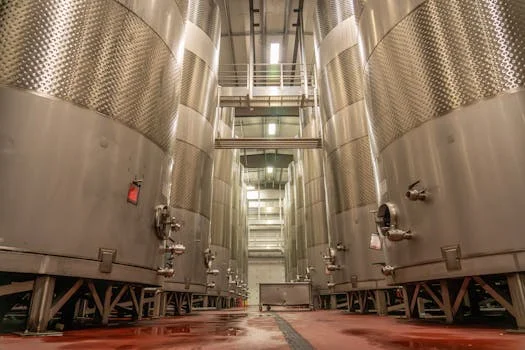
Selecting the optimal wastewater treatment system for a Senegalese factory follows a fixed decision sequence that starts with effluent data, not equipment catalogs. Step 1 is to characterize TSS, COD, BOD, FOG, pH, and heavy metals on representative peak samples. That data decides primary treatment. For high-FOG streams, how DAF systems achieve 95%+ suspended solids removal is the usual first filter before biology.
Step 2 sets capacity: measure peak flow in m³/h and design for at least 20% overcapacity. A textile line peaking at 50 m³/h therefore needs about 60 m³/h of installed capacity. Step 3 checks footprint. Modular MBR or underground package plants need 50–70% less plot than conventional basins, which matters in dense Dakar yards. Step 4 compares OPEX. MBR energy often lands near 0.8–1.2 kWh/m³ versus DAF at about 0.3–0.5 kWh/m³, before chemicals. Step 5 locks compliance by proving the train can hold TSS <30 mg/L and the rest of the Decree 2022-1234 table under peak load. Always request third-party validation reports, not brochure curves alone.
Who This Is For / Next Step
Plant engineers, EPC contractors, and procurement managers use this guide when sizing pretreatment or full trains for factories that must meet ONAS connection rules or Decree 2022-1234 limits around Dakar and secondary industrial zones. Teams chasing only municipal-scale conventional plants above several hundred m³/h, or potable reuse with full RO polishing, should look at dedicated EPC packages instead of mid-range modular catalogs. If you already have peak-flow and lab data, request a sized DAF, MBR, or package-plant proposal with landed CAPEX and OPEX for your Senegal site.
Keep as-built drawings, chemical SDS sheets, and the latest third-party effluent lab reports in one file set for ONAS inspectors. Plants that document peak-day COD, FOG, and metals before tender cut change orders during installation. When comparing bids, normalize every quote to the same design flow, the same discharge limits, and the same sludge disposal assumption so CAPEX gaps reflect real scope differences rather than optimistic hydraulics.
Sludge handling deserves its own line item. Dewatered cake from DAF float or MBR waste activated sludge must leave site under local hauler rules. Weekend storage capacity on a Dakar plot often decides whether a screw press or filter press belongs in the first package.
Frequently Asked Questions
What are the most common wastewater treatment challenges for Senegalese factories?
Senegalese factories most often struggle with high FOG from food processing, strong color from textiles, and metals from petrochemical lines. DAF handles FOG and fine TSS well, while coagulation plus MBR or chemical precipitation addresses color and metals. A combined coagulation–MBR train has cut textile color by about 95% on documented Dakar projects when coagulants and membrane flux were tuned to dye load.
How much does it cost to maintain an industrial wastewater treatment system in Senegal?
OPEX for industrial wastewater systems in Senegal typically runs $0.10–$0.50/m³ treated, driven by technology and influent strength. Modular DAF packages more often sit at $0.10–$0.30/m³, while conventional aeration plants land nearer $0.20–$0.50/m³. Plan an additional $5,000–$20,000 per year for spares—membranes, pumps, and sensors—especially when import lead times stretch beyond eight weeks.
Can treated wastewater be reused in Senegalese factories?
Yes, treated wastewater can be reused in Senegalese factories for non-potable duties such as cooling, irrigation, or washdown water. MBR plus reverse osmosis can reach reuse-grade water with turbidity below 1 NTU and TDS under 500 mg/L when pretreatment is stable. One Dakar brewery case reused about 30% of treated flow for cleaning and reported roughly $20,000 in annual water savings under that recovery rate.
What financing options are available for wastewater treatment systems in Senegal?
Financing options for wastewater systems in Senegal include government green-fund windows, EU Global Gateway-linked programs, and supplier payment plans up to about five years. Local banks such as BICIS have offered green loans for compliant environmental systems at indicative rates near 5–7%. Pair grant screening with a landed-cost model that already includes 10–15% import duty on packaged equipment.
How long does it take to install a wastewater treatment system in Senegal?
Installation time for modular DAF and MBR units in Senegal is typically 6–12 weeks after equipment arrives, including commissioning. Conventional concrete plants need 12–24 months because civil works dominate the schedule. Imported Chinese packages often ship in 6–10 weeks, while EU- or US-sourced custom plants more often quote 12–18 months before site work even starts.