Why Detergent Wastewater Is a Special DAF Case
Detergent manufacturing and industrial laundry streams contain emulsified surfactants — linear alkylbenzene sulfonates (LAS), alcohol ethoxylates, and fatty acid soaps — that stabilize foams, lower the bulk-liquid surface tension, and resist gravity settling. In a dissolved air flotation (DAF) unit without upstream chemistry tuning, that foam stability causes skimmings to re-emulsify in the sludge hopper and overflow the float launder, so the same hardware that clears >90% of suspended solids on a food-processing line can underperform badly on a surfactant line.
The TecnoLógicas systematic review of DAF (2015–2021) confirms DAF is widely deployed across industrial, agricultural, and municipal sectors, but flags that coagulant choice — synthetic or natural — drives effectiveness more than the flotation unit itself (TecnoLógicas, S1). For a detergent line, that means specifying the chemistry train (coagulant, flocculant, pH setpoint, antifoam) is at least as important as specifying the tank. The high COD/BOD ratio typical of these streams is the second warning sign: surfactants are highly soluble, so DAF only captures the emulsified fraction. The soluble COD that slips through must be designed for downstream, not assumed away at the influent.
How DAF Works on a Surfactant Stream
Mechanistically, a DAF system for detergent wastewater is identical to any other DAF: a recirculation pump takes clarified effluent, pressurizes it to approximately 6 bar, and dissolves air into it inside a saturation vessel. On depressurization at the DAF inlet, micro-bubbles 30–50 microns in diameter nucleate, attach to flocs of similar or larger size, and lift them to the surface (SIGMADAF, S5).
What makes the surfactant case different is what happens upstream and at the surface. Coagulation-flocculation with pH adjustment must sit directly in front of the DAF inlet, dosing cationic coagulant (typically polyaluminum chloride or aluminum sulphate) plus a low-charge anionic flocculant so flocs form before the bubble contact zone. The bubble–floc mixture must be distributed under laminar flow; any turbulence at the inlet re-shearing flocs is the usual cause of poor float on a surfactant line. Surface skimmers remove the floated layer; settleable solids drop to a bottom sludge compartment; clarified water exits over an adjustable weir, with a portion returned to the saturation pump. A foam trap at the outlet weir is a cheap insurance policy for LAS-dominant feeds.
Design Parameters That Decide DAF Performance
Five parameters decide whether a DAF system for detergent wastewater performs or foams over. Each one belongs in the RFQ so a supplier cannot substitute a generic industrial DAF datasheet.
- Hydraulic loading rate (m/h): sets the required surface area. Detergent streams produce light flocs, so loading must be conservative to avoid floc washout over the outlet weir. Confirm the supplier's stated rate on a comparable surfactant or oil-bearing reference, not on a slaughterhouse line.
- Recycle ratio: typically 20–50% of throughput. Surfactant service tends to sit at the higher end of that band to compensate for poor floc buoyancy and to keep the air-to-solids ratio stable as influent TSS swings.
- Air-to-solids ratio: sized to the actual influent TSS. Over-aeration on a surfactant line is a common failure mode — it produces excess foam carryover that disrupts downstream aeration tanks and falsifies the DAF effluent COD.
- Coagulant and flocculant pairing: cationic polyaluminum chloride or aluminum sulphate dominates, almost always paired with a low-charge anionic flocculant for detergent service. Dose must be jar-tested, not copied from a municipal water datasheet (TecnoLógicas, S1).
- Antifoam dosing at the DAF inlet: often required for LAS-rich streams. This is application-specific and must be validated in jar tests or pilot work — there is no published universal dose rate to copy.
Insist on bubble size verification. The SIGMADAF technical description ties efficient flotation specifically to the 30–50 micron band; bubbles outside that band reduce attachment efficiency and are a frequent reason DAF underperforms on surfactant service (SIGMADAF, S5). Request the supplier's bubble-size distribution data, not just a "micro-bubble" marketing line.
| Parameter | Typical range for detergent service | RFQ check |
|---|---|---|
| Hydraulic loading | Conservative vs. generic industrial rating | Ask for the supplier's loading on a comparable surfactant or oil-bearing reference |
| Recycle ratio | 20–50% of throughput, upper end for LAS streams | Confirm pump and saturation vessel are sized for the upper bound |
| Air-to-solids ratio | Sized to influent TSS, not over-specified | Request the sizing calculation behind the quoted value |
| Bubble size | 30–50 µm | Request distribution data, not a generic "micro-bubble" claim |
| Coagulant | PAC or alum + low-charge anionic flocculant | Jar-test dose on actual feed before order |
| Antifoam at DAF inlet | Application-specific | Validate in jar test; no published universal dose |
Removal Targets: What the Numbers Actually Look Like
With coagulation-flocculation and pH adjustment in front of the unit, generic industrial DAF is reported to remove more than 90% of suspended solids, FOG, turbidity, color, and phosphorus, while substantially reducing COD and BOD (SIGMADAF, S5). That 90%+ figure is the realistic baseline for a detergent line — but it is a function of the chemistry train, not of the flotation tank alone.
In a surfactant-adjacent textile study, DAF with coagulation/flocculation removed 95–97% of three reactive dyes in a continuous system at 100 L/h, pH 8, with 10 mg/L coagulant and 10 mg/L flocculant (Nasir et al., reported via hero.epa.gov, S2). The relevance here is not the dye chemistry but the proof point: when DAF is paired with a tuned coagulant-plus-flocculant dose, removal of targeted organics routinely exceeds 95%.
Surfactant removal itself is rarely reported as a standalone metric in DAF studies — it shows up inside the COD reduction. The soluble COD fraction that passes DAF must be sized for downstream biological polishing (SBR, MBR, or conventional activated sludge). A leading operational indicator that chemistry tuning is wrong is foaming in the downstream aeration tank: it means DAF let the emulsified surfactant fraction through, and coagulant selection, antifoam dosing, or recycle ratio need to be revisited.
Where DAF Fits in a Detergent Wastewater Train
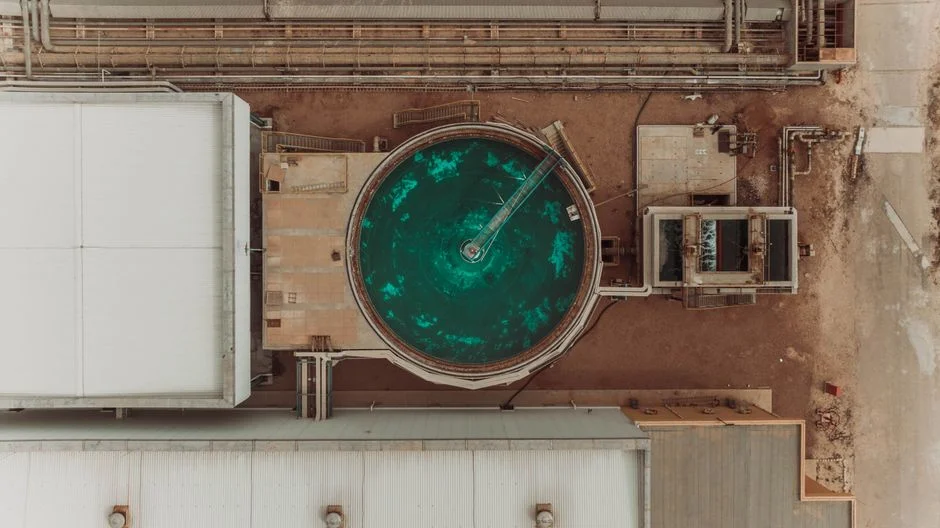
Equalization upstream of the DAF feed pump is non-optional for a detergent line. Surfactant batch loads swing on production campaigns, and an EQ tank with mixing buffers the shock loads so the coagulant dose and recycle ratio do not have to chase a moving target every shift.
Between EQ and the DAF unit, coagulation-flocculation with pH adjustment forms the floc that the bubbles will lift (SIGMADAF, S5). An automatic chemical dosing skid tied to a flow-paced signal is the usual way to keep the dose stable as feed conditions drift.
DAF effluent typically routes to an SBR, MBR, or activated-sludge system for soluble COD polishing. For surfactant service, foaming in those biological units is a known operational risk and the reason a foam trap at the DAF outlet weir earns its place. DAF float and bottom sludge are dewatered — a plate-and-frame filter press is the standard pick for this duty in the TecnoLógicas review (S1) — before disposal or biogas conversion. Discharge to a municipal sewer usually has to meet local FOG and surfactant limits, which a chemistry-tuned DAF can address on its own; soluble COD and residual surfactant almost always need the biological stage. A worked example for a different high-strength stream is in our DAF system for distillery wastewater guide.
Sizing a DAF for a Detergent Plant: Decision Matrix
Match the DAF model family to flow and contaminant load, not to a generic "industrial DAF" label. The SIGMADAF catalog (S5) defines three families that map cleanly onto detergent duties:
- FPBC (parallel plates): high flow, low-to-medium suspended solids, including low-buoyancy particles. The natural fit for a dilute surfactant line with high throughput and modest TSS.
- FPAC (large flotation surface): small-to-medium flows with very high suspended solids loads — up to 40 kg dry matter per m². Use this on a concentrated soap or LAS line where the float fraction is the dominant load.
- FPHF (cross-flow / countercurrent): high contaminant loads at very high flow rates. The right answer for a >100 m³/h facility or a line with both high TSS and high FOG.
For a 10–50 m³/h surfactant line with moderate TSS and high FOG, the baseline is conservative hydraulic loading, elevated recycle ratio, and a jar-tested coagulant dose. For a >100 m³/h facility, FPHF is the more honest choice. Antifoam injection and an overflow foam trap at the DAF outlet are recommended accessories for LAS-dominant streams — they are cheap relative to the cost of foam-induced downtime in a downstream biological stage. Finally, insist on factory acceptance testing of the saturation system at the rated 6 bar with documented bubble size verification, not just a pressure-gauge reading at the pump discharge.
| Plant profile | Recommended DAF family | Key accessories |
|---|---|---|
| 10–50 m³/h, moderate TSS, high FOG | FPBC with conservative loading, upper-end recycle ratio | Antifoam injection; outlet foam trap; jar-tested coagulant dose |
| 10–50 m³/h, very high TSS, LAS-dominant | FPAC for maximum surface area | Antifoam injection; outlet foam trap; downstream biological foam control |
| >100 m³/h, high contaminant load | FPHF cross-flow / countercurrent | FAT at 6 bar; bubble size verification; antifoam dosing |
Cost, Compliance, and Supplier-Selection Checklist
DAF unit CapEx varies widely with capacity, material of construction, and scope of integration. Rather than anchoring on a single price number, frame the commercial discussion around documented performance on comparable streams.
Confirm the supplier can document >90% removal efficiency on a surfactant or oil-bearing reference, with bubble size data inside the 30–50 micron band (SIGMADAF, S5). Ask for evidence of factory acceptance testing at the rated 6 bar saturation pressure and a list of installed detergent or surfactant references — not food-processing or municipal potable references rebranded as "industrial".
On compliance, DAF effluent typically must meet local FOG and COD sewer limits; in the UK this maps to Urban Waste Water Treatment Directive controls, and the buyer should confirm the local equivalent in their jurisdiction. Sludge handling scope needs to be explicit: confirm whether the supplier's scope includes dewatering or whether the DAF float will be sent to a downstream filter press. For a deeper look at the equipment side, our guide to the best DAF unit for industrial wastewater walks through the spec-vs-cost trade-offs in more detail; the DAF system for beverage wastewater guide covers a comparable high-FOG stream. A HydropureWater DAF system in the 4–300 m³/h range covers most detergent-plant flows in a single skid.
| Checklist item | What to ask the supplier |
|---|---|
| Removal performance | Documented >90% on a surfactant or oil-bearing reference? |
| Bubble size | Distribution data in the 30–50 µm band? |
| Saturation pressure | FAT report at the rated ~6 bar with bubble size verification? |
| References | Installed base in detergent, soap, surfactant, or industrial laundry service? |
| Compliance | Local FOG and COD sewer limits mapped to the offered performance? |
| Sludge handling | Is dewatering in scope, or does the DAF float go to a downstream filter press? |
Frequently Asked Questions
What does a DAF system actually remove from detergent wastewater?
With coagulation-flocculation and pH adjustment upstream, a DAF system removes more than 90% of suspended solids, FOG, turbidity, and color, and substantially reduces COD and BOD (SIGMADAF, S5). The micro-bubbles are 30–50 microns in diameter, which is the size band that attaches efficiently to flocs of similar or larger size. Surfactant removal shows up as part of the COD reduction; the soluble fraction passes to downstream biological polishing.
How do I size a DAF for a 10–50 m³/h surfactant line?
Size on hydraulic loading and recycle ratio, not just on flow. Detergent streams with light flocs need conservative hydraulic loading and a recycle ratio in the upper end of the 20–50% band. Confirm with a jar test on the actual feed that the chosen coagulant (PAC or alum) and low-charge anionic flocculant produce flocs dense enough to be lifted by 30–50 micron bubbles.
What does a DAF system for detergent wastewater cost?
CapEx varies with capacity, material of construction, and scope of integration, so a like-for-like number needs a defined flow rate, TSS, FOG, and MOC. Comparable industrial DAF units in the SIGMADAF-class range are a reasonable reference point (S5). For a specific quotation, request a jar test on your feed and a sized proposal with the saturation vessel and chemical dosing skid in scope — that is the only way to get a defensible budget figure.
How do I qualify a DAF supplier for a detergent project?
Three acceptance criteria separate a credible supplier from a generic one. First, request documented >90% removal on a surfactant or oil-bearing reference, not a food-processing line rebranded as "industrial". Second, require factory acceptance testing of the saturation system at the rated ~6 bar with bubble size verification in the 30–50 micron band. Third, ask for a list of installed detergent, soap, or industrial laundry references and the contact details to verify them.