Start with the permit and the plant's worst wastewater
Food and beverage plants near Willow Springs meet pretreatment limits by characterizing each waste stream, obtaining the applicable sewer-discharge and permit conditions, and treating the wastewater before it enters the sewer. Treatment may include screening or solids removal, DAF for fats, oils, grease and floatable solids, chemical dosing and pH adjustment, and biological treatment for biodegradable organics. The final train must be sized for peak washdown and CIP flows—not averages—and validated through sampling and monitoring. Federal pretreatment standards provide the baseline, but numerical discharge limits, monitoring duties and sampling frequency must be confirmed with the receiving sewer authority.
The permit, not a generic equipment specification, defines compliance. Crystal Clean states that EPA pretreatment standards establish the federal baseline for industrial discharges to publicly owned treatment works, while local sewer districts can impose different limits, monitoring requirements and reporting obligations. The 2026 comparison of food and beverage plants meeting sewer limits makes the same practical distinction: no equipment catalog or commercial loading observation should be treated as a local discharge standard.
Before selecting equipment, obtain the current sewer-use ordinance, industrial discharge permit, prohibited-discharge list, designated sampling point, monitoring frequency and surcharge provisions from the receiving authority. Confirm whether each waste stream discharges directly to the sewer, is hauled off site, or enters a shared pretreatment system. The responsible authority and required proof package can differ among those arrangements.
Then separate two design bases. The permit supplies the enforceable discharge conditions; plant wastewater characterization, production schedules and peak operating records supply the engineering inputs. The supplied USGS material on thermal springs in the United States and large springs in the United States concerns spring hydrology, not industrial wastewater pretreatment, so neither is relevant to selecting food-processing treatment equipment or establishing Willow Springs limits.
Map the wastewater streams that drive pretreatment design
Food-processing effluent design begins by separating production and sanitation streams instead of assigning one composition to the whole plant. Crystal Clean identifies raw-material washing, cooking, cooling and packaging as major wastewater sources, while CIP, floor washing and equipment sanitization add variable chemical discharges. Cooling water may also pick up lubricants or other contaminants from process equipment.
Crystal Clean reports that food-processing wastewater has high and variable BOD and COD, organic solids, wide pH swings and unpredictable flows. Acidic process water can enter the same collection system as alkaline CIP effluent, while carbohydrate- or protein-rich streams add soluble biodegradable organics. As a loading warning—not a Willow Springs design value or legal limit—Crystal Clean reports that BOD in some dairy and brewery wastewater may be 10 to 20 times domestic sewage.
| Waste stream | Primary concern | Treatment implication |
|---|---|---|
| Raw-material washing and process losses | Organic solids, suspended solids, sugars, starches or proteins | Solids removal followed by the organic-load treatment required by the permit |
| FOG-rich food processing | Fats, oils, grease and floatable material | Physical separation before biological treatment |
| CIP and equipment sanitation | Acidic or alkaline chemicals, detergents and disinfectants | Segregation, equalization and pH/chemical control |
| Floor washing | Suspended food particles and wash chemicals | Screening, solids capture and flow equalization |
| Cooling water | Potential lubricant or process contamination | Source segregation and stream-specific characterization |
Operational design must account for the reality that washdowns and shift changes can overwhelm systems sized for average conditions. Sampling should therefore cover products, seasons and operating states rather than relying on one grab sample. The MBBR design for vegetable-processing wastewater is useful for understanding how biological design must reflect actual process effluent rather than domestic-sewage assumptions.
Use distinct removal mechanisms. Suspended solids require capture, FOG requires separation, soluble biodegradable organics require biological or another organic-load reduction process, and pH requires balancing or neutralization. Treating one parameter does not establish compliance with the others.
Build a treatment train that removes each contaminant in the right order
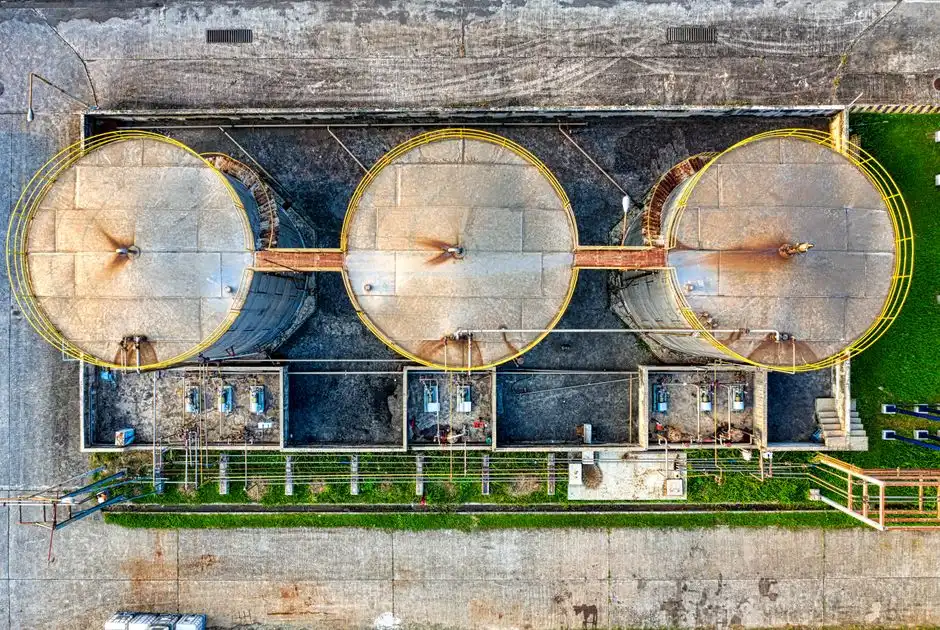
A defensible food-processing treatment train normally moves from source control and segregation to solids removal, equalization, FOG removal, chemical and pH control, clarification, biological treatment where needed, and final compliance monitoring. The sequence should reflect the permit and wastewater profile rather than a predetermined equipment list.
ALAR identifies DAF as a flotation method for fats, oils, grease and fine solids. It places coagulation, flocculation and pH adjustment among the early treatment functions and identifies MBBR and IFAS biological systems for BOD and nutrient reduction. An industrial DAF system for food-processing wastewater can therefore reduce FOG and floatable-solids loading, but it is not a substitute for biological treatment of soluble organics.
The reverse limitation also matters. Biological systems should not be expected to perform as designed when incoming oil, grease and solids overload them. Equalization should therefore serve two functions: attenuating batch flows and stabilizing chemical conditions that could otherwise shock downstream biology. An automatic chemical dosing and pH control system must be evaluated as part of the operating train, not treated as an accessory.
Use published equipment capacities only for initial screening. The supplied DAF specification covers 4–300 m³/h across 13 standard models. That range can help procurement identify candidate configurations, but it cannot establish the required machine size without verified peak flow, contaminant loads and duty-cycle analysis.
| Process function | What it addresses | Design check |
|---|---|---|
| Source control and segregation | Concentrated or incompatible streams | Ability to isolate CIP, FOG-rich and high-strength flows |
| Screening and solids removal | Organic solids and floatable material | Peak solids loading and required removal endpoint |
| Equalization | Washdown, shift-change and batch peaks | Hydraulic buffer and chemical stabilization |
| DAF and clarification | FOG, fine solids and separated solids | FOG, TSS and hydraulic capacity; not soluble BOD alone |
| pH and chemical control | CIP acids, caustics and treatment chemicals | Complete pH range, mixing, dose control and downstream compatibility |
| Biological treatment | Soluble biodegradable organics | Actual BOD/COD profile, variability and nutrients |
| Sludge handling | Separated solids requiring volume reduction | Moisture, generation rate, storage and disposal route |
If the train generates sludge, include dewatering in the project scope. ALAR identifies plate-and-frame filtration as a method for reducing sludge volume before disposal, and the plate-and-frame filter press is one downstream option to evaluate against the selected solids-generation rate and handling route.
Size equipment for peaks, variability and permit conditions
Equipment should be sized from measured peak conditions and verified contaminant loads, not from a production average or a supplier’s general capacity range. The design package should include peak and average flow, batch-discharge timing, hydraulic and organic loading, FOG and TSS characteristics, pH range, temperature, required treatment performance and discharge or reuse objectives.
Check hydraulic capacity and contaminant-removal capacity independently. A unit may pass enough flow while lacking capacity for the FOG, suspended-solids or organic load it must remove. The commercial 4–300 m³/h DAF range therefore helps identify candidate equipment but does not replace plant-specific calculations.
Batch timing is critical because floor washing, washdowns and CIP releases can produce concentrated peaks. Equalization may reduce the required instantaneous treatment rate, but its working volume and mixing performance must be derived from actual schedules and wastewater composition. For biological treatment, assess the process against the plant’s actual wastewater rather than domestic-sewage design assumptions, especially during production changes and sanitation events.
Pilot testing is a practical validation option. ALAR identifies pilot testing as a way to verify performance before full-scale installation, particularly where actual wastewater varies substantially or treatment must be demonstrated against specific objectives.
The final specification should also address redundancy, bypass controls, maintenance access and safe operation during cleaning or chemical-system failure. For broader equipment comparison, review decanter centrifuge sizing for canned-food wastewater and the process-selection questions in the 2026 effluent-treatment buyer’s guide, while retaining the local permit as the compliance basis.
Verify compliance with monitoring, sampling and corrective action

Compliance begins with a controlled treatment chain—not with equipment installation. The chain must connect source control, characterization, treatment, representative sampling, comparison with permit conditions, recordkeeping and corrective action.
Crystal Clean states that monitoring requirements, sampling frequencies and reporting obligations are set by the local sewer district. The plant must therefore follow its permit for the sampling point, frequency, parameters and reporting. Monitor the parameters relevant to the installed treatment train, including pH, TSS, BOD or COD, and FOG where applicable; these are monitoring parameters, not universal Willow Springs limits.
| Control point | Record to retain | Corrective-action trigger |
|---|---|---|
| Equalization | Tank level, incoming flow and operating status | Excessive level, abnormal batch discharge or sustained flow imbalance |
| Chemical and pH control | Chemical dosage, pH and calibration checks | Excursion, inconsistent dosage or failed control response |
| DAF and solids separation | Flow, operating condition, solids removal and sludge inventory | Performance decline, separator upset or accumulated solids |
| Biological treatment | Process condition, organic loading and operating observations | Loss of process stability or abnormal loading |
| Compliance sampling | Lab results, sample location, date, flow and permit comparison | Result outside an applicable permit condition |
| Sludge management | Removal date, quantity and destination | Storage limit reached or destination documentation incomplete |
Document alarms, deviations, laboratory results, instrument calibration, corrective actions and changes in products, recipes or sanitization chemicals. A change in production or CIP chemistry should trigger a wastewater-profile review and an assessment of whether monitoring or treatment must change.
Keep the regulatory record distinct from equipment-performance data. Equipment records show how the train operated; permit records demonstrate whether the discharge complied and what corrective action followed. The comparison frameworks for chemical plants meeting sewer limits and mining and metals plants meeting sewer limits illustrate the same documentation discipline without supplying Willow Springs limits.
Choose a supplier using compliance and operating evidence
A supplier proposal should state the design flow, contaminant loading, treatment objective, process sequence, selected equipment, control philosophy, sludge-handling route and measurable performance criteria. If those inputs are absent, the proposal is not yet a basis for procurement.
Ask for demonstrated experience with food and beverage streams containing fats, oils, grease, sugars, starches, proteins, suspended solids and CIP chemicals. Request pilot data, operating references, commissioning tests, operator training, spare-parts support and the chain of custody for removed waste or sludge.
Do not accept a promise of a discharge result without a stated wastewater basis, the controlling permit limits and measurable acceptance criteria. Equipment capacity alone does not demonstrate permit performance.
Operational support is part of the technical scope. Confirm service response, emergency support and maintenance access because a plugged separator, failed DAF train or dosing-system malfunction can interrupt sanitation and production. The acquisition-related requirements described in the 2026 plant-acquisition wastewater guide also support checking how treatment obligations transfer with site ownership or operational change.
Frequently Asked Questions
What pretreatment limits apply to a food and beverage plant near Willow Springs?
The plant must obtain the current local sewer-use ordinance and industrial discharge permit from the receiving authority. Crystal Clean states that local sewer districts set monitoring requirements, sampling frequencies and reporting obligations, so numerical limits cannot be inferred from federal baselines or equipment literature. Also confirm the prohibited-discharge list, sampling point and surcharge provisions.
Is DAF enough to meet food-processing sewer limits?
<Frequently Asked Questions
What pretreatment limits apply to a food and beverage plant near Willow Springs?
Facilities discharging into the municipal sewer system near Willow Springs must comply with local industrial pretreatment program (IPP) limits, which typically cap Biochemical Oxygen Demand (BOD) at 250-300 mg/L, Total Suspended Solids (TSS) at 250-300 mg/L, and Fats, Oils, and Grease (FOG) at 100 mg/L. Exceeding these limits often triggers significant surcharges, and discharge pH must remain strictly within the 5.5 to 9.5 range to prevent infrastructure corrosion.
Is a DAF system enough to meet food-processing sewer discharge limits?
While a Dissolved Air Flotation (DAF) system is highly effective at removing up to 90% of FOG and 60-80% of TSS, it is rarely sufficient as a standalone solution for high-strength food processing waste. Because DAF units do not significantly reduce soluble BOD, plants often require supplementary biological treatment, such as an aerobic Moving Bed Biofilm Reactor (MBBR) or an anaerobic digester, to reach the final municipal discharge standards.
How do you size wastewater pretreatment equipment for washdown and CIP peaks?
Equipment sizing must be based on instantaneous peak flow rates rather than average daily volume to prevent system overflow during Clean-in-Place (CIP) cycles. Engineers typically use a peaking factor of 2.5 to 4.0 times the average flow to account for high-temperature chemical discharges and concentrated organic slugs, ensuring that equalization tanks provide sufficient hydraulic retention time to buffer these surges before processing.
What information should I request from a wastewater treatment equipment supplier?
When evaluating vendors, request a detailed mass balance calculation that demonstrates how the equipment will achieve specific effluent concentration targets based on your unique influent characterization. You should also require a performance guarantee, a summary of expected chemical consumption rates (mg/L dosage), anticipated sludge production volume in gallons per day, and a comprehensive list of references for similar food and beverage facilities with comparable hydraulic and organic loading profiles.
When should a food plant pilot-test its pretreatment system before installation?
Pilot testing is essential when the wastewater profile includes high concentrations of surfactants, complex proteins, or rapid seasonal variability that could inhibit flocculation or biological performance. A 4- to 8-week pilot study is recommended if the facility plans to implement advanced membrane bioreactors (MBR) or chemical precipitation, as these technologies are highly sensitive to fluctuating influent characteristics that bench-scale testing cannot fully replicate.