What Makes Vegetable Processing Wastewater Different
Vegetable processing wastewater is usually biodegradable, but its flow and organic load can change sharply with production, washing and batch-cleaning schedules. Suspended produce solids, oil and grease, surfactants, cleaning chemicals, pH excursions and temperature changes can impair biological treatment or overload an MBBR. A moving bed biofilm reactor retains active biomass on carriers, but that does not remove the need for equalization, solids pretreatment, controlled loading and final clarification.
Begin with a stream-by-stream map. Separate washing, peeling, blanching, cutting, product-contact cleaning, floor washdown and clean-in-place discharge, then mark each as continuous, batch-based or seasonal. Vegetable fragments can contribute readily biodegradable carbon while creating suspended-solids loading. Oil and grease can coat carriers, while cleaning chemicals may introduce toxicity, pH changes or foam. The relevant design question is not simply whether the wastewater is food-sector effluent, but which fractions reach the reactor and under what conditions.
Create a representative sampling program covering normal production, peak washing, cleaning and discharge periods. Require COD, BOD5, TSS, oil and grease, pH, temperature, flow and surfactant indicators, together with chemicals relevant to the plant’s cleaning operations. Sampling only one production shift will miss batch and seasonal conditions. Use the results to identify whether equalization and solids removal can make the stream biologically treatable.
The review Recent advances in application of moving bed biofilm reactor for wastewater treatment, published by Elsevier’s ScienceDirect in 2022, states that biological treatment alone is unsuitable for highly polluted industrial wastewater containing non-biodegradable compounds. It recommends combining physicochemical and biological processes where recalcitrant or inhibitory components are present. That limitation matters for vegetable plants because food biodegradability does not guarantee consistent treatment performance.
MBBR supports both attached and suspended biological growth and generally retains more biomass than conventional activated sludge, but the reactor still depends on controlled solids, pH, temperature and substrate conditions. The broader MBBR design guide for food processing wastewater provides a wider process context, while the site-specific steps below determine the correct vegetable-plant configuration.
Build the Treatment Train Around the Wastewater
The treatment train should remove material that can obstruct the MBBR or create an uncontrolled biological load, then provide the biological stage with equalized, biodegradable flow. A defensible sequence is:
- Screen or crush large debris: remove packaging, peel, and other material that could lodge around carriers or clog pumps.
- Equalize flow and load: blend production and batch discharges so the MBBR receives a controlled hydraulic and organic load.
- Remove suspended solids: use suitable pretreatment when produce solids, colloids, oil and grease, or floating material are material.
- Apply biological treatment: use an aerobic MBBR for oxygenated organic removal, or an anoxic or anaerobic MBBR only where the treatment objective supports it.
- Separate final solids: provide clarification or another solids-separation stage unless membrane separation is included.
Equalization is not merely a buffer tank. It should damp washdown and clean-in-place surges while moderating the COD and BOD5 load entering the biological reactor. The 2022 ScienceDirect review identifies hydraulic loading rate, organic loading rate, HRT and SRT among the operating variables that must be engineered together with pH, temperature, carrier type, filling ratio and reactor configuration.
Commercial evidence from Veolia Water Technologies’ MBBR Pack campaign describes a canned pulse and vegetable facility that selected a packaged MBBR specifically to cope with large effluent-load variations. The campaign states that one unit can handle up to 500–600 kg COD/d. This is a relevant food-sector reference for load variability, but it is not a sizing rule for another plant; the supplied excerpt provides no discharge-quality result.
DAF should be considered upstream when characterization identifies significant oil, grease, floating solids, colloids or suspended produce solids. A DAF pretreatment system for vegetable processing wastewater can intercept those fractions before they interfere with biomass activity, oxygen transfer or carrier movement. The ScienceDirect review identifies high organic flux, stagnant zones and the need for suspended-solids separation among MBBR design limitations.
| Process stage | Primary design duty | Information required from supplier |
|---|---|---|
| Screening or crushing | Remove large produce and packaging debris | Screen size, duty basis, extracted-solids handling |
| Equalization | Blend hydraulic and organic surges | Working volume, mixing method, submersible-pump duty and discharge-control logic |
| Solids pretreatment | Reduce suspended solids and, where needed, oil and grease | Characterization basis, chemical demand, solids separation and residuals handling |
| MBBR | Biologically remove soluble biodegradable organics | Stage configuration, HRT, OLR, carrier, aeration or mixing, controls |
| Final separation | Remove biomass and remaining solids | Solids loading, separation mechanism, sludge concentration and disposal route |
Do not assume that one reactor configuration accommodates every vegetable stream. The ScienceDirect review notes that food and bio-processing applications can be seasonal and that reactor configuration, carrier type, filling ratio, HRT, OLR, pH, temperature and aeration must be engineered as one system.
Size the MBBR Around Load, Residence Time, and Carriers
MBBR sizing must follow the plant’s load profile, not a generic package capacity. Give the supplier average and peak flow, average and peak COD and BOD5, production and cleaning calendars, required effluent objectives, pH, temperature, TSS, oil and grease, surfactant conditions, and the downstream discharge or reuse route. Without the load-duration profile, neither HRT nor OLR can be defended.
The complete performance-driver list in the 2022 ScienceDirect review includes hydraulic loading rate, OLR, HRT, SRT, pH, temperature, carrier type, filling ratio, reactor configuration, microorganism type, biofilm thickness, attached and suspended biomass, and aeration extent. A carrier should therefore be specified as part of a reactor design, not purchased as a generic packing volume.
The saline phenolic study published by SpringerPlus in 2010 provides an engineering reference. Its 10 L reactor had a 65 cm effective depth, used up to 50% carrier fill, and employed HDPE carriers with a density of 0.96 g/cm3 and an effective surface area of 520 m2/m3. Those characteristics are not transferable specifications for a vegetable plant. They do demonstrate why carrier geometry, protected surface area and fill ratio must appear in the supplier’s calculation.
The same study also shows the consequences of insufficient retention under its phenol and salt conditions. Effluent metabolites were reported as 18.8 mg COD/L at 16-hour HRT, 80 mg COD/L at 12-hour HRT and 171.2 mg COD/L at 8-hour HRT, compared with no detected metabolites at the selected 18-hour condition. These values describe synthetic saline phenolic wastewater only; they are not expected vegetable-wastewater effluent values.
| Supplier calculation or specification | Required basis | Buyer check |
|---|---|---|
| Aerobic and anoxic volume | Actual flow, load profile, HRT, OLR, temperature and selected biology | Reactor stages are separately justified rather than combined by rule of thumb |
| Biofilm carrier media | Carrier type, protected surface area, density, fill ratio and mixing compatibility | Carrier movement and surface-area assumptions are documented |
| Aeration and mixing | Biochemical oxygen demand, ammonia basis where relevant, temperature, elevation and dissolved-oxygen target | Power, air flow, redundancy and diffuser arrangement are included |
| Hydraulic retention time | Selected working volume and verified flow profile | Startup, equalization and peak flow are treated consistently |
| Organic loading rate | Average, peak and diurnal COD and BOD5 load | Cleaning and batch discharges are included, not only production flow |
| Solids separation | Expected biological solids and carryover | Downstream sludge inventory and disposal route are specified |
| Acclimation and startup | Feed chemistry, seed source and ramp-up sequence | Performance test is not scheduled before biological stability is demonstrated |
Require the supplier to state every assumption behind these calculations, including maximum daily load, hydraulic surge, pH and temperature limits. If package capacity is based on the Veolia unit cited at up to 500–600 kg COD/d, require the supplier to explain how that reference translates to this plant’s actual flow, composition and operating envelope.
Startup, Acclimation, and Load-Shock Control
Commissioning should establish a stable biofilm before the reactor is exposed to peak production and cleaning loads. Define seed biomass, carrier wetting, aeration verification, initial loading, biofilm establishment and the criteria for increasing load. Starting at peak flow is not an acceptable commissioning strategy because it confounds reactor instability with poor pretreatment or an incorrect organic design basis.
Laundry research from Tanjungpura University, published in the Jurnal Teknosainsia on 2019-01-10, used Kaldnes K1 media at a 20% fill ratio and a 15-day seeding period before 6-, 8- and 10-day treatment trials. The research provides a practical sequence—seed, establish biofilm, then evaluate—but its wastewater, surfactants and operating conditions were laundry-specific. A vegetable plant still needs a site-specific acclimation plan.
Build operating rules around production changes and cleaning releases. Segregate clean-in-place and product-contact cleaning discharges where practical, ramp reactor loading as production increases, correct pH where required, and maintain enough aeration and mixing to keep carriers moving. The 2022 ScienceDirect review explains that aeration moves carriers and supports aerobic biology, while mechanical mixing is required in anoxic or anaerobic MBBR.
The 2010 SpringerPlus study reports tolerance to phenol, hydraulic and salt shocks after gradual acclimation. This is a warning about sensitivity, not evidence that an MBBR will tolerate vegetable-plant shocks. Waste composition, salinity, surfactants, fill ratio, HRT and acclimation history all differ.
Monitor COD reduction, BOD5, TSS, dissolved oxygen, pH, temperature, biofilm condition, carrier movement, odor and downstream solids inventory. Define operating responses before commissioning: reduce feed, redirect cleaning discharge, increase aeration within design limits, or take the reactor out of service. Those actions must fit the aeration and hydraulic design.
What Performance Evidence Actually Shows

Published MBBR results demonstrate feasibility under stated conditions, but they do not establish a vegetable plant’s guaranteed effluent. The most relevant commercial evidence concerns food-sector load variation; the laboratory studies provide parameter sensitivity and operating lessons from materially different wastewaters.
| Evidence source and date | Feed and conditions | Reported result | Transferability to vegetable processing |
|---|---|---|---|
| Veolia Water Technologies MBBR Pack campaign, 2026 source page | Canned pulse and vegetable facility with large effluent-load variations | Packaged MBBR selected; cited capacity up to 500–600 kg COD/d per unit | Directly relevant to food-sector load variation, but no discharge-quality value appears in the supplied excerpt |
| Tanjungpura University, Jurnal Teknosainsia, 2019-01-10 | Laundry wastewater; Kaldnes K1; 20% fill; 15-day seeding; 10-day trial | BOD 441 to 39.67 mg/L; COD 910 to 56.3 mg/L; phosphate 38.24 to 5.31 mg/L; surfactant 47.8 to 5.62 mg/L | Shows biological removal in a surfactant-bearing feed; not a vegetable-wastewater guarantee |
| SpringerPlus, 2010 | Synthetic saline phenolic wastewater; selected condition of 800 mg/L inlet phenol, 18-hour HRT and salt up to 40 g/L | Phenol and COD removal exceeded 99% under the selected condition | Demonstrates acclimation and parameter sensitivity; feed chemistry is not representative of vegetable wastewater |
| ScienceDirect review, 2022, citing Bering et al. | Commercial laundry wastewater | 95–98% BOD5 removal and 89–94% COD removal reported | Reinforces that feedstock, reactor design and operating conditions must accompany every claim |
For procurement, require guaranteed design influent ranges, guaranteed effluent values where applicable, test methods, operating assumptions and defined consequences when loads fall outside the guarantee. A percentage removal without influent and effluent concentrations is incomplete. If the supplier cites a reference project, request the feed characterization, operating envelope and test record behind the claim.
The laboratory data have specific value. The 2019 laundry study quantifies changes in BOD, COD, phosphate and surfactant under its test conditions. The 2010 SpringerPlus study demonstrates that hydraulic retention time materially affected effluent metabolites under saline phenolic conditions. Neither study answers the vegetable plant’s ultimate questions: whether produce solids will blind the system, whether cleaners will inhibit biology and whether a particular packaged configuration can meet the permit.
Therefore, performance testing should be preceded by site-specific characterization, startup and operating verification. The acceptance basis must identify sampling points, test methods, influent ranges, hydraulic conditions, biological stability criteria and the consequence of a failed result.
Choose MBBR Alone or a Hybrid Treatment System
The choice should follow the characterized wastewater. An MBBR can serve as the central biological stage when equalization and solids pretreatment produce a biodegradable stream with manageable oils, surfactants, pH and temperature excursions. It should not be the first unit exposed to untreated produce solids, floating oil, or concentrated cleaning releases.
Choose DAF plus MBBR when characterization shows material oil and grease, suspended produce solids, colloids or floating solids. DAF removes material that can interfere with biological activity, oxygen transfer and carrier movement; the MBBR then handles the remaining biodegradable dissolved and fine organic load. This route also gives the buyer a clearer pretreatment boundary than asking the MBBR to absorb every upstream duty.
Consider an anoxic or anaerobic MBBR only when the treatment objective and biodegradability analysis justify it. The 2022 ScienceDirect review states that mechanical mixing is required in anoxic or anaerobic MBBR to keep carriers suspended, whereas aeration drives movement in oxic or aerobic MBBR. A downstream membrane stage should be considered only when the project requires solids separation or reuse quality beyond reliable clarification; an MBR membrane bioreactor for high-quality effluent is a different treatment scope from clarification following an MBBR.
| Site condition | Indicative treatment scope | Key design risk to resolve |
|---|---|---|
| Biodegradable stream; low solids and oil; manageable pH, temperature and surfactants | Equalization, solids removal, aerobic MBBR, clarification | Verify peak hydraulic and organic loads and maintain carrier movement |
| Material produce solids, oil, grease, colloids or floating material | Equalization, DAF, aerobic MBBR, clarification | Define DAF loading, chemical demand and residual-solids handling |
| Reusable or low-turbidity solids requirement beyond clarification | MBBR followed by membrane separation or an MBR configuration | Confirm whether the objective is solids separation, reuse quality or both |
| Recalcitrant or inhibitory compounds remain after characterization | Physicochemical pretreatment combined with biological treatment | Do not assume biological treatment alone can remove non-biodegradable compounds |
Compare whole-life energy, not only reactor footprint. The 2022 ScienceDirect review notes that MBBR may require more energy than an SBR for carrier suspension. Require the supplier to quantify aeration, mixing, pumping, media replacement, downstream solids handling and labor. A compact reactor can still have an unattractive operating profile if cleaning, maintenance and residuals are excluded from the comparison.
Turn the Concept into a Supplier RFQ
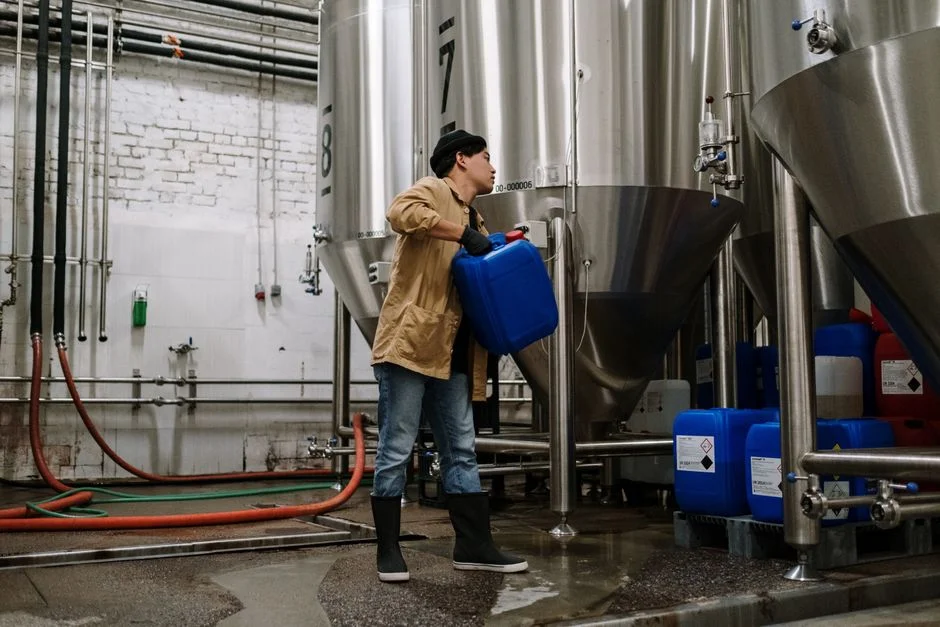
Send suppliers the same design basis so their proposals can be compared. Attach the complete wastewater characterization, production calendar, cleaning schedule, flow and load profile, applicable permit or sewer constraints, reuse objectives, site drawings, power availability and preferred installation concept. State whether batches are scheduled continuously, seasonally or irregularly. A supplier cannot price or guarantee performance from COD alone.
Require a process narrative, mass balance and hydraulic calculations. For the MBBR, request separate aerobic and anoxic volume calculations where applicable, plus the OLR and HRT basis, carrier specification, fill ratio, protected surface area, oxygen and mixing calculations, reactor configuration, controls and downstream solids-separation duty. Identify every design assumption.
Make the performance boundary explicit. State guaranteed influent ranges, temperature and pH limits, maximum daily load, maximum hydraulic surge, permitted cleaning chemistry and consequences outside those limits. State whether the guarantee covers effluent quality, equipment uptime or both, along with sampling locations, test methods and acceptance criteria.
Request itemized life-cycle information: biofilm carrier media replacement, aeration power, maintenance access, instrumentation, downstream sludge handling, operator training, warranties, spare parts and service support. Distinguish equipment supply from civil work, installation, utilities, controls, commissioning, performance testing and operator handover.
Use a weighted decision matrix covering technical fit, verified food-sector references, guaranteed performance, footprint, installation disruption, energy demand, maintenance burden, total cost and support capability. A lower purchase price is not the same as lower life-cycle cost. A food-sector reference should disclose the wastewater, load range and operating conditions, while a laboratory result should remain clearly identified as supporting evidence rather than a commercial guarantee.
For a different process-design reference, compare the MBBR process design for fruit juice wastewater with the vegetable-specific flows and cleaning regime. For sewer-limit context, see how food and beverage plant wastewater sewer-limit compliance depends on the receiving authority’s applicable limits and the receiving treatment agreement.
Frequently Asked Questions
How much does an MBBR system for vegetable processing wastewater cost?
There is no defensible universal price in the supplied evidence. Ask each supplier to itemize equipment, civil work, installation, aeration and pumping utilities, biofilm carrier media, downstream solids handling, controls, commissioning, operator training, maintenance and service support. Require the operating assumptions behind each price, including the guaranteed influent range and production load profile.
How should the supplier size and select the reactor?
The supplier must calculate reactor volume from the plant’s actual flow and COD/BOD5 load profile, selected HRT and OLR criteria, pretreatment performance, pH, temperature and downstream solids-separation duty. The request should also identify carrier type, protected surface area, fill ratio, aeration or mixing, and the assumptions used for attached and suspended biomass. A generic package capacity is not a substitute for those calculations.
Which supplier experience is relevant to vegetable processing?
Prioritize references with comparable food-processing streams, seasonal or batch variation, and similar pretreatment duties. For each reference, request wastewater characterization, reactor configuration, carrier fill, load range, effluent results, test methods and operating record. Laundry or saline phenolic studies can inform design questions, but they should not be presented as vegetable-plant references.
Do published MBBR removal results guarantee regulatory compliance?
No. Published results are evidence under the stated feed and operating conditions, not site-specific discharge guarantees. Compliance depends on the applicable permit, receiving sewer or treatment agreement, and demonstrated performance with the plant’s wastewater. The acceptance test should therefore state guaranteed effluent values, sampling methods, influent envelopes, biological stability criteria and corrective-action obligations.