What Erbil manufacturers are using for high-COD trade wastewater
In 2026, Erbil manufacturers generally treat high-COD trade wastewater with a staged train: remove rags and suspended solids, equalize flow and load, reduce bulk COD biologically when the wastewater is biodegradable, use Fenton or photo-Fenton for refractory organics, and polish and disinfect before reuse or discharge. The strongest recent Erbil benchmark used mature landfill leachate containing 5620 ± 380 mg L⁻¹ COD. UV-assisted photo-Fenton removed 90.2 ± 1.4% COD and 78.6 ± 2.3% TOC, but pilot validation, toxicity testing, sludge characterization and energy assessment remain necessary before industrial scale-up.
The practical answer is a manufacturer-owned treatment train, not a single COD-removal machine. Screening protects pumps; equalization controls shock loading; biological treatment can remove biodegradable bulk COD; advanced oxidation addresses refractory organics; and final solids separation, disinfection and reuse management determine whether the treated water is suitable for its intended endpoint.
The strongest local evidence is narrower than a general industrial performance claim. The Global NEST Journal study used undiluted mature landfill leachate from Erbil’s Kani-Qrzhala landfill. Raw leachate contained 5620 ± 380 mg L⁻¹ COD, 1320 ± 45 mg L⁻¹ TOC and a BOD₅/COD ratio of 0.12 ± 0.03, indicating a low biodegradable fraction. These values are a local high-COD reference for pilot planning, not guaranteed performance for mixed manufacturing effluent.
Reuse must be treated as a defined project endpoint rather than an assumed benefit. UNAMI reported an Erbil treatment unit producing over 300 cubic metres per day and supplying irrigation demand for 300,000 oak trees. That demonstrates local reuse infrastructure, but it does not establish that industrial effluent can meet the same quality without additional treatment. Detailed guidance on industrial wastewater pretreatment for sulfide control and DAF versus clarifier selection should be applied to the factory’s actual waste characteristics.
Characterize the waste before selecting equipment
COD alone cannot determine the correct treatment train because oils, suspended solids, metals, salinity, toxicity and flow variation determine whether the downstream biological, oxidation and polishing stages can operate reliably. The procurement file should begin with a representative characterization rather than a technology selection based on one headline COD value.
Request COD, BOD₅, TOC, suspended solids, oil and grease, pH, temperature, salinity, metals and the source industry’s process chemistry. The wastewater should be sampled across the production cycle because one grab sample can miss batch discharges or dilution events. The 2024 Journal of Food Protection review, Waterborne Diseases and Wastewater Treatment in Iraq, identifies industrial waste and agricultural runoff among the pressures affecting Iraqi water sources, so upstream contamination cannot be assumed away.
The low BOD₅/COD ratio of 0.12 ± 0.03 reported for Erbil mature landfill leachate by the Global NEST Journal study demonstrates why biodegradability must be measured. A high COD concentration does not necessarily mean that most of the load can be removed biologically. Oils, solvents, biocides, high salinity and inhibitory metals may require additional pretreatment or oxidation before biological treatment is viable.
The required endpoint must be fixed before quotation. Sewer discharge, controlled reuse, irrigation, process-water reuse and zero-liquid-discharge objectives require different solids separation, residual-chemical control, disinfection and monitoring. Local irrigation evidence also requires caution: the 2022 Erbil Polytechnic University study found unacceptable metal contamination in edible plants irrigated with wastewater containing Pb, Zn, Mn, Cd, Cu and Ni. Assess industrial heavy-metal removal methods where the influent analysis identifies relevant metals.
| Procurement input | Decision supported | Acceptance basis |
|---|---|---|
| Representative production-cycle analysis | Process selection and pilot scope | Documented wastewater used in testing |
| COD, BOD₅ and TOC | Biological and oxidation duty | Site-specific measurements |
| Suspended solids, oil and grease | Screening and DAF requirement | Measured peak and average loads |
| pH, temperature, salinity and metals | Reaction control and biological suitability | Operational limits from pilot results |
| Target discharge or reuse endpoint | Polishing and disinfection scope | Current authority or reuse specification |
An automatic chemical dosing and pH control system may be part of the train, but reagent selection and dosage should follow jar tests and the wastewater analysis rather than generic dosing rates.
Build a pretreatment train that protects downstream biology
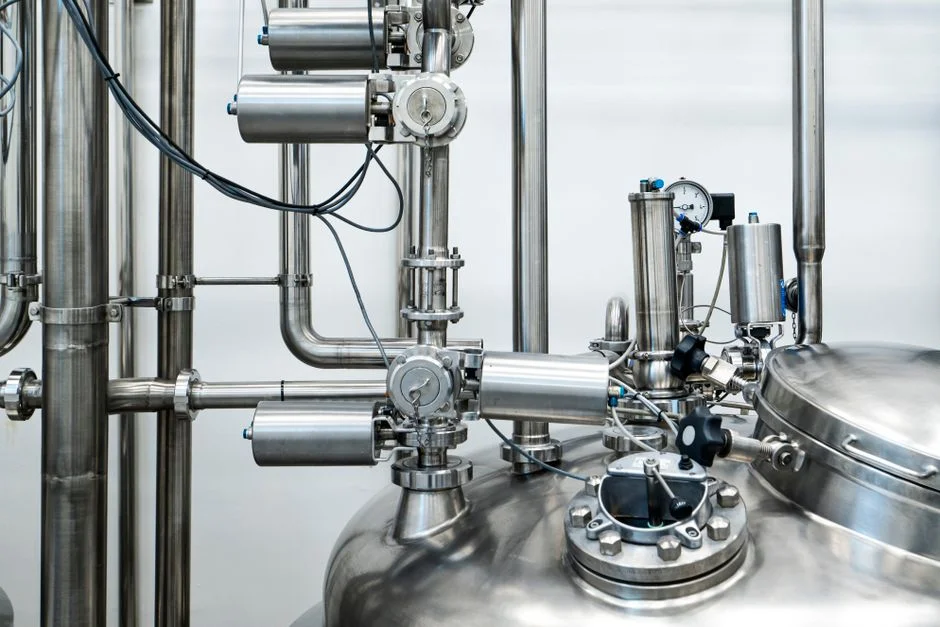
Pretreatment determines whether equalization, biological treatment, oxidation and polishing receive a stable and treatable feed. Mechanical screening removes material that can block pumps or damage downstream equipment, while DAF addresses oil, grease, free oil, colloids and suspended solids when the characterization shows a separation need.
Rotary mechanical bar screens are suitable for removing rags, plastics, fibrous debris and suspended solids before the wastewater enters pumps and biological equipment. A rotary mechanical bar screen for wastewater pretreatment should be selected around the measured solids character, operating hours and required solids handling arrangement.
For wastewater containing oil, grease, FOG, colloids or high suspended-solids loads, the available DAF pretreatment for industrial trade wastewater catalogue system covers 4–300 m³/h and is intended for industrial pretreatment applications. That range is equipment scope, not a plant design conclusion: actual duty still requires the factory’s flow profile and contaminant analysis. A comparison of DAF and clarifier applications helps separate the process objective from the catalogue rating.
Equalization should smooth flow and load variation before chemical dosing or oxidation. Reactor volume must be calculated from measured hourly flow, operating schedule, retained-volume requirement and load variation; a generic flow rate cannot establish the duty. PLC-controlled chemical injection can improve dosing consistency where pH adjustment, coagulation or flocculation is required, but the selected automatic chemical dosing and pH control system must be verified against the reagent, dose and tank arrangement determined by testing.
| Stage | Primary purpose | Design input still required |
|---|---|---|
| Rotary bar screen | Remove rags, plastics and fibrous solids | Solids character, flow profile and disposal route |
| DAF where applicable | Separate oil, grease, FOG, colloids and floatable solids | Oil and grease analysis, suspended-solids loading and recycle arrangement |
| Equalization | Control shock flow and load variation | Measured average flow, peak flow, operating hours and load profile |
| Chemical dosing | Control pH, coagulation and flocculation | Jar tests, reagent selection and dose range |
| Lamella clarification or equivalent | Provide clarified feed and remove settled or flocculated solids | Solids capture target, sludge characteristics and downstream loading |
Where biological or oxidation equipment requires clarified feed, the listed high-efficiency lamella sedimentation system combines sludge recirculation, flocculation and inclined-plate separation. Its selection must follow the solids-loading and clarification target, not simply the nominal treatment capacity.
Choose biological treatment only when the waste is biodegradable
Biological treatment should carry the bulk COD load only when respirometry and pilot results show that the waste is biodegradable under the proposed operating conditions. Equalization and removal of inhibitory materials must precede that decision. Configuration then depends on COD, temperature, nutrients, toxicity, process variability and the downstream oxidation requirements.
Two catalogue packages illustrate the available process architectures. The WSZ anoxic and aerobic contact-oxidation package handles 1–80 m³/h. The MBR configuration combines activated sludge with submerged PVDF membrane filtration and is listed at 10–2,000 m³/day. These are equipment envelopes, not factory sizing conclusions; the WSZ anoxic and aerobic treatment package and the integrated MBR treatment configuration must be checked against actual flow, load and effluent requirements.
The Erbil leachate benchmark shows where that decision boundary lies. Its BOD₅/COD ratio of 0.12 ± 0.03 indicates that the readily biodegradable fraction was limited, so advanced oxidation may be required before or instead of relying on biological removal. The Global NEST Journal authors identified refractory organic matter as a limitation on biological treatment of that leachate.
Request respirometry or a pilot study where the factory waste contains solvents, oils, biocides, high salinity or inhibitory metals. A useful biological trial should measure COD removal, sludge settleability and nitrification where relevant, then confirm that the biologically treated effluent does not impair the downstream oxidation stage.
| Decision condition | Preferred starting point | Evidence needed before commitment |
|---|---|---|
| Waste is demonstrably biodegradable and stable after equalization | Equalization followed by biological treatment | Respirometry and pilot COD-removal results |
| Biodegradable fraction is limited or treatment is inhibited | Oxidation before biological treatment, or advanced oxidation followed by polishing | Refractory-COD response, toxicity and downstream compatibility |
| Variable wastewater with significant oil, solids or pH swings | Physical and chemical pretreatment before biology | Cycle-based analysis and equipment trial |
| High-quality solids separation is required | Biological treatment with membrane clarification where justified | Effluent solids target, membrane fouling risk and operating controls |
The procurement sequence is therefore conditional: measure biodegradability, establish pretreatment performance, test the biological stage and only then decide how much refractory COD remains for oxidation. A biological package should not be treated as a universal COD solution for trade waste.
Use Fenton and photo-Fenton to break down refractory organics
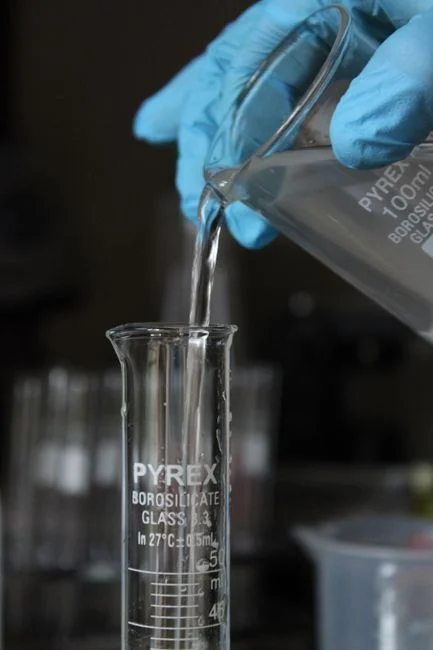
Photo-Fenton can reduce refractory COD in Erbil leachate under defined conditions, but its value must be judged by COD and TOC removal together with reagent consumption, electricity, sludge and downstream treatment requirements.
At the selected conditions of pH 3 and 25 °C, classical Fenton with 500 mg L⁻¹ H₂O₂ and 300 mg L⁻¹ Fe²⁺ achieved 66.3% COD removal from Erbil mature landfill leachate, according to the Global NEST Journal study. UV-assisted photo-Fenton under the selected pH and temperature conditions achieved 90.2 ± 1.4% COD removal and 78.6 ± 2.3% TOC removal with 500 mg L⁻¹ H₂O₂, 100 mg L⁻¹ Fe²⁻ and 64 W UV-C. The reported photo-Fenton process used 67% less Fe²⁺ than classical Fenton, and the BMG kinetic model gave R² = 0.9956.
The study also reported nominal UV energy of 128 kWh m⁻³. That is a scale-up warning rather than a procurement price: the commercial comparison must include electricity, peroxide, iron, acid adjustment, reaction residence, iron-bearing sludge removal and downstream polishing. A plate-and-frame filter press for iron-bearing sludge dewatering may form part of that solids-handling scope, but its selection depends on sludge characteristics established during testing.
Do not transfer the leachate percentages directly to factory effluent. The wastewater composition, pH response, matrix effects, ultraviolet transmittance, toxicity and residual oxidant demand may all differ. The Global NEST Journal authors state that multivariable optimization, toxicity and biodegradability testing, sludge characterization and pilot-scale energy validation remain necessary before industrial scale-up.
| Comparison item | Classical Fenton | UV-assisted photo-Fenton |
|---|---|---|
| Test matrix | Undiluted mature landfill leachate from Erbil | Same leachate and batch-reactor platform |
| Selected conditions | pH 3; 25 °C; 500 mg L⁻¹ H₂O₂ | Selected pH and temperature conditions; 500 mg L⁻¹ H₂O₂ |
| Fe²⁺ dose | 300 mg L⁻¹ | 100 mg L⁻¹ |
| Reported removal | 66.3% COD | 90.2 ± 1.4% COD; 78.6 ± 2.3% TOC |
| UV basis | Not applicable in the reported comparison | 64 W UV-C; nominal energy 128 kWh m⁻³ |
| Model result | Not stated for the selected classical-Fenton condition | BMG R² = 0.9956 |
| Evidence limitation | Leachate-specific batch result | Leachate-specific batch result; pilot and energy validation required |
A factory pilot should use the actual effluent, control pH, establish peroxide demand, characterize the resulting sludge and verify whether the oxidized water remains suitable for the next biological or polishing step. Ultrafiltration design for industrial wastewater is relevant where the treated stream requires solids separation before reuse.
Polish, disinfect and route the treated effluent
The final treatment stage must match the selected reuse or discharge route, including residual chemicals, solids, microorganisms and applicable monitoring requirements. A clarification step alone does not establish suitability for irrigation or sensitive process reuse.
Use ultrafiltration where the objective requires removal of colloids, suspended solids and bacteria before sensitive reuse or reverse osmosis. The listed hollow-fiber ultrafiltration system operates from 2,000 to 40,000 L/h and uses 0.03 micron PVDF membranes. These are catalogue specifications; the required train still depends on flow, solids loading, membrane configuration and the endpoint.
For on-site chemical disinfection, the listed chlorine dioxide generator range runs from 50 g/h to 20,000 g/h. Generator capacity should therefore be matched to dose, contact time and actual treated flow rather than selected from the upper catalogue limit. Removal of residual metals before reuse also requires separate consideration if the influent contains them.
UV sterilization is appropriate where a chemical-free final barrier is required. The listed UV-C sterilization system is specified for chlorine-resistant Cryptosporidium and Giardia, with no disinfection by-products or taste change. It does not remove dissolved contaminants, residual oxidants or metals.
| Final-barrier decision | Applicable equipment | Confirmation required |
|---|---|---|
| Colloids, suspended solids and bacteria must be reduced before sensitive reuse or reverse osmosis | Hollow-fiber ultrafiltration | Flow, solids loading and required permeate quality |
| On-site chemical microbial control is required | Chlorine dioxide generation | Dose, contact time, residual monitoring and chemical handling |
| A chemical-free microbial barrier is required | UV-C sterilization | UV transmittance, dose and target organism |
| Oxidation or precipitation solids require controlled handling | Plate-and-frame filtration | Sludge moisture, yield and disposal route |
Include sludge dewatering in the project scope because oxidation and precipitation can generate solids requiring controlled removal. Before approving irrigation or process reuse, request toxicity, residual-chemical and endpoint-quality checks. The 2022 Erbil Polytechnic University findings make this especially important where wastewater metal contamination can affect edible plants.
Match the system to flow, load and compliance risk
A defensible supplier comparison begins with the factory’s measured wastewater and intended endpoint, not with the highest headline removal percentage. The receiving authority’s current requirements must also be obtained before finalizing the scope; the supplied research does not provide an Erbil-specific numerical discharge limit for this application.
Compare candidate trains by influent COD, biodegradability, flow variation, land availability, reuse objective, sludge volume, operator capability and energy demand. The 2024 Journal of Food Protection review reports that Iraqi wastewater treatment plants are often poorly maintained or overloaded. That finding makes isolation, storage, redundancy, maintainability and operator training procurement priorities rather than optional extras.
Ask every supplier to identify which performance claims came from actual factory effluent and which came from synthetic water, leachate or batch testing. The Erbil photo-Fenton result should be used as a pilot-planning benchmark, not an acceptance guarantee, because the Global NEST Journal authors explicitly require further testing and pilot-scale energy validation.
| Procurement category | Require in the offer | Reason for review |
|---|---|---|
| Performance evidence | Exact wastewater, test protocol, pilot data and acceptance method | Separates plant effluent evidence from leachate or batch claims |
| Operating inputs | Chemical consumption, electricity, sludge yield and controls scope | Supports total operating comparison |
| Civil and site requirements | Plot, foundations, access, drainage, utilities and installation interface | Confirms that the package can be integrated |
| Reliability | Isolation, storage, redundancy, spare parts and maintenance plan | Addresses overloaded and poorly maintained plant risk |
| Commercial protection | Warranty, local service capability, commissioning and operator training | Defines accountability after handover |
The comparison process should follow the effluent treatment plant buyer’s guide while applying site-specific wastewater treatment planning methodology to Erbil. For commercial budgeting, request the life-cycle inputs addressed in the containerized wastewater treatment cost and price guide; the supplied research does not include an Erbil-specific quotation.
Frequently Asked Questions
How should a manufacturer in Erbil size a high-COD wastewater treatment skid?
Do not size from COD alone. Provide measured average and peak flow, the production operating schedule, a complete wastewater characterization, hourly load variation and the required discharge or reuse endpoint. These inputs determine equalization, pretreatment, biological or oxidation duty, polishing and sludge handling. The final sizing should then be checked against a representative pilot.
Which evidence should be requested when selecting a wastewater treatment supplier?
Ask which wastewater produced every performance claim: factory effluent, leachate, synthetic water or batch-tested solution. Request pilot data, the guarantee protocol, chemical and energy consumption, sludge yield, controls scope, warranty and local service capability. This check is more informative than a removal percentage without its test matrix and operating conditions.
What should an Erbil buyer obtain before approving discharge or reuse?
Obtain the receiving authority’s current discharge or reuse requirements and verify the proposed sampling and monitoring plan against them. For irrigation, also request toxicity and metal data because the 2022 Erbil Polytechnic University study found unacceptable contamination in edible plants irrigated with wastewater containing Pb, Zn, Mn, Cd, Cu and Ni. No numerical discharge limit is supplied in the research.
What should be included when comparing cost and lead time?
Request a life-cycle offer covering equipment, installation, chemicals, membranes or UV lamps, sludge handling, power, maintenance, commissioning and operator training. Also require the proposed delivery schedule and local support arrangement. The supplied sources do not provide Erbil-specific prices or lead times, so those items must be obtained in supplier quotations rather than assumed.