What Wastewater and Cooling Blowdown Treatment Does a Las Piñas Data Center Need?
A Las Piñas data center generally needs source-segregated treatment for cooling tower blowdown, RO reject, floor wash, humidifier bleed, and sanitary sewage, with a verified route to reuse or compliant discharge. Metro Manila’s benchmark is 25–30% blowdown at 4 cycles of concentration (CoC), but the correct train depends on measured flows, source-water chemistry, pretreatment requirements, and the receiving sewer or water body. The supplied research identifies DENR DAO 2021-19, LLDA clearance where applicable, PEOS/EIS requirements for hyperscale builds, and local drainage conditions as compliance dependencies. This is a concept-selection framework, not a final process guarantee: obtain the operating water balance, seasonal source-water analysis, cooling chemical inventory, receiving-route limits, and reuse targets before selecting equipment.
The design should not begin with an RO product name. It should begin by establishing which stream is being treated, where it can legally go, what quality it must meet, and whether recovered water can return to the cooling loop or serve another permitted use. The location-specific data center blowdown treatment framework provides a useful cross-check for that sequence.
Map the Wastewater Before Choosing Equipment
Cooling tower blowdown is the principal continuous process-water stream because evaporation leaves dissolved solids, suspended matter, residual biocides, corrosion inhibitors, and scale-control chemicals behind. It should not be blended automatically with RO reject, oily floor wash, generator cooling water, humidifier bleed, stormwater, or sanitary sewage; each stream has a different chemistry, peak profile, reuse potential, and permit pathway.
The Metro Manila guide specifically warns that oily or intermittent streams should not enter a membrane train without oil-removal pretreatment, while RSP Engineers treats domestic sanitary flow as distinct from industrial process wastewater. The following worksheet keeps those boundaries visible.
| Stream | Characterization | Design information required |
|---|---|---|
| Cooling tower blowdown | Continuous stream containing concentrated salts, suspended solids, biocides, corrosion inhibitors, and scale-control chemicals | Makeup and circulating flow, evaporation, CoC, average and peak blowdown, operating profile, chemical inventory, TDS, silica, and suspended solids |
| RO reject | Concentrated salt stream from humidification or process-water polishing | Feed flow, recovery, reject flow, chemistry, temporary storage, and final receiving route |
| Floor wash and generator cooling water | Intermittent; may contain oil, dirt, corrosion products, or cleaning chemicals | Peak flow, episodic duration, oil concentration, cleaning chemicals, and pretreatment requirements |
| Humidifier bleed | Periodic concentrated discharge with a chemistry dependent on upstream treatment | Frequency, flow, source-water chemistry, and segregation method |
| Stormwater | Seasonal runoff with suspended-solids spikes during severe rainfall | Drainage area, rainfall profile, contamination sources, and permitted discharge route |
| Sanitary sewage | Domestic waste from restrooms and kitchens, requiring a separate process and permit path | Peak and average sanitary flow, occupancy, local sewer requirements, and separate treatment scope |
Genesis Water Technologies reports that measured blowdown can exceed theoretical calculations by 15–30% because of unmeasured losses and emergency dumps. Size the treatment skid from meter data, including operating profiles and upset conditions, not from a generic gallons-per-day figure. An effluent treatment buyer’s guide for tropical industrial sites can help structure the tender information, but the Las Piñas water balance remains the controlling input.
Set the Las Piñas Water-Quality and Compliance Basis
The supplied Metro Manila benchmark puts dry-season surface-source TDS at 300–600 mg/L and blowdown at 1,200–6,000 mg/L when makeup is concentrated at 4–6 CoC. These values establish a testing envelope, not a substitute for Las Piñas source-water measurements. HydropureWater’s 2026 Manila guide also lists cooling-makeup targets of 500–1,500 mg/L TDS, 10–25 mg/L suspended solids, pH 6.5–8.5, and silica below 150 mg/L.
| Decision input | Evidence or required verification |
|---|---|
| Makeup-water chemistry | Use the 300–600 mg/L TDS dry-season benchmark from HydropureWater’s 2026 Manila guide only as a sampling-planning reference; test the actual source. |
| Blowdown chemistry | HydropureWater’s 2026 Manila guide reports 1,200–6,000 mg/L TDS at 4–6 CoC; verify against the facility’s operating CoC and chemicals. |
| Reuse quality | Confirm project-specific TDS, suspended solids, pH, silica, and chemistry-compatibility targets. |
| Discharge quality | HydropureWater’s 2026 Manila guide mentions a 1,500 mg/L typical industrial-discharge cap and an older DENR Administrative Order 2016-08 Class C benchmark of 1,000 mg/L TDS. Do not select between these figures without confirming the currently applicable DAO 2021-19 category and the local permit. |
| Receiving route | Confirm the sewer or water body, classification, local pretreatment limits, discharge point, and whether LLDA jurisdiction applies. |
Test TDS or conductivity, pH, temperature, TSS, silica, hardness, chloride, sulfate, residual biocides, corrosion inhibitors, and relevant metals. Source-water testing should cover the dry-season salinity-intrusion period and other expected operating conditions. For a design that relies on continuous compliance evidence, specify real-time water-quality monitoring for treatment skids, with laboratory verification where required.
The permitting sequence is site-specific: identify the receiving route, confirm the authority’s pretreatment requirements, then compare reuse against compliant discharge. A tenant sustainability commitment may justify additional reuse quality, but it does not replace a discharge permit or sewer approval.
Control Blowdown Volume Without Overstressing the Cooling Loop
Increasing CoC reduces blowdown, but the reduction is smaller than operational targets often assume. Genesis Water Technologies gives the blowdown ratio as 1/(CoC−1): 25% at 4 CoC and 20% at 6 CoC. That is a five-percentage-point reduction, or 20% of blowdown volume—not a 50% reduction.
The same source warns that biological and scaling risks rise above 5–6 CoC without advanced treatment, potentially forcing the facility back to a lower CoC. The practical sequence is therefore:
- Meter makeup, blowdown, evaporation, conductivity, pH, and suspended solids.
- Reconcile measured water flows and identify leaks, emergency dumps, or control-system losses.
- Review the cooling chemical program for scaling, corrosion, and microbiological control.
- Add side-stream filtration where it can reduce suspended solids without increasing dissolved solids.
- Change the CoC setpoint only after the measured operating margin is understood.
HydropureWater’s 2026 Manila guide states that 10–25 micron side-stream filtration can hold blowdown suspended solids below 15 mg/L and support higher CoC without reducing TDS. This makes filtration an operating-control measure, not a substitute for salt removal. Water Usage Effectiveness also cannot substitute for this assessment: Genesis explains that WUE does not reveal discharge-water quality or reuse potential. A source such as the location-specific data center blowdown treatment framework can support the same distinction between consumption, discharge, and recovery.
Compare the Treatment Options by Recovery and Discharge Objective
The appropriate treatment train follows the receiving route and reuse target: filtration for solids control, UF plus RO for salt removal, polishing where hardness is the binding constraint, and ZLD where the project requires very high liquid recovery or a restricted discharge route. HydropureWater’s 2026 Manila guide provides the comparison below; the figures are Metro Manila benchmarks, not Las Piñas quotations.
| Option | Reported performance | Primary limitation | Best fit |
|---|---|---|---|
| Side-stream filtration | 10–25 micron self-cleaning filter on 1–5% of circulation flow; suspended solids below 15 mg/L | Does not remove dissolved salts or resolve a TDS exceedance | Minimum solids-control train or higher-CoC operation |
| UF plus RO | 50–85% recovery; 10–50 mg/L TDS permeate | Conventional BWRO generally reaches 75–80% recovery before silica and calcium sulfate scaling become unmanageable | Default cooling-makeup reuse train where discharge and reuse criteria permit |
| UF plus RO plus NF polishing | NF recovery of 70–85%; NF permeate can be blended with RO permeate | Additional capital, controls, and footprint | Sites constrained by hardness more than total TDS |
| UF plus RO plus MVC | 95–98% recovery; distillate below 10 mg/L TDS; 15–25 kWh per 1,000 gallons | Power, footprint, controls, and concentrate or solid handling | ZLD objective or highly restricted liquid discharge |
For UF plus RO, specify UF pretreatment for data center cooling blowdown and an industrial RO system for cooling-tower makeup reuse. The membrane supplier should calculate recovery from the measured feed chemistry, not only the headline 50–85% range.
IDE’s 2026 high-recovery architecture offers a specialized alternative: controlled precipitation removes sparingly soluble salts as dense solids, while dynamic RO operation manages membrane-surface salt buildup. This may be relevant where conventional BWRO cannot meet the project objective, but it must be evaluated against simpler reuse and discharge alternatives.
For commercial screening, HydropureWater’s 2026 Manila guide gives a 50,000 GPD RO train at $250,000–$500,000 CapEx and $1.50–$3.00 per 1,000 gallons OpEx. It gives a ZLD overlay at an additional $3–8 million and $5–15 per 1,000 gallons OpEx. Require current vendor quotations using the verified Las Piñas flow, chemistry, power tariff, recovery target, and concentrate route.
Build a Pretreatment Train Suited to Tropical Cooling Water
Membrane fouling is the dominant failure mode identified for Philippine sites in HydropureWater’s 2026 Manila guide because warm, biologically active feed water encourages biofilm and organic fouling. The pretreatment objective is therefore more than removing visible solids: it must control suspended matter, colloids, biofilm fragments, scaling constituents, and incompatible chemical residuals before they reach the membranes.
A defensible sequence is:
- Equalization and screening: smooth peak flows and remove gross debris.
- Self-cleaning side-stream filtration: protect downstream equipment and control suspended solids.
- Multi-media filtration, where justified: remove suspended solids, turbidity, and colloidal matter and improve the feed condition before UF.
- UF: remove bacteria, colloids, and suspended solids ahead of RO.
- Chemical control: adjust pH or apply antiscalant only where the verified chemistry and membrane supplier’s process design justify it.
- RO: remove dissolved salts.
HydropureWater’s 2026 Manila guide describes a 0.03 micron PVDF UF stage for bacteria, colloids, and suspended solids without chemicals. It also identifies multi-media filtration as a practical pre-UF stage. For the mechanical train, see multi-media filtration before UF and RO. Where required, use an automatic antiscalant and pH-control dosing skid under PLC control, with interlocks, calibration procedures, and chemical storage included in the operating plan.
RSP Engineers identifies residual chlorine or specific biocidal compounds, altered pH, temperature, and metals as potential discharge and pretreatment concerns. Genesis also cautions that aggressive chemical programs can add dissolved solids and make downstream treatment harder. The selected cooling chemical package and the recovery system therefore have to be designed together.
Specify the Treatment Skid and Validate the Supplier Proposal
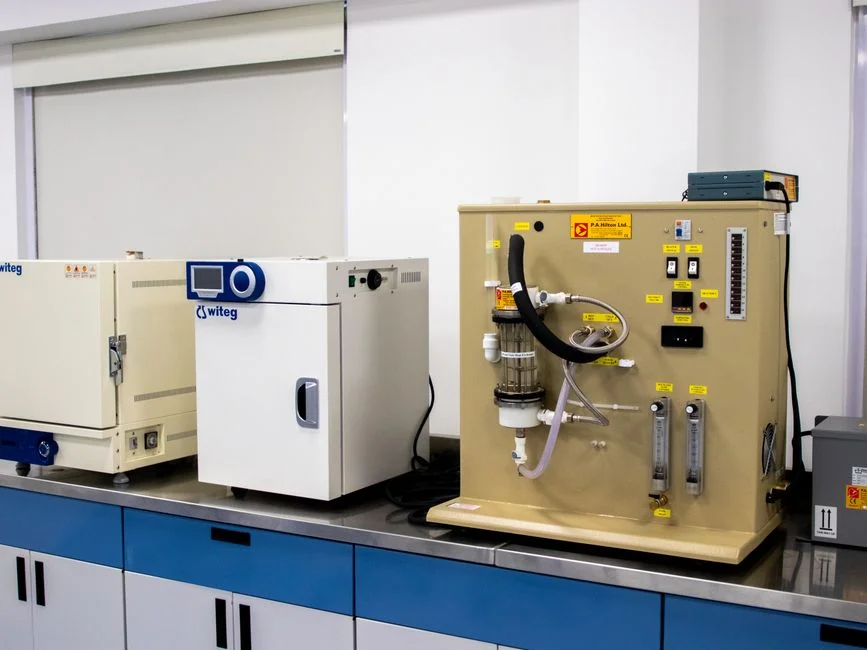
A comparable bid should expose every assumption behind the equipment selection. Require each supplier to complete the following schedule and identify any item that must be verified by site testing.
| RFQ item | Supplier response required |
|---|---|
| Design basis | Average and peak blowdown, maximum and minimum operating flow, operating hours, feed-water analysis, design recovery, permeate quality, and concentrate destination |
| Performance guarantee | Defined test protocol for permeate TDS, suspended solids, recovery, differential pressure, membrane-cleaning frequency, and system availability |
| Equipment and materials | Membrane materials, pretreatment requirements, controls, chemical consumption, cleaning chemicals, spare-parts strategy, power demand, and treatment footprint |
| Flow uncertainty | Calculation showing the difference between theoretical blowdown and measured or emergency blowdown, including the 15–30% variance identified by Genesis |
| Reuse proof | Demonstration against project TDS, suspended solids, pH, and silica targets for cooling makeup, not a generic permeate specification |
| Total cost | Concentrate or solids handling, energy, membrane replacement, chemical cleaning, operator labor, and disposal obligations |
The bid should include consumables and serviceability information for RO and UF membrane elements and the required treatment parts, valves, and media. Require the design calculation to reconcile the water balance, evaporation, CoC, measured blowdown, emergency dumps, recovery, and concentrate generation.
Do not accept a recovery percentage without its boundary. “50–85% recovery” does not tell the buyer whether permeate can satisfy the cooling target, whether the concentrate has a lawful destination, or how the system behaves at minimum flow. A supplier should present the mass balance and operating envelope alongside the equipment list.
Plan Monitoring, Residuals, and Operational Ownership
Treatment remains an operating obligation after commissioning, not merely a discharge skid. Specify online or calibrated measurement of flow, conductivity, pH, temperature, and differential pressure, supported by routine laboratory testing for suspended solids, silica, hardness, and relevant chemical residuals. Sampling points, calibration procedures, alarm thresholds, and data-retention requirements should be included in the control narrative.
Disinfection must fit both the cooling loop and downstream membranes. UV can control microbial contamination without adding a persistent chemical residual, while on-site chlorine dioxide disinfection for cooling loops requires validation against residual limits and membrane compatibility. UV is another option for appropriate reuse streams, but it does not remove dissolved salts.
Civil and MEP planning should reserve space for equalization, containment, chemical storage, drainage, vehicle access, sampling points, and maintenance access. RSP Engineers identifies treatment footprint as a common source of redesign when it is omitted from early site planning. The operating plan should assign responsibility for startup, shutdown, membrane cleaning, upset response, spare parts, laboratory sampling, and safe chemical handling.
Use an MBR only where the sanitary or wastewater-reuse stream requires it and the effluent target warrants that process; an integrated MBR treatment system is not a substitute for salt rejection from concentrated cooling blowdown.
Frequently Asked Questions
What treatment system does a Las Piñas data center need for cooling blowdown?
Start with source segregation, a measured water balance, and confirmation of the receiving route. If the objective is solids control and higher CoC, side-stream filtration may be sufficient. If the objective is cooling-makeup reuse or TDS reduction, evaluate UF plus RO; add NF where hardness controls reuse quality, and evaluate MVC-based ZLD when very high liquid recovery or a restricted discharge route justifies it. The route, source chemistry, and reuse target determine the answer—not the equipment label alone.
How much does cooling blowdown treatment cost in the Philippines?
HydropureWater’s 2026 Manila guide gives regional benchmarks of $250,000–$500,000 CapEx and $1.50–$3.00 per 1,000 gallons OpEx for a 50,000 GPD RO train. It gives an additional $3–8 million and $5–15 per 1,000 gallons OpEx for a ZLD overlay. These are Metro Manila benchmarks, not Las Piñas quotations. Request bids using measured average and peak blowdown, source-water analysis, recovery, concentrate route, power cost, operating hours, membrane replacement, chemicals, and disposal costs.
Can UF and RO be used to reuse cooling blowdown as cooling makeup?
Yes, when the recovered permeate meets the project’s cooling-water chemistry and the concentrate has a valid destination. HydropureWater’s 2026 Manila guide gives UF plus RO recovery of 50–85% and permeate TDS of 10–50 mg/L; its cooling-makeup targets are 500–1,500 mg/L TDS, 10–25 mg/L suspended solids, pH 6.5–8.5, and silica below 150 mg/L. Conventional BWRO commonly reaches 75–80% recovery before silica and calcium sulfate scaling become unmanageable, so pretreatment and antiscalant design remain critical.
What flow capacity does a data-center blowdown treatment skid need?
Size from measured blowdown, not the theoretical ratio alone. The theoretical blowdown ratio is 1/(CoC−1), but Genesis Water Technologies reports actual blowdown may exceed theoretical calculations by 15–30% because of unmeasured losses and emergency dumps. The RFQ should state average, peak, minimum, and emergency flow separately, along with operating hours and recovery. The supplier should then reconcile those flows in its mass balance and confirm turndown, storage, and upset operation.
Which discharge regulations apply to a Las Piñas data center?
Confirm the applicable DENR DAO 2021-19 category, receiving-water classification, local sewer or drainage conditions, pretreatment limits, and project permits before fixing the process. LLDA clearance may apply depending on the discharge route and jurisdiction, while hyperscale developments may trigger PEOS/EIS requirements. Do not rely on the 1,500 mg/L typical industrial cap or the older 1,000 mg/L Class C TDS benchmark quoted in the Manila guide as a final site limit: obtain the current permit and written confirmation from the receiving authority.