Why a Single Treatment Unit Is Usually Insufficient
A treatment train is required because coarse grit, fine clays, metal hydroxide floc, oil, and truly dissolved metals cannot be removed by the same physical mechanism. A clarifier can settle material that separates under gravity, while dissolved air flotation (DAF) can capture flocculated fines and oily material with microbubbles. Neither removes truly dissolved Pb, Zn, Cu, or Ni. The 2026 Geneva DAF-versus-clarifier guide assigns those species to pH adjustment followed by hydroxide or sulfide precipitation.
The waste profile therefore determines the unit sequence. Coarse grit and sand need screening and solids separation before pumps or clarification equipment. Fine clays, colloids, metal hydroxide floc, and free or emulsified oil need coagulation, flocculation, and flotation or an equivalent solids-removal step. Dissolved metals need controlled chemistry and subsequent capture of the resulting precipitate.
The supplied 2026 guide gives a practical screening rule: use DAF for fine-particle or oily wastewater up to 200 m³/hr, use lamella clarification for coarse, fast-settling grit above 200 m³/hr, and use a hybrid train for mixed or regulated streams. For plants handling metals finishing wastewater as well as ore mining and dressing effluent, that distinction is more important than the headline flow rate.
Federal applicability also depends on the regulated category. The guide identifies 40 CFR Part 437 for ore mining and dressing and 40 CFR Part 433 for metal finishing. Those categories do not replace the current Lake Geneva POTW pretreatment permit, applicable state requirements, or site-specific discharge authorization. Equipment selection should therefore begin with the discharge basis, not with a preferred machine.
Start with the Lake Geneva Discharge Basis
The governing requirement is the current POTW pretreatment permit together with the applicable federal and state discharge conditions. The supplied research identifies 40 CFR Part 437 for ore mining and dressing and 40 CFR Part 433 for metal finishing, but it does not provide a current Geneva POTW numerical limit schedule. A treatment train cannot be sized defensibly until the permit, referenced category, sampling requirements, and receiving-agency interpretations are identified.
- Obtain the current Lake Geneva POTW pretreatment permit and discharge permit, then identify every incorporated federal, state, and local condition. Do not infer a Geneva limit from an equipment performance claim or a federal category alone.
- Determine whether the operation is primarily ore mining and dressing or metal finishing, including whether separate waste streams fall under different requirements. Mixed plants may need both process-specific and combined-discharge reviews.
- Commission a representative waste-characterization program covering flow, pH, TSS, oil and grease, COD, regulated metals, and the particle-size or settleability distribution of solids. Sample production, washdown, cleaning, upset, and storm-derived flows separately before establishing a design basis.
- Confirm sampling frequency, averaging period, prohibited discharges, local sewer limits, monitoring points, and whether the proposed route is direct POTW discharge or surface-water discharge under the applicable state framework.
- Identify variability that can change equipment selection: metals plating sequence, rinse chemistry, quarry wash flow, lubricant use, wash-bay traffic, and batch discharges.
Request enough wastewater data to define both peak and sustained design conditions. A single average concentration cannot support chemical dosing, equalization, tank sizing, or final-clarifier selection. The acceptance criteria for the equipment should then be written directly from the permit and representative testing, with the discharge point identified.
The Geneva DAF versus clarifier comparison supports the federal-category distinction, but its example design assumptions are not substitutes for the current permit.
Build a Waste-Specific Treatment Train
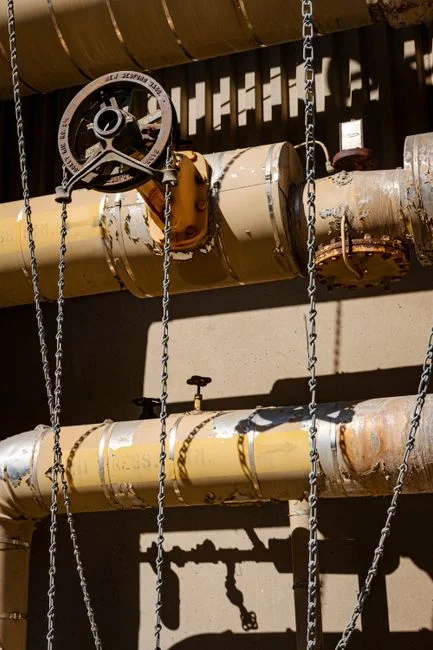
The treatment sequence should follow the contaminant classes rather than a generic equipment list. A practical framework is equalization and flow control, debris and grit removal, primary clarification where justified, DAF polishing, dissolved-metals precipitation, and final clarification. The exact order must be confirmed through representative testing.
| Waste or contaminant class | Primary mechanism | Recommended process step | Decision checks |
|---|---|---|---|
| Coarse grit, sand, rubble | Physical separation | Screening followed by grit removal or primary clarification | Particle size, peak washdown flow, debris loading, pump protection |
| Fine clays, colloids, metal hydroxide floc | Flocculation and flotation | DAF system for fines, oils and metal hydroxide floc | Coagulant and flocculant dose, floc durability, solids capture |
| Free or emulsified oil | Coalescence, flotation, or separation | DAF, with oil-water separation where justified | Oil type, emulsification, free oil, existing interceptors |
| Dissolved Pb, Zn, Cu, or Ni | Chemical precipitation | automatic dosing for pH adjustment and metal precipitation | Jar and pilot tests, residual metal, precipitate settling |
| Generated sludge or DAF float | Concentration and dewatering | Sludge holding followed by plate-and-frame filter press for DAF sludge | Solids percentage, polymer demand, cake handling, disposal route |
Use a rotary mechanical bar screen before pumps and clarification equipment where debris protection is required. The supplied 2025 Geneva wash-bay example installed a 5,000-gallon sand-mud interceptor, two oil-water separators, and two lift stations for a phosphate mining wash-bay reclaim train (NWPX Geneva, 2025-08). That sequence illustrates the underlying logic: remove grit first, manage oil separately, and then control flow and lift.
Where coarse, fast-settling solids dominate, a lamella clarifier for coarse grit and solids separation can serve as the primary stage. HydropureWater lists surface loading rates of 20–40 m/h for its lamella sedimentation system, while the 2026 guide gives an effective range of 20–40 m³/m²·hr. These figures are preliminary selection inputs, not acceptance limits.
DAF is the stronger candidate for fine clays, metal hydroxide floc, colloids, and oily wastewater. The supplied 2026 guide reports 90–97% TSS and 60–80% COD removal for a properly flocculated DAF polishing stage (DAGYEE and H2Flow, 2026). Those values require representative feed and controlled flocculation; they cannot simply be transferred to every mine or fabrication stream.
For truly dissolved metals, controlled pH adjustment and hydroxide or sulfide precipitation must precede solids separation. The supplied 2026 guide identifies pH 9–9.5 for hydroxide precipitation. Jar tests should establish reagent type, dose, residual pH, settling behavior, and final-metal performance before automatic chemical dosing for pH adjustment and metal precipitation is configured.
Choose DAF, Lamella Clarification or a Hybrid
DAF, lamella clarification, and hybrid treatment solve different separation problems. The correct comparison begins with the waste profile and compliance obligation, not with unit footprint alone.
| Selection factor | DAF | Lamella clarification | Hybrid treatment train |
|---|---|---|---|
| Best-fit waste | Fine clays, colloids, floc, and oily wastewater | Coarse, fast-settling grit and solids | Mixed or regulated streams containing both fractions |
| Flow screening rule | Fine-particle or oily wastewater up to 200 m³/hr | Coarse grit above 200 m³/hr | Selected after waste characterization; no universal flow cutoff |
| Mechanism | Coagulated or flocculated solids attach to microbubbles and float | Inclined plates provide effective settling area | Lamella primary treatment, DAF polishing, and precipitation for dissolved metals |
| Dissolved metals | Not removed without precipitation | Not removed without precipitation | Removed by controlled precipitation followed by solids capture |
| Key equipment requirements | Saturation pressure at least 5 bar, typically 5–7 bar; microbubbles; automatic skimming; recycle-pump VFD | Compact plate area and sludge recirculation | Integrated controls, chemical systems, solids handling, and final clarification |
| Relative footprint | Typically 3–5 times smaller than a conventional clarifier of equal flow | Compared with DAF, the footprint ratio narrows to 1.5–2 times | Requires space for chemical dosing, sludge holding, and polymer equipment |
The footprint comparison comes from the supplied 2026 guide. The same guide reports lower chemical and energy operating costs for lamella clarification where the stream is dominated by coarse, fast-settling grit. DAF adds saturation, compression, skimming, and control systems, but it can remove fine solids and oil that are less effectively captured by gravity settling.
The guide’s hypothetical 50 m³/hr layout allocates approximately 30 m² to the DAF unit and 200–250 m² to the complete train including chemical dosing, sludge holding, and a polymer skid. This is an illustration, not a Lake Geneva guarantee or permit-derived design. Its stated TSS and metals targets are also hypothetical assumptions and must not be converted into local limits.
For a mixed plant, the 2026 guide’s rationale is direct: lamella handles coarse grit, DAF removes fines, oils, and floc, and precipitation addresses dissolved metals. This sequence is preferable to assuming that one high-performing clarification device will satisfy the industrial sewer discharge permit.
Verify Performance Before the Waste Reaches Sewer
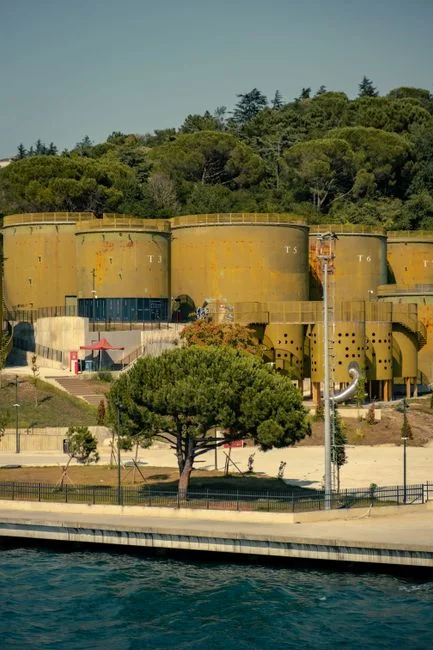
Commissioning should verify the complete treatment train at representative flow, pollutant concentration, chemistry, and operating duration. A successful DAF test at one short-duration flow condition does not establish precipitation performance or sustained compliance.
- Verify pH control, reagent dose, mixing, flocculation, solids capture, and final-clarifier performance during equalization and representative loading.
- Confirm that automatic dosing responds to measured flow and pH rather than a fixed timetable. Interlocks should stop or divert feed when chemical supply, recycle flow, or required equipment is unavailable.
- Test the discharge point for flow, pH, TSS, oil and grease, and each regulated metal. Add COD and other pollutants when required by the permit.
- Exercise alarms, diversion, sludge removal, power-loss response, and sampling arrangements before accepting the installation.
- Reconcile final results with the permit’s averaging period and sampling protocol; short-term grab samples do not substitute for required compliance monitoring.
The supplied 2026 guide reports 90–97% TSS and 60–80% COD removal for properly flocculated DAF polishing of mining feed. Use these only as preliminary selection values, not guarantees or local limits.
Sludge handling also belongs inside the reliability plan. The guide reports DAF float at 2–5% dry solids and cites plate-and-frame dewatering to 25–35% cake (H2Flow, 2026). Confirm that the selected sludge route can handle the expected solids, chemicals, and operating schedule without allowing solids accumulation to destabilize the process.
Procurement Questions That Prevent Compliance Risk
Comparable bids must be based on the same waste, flow basis, and performance obligations. The supplied 2026 guide states that a like-for-like DAF generally costs 20–40% more than a conventional clarifier because it includes saturation, compression, skimming, and control systems. That equipment comparison does not include differences in foundations, chemical systems, sludge handling, installation, or site utilities.
- Require the bidder to state the guaranteed flow basis, inlet TSS, oil and grease, metals, pH range, and wastewater composition used for sizing.
- Request guaranteed treatment objectives, recognized test methods, sampling points, averaging basis, turndown provisions, and the operating conditions attached to every performance claim.
- Compare installed scope. Confirm chemical storage and dosing, controls, electrical requirements, utilities, access, foundations, sludge removal, commissioning, training, and spare parts.
- Require materials-of-construction information and compatibility confirmation for the actual wastewater chemistry rather than relying on a generic materials list.
- Assess local service support, response time, critical spare-parts availability, and the supplier’s process-control experience.
- Require site-specific pilot or jar testing where variability could change DAF, clarifier, precipitation, or sludge-handling selections.
Do not compare a DAF bid with a clarification-only bid as if they have identical compliance scope. If the permit requires dissolved-metals removal, both bids need precipitation and downstream solids capture. If the feed contains oil or fine clays, removing those units from scope may make the apparent price advantage invalid.
Frequently Asked Questions
What Lake Geneva POTW limits apply to DAF, lamella clarification, and heavy metals precipitation?
The supplied research does not provide a current Geneva POTW limit schedule, so no DAF, lamella, or precipitation limit can be identified as universal. The current POTW pretreatment permit and the applicable federal and state conditions control. Have the discharge point checked against the permit, including pollutant limits, sampling frequency, averaging periods, prohibited discharges, and monitoring requirements, before setting acceptance criteria.
How should an equipment supplier be selected when several treatment technologies can handle the flow?
Select the supplier through waste characterization, site-specific validation, and enforceable performance criteria rather than flow rate alone. Require the bidder to identify which contaminant population each unit removes, where truly dissolved metals are precipitated, and how the final discharge is demonstrated. For mixed waste, ask whether the proposed scope includes grit removal, DAF, precipitation, final clarification, controls, and sludge handling—not merely a tank and pump package.
How should a buyer price a hybrid DAF and clarifier treatment train?
Start with the installed scope, not the DAF equipment price alone. The supplied 2026 guide cites a 20–40% equipment premium for a like-for-like DAF over a conventional clarifier. The hybrid also adds precipitation, chemical storage and dosing, controls, final clarification, and sludge handling. Request quotations using the same representative influent, flow range, guaranteed objectives, utilities, foundation assumptions, commissioning boundary, and sludge-disposal basis.
Is the published 50 m³/hr hybrid layout suitable for a Lake Geneva plant?
No fixed transfer is defensible. The supplied 2026 guide describes a hypothetical 50 m³/hr case with approximately 30 m² for the DAF and 200–250 m² for the full train. Its TSS and metals values are design assumptions, not Geneva permit limits. Use the layout only to frame a preliminary space allowance; confirm actual flow, hydraulics, equipment dimensions, controls, sludge handling, and acceptance criteria through site-specific design.