
What System Does a Dammam Hotel or Resort Need in 2026?
A Dammam hotel or resort generally needs a pretreatment and biological treatment system sized from its design flow, influent, discharge route and reuse objectives. For 4–5-star properties, HydropureWater’s 2026 guidance uses 0.20–0.30 m³ per guest per night and a 2.5–3.0× peak factor; a 300-key resort at 80% occupancy therefore needs approximately 48–72 m³/day mean flow and 120–216 m³/day peak capacity. A buried WSZ package plant suits lower-complexity sites, while MBR is appropriate where footprint, reuse quality or tighter effluent limits justify membrane treatment. Dammam’s municipal STP connection should be investigated first, but final selection requires current permit conditions, sewer-connection terms and site-specific influent testing.
The procurement decision starts with the discharge route, not the package name. First establish whether a connection to Dammam’s municipal sewer is technically and legally available. If it is, define the pretreatment required for sewer acceptance and avoid carrying unnecessary treatment capacity on private land. If it is not, develop an on-site treatment train around the required effluent endpoint.
For disposal-only projects, a submerged underground WSZ package sewage treatment plant can combine biological treatment, sedimentation and disinfection within a buried installation. A reuse project with stringent effluent quality or a restricted footprint may require an integrated MBR wastewater treatment system.
HydropureWater’s 2026 sizing basis is 0.20–0.30 m³ per guest per night for 4–5-star resorts and 0.15 m³ for budget properties, with a 2.5–3.0× peak factor (HydropureWater field data, 2026). For 300 keys at 80% occupancy, that produces approximately 48–72 m³/day mean flow and 120–216 m³/day peak flow. These values establish a preliminary basis only: current Dammam permit conditions, sewer-connection terms, site testing and the intended reuse endpoint must be verified before equipment selection.
Dammam Sewer Connection or On-Site Treatment?
MOWAH’s Dammam Independent Sewage Treatment Plant has 200,000 m³/day capacity, expandable to 350,000 m³/day, and SWPC is the offtaker under a 25-year Sewage Treatment Agreement (MOWAH project information).
That infrastructure establishes a regional context, but it does not prove that a particular hotel can connect. The developer must still obtain confirmation of the available sewer route, connection approval, hydraulic capacity at the receiving point, pretreatment requirements and applicable discharge conditions from SWPC or the relevant authority.
For a sewer-discharge route, the private scope may end with flow control, equalization, solids removal and grease control, provided the sewer authority accepts the proposed effluent. For an on-site route, the treatment system must address peak hydraulic loading, hospitality-strength kitchen and laundry wastewater, disinfection, sludge handling and the selected reuse or disposal outlet.
| Decision | Route to verify | Scope to develop | Inputs required before selection |
|---|---|---|---|
| Municipal sewer | Connection approval and receiving-sewer conditions | Grease and solids control, equalization and flow measurement as required | Connection terms, sewer route, acceptance limits and upstream capacity |
| On-site treatment | Disposal outlet or approved reuse endpoint | Pretreatment, biological treatment, disinfection, sludge handling, storage and controls | Design flow, influent, land area, utilities, groundwater, soil, reuse demand and maintenance access |
Site collection should include floor plans and available footprint, the sewer route, groundwater and soil conditions, power, maintenance access, irrigation demand, cooling-tower demand and expected occupancy. These inputs determine whether a sewer connection is practical and whether an on-site package has enough space and service access.
Size the Plant from Occupancy and Water Use
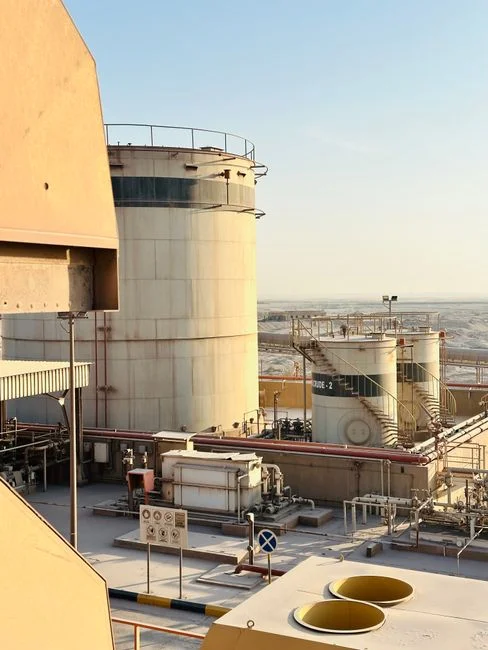
Hotel sewage treatment sizing must start with an occupancy-based flow inventory and then add the peak-flow basis; a package rating selected from average daily flow alone will not define hydraulic adequacy.
HydropureWater’s 2026 field-data basis uses 0.20–0.30 m³ per guest per night for 4–5-star resorts and 0.15 m³ for budget properties, with a 2.5–3.0× peak factor (HydropureWater field data, 2026). The 300-key example at 80% occupancy produces approximately 48–72 m³/day mean flow and 120–216 m³/day peak flow.
- Set occupancy scenarios for low, design and full operation.
- Apply the applicable guest-flow basis to each scenario.
- Add kitchen, laundry, pool, staff accommodation and other service flows.
- Apply the peak factor to the resulting mean-flow inventory.
- Check the result against available treatment-package capacity and site constraints.
| Parameter | Preliminary basis | Procurement treatment |
|---|---|---|
| 4–5-star guest flow | 0.20–0.30 m³ per guest per night | Confirm against occupancy scenarios, fixtures and site water-use data |
| Budget-property guest flow | 0.15 m³ per guest per night | Validate property classification and operating assumptions |
| Peak factor | 2.5–3.0× mean flow | Check equalization and peak-treatment duty |
| 300 keys at 80% occupancy | 48–72 m³/day mean; 120–216 m³/day peak | Add separately inventoried non-guest flows |
| Package flow comparison | MBR: 10–2,000 m³/day; WSZ: 1–80 m³/h | Compare the supplier’s guaranteed operating envelope with the site design flow |
Seasonal operation and water-saving assumptions must be settled before the design flow is frozen. The ranges are preliminary selection values, not final engineered capacity. The hotel wastewater treatment plant cost guide provides a separate framework for connecting sizing decisions to capital and operating costs.
Protect the Treatment Process from Hotel Wastewater
Hotel wastewater requires a controlled pretreatment train because kitchen grease, solids, rags and fibrous material can overload biological equipment and foul MBR membranes.
HydropureWater’s 2026 influent references after coarse screening are BOD 200–300 mg/L, COD 400–600 mg/L, TSS 200–350 mg/L, NH₃-N 25–40 mg/L and oil and grease 50–150 mg/L (HydropureWater field data, 2026). These are design references, not a substitute for sampling the individual property.
The recommended sequence is a rotary bar screen at no more than 5 mm, grit chamber, flow equalization and FOG removal through a grease trap and DAF where required (HydropureWater, 2026). The screen protects downstream pumps, valves and biological processes from solids, rags, plastics and fibrous debris. A GX rotary mechanical bar screen provides continuous-duty solids exclusion at the headworks.
| Process stage | Design role | Evidence or confirmation required |
|---|---|---|
| Rotary bar screen | Remove rags, plastics and coarse fibrous solids | No more than 5 mm aperture in the HydropureWater sequence |
| Grit chamber | Separate dense mineral material | Confirm site drainage and grit-removal method |
| Flow equalization | Moderate peak loading and improve operating stability | Determine from the complete flow inventory and operating strategy |
| Grease trap and DAF | Remove FOG and suspended solids before biological treatment | DAF removal cited at 60–90% oil and grease and 50–70% TSS in 15–25 minutes |
| Site sampling | Confirm concentrations, variability and discharge contribution | Composite sampling across representative operating periods |
Where FOG and TSS removal is required, a dissolved air flotation DAF machine can precede the bioreactor. Capacity, solids-removal performance and chemical demand should be selected against site-specific influent results rather than the reference ranges alone.
Choose WSZ, MBR or a Discharge-Only Treatment Train
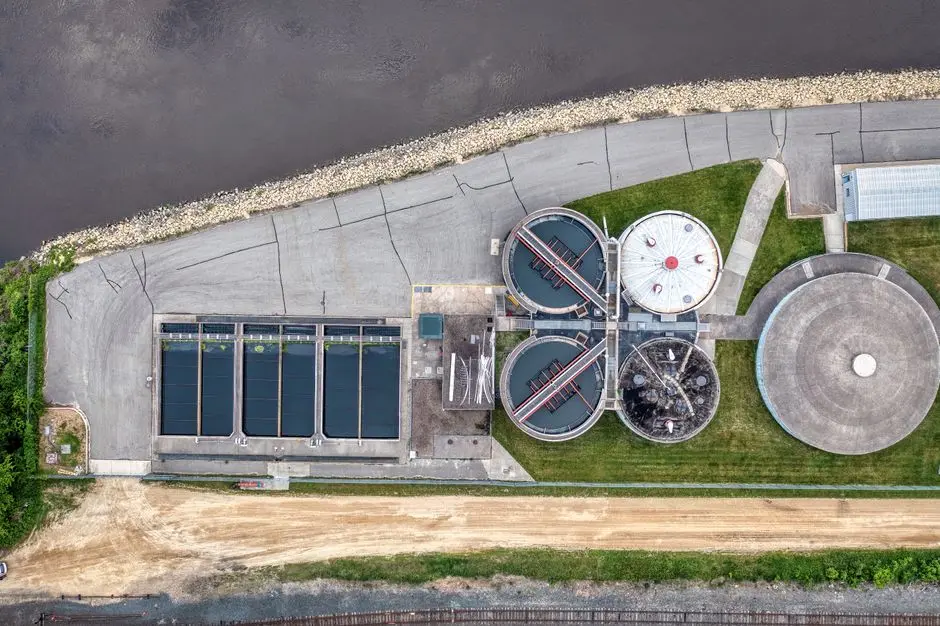
WSZ is the lower-complexity package option, while MBR is the stronger option when reuse quality, compactness or higher-quality effluent justifies the additional membrane stage.
The WSZ specification describes an integrated buried A/O biological contact-oxidation, sedimentation and disinfection package for 1–80 m³/h. It can be installed below grade with landscaping above and requires no dedicated operator according to the product specification. This configuration can suit discharge or lower-complexity reuse applications where the permitted endpoint does not require MBR-level clarification.
HydropureWater’s integrated MBR combines activated-sludge treatment with submerged PVDF membrane filtration. Its stated design produces effluent below 1 μm, reduces footprint by 60% compared with conventional systems and covers package capacities from 10–2,000 m³/day. The 2026 MBR reference uses 0.1–0.4 μm membranes, BOD ≤5 mg/L and TSS ≤1 mg/L (HydropureWater, 2026). These are source-specific benchmarks; the final guarantee must match the approved discharge or reuse endpoint.
| Selection issue | WSZ package | MBR package | SBR alternative |
|---|---|---|---|
| Process arrangement | Buried A/O contact oxidation, sedimentation and disinfection | Activated sludge with submerged membrane filtration | Fill, react, settle and decant cycles |
| Stated capacity | 1–80 m³/h | 10–2,000 m³/day | Site-specific selection |
| Reference effluent | Confirm against the approved endpoint | BOD ≤5 mg/L and TSS ≤1 mg/L in the 2026 benchmark | BOD ≤20 mg/L and TSS ≤20 mg/L in the cited source |
| Reuse implication | Applicable where the endpoint permits it | Principal membrane step between ordinary discharge compliance and Grade-A reuse | Sand filtration and UV required for Grade-A reuse |
| Principal trade-off | Compact, automated package without a dedicated operator | Higher-quality effluent and compact footprint | Additional polishing is needed for Grade-A reuse |
Technology selection should follow the actual hydraulic load, available space, reuse demand, operating capability and permit route. An underground WSZ package sewage treatment plant may be sufficient for a simpler discharge route, but it should not be assumed to satisfy an unrestricted reuse specification. An integrated MBR wastewater treatment system is more defensible where reuse quality is central. If the project prefers SBR, the source’s Grade-A route requires sand filtration and UV disinfection.
Set the Effluent Target Before Ordering Equipment?
Municipal discharge and Grade-A reuse are different procurement scopes, with different guarantees, disinfection requirements and downstream infrastructure.
HydropureWater’s 2026 PDWS municipal-discharge values are BOD ≤25 mg/L, COD ≤150 mg/L, TSS ≤30 mg/L, NH₃-N ≤5 mg/L and fecal coliforms <200 CFU/100 mL (HydropureWater, 2026). These values form the discharge reference in the source, but they do not replace the current permit or receiving-sewer conditions applicable to a Dammam site.
The source’s Grade-A treated sewage effluent values are BOD ≤10 mg/L, TSS ≤10 mg/L, turbidity ≤5 NTU and fecal coliforms <2.2 CFU/100 mL (HydropureWater, 2026). The membrane stage is identified in the source as the principal step between ordinary discharge compliance and Grade-A reuse.
| Parameter | PDWS municipal discharge reference | Grade-A TSE reference |
|---|---|---|
| BOD | ≤25 mg/L | ≤10 mg/L |
| COD | ≤150 mg/L | Not specified in the supplied Grade-A reference |
| TSS | ≤30 mg/L | ≤10 mg/L |
| NH₃-N | ≤5 mg/L | Not specified in the supplied Grade-A reference |
| Turbidity | Not specified in the supplied discharge reference | ≤5 NTU |
| Fecal coliforms | <200 CFU/100 mL | <2.2 CFU/100 mL |
For irrigation, HydropureWater’s 2026 guidance recommends 24–48 hours of storage to align peak and off-peak demand. Its 300-key example indicates that 8,000 m² of planted area may absorb 40–80 m³/day (HydropureWater, 2026). Toilet flushing or unrestricted reuse requires final disinfection and storage water-quality controls; the source identifies UV polishing and the JY water-purification skid for this duty.
A UV sterilizer for water treatment or chlorine dioxide generator should be selected against the approved reuse route, residual requirement and downstream application. Verify all reference values against the current Dammam permit and approved reuse classification before freezing the equipment specification.
Plan Disinfection, Sludge and Remote Operation?
A treatment-package bid is incomplete unless it includes disinfection, sludge handling, controls, utilities and maintenance access.
Disinfection should follow the approved reuse route and residual-control requirement. HydropureWater’s 2026 source rationale for chlorine dioxide is its tolerance of high alkalinity, operation across pH 6–9 and control of biofilm and Legionella in cooling-tower make-up. UV is relevant where the approved endpoint and storage-water quality require it.
A sludge-management plan must define thickening or dewatering, cake handling, storage and haul-off. The source states that plate presses typically reach 22–25% dry-cake solids, compared with 15–18% on drying beds, reducing sludge haul-off volume by about 30% (HydropureWater field data, 2026). The equipment scope should therefore address the plate-frame filter press where the selected process produces sludge requiring dewatering.
| Supporting system | Required scope | Bid information |
|---|---|---|
| Disinfection | UV or chlorine dioxide selected for the approved route | Residual, dose-control, contact requirements and maintenance |
| Sludge handling | Collection, storage, dewatering and disposal route | Expected solids production and cake-handling basis |
| Controls | PLC/SCADA, remote telemetry and alarms | Signals, data outputs, access levels and cybersecurity boundary |
| Chemical dosing | Automatic dosing where pH correction or other chemicals are required | Scope for coagulants, flocculants, pH adjusters and specialty chemicals |
| Service access | Safe access for screens, pumps, membranes, tanks and instrumentation | Clearances, lifting arrangements and access routes |
Remote telemetry and alarms are particularly important when a package is installed without a dedicated plant operator. Where treatment chemicals are required, define an automatic chemical dosing system with tank capacity, duty, bunding and control interfaces included in the bid.
Build the Equipment Request and Vendor Comparison?
A defensible hotel wastewater tender requires bidders to disclose the complete technical envelope and installed project scope, not just a package price and nominal capacity.
Each bid should state design flow, peak-flow basis, influent design values, effluent endpoint, pretreatment duty, biological process, membrane type, disinfection, sludge handling, controls and utility consumption. The supplier should guarantee a flow and effluent-performance envelope tied to the property’s actual wastewater characteristics and occupancy scenarios.
Commercial schedules should separate the treatment package from installed civil works, pretreatment, reuse storage, piping, commissioning, operator training, spare parts and lifecycle service. This separation allows a buyer to identify omissions without treating every bid as an identical equipment package. The hotel wastewater treatment plant cost guide provides additional guidance on capital and operating-cost structure.
| Bid package | Minimum information required | Reason for inclusion |
|---|---|---|
| Design basis | Mean and peak flow, occupancy scenarios, influent values and reuse demand | Confirms that all bidders priced the same project |
| Treatment guarantee | Design flow range and applicable effluent guarantees | Prevents comparison of incompatible performance envelopes |
| Installed scope | Civil works, pretreatment, storage, piping, utilities, controls and commissioning | Separates treatment equipment from site construction |
| Site verification | Footprint, access, power, noise, odour, burial depth and maintainability | Tests whether the proposed package fits the Dammam site |
| Lifecycle | Energy, chemicals, maintenance, spares and service support | Supports whole-life evaluation rather than equipment-price comparison |
| Storage | Separate allowance for treated-water storage where required | HydropureWater’s 2026 guidance recommends 24–48 hours where irrigation and production are misaligned |
Vendors should verify footprint, access, utilities, noise, odour, burial depth and maintainability against actual site constraints. The comparison of hotel wastewater treatment systems supports a process-based comparison, but the Dammam permit, sewer terms and reuse classification remain project-specific. Evaluate whole-life suitability, especially where irrigation, cooling-tower or toilet-flushing reuse can replace potable-water demand.
Frequently Asked Questions
What flow should a Dammam hotel use for preliminary wastewater plant sizing?
For a 4–5-star property, start with 0.20–0.30 m³ per guest per night and a 2.5–3.0× peak factor, as stated in HydropureWater’s 2026 field-data guidance. At 300 keys and 80% occupancy, the resulting mean flow is approximately 48–72 m³/day and peak flow is 120–216 m³/day. Add kitchen, laundry, pool, staff and other service flows before treating these as final design values.
Should a Dammam resort choose WSZ or MBR?
Choose WSZ where a compact, automated biological package can meet the permitted discharge or simpler reuse route. Choose MBR where the approved endpoint requires the source’s higher-grade benchmark, reuse quality is important or footprint is constrained. MBR is not automatically necessary; hydraulic load, land availability, reuse demand, maintenance capability and permit conditions decide the case.
What does the complete hotel wastewater treatment project cost?
There is no supported quotation in the research for a Dammam property, so a defensible budget cannot be given from guest count alone. Request itemized bids for treatment equipment, civil works, pretreatment, storage, piping, utilities, commissioning, training, spares and lifecycle service. Provide each bidder the same occupancy scenarios, design flow, influent basis, effluent endpoint and site constraints before comparing prices.
How should a buyer verify Dammam sewer connection and permit compliance?
Ask SWPC or the relevant authority to confirm connection availability, route, receiving-point capacity, pretreatment acceptance, connection terms and current discharge conditions. Do not infer site approval from the Dammam Independent Sewage Treatment Plant’s published 200,000 m³/day capacity. Check the current permit separately because the PDWS and Grade-A values cited by HydropureWater in 2026 are design references, not site approval.
When is MBR wastewater reuse preferable to discharge-only treatment?
MBR becomes preferable when the reuse endpoint requires a high-quality treated effluent, the site has limited space, or irrigation, cooling-tower or toilet-flushing demand justifies recovery of the treated stream. The 2026 source identifies the membrane stage as the principal step between ordinary discharge compliance and Grade-A reuse. Confirm storage, disinfection and water-quality controls as part of the same reuse scope.