Choose a Treatment System by Flow, Footprint and Reuse Needs
Domestic sewage treatment in Arequipa should be selected from verified flow, organic loading, footprint and reuse requirements, not from population estimates or equipment catalogues alone. The verified WSZ underground package plant covers 1–80 m³/h and combines anoxic/aerobic A/O contact oxidation, sedimentation and disinfection in one automated buried unit, suitable for residential communities, hotels, hospitals and factories. MBR is the stronger candidate where compact installation or advanced reuse treatment is required. At Arequipa’s 2,335-meter elevation, HydropureWater’s commercial guide states that atmospheric pressure is roughly 25% lower and recommends 20–30% larger blowers and diffusers for aerobic biological processes.
Start the selection exercise with average and peak domestic wastewater flow, the peak factor, retention requirements, available land and the intended discharge or reuse route. Then screen candidate systems against those inputs. The integrated underground sewage treatment plant is a practical first option when its hydraulic and organic design capacities cover the verified duty.
The WSZ catalog confirms automatic operation, no requirement for an on-site operator, below-grade installation and optional trailer mounting for mobile deployment. Those are catalog attributes, not proof that a proposed configuration will meet a project’s permit. A bidder must still confirm peak loading, wastewater characteristics, access for installation, sludge handling and future expansion. The broader Peru domestic sewage treatment equipment guide identifies MBR as the higher-tier option where advanced treatment and reuse justify its additional process complexity.
| Decision input | What to request before selecting | Selection implication |
|---|---|---|
| Hydraulic duty | Average flow, peak-hour flow, peak factor and units | Size the selected plant and equalization against verified peaks, not nominal throughput alone. |
| Organic load | Influent BOD, COD, TSS and load per day | Confirm biological and solids-handling capacity separately. |
| Site and installation | Footprint, access, burial depth, utilities and drainage | Favor a buried package plant where land is constrained; verify construction logistics. |
| Effluent route | Discharge point, sewer connection or reuse specification | Use MBR when the required reuse quality cannot be demonstrated by the package plant. |
| Operations | Operator availability, sludge route, standby power and monitoring | Define responsibilities before comparing equipment price. |
How the Domestic Sewage Treatment Process Fits Together
A complete domestic sewage treatment train begins with inlet works and screening, followed by equalization where the flow and load require it, biological treatment, solids separation, disinfection, monitored discharge and controlled sludge handling. Each stage needs a stated function and capacity in the supplier’s process flow diagram; a package-plant name alone does not demonstrate that site-specific pretreatment or solids management has been included.
- Inlet and screening: define the incoming flow, solids and rag risk, access arrangements and whether a mechanical bar screen is required.
- Equalization: identify buffering volume and controls where daily or seasonal variation affects treatment.
- Biological treatment: assign reactor volume, aeration, recirculation and operating controls to a defined organic load.
- Solids separation: specify the separation mechanism, solids inventory and sludge-removal route.
- Disinfection and monitoring: establish treatment performance, sampling points, control instruments and discharge responsibilities.
The WSZ configuration integrates A/O biological contact oxidation, sedimentation and disinfection in one buried package. That does not mean every site requires no additional headworks, odor control, standby power or off-site sludge handling. Bid schedules should assign those items explicitly.
Decentralized and nature-based alternatives also require project-specific engineering. IntechOpen’s academic work on Application of Vermifiltration for Domestic Sewage Treatment describes vermifiltration as a decentralized method combining filtration with earthworms for domestic septic-tank sewage. Its research establishes the concept, not a purchase-ready flow capacity for a hotel, hospital or housing development in Arequipa.
A separate IntechOpen study investigates constructed wetlands integrated with microbial fuel cells for domestic wastewater treatment and electricity production. Neither academic concept removes the need to check current discharge authorization, reuse criteria, odor, solids handling and site performance. The supplier’s offer should identify flow equalization, sludge removal, odor control, standby power, telemetry and final sampling as named deliverables or exclusions.
Build a Project-Specific Design Basis
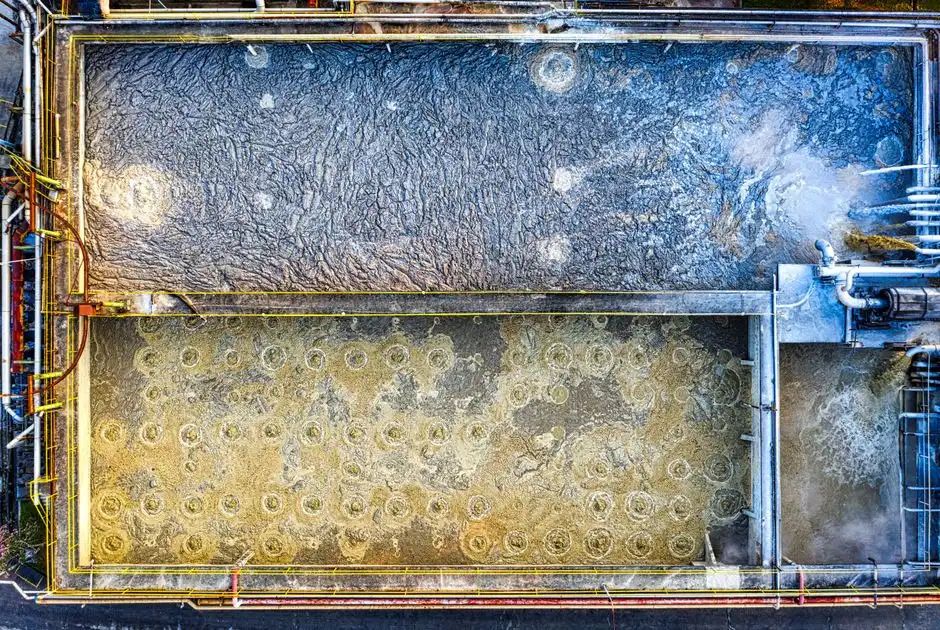
An undersized quotation is easiest to prevent by requiring each bidder to design against the same measured project inputs. Request measured or defensibly estimated average flow, peak-hour flow, daily and seasonal variation, wastewater temperature and the unit basis for every flow figure. A design flow without its measurement period, statistical basis and units is not comparable.
Require influent sampling for BOD, COD, TSS, fats, oils and grease where relevant, plus pH, conductivity, nutrients and substances that may inhibit biological treatment. For domestic sewage, the sampling program should also distinguish sanitary wastewater from kitchen, laundry, clinical, parking or industrial contributions. These streams can change loading, fouling risk and treatment objectives.
Ask each supplier to state design flow, design organic loading, hydraulic retention, solids inventory, sludge-production rate and treatment-stage capacities separately. This prevents a nominal flow rating from masking inadequate aeration, solids separation or sludge capacity. The supplier should also provide the hydraulic profile, process-control narrative and preliminary mass balance.
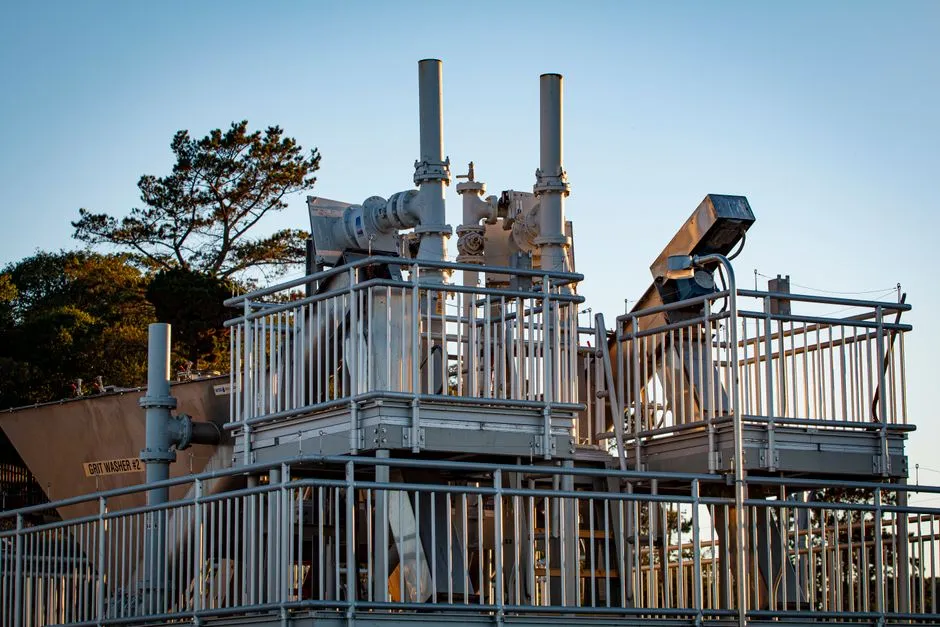
Confirm headworks and pumping requirements against the selected treatment route. Where pretreatment is necessary, a mechanical bar screen can protect downstream pumps and biological equipment from solids, rags, plastics and fibrous debris. Its inclusion must follow the influent assessment and pumping arrangement rather than being added by default.
Performance claims remain conditional on influent characteristics, operating conditions and the applicable permit. Request the test basis: sampling point, flow condition, analytical method, duration, startup period, guaranteed parameter and remedy for non-performance. Headline removal percentages do not provide a comparable acceptance test.
| Design-basis field | Minimum evidence to request | Reason it affects procurement |
|---|---|---|
| Flow | Average and peak values, units, measurement basis and seasonal pattern | Determines hydraulic and equalization sizing. |
| Organic and solids load | Influent sampling and load calculations | Determines biological treatment, aeration and solids handling. |
| Hydraulics | Process-stage capacities and hydraulic profile | Checks peak passage and retention assumptions. |
| Sludge | Production estimate, removal method, storage and disposal route | Defines operating labor, equipment and disposal cost. |
| Performance | Guaranteed parameters, test protocol and remedy | Converts a catalogue claim into an enforceable obligation. |
| Construction interface | Access, excavation, lifting, utilities, drainage and controls | Identifies civil and installation exclusions. |
Account for Arequipa’s High-Altitude Biological Treatment
Arequipa’s elevation materially affects aerobic biological design because lower atmospheric pressure reduces oxygen-transfer efficiency. HydropureWater’s 2026 commercial article places the city at 2,335 meters above sea level and states that atmospheric pressure is roughly 25% lower than at sea level. These are site-condition inputs, not a complete aeration design.
The same source says reduced oxygen transfer can produce anaerobic conditions, odors and non-compliant BOD levels. It recommends oversizing blowers and diffusers by 20–30% to compensate for lower oxygen partial pressure. That is a starting point for supplier review, not a substitute for calculation: the actual air requirement depends on the selected process, loading, diffuser depth, temperature, transfer rate and dissolved-oxygen target.
Require the aeration calculation to identify expected dissolved oxygen, design aeration rate, blower power, diffuser depth, turndown strategy and power consumption across the proposed flow range. The calculation should also state which assumptions were corrected for site elevation. A supplier that simply adds the stated allowance without showing the underlying oxygen-transfer calculation has not demonstrated that its equipment is suitable for Arequipa.
For an MBR membrane bioreactor proposal, request membrane aeration and scouring calculations in addition to biological-reactor aeration. Aeration serves both oxygen transfer and solids control, so the membrane configuration, design flux, operating temperature and required scouring conditions must be considered together.
Check whether the electrical supply and controls support the revised blower duty. The bid should disclose redundant equipment, minimum turndown, altitude-rated electrical equipment, power-quality requirements and the consequences of a blower outage. This is particularly important where the permit or reuse specification requires continuous treatment and monitoring.
Compare A/O Package Plants, MBR and Decentralized Alternatives
The WSZ package is the simplest of the three principal concepts where an integrated below-grade treatment unit is acceptable: its verified catalog range is 1–80 m³/h, with integrated A/O contact oxidation, sedimentation, disinfection, underground installation and automatic operation. MBR becomes the stronger option when footprint and advanced reuse quality drive the specification. Decentralized delivery may be attractive for dispersed sites, but it still requires explicit treatment, solids and infrastructure pricing.
HydropureWater’s 2026 commercial guide describes MBR as the higher tier for advanced reuse and states that the stated configuration eliminates secondary clarifiers. Its supplied MBR economics are 0.8–1.2 kWh/m³ energy consumption, membrane replacement every 5–7 years and an added lifecycle cost of approximately $0.20–$0.40/m³. These figures are suitable for initial commercial comparison, but a bidder must state the flow basis, treatment scope and pricing assumptions behind them.
Dissolved air flotation is not presented as a complete domestic-sewage solution here. It is relevant as pretreatment where verified wastewater contains material suspended solids, oil, grease or other floatables that could interfere with downstream biological or membrane equipment. The commercial guide states that DAF is commonly used before biological systems to prevent membrane blinding or diffuser clogging. It also states DAF chemical costs of $0.15–$0.30/m³; this applies only where DAF is included and the required coagulant or polymer program has been verified.
| Criterion | WSZ A/O package | MBR | Decentralized treatment |
|---|---|---|---|
| Verified or sourced capacity basis | WSZ catalog: 1–80 m³/h | Project-specific design basis required | Project-specific design basis required |
| Verified process configuration | A/O contact oxidation, sedimentation and disinfection in one buried unit | Commercial guide: higher-tier treatment for advanced reuse; secondary clarifiers eliminated in the stated configuration | May include package plants or decentralized research-based concepts, each requiring separate verification |
| Footprint and installation | Below-grade package installation | Commercial guide identifies a significantly reduced footprint | Compare buried package installation with conventional decentralized networks and MBR |
| Operating implications | Fully automated; catalog states no operator required | Commercial guide: 0.8–1.2 kWh/m³; membrane replacement every 5–7 years; approximately $0.20–$0.40/m³ added lifecycle cost | May distribute maintenance and infrastructure responsibilities across sites |
| Main procurement risk | Peak and organic loading may exceed selected stage capacities | Capital, aeration demand, membrane lifecycle and performance obligations | Incomplete comparison of network, package, sludge and service scope |
| Pretreatment | Add only where influent and pumping risks justify it | Assess solids, grease and fibrous-material fouling | Define required upstream controls at every installation point |
The final choice must remain conditional on current permit limits, reuse criteria, land availability, peak flow, sludge handling and operator capability. Compare these three scopes only after obtaining a common flow basis and identical civil, electrical, commissioning and disposal exclusions.
Price the Plant by Total Cost and Performance Obligations
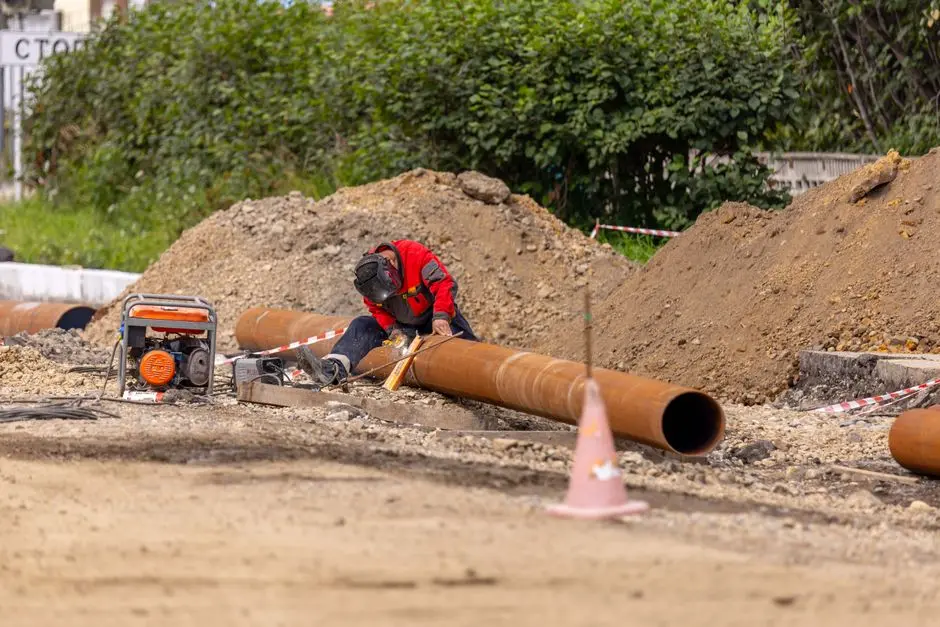
Compare installed and lifecycle cost, not the equipment invoice alone. The commercial schedule should separate equipment, civil works, installation, electrical and controls, commissioning, training, consumables, energy, chemicals, preventive maintenance, membrane replacement and sludge disposal. Civil excavation, buried-unit construction, pumping, access roads, utility connections and off-site sludge transport can otherwise be hidden between bidders.
HydropureWater’s 2026 commercial guide gives DAF chemical costs of $0.15–$0.30/m³. Include this figure only if DAF is part of the selected train. The source also requires consistent chemical dosing, while this procurement guide treats coagulant and polymer demand as an item to confirm through wastewater testing and jar testing. It should not be applied automatically to domestic sewage.
For MBR comparisons, carry the source’s energy consumption of 0.8–1.2 kWh/m³, membrane replacement interval of 5–7 years and added lifecycle cost of approximately $0.20–$0.40/m³. HydropureWater’s commercial guide also provides broad capital-cost benchmarks for other technologies, but they must not be transferred into a proposal without checking the flow basis, treatment scope, civil-work assumptions and quotation date.
Require each supplier to state the performance guarantee, test protocol, remedy for non-performance, spare-parts pricing and exclusions. Also request energy assumptions, chemical dosing rates, maintenance hours, membrane-cleaning requirements, sludge-removal frequency and disposal charges. These inputs allow the buyer to compare actual cost drivers rather than several incompatible headline totals.
| Cost element | Evidence to request | Comparison treatment |
|---|---|---|
| Equipment and civil works | Supply scope, foundations, excavation, buried installation, access and utilities | Use one bill of quantities and state exclusions. |
| Commissioning and handover | Testing, training, documentation, spares and acceptance criteria | Include in total installed cost. |
| Energy | Design load, blower or membrane duty, operating hours and tariff assumption | Compare against each bidder’s own flow and duty basis. |
| Consumables and chemicals | Disinfection, cleaning, DAF chemicals and expected consumption | Separate verified treatment needs from optional pretreatment. |
| Maintenance and replacement | Preventive schedule, membrane or wear-part replacement assumptions | Price the stated MBR replacement cycle of 5–7 years where applicable. |
| Sludge | Removal, storage, transport and disposal responsibility | Assign a unit rate and disposal route to each bidder. |
| Performance risk | Guarantee, test method and contractual remedy | Exclude offers whose remedy is only a general compliance statement. |
Verify Compliance, Installation and Local Service Before Award
Permit compliance is a project-specific legal determination, not a generic product claim. HydropureWater’s 2026 commercial article cites BOD ≤30 mg/L, TSS ≤50 mg/L and COD ≤125 mg/L for most applications under MINAM Resolution 001-2024. It also states that the receiving system and discharge category must be checked; the buyer should obtain the current requirements from ANA or SEDAPAR rather than treat those values as universal.
Ask for a permit-support dossier that can support an ANA discharge authorization or SEDAPAR collateral-services registration process. Depending on the route, this should include the process flow diagram, mass balances, equipment data sheets, operating plan, sampling plan and evidence of the proposed discharge or reuse condition. The commercial guide identifies these document types and also refers to a SUNASS wastewater-permit process; the responsible authority and applicable procedure must be confirmed for the project.
Use the commercial guide’s installation assumptions only for initial planning: 4–8 weeks for package plants, 12–16 weeks for custom DAF and 16–24 weeks for large industrial MBR systems. The supplier must confirm the actual scope, engineering approvals, civil works, equipment manufacturing, transport, installation, commissioning and permit dependencies. These planning windows are not a substitute for a contractual milestone schedule.
Require local commissioning support, operator training, a preventive-maintenance schedule, a stated response time, spare-parts availability and remote-monitoring functionality. If the offer relies on a local partner, identify that partner and make access to technical support, process data and critical spares contractual.
Make acceptance conditional on installation, testing, operator training, documentation handover and performance verification. The acceptance test should identify influent conditions, sampling points, analytical methods, duration and acceptance criteria. Payment milestones should follow those verifiable events rather than equipment shipment alone.
Frequently Asked Questions
How should we compare installed cost and lifecycle cost for a domestic sewage treatment plant in Arequipa?
Ask every bidder for the same complete scope: equipment, civil works, electrical and controls, commissioning, training, energy, chemicals, maintenance, consumables, replacement items and sludge disposal. Do not use a plant price from a different flow or treatment scope. For MBR, check the commercial guide’s stated 0.8–1.2 kWh/m³ energy consumption, 5–7-year membrane replacement interval and approximately $0.20–$0.40/m³ lifecycle addition against the quoted design basis.
Which supplier-selection evidence should we require before awarding the package?
Require documented design flow and organic loading, an altitude-adjusted aeration calculation for Arequipa, a performance test with contractual remedies, local commissioning and maintenance support, and a defined permit-dossier deliverable. Also request spare-parts pricing, response time and remote-monitoring functionality. A statement that the equipment is “compliant” is not an acceptable substitute for this evidence.
How do we size an A/O package plant versus an MBR?
State the average flow, peak-hour flow and organic load, then require each bidder to demonstrate capacity at those conditions. The verified WSZ range is 1–80 m³/h, but being within that range does not prove the selected unit has adequate biological, aeration or solids capacity. An MBR must instead demonstrate its own hydraulic and membrane design basis.
What is the main compliance risk when preparing discharge-permit evidence?
The main risk is treating a quoted effluent limit as universal. Confirm the current discharge category, receiving system, discharge or reuse route, sampling method and responsible authority with ANA and SEDAPAR. The dossier should contain the process flow, mass balance, equipment data, operating plan and test protocol, with each performance value tied to defined influent conditions.
How long should installation and commissioning be allowed to take?
Use the commercial guide’s planning windows—4–8 weeks for package plants, 12–16 weeks for custom DAF and 16–24 weeks for large industrial MBR systems—only as initial allowances. Require a supplier schedule identifying permitting, detailed engineering, manufacturing, civil works, delivery, installation, testing, training and permit activities that remain the supplier’s responsibility.