Start with the COD profile, not a generic treatment method
Glass manufacturing wastewater COD removal is usually designed as a treatment train, not a single-process decision. Equalization, screening and physical removal can control suspended solids, oil and grease, and colloids before chemical or electrochemical coagulation. The supplied academic evidence reports 99.5% COD removal and 94.2% oil removal in a Wasit University electrochemical study, but that result came from a specific petroleum-wastewater test using four aluminium and four iron electrodes, 2 cm spacing, 12 cm submergence, pH 7, 50 minutes and 10.5 V. It should be treated as supporting evidence, not a guaranteed glass-plant performance figure. Equipment selection must follow plant-specific COD characterization, discharge route and pilot testing.
Begin by separating production wastewater, cooling or wash water, stormwater and contaminated floor drainage before combining them for treatment design. A single composite COD value can conceal dilution from relatively clean streams or intermittent loads from production and cleaning operations. For each stream, request COD and BOD, pH, temperature, suspended solids, oil and grease, colloid content, flow variability and relevant process chemistry. The supplied research does not establish universal glass-wastewater values, so the characterization dataset must come from the plant.
Next, distinguish soluble COD from particulate and emulsified contributions. Physical removal can capture settled or floatable material; coagulation can aggregate colloids and destabilize emulsions; biological oxidation may address compatible dissolved organics. The practical implication is that soluble COD removal cannot be inferred from total COD reduction after solids separation alone.
Document the discharge route early. The US EPA states that 40 CFR Part 426 covers direct dischargers to waters of the United States and indirect dischargers to a publicly owned treatment works; the requirements are incorporated into NPDES permits for direct dischargers and permits or other control mechanisms for indirect dischargers (US EPA, current 2026 guidance). Coordinate equipment selection with the applicable permit or pretreatment controls.
Do not transfer laboratory COD-removal percentages directly into a design guarantee. A plant-specific pilot must establish whether the proposed automatic chemical dosing system can maintain the required result under changing wastewater conditions.
Map the glass-process waste stream to its treatment objectives
Equalization reduces hydraulic and concentration shocks, but it does not remove COD. Its design objective is to provide stable flow, pH and contaminant loading to downstream equipment. The decision framework below links each contaminant fraction to the treatment mechanism that must be demonstrated.
| Wastewater characteristic | Primary treatment objective | Equipment or process to evaluate | Key design question |
|---|---|---|---|
| Suspended solids, grit and fibrous debris | Remove material before it obstructs or burdens downstream stages | Mechanical screening and physical pretreatment | What solids and screenings must be captured and where will they go? |
| Oil, grease and floating material | Recover or separate free and emulsified oil before biological or electrochemical treatment | Skimming and industrial DAF wastewater pretreatment system | Is oil a discrete fraction, a stable emulsion or both? |
| Colloidal and particulate COD | Aggregate or float material that cannot be removed reliably by settling alone | Chemical coagulation or electrocoagulation followed by separation | How much of total COD is associated with removable solids? |
| Dissolved biodegradable COD | Oxidize residual soluble organics | Biological treatment, subject to treatability and inhibition testing | Does the residual composition support the selected biological process? |
| Residual suspended solids | Prevent solids carryover and meet the required final clarity | Clarification, filtration or an MBR membrane bioreactor for industrial wastewater polishing | Is the membrane being used for solids retention, biological treatment or both? |
Use physical pretreatment where suspended solids, settled grit, floating material or colloids would interfere with dosing, flotation or biological treatment. Evaluate chemical coagulation or electrocoagulation where suspended, colloidal, emulsified or otherwise difficult-to-separate material contributes materially to COD. The supplied research supports electrocoagulation and MBR catalog options but provides no glass-specific biological removal rate.
Membrane filtration should be treated as a polishing or solids-retention stage. It can prevent solids carryover, but it should not be assumed to remove dissolved COD merely because the membrane produces low-turbidity effluent.
Build a pretreatment train that protects downstream COD-removal equipment
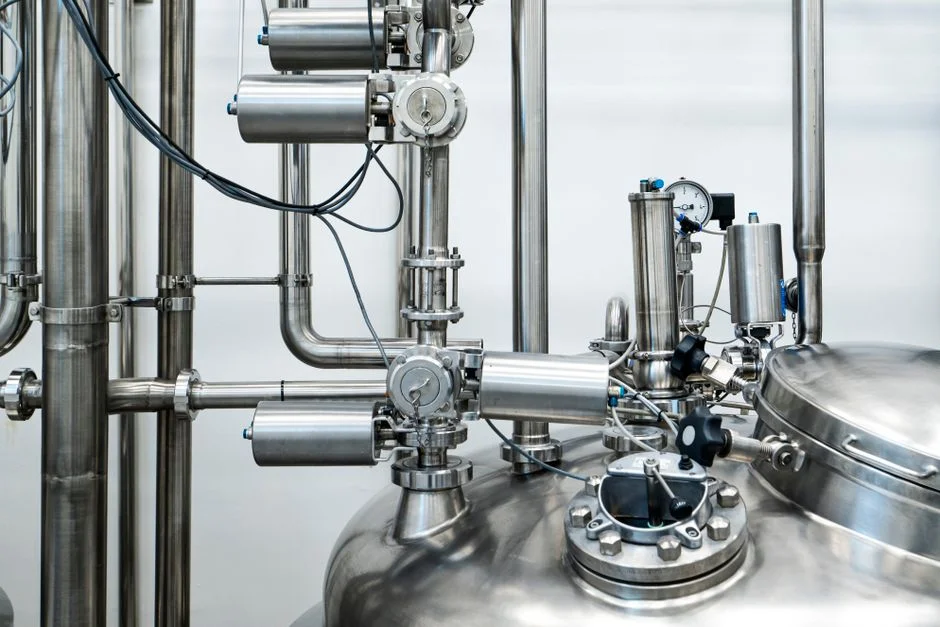
Protect pumps, valves and treatment units from debris before selecting the principal COD-removal process. Fine screening should address rags, plastics and fibrous material that can wrap equipment or create blind zones. The size and location of screening depend on the plant’s flow, solids character and handling arrangements.
Consider DAF where suspended solids, oil and grease, or colloidal material require high-rate separation. HydropureWater lists a 4–300 m³/h range across 13 standard models for the dissolved-air flotation wastewater pretreatment system. This is an equipment range, not proof that a particular DAF unit will meet a glass plant’s COD objective; influent characterization and pilot testing remain necessary.
Where pH adjustment, coagulation or flocculation is required, use controlled chemical dosing rather than a fixed dosage. The automatic chemical dosing system supports coagulants, flocculants, pH adjusters and specialty chemicals. Control should respond to flow and contaminant loading, because the required coagulant mass changes with wastewater composition.
Oil and grease pretreatment should precede any stage where emulsified oil could interfere with biological activity, membrane operation or electrochemical reactions. Verify whether the chosen DAF arrangement captures both floatable oil and the destabilized solids generated during coagulation.
Include downstream solids handling in the process design. COD removed by flotation, coagulation or filtration is transferred into sludge or another residual stream. Specify thickening, dewatering and disposal interfaces rather than treating separation as the end of the treatment train. A plate-and-frame filter press can be evaluated as part of that solids-management route, but its selected capacity must follow the expected residual-solids mass and desired dewatering outcome.
Compare coagulation routes for COD-bearing industrial wastewater
Chemical coagulation and electrocoagulation both aggregate fine material, but their operating and maintenance requirements differ. The supplied research does not provide a glass-specific COD-removal rate for chemical coagulation, so neither route should be selected on a generic percentage.
| Decision factor | Chemical coagulation | Electrocoagulation |
|---|---|---|
| Primary mechanism | Destabilization and floc formation through externally dosed coagulant | In situ coagulant generation through sacrificial iron or aluminium electrodes, with electrochemical destabilization and flotation |
| Principal operating controls | Coagulant dose, pH, mixing, flocculation and settling or flotation | Current, voltage, electrode arrangement, spacing, conductivity, pH, residence time and solids separation |
| Material handling requirement | Chemical delivery and storage; coagulated solids require separation | Electrode replacement and maintenance; generated solids require separation |
| Evidence available in the supplied research | No glass-specific COD-removal rate | Wasit University petroleum-wastewater results; broader oily-wastewater evidence cited by Safari et al. |
| Commercial comparison requirement | Price and consumption of coagulants; mixing energy; sludge volume; labour and residuals | Price and consumption of electrodes; electricity; sludge volume; electrode maintenance; plant space |
The Wasit University study reported optimum removal of 99.5% for COD and 94.2% for oil in petroleum wastewater (Wasit University, supplied study dated 2026). The tested condition used four aluminium and four iron electrodes, 2 cm between electrodes, 12 cm submergence, pH 7, 50 minutes, 10.5 V, sodium chloride of 0.5 g/L, initial oil of 95 mg/L and initial COD of 710 mg/L.
The same study reported energy consumption of 12 kWh/m³ and TSS of 73 mg/L (Wasit University, supplied study dated 2026). These values describe that specific test; they are not universal electrocoagulation benchmarks for a glass factory effluent.
Safari, Azadi Aghdam and Kariminia’s paper directly addresses electrocoagulation for COD and diesel removal from oily wastewater (International Journal of Environmental Science and Technology, 2016). Its references also connect electrocoagulation to lignin, COD and color removal from pulp-and-paper wastewater and to COD and turbidity removal from real oxide-CMP wastewater. That breadth supports the technology’s range of applications, but not a glass-plant guarantee.
Compare total operating cost instead of COD-removal percentage alone. Include electricity, chemical consumption, electrode replacement, sludge generation, residuals handling, controls and space. A high-efficiency sedimentation tank may be relevant after coagulation, but it does not establish the performance of the upstream process.
Select biological polishing and membrane finishing only when the residual COD fits
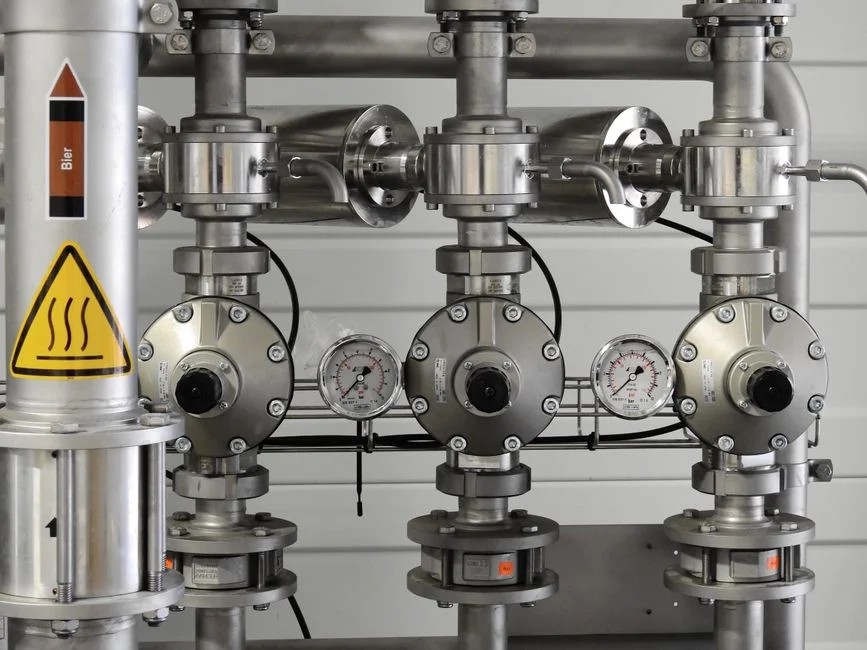
Biological treatment should be selected only when the residual COD is compatible with the chosen biological process and the wastewater does not contain concentrations of inhibitory substances that defeat the design. The supplied research does not provide a glass-specific biological removal rate, so treatability, inhibition and final soluble-COD performance need testing on the actual stream.
An MBR membrane bioreactor for industrial wastewater polishing combines biological treatment and membrane solids separation. HydropureWater lists capacity from 10–2,000 m³/day and PVDF filtration below 1 μm. These are catalog specifications; they do not establish the treated COD concentration or the suitability of the biological process for a particular glass effluent.
Treat membrane filtration as a solids barrier and polishing mechanism. It can retain biomass and prevent suspended-solids carryover, while the biological stage addresses biodegradable dissolved organics. It should not be represented as a universal dissolved-COD removal process without supporting test data.
Set final targets from the applicable requirements. The US EPA identifies 40 CFR Part 426 as the Glass Manufacturing Effluent Guidelines framework for direct and indirect dischargers, but the specific permit, pretreatment documentation and receiving sewer controls determine the operative limits (US EPA, current 2026 guidance). Where polishing is required, evaluate the RO and UF membrane filter elements against the residual load, fouling tendency and required treatment objective.
Include final sampling points and monitoring for COD, suspended solids, pH and every pollutant identified by the permit or pretreatment documentation. Sampling locations should distinguish process performance from compliance monitoring.
Size the system from verified wastewater and pilot-test data
Equipment sizing should start with verified peak and average wastewater flows, not a generic plant-flow assumption. Include production variability, wash cycles, cooling discharges, stormwater and any permitted bypass or equalization requirements. Separate streams until their hydraulic and contaminant contributions are known.
| Sizing or procurement item | Required input | Output to verify |
|---|---|---|
| Equalization | Verified flow profile, production and wash-cycle sequence | Working volume, mixing strategy, pumping arrangement and controlled return |
| Screening and physical pretreatment | Debris and suspended-solids characterization | Screen aperture, solids capture method and screenings handling |
| DAF | Oil, grease, solids and colloid data; pilot separation results | Surface loading basis, recycle arrangement, skimming and residual-solids handling |
| Coagulation or electrocoagulation | Representative wastewater and pilot dose/current data | Coagulant demand, electrical load, electrode arrangement, residence time and separation |
| Biological or membrane polishing | Residual soluble COD, treatability and inhibition results | Process loading basis, membrane area or module count and cleaning requirements |
| Final compliance | Direct- or indirect-discharge route and applicable requirements | Final targets, monitoring parameters, sample points and reporting controls |
Use a pilot trial to establish coagulant dose, electrocoagulation current, voltage, residence time, electrode arrangement, solids separation and residual COD performance. Representative operation is more useful than one optimized laboratory sample. If comparison is needed, follow the DAF versus clarifier selection for industrial wastewater approach through raw-water characterization and pilot comparison rather than equipment selection from flow alone.
Require each supplier to state the design basis, sizing method, included ancillaries, control philosophy and performance boundaries. Check whether screening, equalization, chemical storage, solids handling and power supply are included or treated as separate scopes.
Confirm whether the facility is a direct or indirect discharger under the US EPA’s 40 CFR Part 426 framework, then coordinate the final objective with the regulator or receiving authority. The rotary mechanical bar screen, DAF and MBR must each be checked against that treatment train rather than selected as independent products.
Verify treatment claims with a defensible acceptance test
A credible COD acceptance test must state enough operating and analytical detail to reproduce the result. Request initial and treated COD concentrations, sampling method, flow rate, removal efficiency, energy consumption, reagent consumption and trial duration. Ask whether concentrations were measured on filtered or unfiltered samples; the distinction affects attribution between particulate and dissolved COD.
Check whether the test wastewater and operating conditions represent the buyer’s actual glass-manufacturing stream. The Wasit University result applies to petroleum wastewater under a stated electrochemical condition, not automatically to a glass factory effluent (Wasit University, supplied study dated 2026).
Confirm performance across the expected operating range rather than at one optimized laboratory condition. A pilot should capture normal flow and contaminant variability, changes in production or cleaning cycles, and the solids-separation step. Where chemical dosing is central, verify control response to both flow and contaminant loading.
Define acceptance criteria for COD, suspended solids, oil and grease, pH and other permit-relevant parameters before selecting equipment. Also verify electrical requirements, controls, residual-solids handling, electrode maintenance or chemical delivery, spare parts and operator responsibilities.
Use the automatic chemical dosing system acceptance review to confirm that equipment alarms, flow-paced control, calibration access and chemical-use measurement match the agreed operating strategy. Performance acceptance and commercial scope should be documented together.
Frequently Asked Questions
What is the best COD-removal method for glass manufacturing wastewater?
There is no defensible single answer from COD concentration alone. Characterize soluble COD separately from particulate, colloidal and emulsified contributions, then match physical pretreatment, coagulation or electrocoagulation, biological treatment and membrane finishing to the remaining objective. For a broader industrial comparison, see this COD-removal treatment train for industrial manufacturing wastewater.
How much should a glass wastewater treatment system cost?
The supplied research contains no quotation or glass-specific system price, so a buyer should request an itemized offer based on verified flow, wastewater analyses, selected duty, solids handling, controls, installation requirements and pilot acceptance criteria. Compare operating costs as well as capital: chemicals, power, electrode replacement, sludge handling, maintenance and operator labor.
Can electrocoagulation meet a glass plant’s COD and discharge limits?
It may be suitable, but it cannot be guaranteed from published results or total COD alone. The Wasit University study achieved 99.5% COD removal in its petroleum-wastewater test under a specific condition (Wasit University, supplied study dated 2026). The buyer should require representative pilot data, a solids-separation balance and an acceptance test against the applicable permit or pretreatment limit.
What flow data and wastewater tests are needed to size the equipment?
Request peak and average flows, production and wash-cycle sequences, stormwater and drainage inputs, plus COD, BOD, suspended solids, oil and grease, pH, temperature and colloid data. Add process-specific chemistry and toxicity or inhibition screening where biological treatment is considered. These inputs establish both hydraulic capacity and contaminant loading for each treatment stage.
How do direct-discharge and indirect-discharge requirements affect the selected treatment train?
The US EPA states that 40 CFR Part 426 applies through NPDES permits for direct dischargers and through permits or other control mechanisms for indirect dischargers (US EPA, current 2026 guidance). Confirm the route first, obtain the applicable limits from the regulator or receiving authority, and then size the final stage and monitoring system to those requirements rather than to a generic COD target.