Which clarification method fits Freeport chemical wastewater?
Freeport factories should choose DAF when chemical wastewater contains floatable oils, FOG, or solids that can be conditioned into reliably buoyant floc; conventional clarification is generally stronger for heavier, readily settleable solids. The decision should not be based on flow alone: characterize TSS, FOG, particle settling and flotation behavior, soluble COD, toxicity, pH, flow variation, and reuse or discharge goals. DAF requires chemical coagulation and flocculation, clean-water startup, recycle and saturation equipment, skimming, and settled-sludge removal. Clarifiers depend on available surface area, settling time, sludge handling, and hydraulic performance. Pilot testing and a whole-train comparison should precede purchase.
Dissolved air flotation uses 30–50 micron microbubbles to attach to conditioned particles and carry them to the surface, where a skimmer removes the floating sludge (Clearwater Industries, 2026-04-27). Gravity sedimentation instead relies on solids settling through the designed separation zone before bottom sludge withdrawal. A lamella clarifier for solids separation can increase effective settling area through inclined plates, but the arrangement remains fundamentally dependent on gravity separation.
The practical selection rule is contaminant behavior, not the “chemical” label. Screen the stream against four questions:
- What must be removed: suspended solids, free oil, FOG, precipitated metals, or only a defined discharge or reuse target?
- How does that material behave: does it float, settle reliably, or require coagulation and flocculation before separation?
- What pretreatment is needed for pH, emulsified oil, surfactants, toxic compounds, or shock loads?
- Where will the clarified water go next, and what additional treatment is required?
DAF and gravity clarification are not mutually exclusive. Clearwater states that most DAF systems include some sedimentation and bottom-sludge removal (Clearwater Industries, 2026-04-27). Neither technology independently removes soluble COD, dissolved salts, or toxic contaminants. For an industrial DAF system for chemical wastewater, evaluate flotation performance and the entire clarification train—not just the flotation tank.
Characterize the wastewater before comparing equipment
A single composite sample cannot support equipment sizing when cleaners, oils, surfactants, pigments, metals, or batch dumps create changing wastewater conditions. Sample representative production, cleaning, and dumping cycles, then separate flow and load variability from the average used for conceptual design. The wastewater characterization should be reviewed with an application engineer before comparing an industrial DAF system for chemical wastewater with a lamella clarifier for solids separation.
| Information to obtain | Why it affects clarification | Buyer action |
|---|---|---|
| Representative flow and load record | Shock batches can exceed the hydraulic or chemical-conditioning capacity of the selected unit. | Sample production, cleaning, and dumping cycles; identify peak and sustained conditions. |
| TSS, FOG, and particle-size distribution | Clarification depends on whether particles settle, float, or can be conditioned into a separable floc. | Run screening tests and preserve representative samples for jar and pilot work. |
| Soluble COD, pH, temperature, and toxicity | Physical separation does not remove dissolved pollutants and may require downstream biological, adsorption, or membrane treatment. | Obtain the permit, sewer authorization, or reuse specification that defines the required water quality. |
| Equalization and batch segregation | Flow variation can affect solids capture, chemical demand, and settling behavior. | Evaluate equalization and segregation as part of the treatment train. |
Document soluble COD separately from particulate organics because suspended material can contribute to a total COD result while remaining physically removable. Also record whether oil is free, emulsified, or surfactant-stabilized; the same FOG measurement can conceal very different separation requirements.
The EPA Process Design Manual for Suspended Solids Removal, published in January 1975, identifies flow variation and flow equalization as general design considerations and states that particle size, specific gravity, and shear resistance affect solids-separation performance. Its design guidance should be treated as historical guidance rather than a current Freeport standard. For current requirements, the plant must identify its discharge route and obtain the applicable regulator or sewer-authority analysis; the supplied research establishes no Freeport-specific discharge limits.
Chemical dosing should be defined from wastewater chemistry, not selected by analogy with another plant. A PLC-controlled chemical dosing system can coordinate pH adjustment, coagulant, and flocculant feeds, but the chemical hierarchy, set points, and consumption still depend on jar-test results and operating data.
How DAF and gravity clarification separate chemical wastewater solids
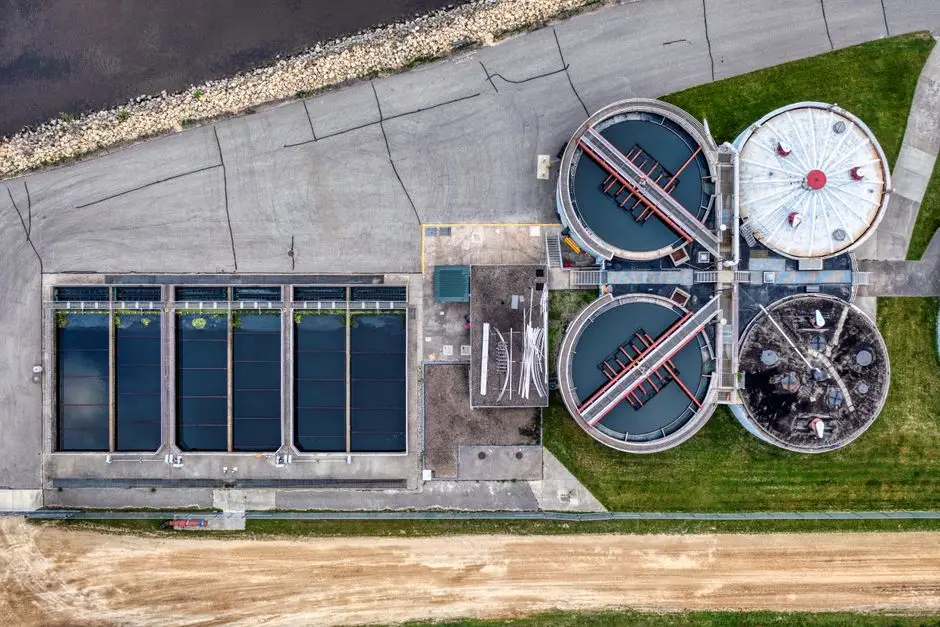
DAF separates conditioned solids by changing their transport mechanism: microbubbles attach to the floc, lift it to the surface, and leave the clarified water below the floating blanket. Gravity clarification leaves separation to particle settling through a defined zone. The two routes require different pretreatment, hydraulic controls, and sludge-management provisions.
The DAF sequence defined by Clearwater Industries (2026-04-27) is:
- Fill the unit with clean water.
- Recycle clarified water through the pressurization and air-saturation system.
- Release the saturated water into the clarification tank so microbubbles form.
- Attach bubbles to chemically conditioned solids.
- Skim the floating sludge and recover clarified water.
Clearwater explicitly recommends pairing DAF with proper coagulation and flocculation because conditioning increases particle size and improves bubble contact (Clearwater Industries, 2026-04-27). Thus, DAF is not simply a tank with an air compressor: it is a controlled sequence involving chemical addition, mixing, recycle, saturation, pressure release, flotation, and skimming. The recycle pump, air-saturation system, and skimmer must remain aligned with the selected solids and production schedule.
A gravity clarifier introduces wastewater into a settling zone, allows solids to settle, and removes sludge from the bottom. Where particles are light, emulsified, or poorly settleable, chemical conditioning may still be required; settling performance then depends on floc strength, hydraulic disturbance, and sludge withdrawal rather than tank volume alone.
DAF also produces a bottom solids stream. Clearwater reports that heavier solids settle in the collection zone and are removed with an auger (Clearwater Industries, 2026-04-27). The equipment proposal should therefore define both floating sludge and settled solids, not leave one stream unaccounted for. Clearwater also states that chemical treatment can create thicker, more dewatered sludge that may require little or no further dewatering, but the actual stream must be verified before excluding a plate and frame filter press from the project scope.
Compare DAF and clarifiers across factory operating criteria
DAF is normally the stronger physical-separation option when oils, fats, floatable impurities, or conditioned solids are the primary targets; gravity clarification is normally more predictable for heavier solids with reliable settling characteristics. That distinction changes when particle behavior, hydraulic variability, sludge handling, and downstream treatment are included.
| Selection criterion | DAF | Gravity or lamella clarification | Evidence required |
|---|---|---|---|
| Primary separation target | Floatable oils, FOG, and conditioned solids. | Heavier solids that settle reliably. | Representative settling and flotation tests. |
| Pretreatment | Normally requires a designed coagulation and flocculation train. | May require conditioning when solids do not settle naturally. | Jar-test range and mixing criteria. |
| Hydraulic behavior | Recycle, saturation, pressure release, and skimming must track incoming flow and load. | Requires adequate separation area and reliable hydraulic distribution and sludge withdrawal. | Flow range, equalization design, surface loading, and site constraints. |
| Mechanical scope | Adds recycle pumping, air saturation, pressure release, bubble attachment, and skimming. | Adds or retains settling area, inlet distribution, sludge collection, and withdrawal equipment. | Installed-equipment and utility comparison. |
| Solids streams | Floating sludge plus settled bottom solids. | Concentrated bottom sludge. | Solids characterization and handling plan. |
| Application evidence | Clearwater identifies configurations for small-to-medium flows with very high TSS/FOG, low-to-medium solids loads including low-buoyancy particles, and high flows with low-to-large solids loads (Clearwater Industries, 2026-04-27). | HydropureWater’s catalog lists surface loading rates of 20–40 m/h and chemical-consumption reduction of up to 30% under its stated catalog conditions. | Confirm that the proposed arrangement matches site-specific wastewater and operating conditions. |
Do not select either technology from a generic comparison table alone. Surface area, hydraulic loading, equalization, chemical use, installed footprint, controls, maintenance access, operator training, and downstream impacts should be priced and assessed together. A clarifier may reduce chemical use under its catalog conditions, but that does not establish a Freeport operating saving without dosing data.
DAF adds mechanical systems that require inspection and operator attention. A clarifier may have a simpler mechanical arrangement, but poor sludge withdrawal, hydraulic short-circuiting, or unsuitable settling characteristics can still produce inconsistent results. Both options generate sludge and both require a defined disposal route.
Catalog capacity is a screening tool, not proof of fit. Compare a DAF system for chemical wastewater against a lamella clarifier for solids separation using the same flow cases, chemical assumptions, effluent objectives, utilities, and sludge-handling boundaries.
Build a treatment train that protects compliance performance
A skimmer removes floating material; it does not establish compliance with a soluble-COD, toxicity, or reuse requirement. Evaluate the following sequence as one system:
- Equalization and segregation of routine production, cleaning, and dump flows.
- pH adjustment where needed for chemical conditioning or downstream compatibility.
- Coagulation and flocculation.
- DAF or gravity clarification.
- Withdrawal, thickening, storage, and dewatering of sludge streams.
- Biological, adsorption, membrane, or other polishing where required.
- Monitoring against the applicable permit, sewer authorization, or reuse specification.
Automatic dosing is part of process control, not a minor accessory. HydropureWater states that its PLC-controlled systems inject coagulants, flocculants, pH adjusters, and specialty chemicals. The proposed PLC-controlled chemical dosing system should therefore be tied to verified chemical recipes, sensors, alarms, operator access, and chemical-storage requirements.
Physical clarification does not itself resolve soluble COD, dissolved contaminants, or toxicity. Those objectives may require biological treatment, adsorption, membrane treatment, or another polishing step. For wastewater reuse, the receiving process determines the required clarification performance; a DAF or lamella clarifier should not be credited automatically with meeting a reuse specification.
Sludge treatment is a separate design decision. HydropureWater’s plate and frame filter press catalog lists filtration areas from 1 m² to 500 m² for industrial sludge dewatering. The selected area still depends on sludge volume, solids concentration, dewatering behavior, operating cycle, and destination. Do not assume chemical conditioning has eliminated the need for thickening, storage, or dewatering until representative sludge has been tested.
Startup and controls also affect compliance risk. Clearwater states that DAF should be filled with clean water before wastewater because startup with wastewater can cause dirty discharge and may damage the recirculation pump and air-saturation system (Clearwater Industries, 2026-04-27). The Compact DAF platform allows PLC adjustment of chemical dosing pumps, skimmer speed, and sludge discharge. A complete commissioning plan should include clean-water startup, media conditioning, chemical calibration, sludge removal checks, and a defined response to off-specification discharge.
Use pilot evidence and an RFQ checklist to lower selection risk
Pilot evidence is warranted when the stream contains emulsified oil, surfactants, variable batch dumps, poorly settling solids, or contaminants whose behavior changes with pH and chemical dose. A bench or jar-test program should compare pH adjustment, coagulant type and dose, flocculant dose, mixing conditions, and the resulting settling or flotation response. Pilot testing then verifies contaminant recovery, sludge characteristics, hydraulic response, and chemical consumption under representative flow and batch cycles.
| RFQ requirement | Acceptable supplier response | Buyer check |
|---|---|---|
| Design basis | Design flow, flow range, equalization assumptions, wastewater loads, and pretreatment defined. | Inputs match representative site data and identified peak conditions. |
| Treatment objective | Proposed effluent or reuse targets tied to the permit, sewer authorization, or reuse specification. | No universal concentration is assumed or substituted. |
| Equipment scope | Materials of construction, recycle and saturation equipment, controls, sludge removal, utilities, and downstream interfaces stated. | Compare complete installed scope, not vessel price alone. |
| Performance evidence | Application review plus relevant pilot or operating evidence. | Conditions are comparable to the Freeport stream. |
| Installation and acceptance | Skid arrangement, utilities, commissioning sequence, and measurable acceptance criteria included. | Tie final acceptance to site wastewater and project targets. |
Clearwater states that its COMPACT DAF uses one skid for flows of 66 GPM or less and a modular two-skid arrangement for larger flows (Clearwater Industries, 2026-04-27). HydropureWater’s catalog covers 4–300 m³/h across 13 DAF models; this is a commercial screening range, not evidence that a standard model fits a Freeport site without characterization.
Where wastewater behavior varies significantly, require a confirmed site trial and written acceptance criteria before final selection. The decision package should include pilot results, chemical consumption, sludge volumes, recovered water quality, hydraulic response, installation constraints, and the complete treatment-train schematic. A broader industrial wastewater equipment selection framework can help organize the comparison, but the chemical-wastewater characterization remains the controlling evidence.
Frequently Asked Questions
Is DAF cheaper than a clarifier for chemical wastewater?
The supplied research contains no equipment prices, so a defensible cost comparison cannot be made from purchase price alone. Request itemized proposals covering the vessel or skid, pretreatment, chemicals, recycle and air systems, sludge handling, utilities, installation, controls, maintenance, and downstream treatment. Compare total installed and operating costs over the plant’s actual operating schedule.
How should a DAF or clarifier system be sized for a Freeport factory?
Size from characterized flow variability, contaminant loading, particle behavior, pretreatment, and effluent objectives—not from average flow alone. Use jar or bench tests to select chemical conditioning, then use pilot data to verify hydraulic and treatment performance across representative production and batch cycles.
What should a buyer check when selecting a wastewater equipment supplier?
Require an application review, defined materials and controls, a proposed treatment train, relevant pilot or performance evidence, an installation plan, and measurable acceptance criteria. Also require the supplier to identify chemical demand, sludge outlets, utilities, startup requirements, and every downstream interface that could affect compliance.
Can chemical wastewater be sent directly to DAF?
Chemical conditioning should precede DAF because coagulation and flocculation improve particle size and bubble contact. Clean water must also be available for startup. Review PLC-controlled chemical dosing system requirements before introducing wastewater, because starting with wastewater can produce dirty discharge and may damage the recirculation pump and air-saturation system.
Which technology carries lower compliance risk?
DAF generally presents more process risk when floatable or conditioned solids dominate because the train depends on chemical dosing, recycle, air saturation, skimming, and clean-water startup. Gravity clarification is more predictable for readily settleable solids. The lower-risk choice is the one supported by characterized wastewater, pilot performance, and a complete treatment train that meets the site’s applicable discharge or reuse requirements.