Start with the rules that control Madisonville sewer discharge
The applicable industrial user pretreatment requirements are established by the industrial user’s permit or other control mechanism, the receiving POTW’s sewer-use requirements, and any controlling state or local regulation. EPA’s 134-page Local Limits Development Guidance, indexed June 25, 2021, explains the framework for developing POTW local limits, but it is guidance rather than a regulation; a conflicting permit or regulation controls. EPA identifies prohibited discharges, categorical pretreatment standards, and local limits as separate requirements. For a transportation plant, request the industrial user permit, sewer-use ordinance, categorical-standard determination, and site-specific local limits before sizing equipment.
EPA defines pass through as a discharge that exits the POTW into waters of the United States in quantities or concentrations that cause, alone or with other discharges, a violation of the POTW’s NPDES permit. Interference occurs when a discharge inhibits or disrupts the POTW, its treatment processes, or its sludge processes, use, or disposal, and causes a permit or sludge-use violation. An industrial user can therefore create a POTW compliance problem without itself exceeding a numerical limit at the plant.
EPA states that POTWs impose local limits at the industrial user’s end-of-pipe discharge, meaning the point where the user connects to the POTW collection system. Do not infer Madisonville limits from EPA guidance. Ask the receiving POTW for limit values, averaging periods, monitoring frequencies, sampling location, chemical restrictions, slug-discharge controls, and force-majeure provisions.
| Review category | What the plant must establish | Evidence to retain |
|---|---|---|
| Prohibited discharges | Materials or practices the sewer authority does not permit at the connection. | Current permit, sewer-use ordinance, written interpretations, and POTW correspondence. |
| Categorical pretreatment standards | Whether the plant’s industrial activity falls within a categorical standard and which unit, production, or pollutant provisions apply. | Permit determination, process description, production records, and applicable federal citation. |
| POTW local limits | Site-specific pollutant limits and operating conditions applicable at the end-of-pipe discharge. | Limit values, averaging periods, monitoring frequency, sampling point, and reporting or notification requirements. |
The permit-review sequence is also illustrated in guides to pretreatment compliance for industrial facilities and connecting plant operations to discharge controls.
Map every wastewater stream before selecting treatment
Industrial wastewater characterization must cover every path to the sewer connection, not just the final combined sample. At a transportation-equipment plant, begin with process washdown, equipment and floor cleaning, paint-related cleanup, vehicle or component washing, oily runoff, sanitary flows, and any stormwater that is permitted to enter the connection. Separate or tightly control streams when their contaminants, cleaning chemicals, or flow patterns differ enough to make a combined treatment basis unreliable.
EPA’s sampling framework identifies three useful levels: at the POTW, in the collection system, and at industrial users. The guidance calls for representative analytical results and flow information, maintained so the profile can be reviewed and updated. That approach matters at a transportation plant because a low-concentration grab sample during an easy operating period will not characterize a production cleanup, oily wash event, or floor-drainage discharge.
Build a sampling plan around normal production, high-load periods, cleaning cycles, and batch dumps. Record the shift, production state, cleaning activity, equipment condition, source being sampled, and flow conditions. For transportation-equipment operations, the screening set should include oil and grease, suspended solids, BOD/TSS, ammonia, and pH, then add plant-specific pollutants identified through process review and the POTW’s list of pollutants of concern. EPA treats conventional and non-conventional pollutants, BOD/TSS, ammonia, and oil and grease as distinct subjects in local-limit and MAHL development; those categories do not establish that every parameter is locally limited.
Use a mass balance to distinguish dilution from removal. Compare flow, pollutant concentration, and pollutant mass before and after each treatment step. If load rises while concentration falls, the plant may be diluting a concentrated batch rather than removing pollutants. Also determine whether floor drainage, uncontrolled washdown, or another source is bypassing the treatment train.
| Stream or condition | Characterization question | Engineering output |
|---|---|---|
| Process washdown and equipment washing | Which cleaning chemicals, coatings, metals, or lubricants are present, and is the discharge continuous or batch-loaded? | Source segregation decision, sampling plan, and candidate treatment mechanisms. |
| Floor and vehicle washing | How much free oil, settled solids, grit, and wash water enter the drain? | Equalization need, solids-removal step, and oil-and-grease removal basis. |
| Paint-related cleanup | What paint solids, residual coating chemicals, and wash-water characteristics are present? | Potential chemical compatibility controls and treatment-train review. |
| Oily runoff | Is the oil free-phase, emulsified, or carried with suspended solids? | Physical-removal evaluation and upstream containment requirements. |
| Combined discharge | Does the combined profile reflect every permitted source and normal operating variability? | Design flow, pollutant loads, and end-of-pipe compliance targets. |
Related engineering methods for industrial wastewater characterization and process-specific treatment selection show why pollutant data must precede equipment selection.
Turn the wastewater profile into a pretreatment decision

Treatment selection should follow from the measured pollutant profile, hydraulic variation, required end-of-pipe quality, sludge-handling route, and future operating needs. For oil, grease, and floatable contaminants, evaluate dissolved air flotation as a primary solids-removal option. The DAF system for oil, grease and floatable contaminants covers 4–300 m³/h across 13 standard models and is intended to remove suspended solids, FOG, oil and grease, and colloidal matter. These are supplied equipment specifications, not a guarantee of performance at an uncharacterized Madisonville site.
For fibrous material, plastics, and gross debris that could burden downstream equipment, evaluate fine screening before selected treatment steps. The fine screening for industrial wastewater headworks is the GX Series, designed for municipal and industrial headworks and for removing suspended solids, rags, plastics, and fibrous debris. Screening should protect downstream equipment, but it does not remove dissolved contaminants or oil dispersed through the water.
When dissolved or finely divided contaminants remain after physical separation and a biological stage is appropriate, evaluate MBR treatment. The supplied MBR specification combines activated sludge with submerged PVDF membrane filtration, covers 10–2,000 m³/day, and states that the system produces effluent with filtration below 1 μm. These figures describe the equipment envelope; they do not establish that the final discharge will satisfy local limits. For broader physical-treatment comparison, see DAF versus clarifier selection for industrial pretreatment.
Use the receiving POTW’s calculated allowable loading and the plant’s allocated portion as design inputs. EPA’s MAHL process considers pollutants of concern, collected data, treatment removal efficiencies, flow, allowable headworks loading, uncontrolled sources, hauled waste, safety factors, and growth allowances. The plant must then translate its allocated loading into an allowable discharge under its actual flow pattern rather than treating the MAHL as a concentration limit.
Automatic chemical dosing belongs only where the selected train requires it and the chemicals are compatible with discharge requirements. The supplied automatic dosing system is PLC-controlled, skid-mounted, and intended for coagulants, flocculants, pH adjusters, and specialty chemicals. Confirm chemical compatibility, storage controls, secondary containment, and permit restrictions before ordering.
| Measured condition | Treatment decision | Verification required before sizing |
|---|---|---|
| Free oil, grease, floatable material, and settleable solids | Evaluate DAF or another physical-removal mechanism as the primary stage. | Representative oil-and-grease and suspended-solids data, flow variation, and required end-of-pipe quality. |
| Rags, plastics, fibrous debris, or protective equipment | Evaluate screening at appropriate points in the train. | Debris characteristics, available headworks configuration, and downstream equipment requirements. |
| Dissolved or finely divided load remaining after physical treatment | Evaluate biological treatment, with membrane filtration where required. | Biodegradability, treatment objectives, sludge route, footprint, and future flow needs. |
| Batch cleaning or washdown peaks | Evaluate equalization and controlled storage before treatment. | Peak and batch volumes, operating sequence, available storage time, and discharge authorization. |
| pH or coagulation chemistry requires adjustment | Evaluate controlled chemical dosing. | Chemical identity, dosing basis, compatibility, storage, and discharge restrictions. |
Build monitoring around the point of discharge
The legal compliance point is the industrial user’s end-of-pipe discharge at the connection to the POTW collection system, unless the POTW formally approves an alternate sampling point. Establish that point in the permit, industrial user permit, or written control mechanism. Monitor the pollutants and averaging periods identified in the controlling requirements; the supplied research provides no Madisonville-specific values for those parameters.
End-of-pipe sampling proves a result at the required point, but operating records explain whether it is reproducible. Keep flow, equipment status, chemical use, operating observations, laboratory results, and corrective actions in the same compliance record. This creates an auditable chain from source activity to treatment operation to analytical result.
Apply EPA’s data-quality and analytical-method guidance when reviewing results. An abnormal reading should trigger source tracing and a controlled investigation, not an automatic release decision. Check the sample for representativeness, handling, analytical method, laboratory information, and agreement with process observations before drawing a compliance conclusion.
Account for collection-system conditions, including wet weather. EPA states that increased wastewater flow during wet weather can create operational challenges and adversely affect treatment efficiency, reliability, and unit-process control. For a transportation plant, this makes stormwater routing, drain isolation, and identification of clean versus dirty runoff part of the pretreatment design rather than an incidental plumbing issue. The broader industrial pretreatment limit compliance workflow illustrates how permit review, sampling, treatment, and documentation connect.
Prepare for excursions before they become violations
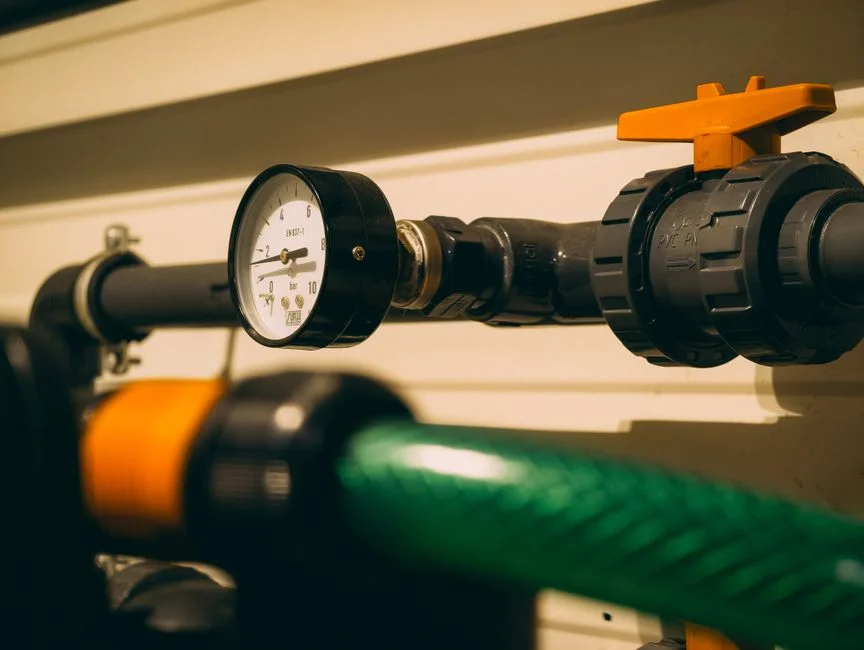
An excursion plan should convert the approved treatment design and sewer requirements into operating triggers without inventing concentration or flow thresholds. The plan must name who can stop or divert a stream, who authorizes treatment changes, who notifies the POTW, and how the event is documented. For high flow, visible free oil, abnormal pH, chemical-dosing failure, biological upset, delayed sampling, or an exceedance, the default sequence is to stop or divert the affected stream when safe, stabilize the train, trace the source, document the event, and notify the POTW as required.
Evaluate equalization and controlled storage where production cleaning or washdown generates batch loads that could overwhelm the treatment train. Storage provides operating time for inspection, treatment adjustment, sampling, and controlled release, but its capacity must come from measured batch volumes and the authorized discharge sequence—not an assumed peak factor.
Reevaluate the treatment train after a process change, new chemical, production expansion, failed monitoring result, or permit revision. EPA’s guidance identifies annual reviews and periodic detailed reevaluations as parts of local-limit management. The response plan should also state what changes automatically require a new profile, such as a new cleaning chemical or a shift in the amount of oily runoff entering the sewer.
Keep contingency records at the operator level: event time, source and destination, observed condition, actions taken, flow and operating data, samples collected, notifications, approvals, and return-to-normal criteria. For comparison, pretreatment excursion planning for industrial plants shows how clear authority prevents improvised discharge decisions during an upset.
Frequently Asked Questions
What should a transportation plant request before asking for an equipment price?
Request the industrial user permit or control mechanism, sewer-use ordinance, applicable categorical-standard determination, POTW local limits, sampling point, averaging periods, monitoring frequency, and notification requirements. Also provide measured stream flows, representative analytical results, production and cleanup schedules, available footprint, sludge-handling constraints, and any planned expansion. Without those inputs, a price would price assumptions rather than a defensible treatment scope.
How should pretreatment equipment be sized without inventing a Madisonville limit?
Size from the characterized wastewater and the POTW’s controlling discharge conditions, not from an unverified limit. Obtain flow records, batch-dump volumes, oil-and-greese and suspended-solids data, hydraulic variation, and the required end-of-pipe quality. Where EPA’s MAHL framework applies, request the POTW’s allowable loading and the plant’s allocated portion. Equipment envelopes then become selection criteria rather than promises of compliance.
How do I select a supplier without relying only on nominal capacity?
Ask each supplier to demonstrate that the proposed mechanism addresses the measured pollutants, peak and batch flows, operating controls, sludge route, chemical compatibility, and future expansion. For a DAF, DAF-versus-clarifier comparison, request evidence tied to the actual oil, grease, solids, and hydraulic profile. Also request drawings, utility requirements, control philosophy, installation constraints, commissioning criteria, and the documents needed to support the POTW approval.
What records prove that the plant complied at discharge?
Maintain the permit or local-limit version, approved sampling point, analytical results, flow data, equipment and chemical operating records, laboratory information, source investigations, corrective actions, and POTW notifications in one traceable record. End-of-pipe sampling should be linked to the production and cleaning event that produced the wastewater. This supports a defensible release decision and demonstrates whether treatment performance was stable.