The 2026 Compliance Stack for a Chemical Plant Near Livonia
Chemical plants near Livonia, Michigan meet pretreatment limits by operating under a three-layer compliance stack. First, they follow EPA's federal pretreatment framework at 40 CFR Part 403, which defines pretreatment standards, prohibits pass-through and interference, and requires POTWs to develop site-specific local limits under 40 CFR 403.5(c). Second, they comply with local limits set by the receiving POTW, enforced at the end-of-pipe connection to the sewer. Third, they hold a nondomestic discharge permit with self-monitoring and reporting. Plants typically meet numeric limits using source control, equalization, pH adjustment, metals precipitation, dissolved air flotation, and disinfection, with surcharge fees for high COD or TSS.
Each layer is enforceable on its own. The federal layer sets the floor: 40 CFR Part 403.3(j) defines pretreatment standards, 40 CFR 403.5 lists the general prohibited discharge standards, and 40 CFR 403.3(p) and (k) define the pass-through and interference triggers that a POTW can use against any industrial user, according to EPA's pretreatment and local-limits guidance (EPA, "Pretreatment Standards and Requirements-Local Limits"). The local layer sits on top of that floor. EPA notes that "POTWs impose local limits at the end-of-pipe discharge from an industrial user (i.e., at the point of connection to the POTW's collection system)," and those limits "are site-specific and can be numeric or narrative effluent discharge limits, including BMPs" (EPA). The permit layer ties the two together: a nondomestic discharge permit spells out the monitoring point, the sampling cadence, and the surcharge schedule that the plant will be billed against each month.
The local water-quality context is what makes this stack concrete in the Livonia corridor. EWG's Tap Water Database entry for Livonia (PWS MI0003930) lists "Industry" as a pollution source category for chemicals detected in 2021–2023 sampling, alongside treatment byproducts and naturally occurring contaminants (EWG, "Livonia, Michigan"). A regulated public water system with industrial sources in its watershed is the same system whose POTW has direct regulatory accountability for what enters the collection system, so the local limits a chemical plant sees in its permit are not advisory.
What Counts as a Chemical Plant Under the Pretreatment Rules
Under the federal framework, an "Industrial User" is broadly defined as any non-domestic source that discharges pollutants into a POTW, and pretreatment standards are the pollutant discharge limits that apply to that source, per the definition in 40 CFR 403.3(j) (EPA). A "Significant Industrial User" (SIU) is a sub-classification driven by process flow, categorical standard applicability, and the POTW's own local-limit screening, not by SIC code alone. The Clean Water Services pretreatment program illustrates the same structure in operation: SIUs and Nonsignificant Users both submit reports, but the SIU tier carries full DMR obligations and the full enforcement response plan (Clean Water Services, "Industrial Pretreatment").
Categorical standards add a second axis. 40 CFR Parts 405–471 set technology- and industry-specific effluent limits for chemical and allied product manufacturing subcategories, and these federal limits apply on top of the general 40 CFR 403 framework. When a chemical plant falls under a categorical standard, the federal limits preempt any weaker local limit; when it does not, the POTW's local limits are the primary compliance target. EPA reinforces this hierarchy by stating that "EPA can enforce local limits that are developed and approved in accordance with 40 CFR Part 403.5(c) as pretreatment standards" (EPA).
| Compliance layer | What it sets | Where it lives |
|---|---|---|
| Federal categorical | Technology-based numeric effluent limits for chemical subcategories | 40 CFR Parts 405–471 |
| Federal general | Prohibited discharge standards; pass-through and interference definitions | 40 CFR 403.3(j), 403.5, 403.3(p), 403.3(k) |
| Local limits | Site-specific numeric, narrative, or BMP limits at end-of-pipe | POTW local limits under 40 CFR 403.5(c) |
| Permit | Self-monitoring, reporting cadence, surcharge schedule, ERP | Nondomestic discharge permit issued by the POTW |
What Livonia-Area POTWs Typically Monitor and Limit
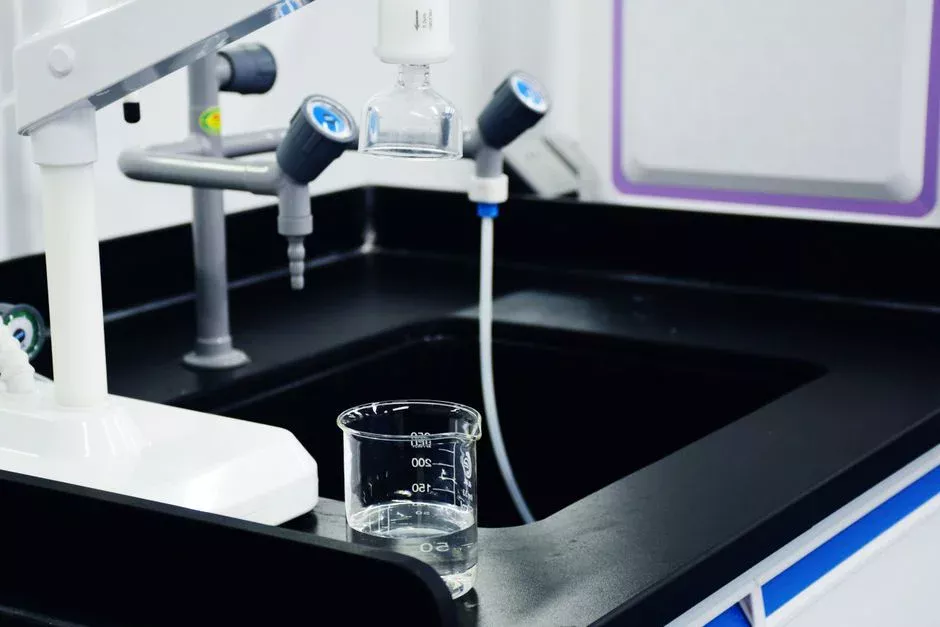
Conventional parameters — pH, TSS, COD/BOD, oil and grease, and temperature — appear in nearly every industrial discharge permit because they directly drive biological treatment performance and sludge handling at the receiving POTW. The Clean Water Services model bills these out explicitly: each month, an industrial user is charged for actual discharge volume plus a high-strength surcharge for elevated COD or TSS (Clean Water Services).
Heavy metals are the next tier of monitoring. Copper, lead, zinc, nickel, chromium (including hexavalent), cadmium, and mercury are the most common local-limit targets because of their toxicity to activated-sludge biomass and their persistence through to biosolids, which is exactly the sludge-end concern that EPA cites as a driver for local limits (EPA). For chemical and allied product manufacturing, categorical and local-limit parameters also include cyanide, phenols, sulfides, formaldehyde, and total organic halogen, which reflect the raw inputs and reaction byproducts typical of organic and inorganic chemical production rather than SIC-code defaults.
Surfactants, PFAS-related parameters, and nutrients are increasingly reviewed in pretreatment programs as receiving-water and biosolids standards tighten, even where no categorical standard has yet been finalized. The EWG Livonia tap water entry (PWS MI0003930) lists industry as a pollution source for the system, underscoring that the local POTW has legitimate interest in controlling industrial contributions to the same watershed that feeds the public water supply (EWG). For a chemical plant, the practical consequence is that the permit reviewer will read "industrial" sources broadly and limit broadly as well.
| Parameter group | Typical examples | Why it is limited |
|---|---|---|
| Conventional | pH, TSS, COD/BOD, oil & grease, temperature | Direct effect on biological treatment and sludge handling; drives surcharges |
| Heavy metals | Cu, Pb, Zn, Ni, Cr (incl. hexavalent), Cd, Hg | Biomass toxicity and biosolids contamination; persistence through treatment |
| Chemical-industry-specific | Cyanide, phenols, sulfides, formaldehyde, total organic halogen | Categorical and local-limit parameters tied to chemical manufacturing subcategories |
| Emerging | PFAS-related parameters, surfactants, nutrients | Tightening receiving-water and biosolids standards; increasingly reviewed in local limits |
The Pretreatment Train That Actually Meets the Limits
The unit operations in a chemical-plant pretreatment train map directly to the parameter groups above. The standard sequence runs headworks screening, flow and load equalization, pH adjustment, chemical precipitation, dissolved air flotation, optional disinfection, and sludge dewatering. The order is not arbitrary: each stage protects the next, and a failure at any stage usually shows up as a permit exceedance at the end-of-pipe sampling point defined in 40 CFR 403.5(c) (EPA).
At the head of the train, a rotary mechanical bar screen for chemical plant headworks removes rags, plastics, and debris that would otherwise foul downstream pumps, plug chemical dosing lines, and contaminate sludge. Equalization basins then dampen batch discharges so pH, flow, and contaminant spikes do not break the downstream process or violate instantaneous permit limits. pH adjustment uses a PLC-controlled chemical dosing system for pH and metals precipitation, because most chemical-plant wastewater arrives outside the 6–9 pH range that POTWs typically require for discharge. Metals precipitation with coagulant and flocculant dosing, followed by a DAF system for oil, grease, and precipitated metals removal, removes suspended solids, FOG, and precipitated metal hydroxides in a single step. Disinfection with chlorination/dechlorination or UV is added where the permit includes fecal or total coliform limits, and a plate and frame filter press for pretreatment sludge dewaters the resulting sludge so the residual solids meet the POTW's solids acceptance criteria.
| Unit operation | Parameters addressed | Engineering role |
|---|---|---|
| Rotary mechanical bar screen | Rags, plastics, gross debris | Headworks protection for all downstream equipment |
| Equalization basin | Flow, pH, contaminant load variability | Smoothing of batch discharges to keep instantaneous limits in range |
| PLC-controlled chemical dosing | pH, metals (as hydroxide precipitation) | Bringing wastewater into the 6–9 pH window and precipitating dissolved metals |
| Coagulant / flocculant stage | Colloidal metals, TSS, FOG emulsions | Particle growth ahead of solids separation |
| Dissolved air flotation (DAF) | TSS, FOG, precipitated metals | Bulk solids and oil removal in a single physical separation step |
| Disinfection (chlorination/UV) | Fecal / total coliform | Microbial compliance where the permit requires it |
| Plate and frame filter press | Sludge volume, percent solids | Dewatering to meet POTW solids acceptance and reduce haul-off cost |
From Permit to Proof: Self-Monitoring, Reporting, and Surcharges

Compliance is not just a treatment-train question; it is a paperwork question. EPA's framework requires SIUs to sample at the end-of-pipe point of connection to the POTW collection system, and the same end-of-pipe point is where local limits are enforced (EPA). The Clean Water Services model shows the practical shape of that obligation: a baseline nondomestic waste discharge application is due at least 90 days before discharge, ongoing DMR and periodic categorical reports are required, and permit fees plus monthly volume and high-strength surcharges are billed on top (Clean Water Services).
Enforcement escalates in documented steps. The Clean Water Services Enforcement Response Plan runs from a warning letter through administrative penalties and, at the top, an order to stop discharging (Clean Water Services). The same structure tracks the federal pass-through and interference definitions in 40 CFR 403.3(p) and (k), which is what the POTW cites when it moves from a surcharge bill to a formal enforcement action (EPA). For a chemical plant, the cheapest place to intercept that escalation is the DMR: an honest, well-documented report will be treated very differently from a missed one.
2026 Action Checklist for a Livonia-Area Chemical Plant
Use this as a one-page to-do list for a new EHS engineer or compliance lead.
- Pull the current POTW's local limits and pretreatment ordinance, including the annual review and periodic reevaluation schedule per 40 CFR 403.5(c) (EPA).
- Map every process wastewater stream to a unit operation and confirm categorical-standard applicability under 40 CFR Parts 405–471.
- Verify the end-of-pipe sampling location matches the EPA end-of-pipe definition and the permit's monitoring point.
- Build a PLC-controlled dosing and logging backbone so pH, flow, and chemical-feed adjustments are auditable.
- Schedule a compliance audit against pass-through and interference definitions (40 CFR 403.3(p) and (k)) before the POTW does it for you.
For a parallel sector view that compares how food and beverage plants handle the same compliance stack, see the pretreatment compliance playbook for food and beverage plants and the broader regional pretreatment compliance guide for industrial plants. For unit-operation selection, the suspended solids removal technology comparison for 2026 provides a structured head-to-head.
Frequently Asked Questions
What is the difference between pass-through and interference under 40 CFR 403.3?
Pass-through, defined in 40 CFR 403.3(p), is a discharge that exits the POTW into waters of the United States in quantities or concentrations that cause a violation of the POTW's NPDES permit, while interference, defined in 40 CFR 403.3(k), is a discharge that inhibits or disrupts the POTW's treatment processes, operations, or sludge processes and is a cause of an NPDES or sludge violation, as paraphrased from the EPA local-limits guidance (EPA). A chemical plant engineer should treat both triggers as live in 2026.
How much does it cost to install a chemical-plant pretreatment train near Livonia?
The research does not supply a generic installed cost for a chemical-plant pretreatment train, and equipment pricing depends on flow rate, peak influent concentrations, target discharge limits, and the unit operations selected. Buyers should request a sized budget quote tied to their daily flow, peak COD/TSS loading, and the specific local limits in their POTW permit rather than rely on a typical range.
How should a chemical plant choose a pretreatment equipment supplier in 2026?
Supplier selection should be driven by documented compliance outcomes rather than unit price. Ask each vendor for reference installations in chemical or allied product manufacturing under categorical standards, evidence of PLC-controlled dosing and data logging that will pass an EPA-style end-of-pipe audit, and confirmation that the proposed train (headworks, equalization, pH adjustment, metals precipitation, DAF, sludge dewatering) maps to the parameters in your specific POTW permit.
What information does a buyer need to size a DAF and filter press correctly?
Buyers should provide the design daily and peak flow, influent TSS, FOG, and target metals concentrations, the local-limit values from the POTW permit, and the required solids concentration for hauled sludge. Without those inputs, hydraulic and solids-loading sizing cannot be justified to the POTW or to an auditor.