
Which wastewater system fits a Pune hotel or resort?
A Pune hotel or resort usually needs an automated treatment system sized for measured peak wastewater flow, with separate pretreatment for kitchen solids, grease, and pool or spa backwash. For a new site with available land, an underground integrated sewage treatment plant is a practical starting point, while MBR suits compact or reuse-focused projects and DAF addresses characterized grease or solids loads. The correct 2026 choice depends on wastewater characteristics, land, reuse objectives, and discharge route—not guest ratings or occupancy alone.
Guest sanitary wastewater should be the core biological treatment stream, but kitchens, restaurants, laundry, pools, spas, fitness areas, and maintenance washdown can produce materially different loads. Segregate those streams before choosing equipment. A conventional domestic-sewage application may be handled by an integrated anoxic/aerobic package, with additional screening, grease removal, disinfection, or polishing only where the characterization and reuse plan justify them.
Choose MBR where footprint, membrane-based solids separation, automation, or a defined reuse pathway controls the design. Use DAF as pretreatment or solids recovery when measured wastewater contains material suspended solids, FOG, oil and grease, or colloidal matter. Product capacity alone cannot establish discharge compliance or reuse suitability.
Booking.com’s 2026 Pune property listings show why amenity screening matters: JW Marriott Pune has a pool and spa; The Ritz-Carlton, Pune has an outdoor pool; The Westin Pune has an outdoor pool and three food and beverage venues; and Sheraton Grand Pune has dining outlets, an outdoor pool, and a fitness centre. These are property and amenity references, not sources of treatment-system design parameters. The hotel wastewater system comparison guide explains how to turn those operational clues into an engineering decision.
| Property condition | First equipment candidate | Decision still required |
|---|---|---|
| Predominantly domestic sewage with available installation space | Integrated packaged A/O system | Confirm pretreatment, disinfection, sludge handling, and reuse requirements |
| Limited footprint or defined high-quality reuse pathway | MBR system | Confirm feed quality, membrane configuration, polishing, and reuse destination |
| Measured grease, oil, food residue, or solids load | DAF pretreatment | Determine hydraulic and contaminant load and downstream biological capacity |
| Pool and spa backwash present | Separate collection and characterization | Decide treatment route from chemistry, solids, and backwash frequency |
Map every wastewater stream before selecting equipment
A wastewater map should identify the source, routing, destination, and responsible treatment stage for every discharge before any equipment is ordered. Begin with guestrooms, staff areas, kitchens, restaurants, laundry, pools, spas, fitness facilities, landscaping irrigation, maintenance washdown, and any central or decentralized utility connection. Omitting a stream creates an unnecessary design assumption; combining it with sanitary sewage may overload a biological stage that was never characterized for that discharge.
Kitchen and food-service wastewater requires particular care because it carries a grease and solids load that should be removed before the main biological process. A DAF pretreatment system is one equipment option for characterized suspended solids, FOG, oil and grease, and colloidal matter. Its role is upstream treatment or solids recovery, not a substitute for biological treatment of domestic sewage.
Keep pool and spa backwash separate until its chemistry, solids concentration, and water chemistry are known. A backwash flow can be significant relative to the sanitary peak, but connecting it automatically to the biological plant does not establish that the plant can accept its chemical load. It also prevents a backwash event from distorting hotel wastewater sizing. This segregation step is consistent with the domestic sewage treatment equipment guide for hotels.
Record average and peak flow, duration of peak discharge, diurnal and seasonal variation, laundry cycles, kitchen turnover, backwash frequency, operating schedules, and planned expansion. Trip.com’s 2026 listing for Blu Water Resort Malshej describes fishing, bathing facilities, hiking, room service, a snack bar, and a restaurant. That illustrates how resort water streams can extend beyond conventional guestroom sewage, although the listing itself is not a wastewater-characterization source.
| Stream | Data to collect | Routing decision |
|---|---|---|
| Guest and staff sanitary wastewater | Peak flow, average flow, diurnal pattern, wastewater analysis | Core biological treatment train |
| Kitchen and restaurant wastewater | Flow, solids, FOG, oil and grease, operating hours | Solids control and grease pretreatment before biological treatment |
| Laundry wastewater | Batch flow, operating cycle, suspended solids and relevant chemicals | Characterized pretreatment or separate biological review |
| Pool and spa backwash | Discharge volume, frequency, chemistry, solids and residual treatment chemicals | Separate collection until characterization establishes the route |
| Washdown and maintenance | Frequency, contaminants, flow concentration | Route by contaminant rather than by convenience |
Compare packaged sewage, MBR and DAF treatment
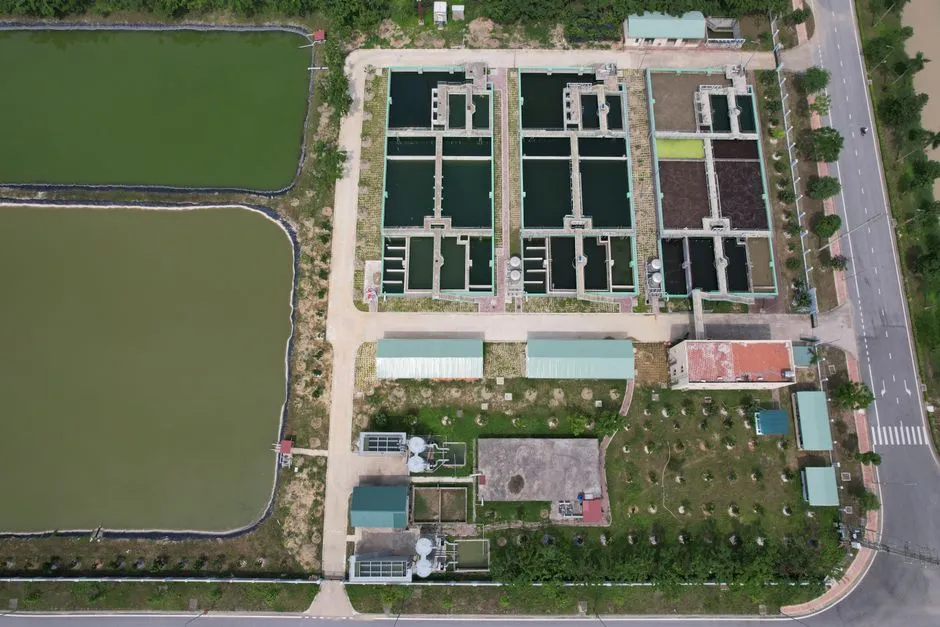
The three principal equipment strategies perform different functions: packaged A/O provides integrated biological treatment, MBR combines biological treatment with membrane filtration, and DAF primarily removes floatable and suspended material before downstream treatment. Selecting by product name alone therefore leaves a basic process question unanswered: what does the wastewater need the equipment to remove?
The supplied WSZ product information describes an integrated package from 1–80 m³/h, combining anoxic/aerobic biological contact oxidation, sedimentation, and disinfection in one buried unit. It is described as fully automated, requires no operator, and supports below-grade installation or trailer deployment for mobile use. These features make the underground integrated sewage treatment plant a credible candidate for a conventional hotel sewage treatment plant where land and installation conditions permit.
The supplied MBR description states 10–2,000 m³/day capacity and combines activated sludge with submerged PVDF membrane filtration. It also states filtration below 1 μm and a footprint 60% smaller than conventional systems. The MBR membrane bioreactor wastewater treatment system should therefore be considered when compactness, membrane solids separation, automation, or reuse-water production is central to the project. These are supplied product claims, not a guarantee that a particular hotel configuration will meet a reuse or discharge requirement.
The supplied DAF description states 4–300 m³/h across 13 standard models. It uses micro-bubbles and automatic skimming for suspended solids, FOG, oil and grease, and colloidal matter. This makes DAF strongest as pretreatment or solids recovery. It does not, on the evidence provided, replace final biological treatment for predominantly domestic sewage.
| Option | Stated capacity and configuration | Strongest project role | Key question for the buyer |
|---|---|---|---|
| WSZ integrated package | 1–80 m³/h; anoxic/aerobic contact oxidation, sedimentation and disinfection in a buried package; automated; below-grade or trailer deployment | Integrated treatment of predominantly domestic sewage | Are separate pretreatment, polishing, and sludge stages required? |
| MBR membrane bioreactor | 10–2,000 m³/day; activated sludge with submerged PVDF filtration; supplied filtration stated below 1 μm; supplied footprint claim is 60% smaller than conventional systems | Compact biological treatment with membrane solids separation or a defined reuse pathway | What measured influent quality and reuse specification will govern acceptance? |
| DAF flotation system | 4–300 m³/h across 13 standard models; micro-bubble flotation and automatic skimming | Pretreatment for solids, FOG, oil and grease, and colloidal matter | Which stream has the contaminant load, and what downstream stage follows? |
Size the system from measured peak demand
Hotel wastewater sizing should begin with verified or metered peak wastewater flow, not an assumed occupancy multiplier or a catalogue capacity. The tender should also document average flow, diurnal variation, seasonal variation, peak duration, pollutant load, and the operating schedules of kitchens, laundry, and backwash systems. Hydraulic demand and contaminant load must both be checked because adequate flow capacity does not establish adequate treatment capacity.
HydropureWater states WSZ capacity from 1–80 m³/h and MBR capacity from 10–2,000 m³/day. Compare those stated envelopes against the property’s measured demand; neither is a guaranteed design load. A selected system should have a documented capacity basis and must still satisfy the complete treatment train. Similarly, the supplied DAF range is 4–300 m³/h across 13 models, so model selection should follow the relevant stream flow and contaminant load rather than the whole-property average.
Future expansion, redundancy, power availability, sludge removal, odour control, and maintenance access belong in the sizing brief. Redundancy can involve standby equipment or another approved contingency arrangement, but the supplied research does not define a generic redundancy rule for Pune properties. The design team should establish site-specific consequences of an outage, particularly where reuse continuity or discharge obligations are affected.
- Measure peak and average flows for each segregated stream.
- Characterize solids, FOG, oil and grease, and relevant wastewater parameters.
- Compare hydraulic and pollutant loads with each candidate stage.
- Check future demand, operating schedules, utility constraints, and maintenance access.
- Document the selected capacity, design margins, duty arrangements, and exclusions.
| Sizing input | Evidence needed | Use in selection |
|---|---|---|
| Peak and average flow | Meter records or verified site analysis | Check instantaneous and sustained hydraulic demand |
| Pollutant load | Representative wastewater analyses by stream | Check biological, membrane, and pretreatment suitability |
| Operating pattern | Diurnal, seasonal, laundry, kitchen, and backwash records | Assess peak duration and treatment sequencing |
| Future demand | Planned occupancy, amenities, and expansion | Identify reserve capacity or upgrade triggers |
| Site constraints | Power, access, sludge route, odour, and maintenance data | Confirm that the equipment can be installed and operated |
Build the treatment train and reuse strategy

A practical hotel treatment train normally progresses from solids control to characterized grease and oil removal where required, then biological treatment, followed by the disinfection or polishing needed for the specified discharge or reuse. The exact sequence depends on the wastewater balance. Equipment should be selected for a function within that sequence rather than treated as a complete stand-alone solution.
Use the WSZ package when the wastewater is predominantly domestic sewage and its integrated biological, sedimentation, and disinfection arrangement suits the site. Use MBR when the project requires membrane-based solids separation, a smaller footprint, or a defined reuse pathway; the supplied product description states filtration below 1 μm. Add DAF ahead of biological treatment where kitchen, laundry, or another characterized stream carries material suspended solids, FOG, oil and grease, or colloidal matter.
Residual sludge remains a separate design requirement. A biological treatment package does not, by itself, resolve sludge dewatering, storage, collection, transport, and disposal. A plate-frame filter press may be evaluated as part of that route, while a rotary mechanical bar screen addresses upstream solids control. The selected arrangement must match the residual solids characteristics and the property’s approved handling route.
For reuse, define the destination and quality objective before selecting final equipment. Irrigation, toilet flushing, cooling, or another application may require different treatment and disinfection provisions. The supplied research does not establish a Pune-specific numerical reuse standard, so the project consultant and relevant authority must define the applicable requirement. Product filtration claims cannot substitute for a project-specific reuse assessment.
| Treatment stage | Function | Selection condition |
|---|---|---|
| Screening or solids control | Remove coarse and recoverable solids before downstream treatment | Present in the incoming wastewater stream |
| DAF or other grease pretreatment | Remove suspended solids, FOG, oil and grease, and colloidal matter | Supported by stream characterization |
| Integrated A/O package | Provide biological treatment, sedimentation, and disinfection | Predominantly domestic sewage and suitable package arrangement |
| MBR | Combine biological treatment with membrane filtration | Compactness, membrane separation, or defined reuse need |
| Polishing and disinfection | Meet the required discharge or reuse quality | Specified receiving or reuse requirement |
| Sludge handling | Dehydrate, store, and route residual solids | Residual solids characteristics and approved disposal route |
Account for installation, operation and compliance risk
The tender must cover the installed system rather than the equipment container alone. Include civil works, power, standby provisions, access, odour control, noise, landscaping, bypasses, instrumentation, operator training, spares, sludge disposal, commissioning, and operating documentation. These items determine whether a technically suitable package can be commissioned and operated reliably at the hotel or resort.
For Pune properties, compare below-ground package installation with above-ground or trailer-mounted deployment. The supplied WSZ information supports below-grade installation with landscaping above and mobile trailer deployment. The choice should follow site geology, groundwater, access, future expansion, odour impacts, maintenance requirements, and architectural constraints; the supplied research does not establish which condition applies to a particular site.
Confirm applicable discharge, reuse, and environmental requirements with the property’s consultants and the relevant authority during design. The supplied research does not state a Pune-specific numerical effluent limit, so a bid must not claim compliance from capacity or product data alone. Ask suppliers to state guaranteed flow, treatment objectives, test methods, controls, automation scope, commissioning protocol, and operating documentation. A automatic chemical dosing system should be included only where the treatment strategy and characterized influent justify chemical application.
Do not use occupancy estimates, online guest ratings, or hotel directory prices as wastewater design criteria. Amenities may identify likely streams, but only measured flow, wastewater analysis, site information, and confirmed treatment objectives support equipment selection.
Prepare the supplier request and final selection checklist
A comparable tender starts with a complete wastewater balance and a site-specific treatment objective. Provide bidders with measured peak and average flows, analyses by stream, the segregation plan, site survey, reuse demand, intended discharge route, operating schedules, and expected expansion. The same baseline information must go to every bidder; otherwise the lowest headline price will not be comparable.
Require each bidder to identify the required screening, DAF, biological, MBR, disinfection, polishing, and sludge-dewatering stages. Ask for a process flow diagram, P&ID, equipment envelopes, civil drawings, control philosophy, utilities demand, commissioning exclusions, O&M scope, warranty, and a price breakdown. The Paris hotel wastewater comparison illustrates the kind of question-led shortlisting that should also be used for Pune.
| Submission item | Buyer check |
|---|---|
| Capacity basis | Stated design flow and measured peak demand are explicitly reconciled |
| Process proposal | Every wastewater stream is routed to an appropriate stage |
| Performance schedule | Treatment objectives, test methods, and acceptance conditions are stated |
| Civil and utility scope | Installation, power, access, drainage, odour, noise, and site works are defined |
| Commissioning and O&M | Training, spares, documentation, maintenance, and sludge route are included |
| Commercial comparison | Total installed and lifecycle scope is compared, not equipment price alone |
Frequently Asked Questions
How much does a wastewater treatment system cost for a hotel in Pune?
The supplied research does not provide a defensible Pune price. Request a quotation after establishing measured peak and average flows, wastewater analyses, civil scope, installation conditions, reuse targets, sludge handling, and discharge requirements. Require an itemized price that separates equipment, civil works, utilities, installation, commissioning, training, spares, O&M, and sludge disposal so that bids can be compared consistently.
Should a Pune hotel choose MBR or a packaged sewage treatment plant?
Choose MBR when compactness, membrane-based solids separation, automation, or a defined reuse pathway is central to the project. Choose a packaged sewage treatment plant when the wastewater is predominantly domestic sewage and an integrated biological, sedimentation, and disinfection system suits the site. Confirm the choice against measured flow, wastewater characteristics, land, reuse objectives, and the complete installed scope.
How is a hotel wastewater treatment system sized?
Size it from measured peak and average flow, stream segregation, wastewater analyses, operating schedules, pollutant load, future expansion, and reuse demand. Check both hydraulic and contaminant loads against each proposed stage. Catalogue capacity is an envelope for comparison, not proof that a model meets the property’s design conditions.
When is DAF required for hotel wastewater?
Consider DAF when characterization shows material suspended solids, FOG, oil and grease, or colloidal matter requiring removal before downstream biological treatment. Its placement should follow the relevant kitchen, laundry, or other contaminated stream. DAF is a pretreatment or solids-recovery function and should not be presented as final biological treatment.
What should a hotel ask a wastewater equipment supplier before ordering?
Require a process proposal, documented capacity basis, P&ID, civil and utility requirements, commissioning protocol, O&M terms, test methods, warranty, and clear allocation of performance responsibility. Include the wastewater analyses, reuse objective, discharge route, site survey, and excluded civil or operating responsibilities in the enquiry.
Related Equipment
- DAF pretreatment system — specifications, capacity range, and technical data