Which Unit Fits the Wastewater?
For fabricated-metals wastewater in Steele, choose DAF when the primary problem is emulsified oil, lubricants, floating solids or colloids; choose a clarifier when the objective is settling dense solids, precipitates or sludge. Many plants need both: DAF first for floating contaminants, then clarification or filtration for residual solids. Metals-industry evidence identifies DAF or induced gas flotation for rolling coolant emulsions and clarification after chemical precipitation. Final selection depends on oil content, solids, metals, pH, flow variability, reuse targets and permit limits.
Dissolved air flotation attaches air bubbles to buoyant material or conditioned flocs so they rise to a surface for skimming. A clarifier uses gravity settling; lamella settlers use inclined plates to improve the effective separation area for settleable solids. Neither mechanism is universally superior, and the fabricated-metals DAF versus clarifier guide provides the broader comparison.
The selection should be made stream by stream. Cutting and machining may produce concentrated coolant and metal fines, coating operations may generate wash water with dispersed contaminants, and cooling-water systems may collect oil, scale and corrosion products. A batch wash dump and a continuous cooling stream cannot share one design basis merely because they enter the same collection system.
Before selecting equipment, establish whether the stream is batch or continuous, how much flow and load arrive during production peaks, and whether the final objective is pretreatment for discharge, biological treatment, filtration, cooling reuse or another process loop. The governing contaminant—not the generic category of “metals wastewater”—should determine the primary unit.
Match Each Fabrication Stream to a Treatment Step
WesTech’s metals-industry application map states that rolling coolant and lubricant streams form emulsions that can be broken by thermal, chemical or physical methods including dissolved air flotation and induced gas flotation. That establishes flotation as a relevant treatment for metalworking coolant emulsion, but it does not make DAF the whole treatment train. Scale, settled fines, precipitated metals and wash-water solids still require their own unit operations.
For continuous casting, WesTech describes a scale pit with an oil skimmer and solids scraper as the first pretreatment step. The pit normally provides 30–45 minutes of retention and removes larger scale, particulate and surface oil before deep-bed filtration and reuse. That example is a benchmark for front-end solids control, not a direct sizing template for a Steele fabricator. Its wastewater includes scale, particulate, oil and possible hydraulic-fluid releases, whereas fabrication streams may have different hydraulics and chemistry.
Screening, collection and primary treatment are separate functions. A rotary mechanical bar screen can remove larger debris, but it cannot replace flotation for dispersed oil or clarification for chemical precipitates. Conversely, a DAF unit does not remove coarse scale already in the collection system.
| Fabrication stream or contaminant | Primary treatment question | Relevant treatment step | Evidence or buyer check |
|---|---|---|---|
| Rolling, machining or cutting coolant emulsion | Is the oil dispersed or floating, and what is the emulsion chemistry? | Conditioning followed by DAF or another emulsion-separation method | WesTech identifies DAF/IGF for rolling coolant emulsions |
| Scale, metal fines and coarse debris | Will removal before fine treatment control solids loading? | Collection, screening or scale pit, then solids separation | WesTech continuous-casting scale pit normally has 30–45 minutes retention |
| Acidic, alkaline or oily wash water | Does the stream require pH correction, metal precipitation or oil removal first? | Chemical reaction, DAF and/or clarification as characterized | Test metals, pH, oil and grease, TSS and COD |
| Zinc, nickel, copper, tin, chromium or iron | Are metals dissolved, precipitated or present in sludge? | Precipitation and clarification, followed by polishing if required | WesTech identifies these metals as possible contaminants from differing steel grades |
Before sizing, collect representative samples across production conditions and measure flow, pH, oil and grease, TSS, COD where applicable, dissolved metals, and the relevant coolant or emulsifier chemistry. For a new industrial dissolved air flotation system, these data establish both hydraulic demand and contaminant loading; catalog capacity alone does not.
DAF and Clarifier: Core Performance Differences
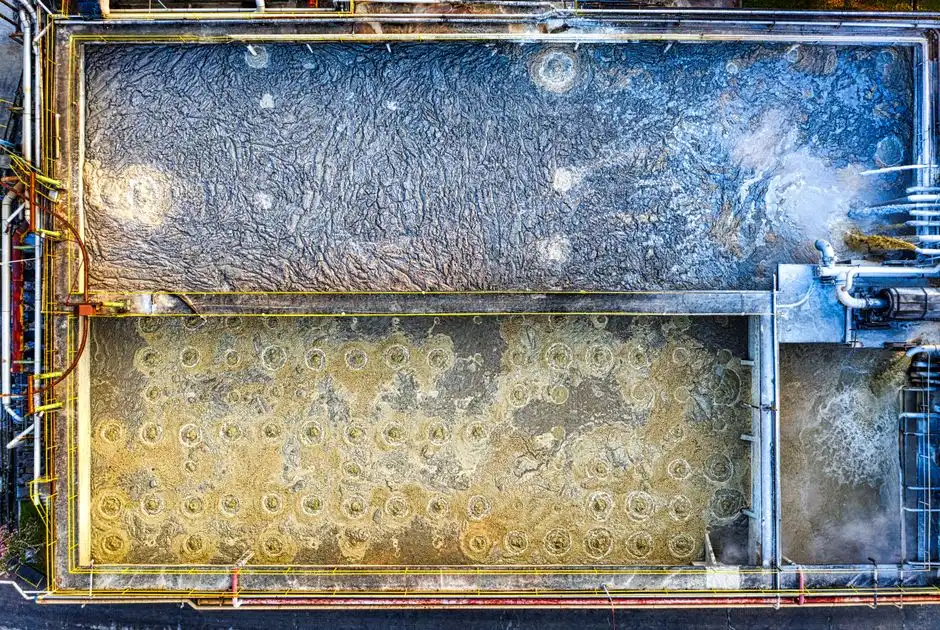
DAF and lamella clarification separate different fractions of the wastewater: flotation targets oil, grease, emulsions, colloids and buoyant solids, while lamella clarification targets gravity-settleable solids, flocculated precipitates and sludge concentration. A plant with both an oily coolant stream and a heavy-metal precipitation stream may therefore need both mechanisms, but they do not necessarily have to treat the same flow.
DAF performance depends on effective bubble generation, recycle or saturation, conditioning chemistry and contaminant floatability. Clarification depends on floc formation, settling velocity, solids inventory and withdrawal. A DAF unit that skims poorly can leave oil in the clarified phase; a clarifier overloaded with buoyant material can lose effective separation. Neither operating result can be inferred from tank geometry alone.
| Design or operating item | DAF | Lamella clarifier |
|---|---|---|
| Primary separation mechanism | Air-bubble attachment and surface flotation | Gravity settling with inclined plates |
| Preferred contaminant role | Oil, grease, emulsions, colloids and floating solids | Dense solids, precipitates and sludge concentration |
| Key process dependency | Bubbles, conditioning, floatability and skimming | Floc formation, settling and solids withdrawal |
| Manufacturer data | HydropureWater lists 4–300 m³/h across 13 standard models, micro-bubble technology and automatic skimming | HydropureWater lists 20–40 m/h surface loading rates and chemical-consumption reductions of up to 30% |
| Evidence limitation | HydropureWater values are product claims, not transferable field guarantees; published removals from other wastewaters cannot be applied without site-specific testing | |
The clarifier figures above are HydropureWater catalog claims for its lamella clarifier for metals wastewater. HydropureWater also claims chemical-consumption reductions of up to 30%; the supplied research does not establish that rate for a specific Steele wastewater.
DAF creates additional operating dependencies in float stability, skimming, recycle-water and pressure management. Clarifiers require dependable underflow withdrawal, recycle and solids-inventory control. Both also require an honest sludge plan: removing contaminants from the water transfers them into a concentrated residual stream that still requires handling.
When a Combined DAF-Clarifier Train Is the Better Choice
A combined train is appropriate when the wastewater contains both floating contaminants and solids that must settle or be filtered. WesTech’s heavy-metals treatment example begins with aeration, followed by an HDS reaction tank, a Solids CONTACT CLARIFIER and pressure filters. That sequence is evidence for staged treatment architecture: aeration and chemistry prepare the stream, clarification captures the formed solids, and filtration removes residual suspended solids.
In fabricated metals, the front end should segregate oily, wash, machining and cooling streams, remove large scale and debris, and apply emulsion breaking or DAF where necessary. Chemical conditioning can then prepare residual solids for clarification. Filtration or another polishing step follows if the reuse or discharge endpoint requires it. An industrial dissolved air flotation system and a lamella clarifier for metals wastewater are complementary when their duties are assigned correctly.
DAF alone may not adequately separate dense metal hydroxides or other settleable precipitates. A clarifier alone may not reliably capture dispersed oil and buoyant emulsions. Neither conclusion eliminates the other unit; it defines where each unit belongs in the train.
Chromium treatment requires especially careful chemistry. WesTech describes reaction tanks and HDS before clarification, with an example effluent of 0.2 ppm chromium at pH 7.5. For additional metals, the source states that pH may be raised to approximately 10. The same source cautions that pH values above 10 can promote metal-hydroxy complexes, increase metal solubility and reduce precipitation effectiveness. Jar and pilot testing are therefore necessary before applying those conditions to plant wastewater.
After clarification, a multi-media filtration system may be needed for residual suspended solids or reuse quality. Chemical feed must remain part of the design rather than an accessory: WesTech’s metals sequence uses lime and recycled sludge in the HDS tank, while the selected PLC-controlled chemical dosing system must match the verified chemistry and flow duty.
Design Inputs That Prevent an Oversized or Undersized System
A defensible size requires both hydraulic flow and contaminant load. Procurement should obtain average and peak flow, operating schedules, batch-dump records, planned production changes and the duty split among oily, wash, machining and cooling streams. A catalog flow range is only an upper limit for a family of configurations; it is not a complete sizing calculation.
| Design basis | Information to request | Why it matters |
|---|---|---|
| Flow and equalization | Average flow, peak flow, batch dumps, operating schedule and future production changes | Prevents a unit from being selected for an unrepresentative average |
| Water chemistry | Oil and grease, TSS, pH, COD, dissolved metals, emulsifier or coolant chemistry | Defines floatability, floc demand and treatment objective |
| Hydraulic calculation | Design flow, hydraulic loading, flotation or clarification area, recycle ratio and skimming capacity | Shows whether the proposed configuration handles peak duty |
| Solids calculation | Solids loading, sludge yield, withdrawal assumptions and downstream dewatering | Connects water treatment to residual handling |
| Utilities and operations | Compressed air or recycle water, chemical storage, controls, maintenance access and operator requirements | Tests whether the installed system can operate as designed |
| Reuse endpoint | Quality criteria for return to cooling or another process loop | Defines whether filtration or polishing is required |
The continuous-casting scale pit demonstrates why equalization and front-end solids control matter: WesTech reports that it normally has 30–45 minutes of retention. The project may need the same acceptance time, a different retention period, or no dedicated pit, but the principle remains: uncontrolled solids can dominate downstream equipment selection.
Ask each supplier to show the sizing calculation behind the proposed flow and contaminant load. For DAF, include recycle ratio, flotation area and skimming duty. For clarification, include loading rate, sludge inventory and withdrawal. Chemical storage, utility availability and operator access belong in the same review.
Pilot or side-stream testing is warranted when chemistry changes substantially, emulsifier behavior is uncertain, or dissolved metals must be removed in addition to floating contaminants. Confirm skimming, solids capture, sludge handling and recovered-water quality before finalizing the equipment specification.
Cost, Supply Risk and Compliance Questions for Buyers
The supplied research provides no defensible purchase price for a fabricated-metals DAF or clarifier because it contains no Steele flow, contaminant loading, operating schedule or quoted configuration. A buyer should request quotations tied to the measured design basis rather than compare headline vessel prices.
| Cost or risk category | DAF-related input | Clarifier-related input |
|---|---|---|
| Capital equipment | Flotation tank, recycle and saturation system, skimming mechanism | Lamella or settling structure, sludge collection and withdrawal |
| Operating inputs | Conditioning chemicals and skimming performance affected by oil, coolant and emulsion characteristics | Flocculant use, sludge inventory and dewatering requirements |
| Utilities | Compressed air and recycle-pump power | Mixing or pumping associated with sludge handling and recycle |
| Downstream treatment | Residual solids filtration and generated scum handling | Sludge thickening, dewatering and filtrate return |
| Commercial controls | Controls, operator labor, maintenance, utilities, chemical storage, service support and performance criteria | |
DAF operating cost is sensitive to how the oily and emulsified contaminants behave during conditioning and skimming. Clarifier operating cost depends more directly on flocculant use and the quantity and dewatering requirement of the resulting sludge. A plate-and-frame filter press may be relevant where the selected treatment train requires sludge dewatering, but its suitability depends on the actual solids.
WesTech reports an average 20:1 sludge-volume reduction after dewatering in its described heavy-metals process. That is an example from that process, not a universal sludge-yield or cost assumption for a Steele fabricator.
Compliance risk must be tied to the final route. Local pretreatment or discharge limits may differ from internal reuse targets. WesTech notes that revised iron and steel effluent guidelines could require additional treatment for continuous-casting operations. A fabricator should obtain the applicable local requirements and require the proposed train to demonstrate compliance or reuse quality against that endpoint.
A Practical Selection Workflow for Steele Fabricators
- Segregate the streams. Separate oily machining and cutting streams, wash water, cooling water and high-solids collection points where practical. Identify the required discharge, pretreatment or reuse endpoint.
- Characterize representative conditions. Measure flow and variability, oil and grease, TSS, pH, COD, dissolved metals, and coolant or emulsifier chemistry across representative production periods.
- Assign the treatment duty. Use flotation for floating contaminants, clarification for settleable solids or precipitates, and both where the streams and endpoint require them. Add filtration only after the upstream separation performance is defined.
- Develop the design basis. Calculate hydraulic and contaminant loading, identify batch and peak conditions, establish the reuse target, and define residual or sludge handling.
- Request comparable alternatives. Give each supplier the same flow, loading, chemistry, utilities, controls, access and compliance assumptions. Use the DAF versus clarifier selection guide for metals wastewater as a framework for comparing the proposals.
- Verify before purchase. Pilot the proposed train, check float or solids removal, assess sludge handling, and confirm that recovered water meets its process endpoint.
This sequence prevents the common mistake of treating DAF and clarification as interchangeable product categories. They are separation mechanisms assigned to different contaminant duties, and either may become part of a larger train when the actual wastewater requires staged treatment.
Frequently Asked Questions
Should a Steele fabricator choose DAF or a clarifier for oily, solids-bearing wastewater?
Choose DAF as the primary oil-removal mechanism when the objective is recovering emulsified coolant, dispersed oil, grease or floating solids. Choose clarification when the target is dense metal fines, chemical precipitates or sludge thickening. If the plant has both oily streams and settleable solids, separate the streams where practical or use flotation followed by clarification. Confirm the choice with representative oil, TSS, pH and metals data rather than equipment name.
How should DAF or clarifier capacity be sized for fabricated-metals wastewater?
Establish both hydraulic flow and contaminant load before selecting capacity. Include average flow, peak flow, batch dumps, operating schedule, future production changes, oil and grease, TSS, pH, COD, dissolved metals and coolant or emulsifier chemistry. A manufacturer should then show design flow, hydraulic loading, contaminant loading, flotation or clarification area, recycle ratio, skimming capacity and sludge-removal assumptions. Catalog flow ranges are not a substitute for this calculation.
How should buyers compare supplier quotations and total cost?
The supplied research contains no price range, so request quotations tied to the same measured design basis. Compare vessel and mechanism costs, chemical consumption, compressed-air or recycle-pump power, sludge handling, filtration, controls, operator labor, maintenance, utilities and local service support. The supplier should also provide verified duty data, hydraulic calculations, materials of construction, control philosophy and a pilot or performance basis for the actual wastewater.
What compliance risk should be checked before purchasing pretreatment equipment?
Identify the applicable local pretreatment or discharge limits separately from any internal reuse target. The selected equipment must be demonstrated against the endpoint that governs the project, not against a general removal claim from another wastewater. Review evidence for the actual stream, including representative testing or pilot performance. Guidance on metals-plant wastewater pretreatment limits can support the permit question, but Steele’s local requirements remain controlling.