What wastewater treatment does a Mumbai hotel actually need?
A Mumbai hotel or resort generally needs an automated sewage treatment plant sized around its wastewater flow, peak demand, available footprint and non-potable reuse targets. An underground packaged A/O unit is a strong baseline where space is tight: HydropureWater’s WSZ combines biological treatment, sedimentation and disinfection in one automated unit, handles 1–80 m³/h and requires no operator. An MBR system is more appropriate when the property needs near-reuse-quality water or a smaller footprint; HydropureWater’s MBR range handles 10–2,000 m³/day, filters below 1 μm and occupies 60% less space than conventional systems. The final train and discharge route must be verified against site wastewater characteristics and applicable MPCB and local authority conditions.
For a hotel, sewage treatment starts with two distinct streams. Blackwater comes from toilets; greywater comes from showers, sinks, laundry and other domestic activities. A treatment train may include preliminary removal of large solids and grit, primary settling of suspended solids, biological treatment of organic matter and, where required, tertiary filtration or disinfection before reuse.
The property must then decide whether treated water will be discharged, reused for non-potable purposes, or both. The reuse destinations identified in the Mumbai hospitality research include landscaping, toilet flushing and cooling towers. These uses should be defined before equipment is selected because the required treatment quality, storage and pumping arrangements differ.
There is no universally best technology for a Mumbai hotel. A packaged A/O plant may be the practical baseline where footprint, automation and operating simplicity dominate. MBR becomes more relevant when the reuse target is tighter or the available installation area is especially constrained. A conventional biological route may remain viable where land and operating resources are adequate. A useful cross-city reference is this hotel wastewater treatment comparison for Frankfurt, but Mumbai-specific flow, land, reuse and consent conditions must control the final decision.
Why Mumbai resort conditions change the design
Mumbai hospitality properties have continuous water demand from guest rooms, restaurants, spas, pools and laundry, producing both wastewater volume and seasonal variation. The commercial Mumbai STP research identifies fluctuating guest numbers as a design issue, so a plant selected only from annual water consumption can be undersized during peak occupancy or event periods.
Limited land availability can favour an underground or compact installation, but burying equipment does not remove the need for maintenance access, ventilation, odour control and safe handling of sludge or other solids. The designer should reserve usable access for routine inspection, cartridge or media replacement, electrical maintenance and sludge withdrawal without disrupting guest operations or landscaping.
The supplied Mumbai research does not provide a universal peak-day multiplier. That value must be developed from occupancy scenarios, water-meter records and measured wastewater flows. Low-season operation also matters: a system that remains stable under variable biological loading is more useful than one that is selected only for the highest recorded daily flow.
Reuse can improve operational resilience by supplying water for landscaping, flushing and cooling-tower demand. It should not, however, be justified by an unsupported percentage saving. The engineering case should instead show the proposed reuse volumes, storage requirements, seasonal mismatch and consequences of reusing water that is not available in sufficient quantity.
Commercial acceptance also varies. A 2025 International Journal For Multidisciplinary Research study found growing awareness of sustainability among Indian travellers, but willingness to pay for eco-hotels varies substantially with demographics, income and personal values; younger travellers and higher-earning customers showed greater willingness to pay, while price-sensitive travellers prioritised affordability. The project should therefore be justified operationally and financially, not by assuming guests will pay a sustainability premium.
These conditions are consistent with the broader site considerations discussed in this hotel wastewater treatment options in Paris comparison: occupancy, reuse demand and space determine the train before a product model is considered.
Build the sizing and compliance brief before selecting equipment
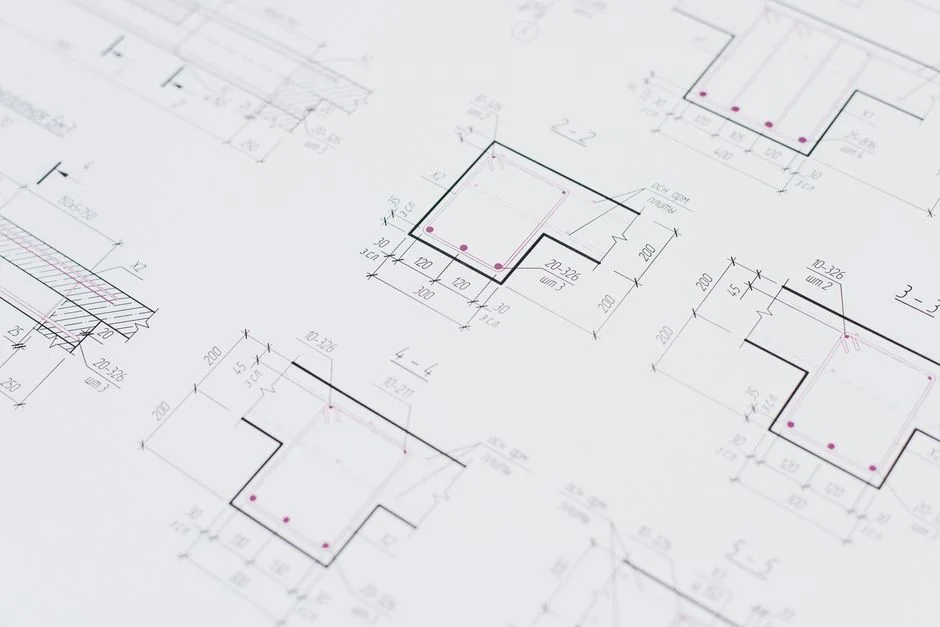
A defensible quotation requires a project-specific design basis, not simply the number of rooms. The Mumbai market research identifies room count, average occupancy, restaurants, pools, spas and laundry as inputs that affect wastewater generation. Each amenity should be listed separately so the designer can determine which flows enter the sewage plant and which streams use a separate process.
Request hourly or daily flow data, water-meter records, peak occupancy scenarios, wastewater sampling, available footprint, soil conditions, power availability, receiving route and intended reuse applications. Sampling should identify the characteristics that can change treatment loading or reuse suitability. The supplied research does not establish a universal sampling programme, so the designer must specify locations, parameters and duration appropriate to the property.
Ask bidders to submit a complete process-flow diagram showing inlet protection, grit management, equalisation where required, biological treatment, clarification, disinfection, reuse storage and sludge management. Inlet protection becomes particularly important where hair, plastics or fibrous laundry material could enter pumps or downstream equipment. The GX rotary mechanical bar screen for wastewater headworks should be considered where those solids are present and its inclusion justified from the wastewater characterisation.
Compliance must be verified at the project level. The supplied Mumbai research states that STPs are required for hotels above a certain capacity, but it does not provide the threshold or applicable consent numbers. Do not substitute a general statement about MPCB requirements for a site-specific consent review. Ask the supplier and relevant local authority to confirm which MPCB consent, sewer-discharge or reuse conditions apply to the property and receiving environment.
Each commercial STP Mumbai quotation should state the process basis, design peak flow, treated-water uses, automation scope, commissioning tests, monitoring obligations, operator training, spare parts, warranty and preventive-maintenance support. Treated sewage must not be represented as potable water; the supplied reuse examples are gardening, flushing, landscape irrigation, cooling towers, car washing and fire sprinklers.
| Design-basis item | Information to obtain before quotation | Reason for the decision |
|---|---|---|
| Occupancy and demand | Rooms, average occupancy, peak occupancy, restaurants, pools, spas, laundry and event use | Establishes flow and loading scenarios |
| Measured wastewater | Hourly or daily meter records and wastewater samples | Separates assumptions from site evidence |
| Installation constraints | Footprint, access route, soil conditions, power and odour-control requirements | Controls layout, foundations and equipment selection |
| Reuse and discharge | Intended reuse destinations, storage demand, receiving route and applicable consent conditions | Sets the required effluent and auxiliary equipment scope |
| Commercial scope | Process guarantee, commissioning, training, spares, warranty and maintenance support | Allows technically comparable proposals |
Compare packaged A/O, MBR and conventional biological treatment
The HydropureWater underground packaged A/O sewage treatment plant combines integrated A/O contact oxidation, sedimentation and disinfection. It is fully automated, requires no operator, handles 1–80 m³/h and can be buried below grade with landscaping above; the supplied product information also allows trailer mounting for mobile deployment.
The HydropureWater MBR membrane bioreactor combines activated sludge with submerged PVDF membrane filtration. Its supplied capacity range is 10–2,000 m³/day, filtration is below 1 μm and the stated footprint is 60% smaller than conventional systems. These figures describe the offered range, not a guarantee that every hotel requires that treatment quality or a plant at the upper end of the range.
The Mumbai research describes three conventional alternatives. Activated sludge processes are reliable but require more land and continuous monitoring, making them more suitable for larger properties with adequate space and operating resources. MBBR uses plastic carriers to support biofilm growth and is described as compact and efficient for space-constrained hotels. SBR operates through filling, aeration, settling and decanting and can adapt to variable loads.
Underground AD+ systems described by Chemtronics India use compact covered construction, do not require continuous operator attendance, tolerate inconsistent greywater flow and generate minimal sludge. The supplier reports power consumption 50–70% below conventional aerobic treatment; this is a supplier claim for its AD+ system, not a general operating guarantee for every packaged plant.
Tertiary treatment remains conditional. UV, chlorination or advanced filtration should be added where the selected reuse or discharge requirement demands it, rather than included by assumption. The research also identifies limited Mumbai space as a reason to favour compact systems, but an MBR adds membrane management requirements. A packaged A/O route is generally simpler to automate; MBR is more relevant where tighter reuse quality or a compact premium-property footprint justifies the added technical control.
| Technology | Supplied scope or performance | Best fit for a Mumbai hotel | Main design issue |
|---|---|---|---|
| Packaged A/O | Integrated contact oxidation, sedimentation and disinfection; automated; no operator required; 1–80 m³/h | Space-constrained sites with conventional non-potable reuse and a preference for simpler automation | Confirm actual peak flow, reuse quality, access and solids management |
| MBR | Activated sludge plus submerged PVDF filtration; below 1 μm; 10–2,000 m³/day; stated 60% footprint reduction | Tighter reuse quality or a compact footprint requirement | Technical management, membrane maintenance and performance verification |
| MBBR | Compact biofilm carrier process described in the Mumbai research | Hotels needing a space-efficient biological route | Confirm process loading, footprint and local operating capability |
| SBR | Fill, aeration, settle and decant sequence | Sites with variable loads where cyclic operation fits the operating plan | Confirm cycle controls, equalisation and standby arrangements |
| ASP | Reliable biological treatment described in the Mumbai research | Larger resorts with adequate land and monitoring resources | Higher land requirement and continuing operational oversight |
Choose the treatment train using a property decision framework
Start with the reuse objective. If the requirement is conventional non-potable reuse, compare packaged A/O with MBBR-style biological treatment. If tighter reuse quality or a compact premium-property footprint is required, evaluate MBR. This sequence prevents membrane polishing from being added merely because it is available.
Next, protect the plant from the wastewater source. Hair, plastics, fibrous laundry material and other solids can damage pumps and downstream biological equipment. Where analysis confirms a solids problem, add an inlet screen or other defined pretreatment. A plate-frame filter press for sludge dewatering should be included where the solids balance shows that dewatering is required before removal from the site.
Use measured seasonal variation to assess equalisation, flow splitting and standby provisions. The supplied research gives no universal equalisation volume or duration, so these must remain engineered design inputs. A bidder that selects them without reference to hourly demand and operating scenarios has not demonstrated the basis of its design.
Then match disinfection and polishing to the end use. If advanced filtration, UV or another disinfection process is needed, make it an explicit package item with test criteria. The UV sterilizer for wastewater disinfection is one possible component to evaluate where the approved reuse or discharge route requires it.
Finally, treat sludge handling as part of the train. Request a solids balance, removal route, dewatering requirement and included accessories before comparing proposals. A treatment guarantee that ignores sludge can conceal a significant operating and compliance burden.
| Property condition | Decision | Equipment or scope to add |
|---|---|---|
| Limited footprint; conventional non-potable reuse | Compare packaged A/O with MBBR | Underground biological treatment, clarification, disinfection and access provisions |
| Tighter reuse quality or especially restricted footprint | Evaluate MBR | MBR with membrane maintenance and performance monitoring |
| Hair, plastics or fibrous laundry solids confirmed | Add inlet protection | Mechanical screening or another engineered solids-removal step |
| Measured seasonal variation creates unequal peaks | Assess equalisation, splitting and standby | Engineered hydraulic controls based on recorded demand |
| Specific reuse or discharge standard requires polishing | Add defined disinfection or filtration | UV, chlorination or advanced filtration with acceptance criteria |
| Sludge cannot be removed or dewatered readily | Resolve solids management before award | Plate-frame filter press or other specified dewatering equipment |
Plan commissioning, monitoring and long-term operation
Require a site acceptance test that demonstrates the agreed flow, treated-water quality, reuse applications, automatic controls, odour control and integration with landscaping or other reuse infrastructure. A laboratory result under ideal sample conditions is not a substitute for demonstrating the installed train.
The handover package should cover the operating sequence, emergency bypass and power-failure response, routine inspections, automation arrangements, spare parts, operator training and maintenance frequency. The 2026 SCADA engineering guide for wastewater treatment plants provides a useful reference for specifying monitoring and control functions, but the property should assess whether local automation or remote monitoring is justified.
The Mumbai market research states that an STP can last 15–20 years or more with proper maintenance. Treat that lifespan as a supplier statement rather than a guaranteed outcome; warranty, service response and preventive-maintenance terms determine whether the claim is actionable.
Ongoing monitoring should follow the site’s consent and reuse plan. A supplier statement that its treated water is “reuse quality” is not regulatory evidence. Keep the approved parameter set, sampling record, operating log, corrective-action process and renewal schedule under one document-management system so the property can demonstrate compliance throughout the operating year.
Frequently Asked Questions
What size hotel sewage treatment plant does a Mumbai property need?
No fixed capacity can be selected from the supplied research alone. The design basis must combine room count, average and peak occupancy, restaurants, pools, spas, laundry and other amenities, average wastewater flow, peak flow and non-potable reuse demand. Request the underlying water-meter records and wastewater sampling before comparing quoted capacities.
How much does a commercial STP for a Mumbai hotel cost?
The supplied research provides no current project quotation, so a reliable price cannot be stated without a defined scope. Ask each bidder for a priced offer covering the process basis, design flow, pretreatment, biological stage, disinfection, reuse storage, sludge handling, automation, foundations, installation, commissioning, training, spares and warranty. Keep exclusions and power or civil-work allowances visible when comparing budgets.
Which supplier is best for a Mumbai hotel wastewater treatment system?
Select on evidence rather than a general capability statement. Check whether the supplier can demonstrate relevant design inputs, a site-specific process guarantee, local service capability, commissioning results, a defined O&M scope and enforceable warranty terms. Also request reference projects with comparable occupancy, wastewater characteristics, reuse duties and operating conditions; a product brochure alone is not enough.
Should a Mumbai hotel choose packaged A/O or MBR?
Choose packaged A/O where footprint, simpler automation and conventional non-potable reuse dominate. Evaluate MBR where tighter reuse quality or a particularly compact footprint creates enough value to justify more technical membrane management. Confirm both choices against measured flow, seasonal variation, available space, staffing capability, sludge handling and the project-specific consent conditions.
What MPCB wastewater compliance conditions apply to the hotel?
The supplied research confirms that MPCB requirements are relevant but does not establish the applicable hotel threshold or project-specific consent. The property must verify its conditions with the relevant authority and the consenting pathway, including any discharge or reuse requirements. Ask bidders to identify the permits and monitoring duties they have included in their proposal, then have those statements verified against the site-specific consent rather than relying on general compliance language.