
Which Treatment System Suits a Marseille Hotel or Resort?
No single treatment system is automatically correct for a Marseille hotel or resort in 2026. The appropriate train depends on wastewater composition, average and peak flow, available footprint, effluent objectives, reuse requirements, operating responsibility, and the permitted discharge route. A buried packaged A/O plant is often practical where land is limited and conventional biological treatment, sedimentation, and disinfection are required. Membrane Bioreactor MBR is the stronger option where compact installation, fine solids separation, or reuse readiness justifies its additional process requirements. Dissolved Air Flotation DAF is pretreatment for grease and solids, not a complete biological treatment system.
Start with the destination rather than the catalogue. A hotel connected to a municipal sewer, a property seeking direct discharge, and a resort planning water reuse have different design boundaries. The same applies to operating responsibility: an automated package requires less routine attendance, but it does not remove the need for maintenance access, monitoring, and an identified service provider.
For a land-constrained property, evaluate the underground package sewage treatment plant. For tighter solids separation or a potential reuse application, evaluate the MBR wastewater treatment system. Add DAF only where the wastewater characterization demonstrates a meaningful oil, grease, or solids-removal duty. A more detailed hotel wastewater treatment system selection guide provides the broader decision sequence.
Marseille’s Mediterranean setting supports disciplined water conservation, but it does not create a discharge standard. Sofitel Marseille Vieux Port reports water-saving fixtures, daily energy monitoring, organic-waste composting, and a commitment to protecting the Mediterranean Sea. These are resource-management practices, not proof that a particular treatment plant will satisfy a permit.
Map Every Wastewater Stream Before Choosing Equipment
Room count alone cannot size a hotel treatment train because wastewater flow and quality change with occupancy, meals, laundry, guest activities, and cleaning practices. The design basis must combine average flow, peak flow, and a wastewater characterization covering the operating periods that matter.
- Document room count, occupancy patterns, and daily wastewater generation.
- Identify kitchen, restaurant, bar, laundry, spa, and pool discharge points.
- Record cleaning chemicals, grease-trap arrangements, odor sources, and storm-water entry points.
- State the proposed reuse demand and the water-quality purpose: irrigation, washdown, or another internal use.
- Confirm whether each stream enters the municipal sewer or requires a separate treatment route.
Ordinary domestic sewage should be assessed separately from kitchen, laundry, spa, and pool discharges. DAF is designed for suspended solids, fat, oil and grease, and colloidal material, making it relevant to food-service and pretreatment duties. A mechanical rotary mechanical bar screen may be relevant where fine screening is needed before the main biological stage.
The supplied research contains no site-specific flow, pollutant, or reuse figures for a Marseille hotel. Therefore, no defensible equipment size can be calculated from the information currently available. Request laboratory analysis of representative samples and confirm the sampling program with the selected designer. For a technical comparison of biological, membrane, and flotation duties, see this packaged A/O, MBR, and DAF comparison for hotels.
| Design input | What the buyer must establish | Why it changes equipment selection |
|---|---|---|
| Domestic sewage | Average flow, peak flow, occupancy pattern, wastewater analysis | Sets biological and hydraulic capacity |
| Kitchen and food service | Discharge points, grease-trap performance, suspended solids and FOG characteristics | May require DAF or another grease-removal stage |
| Spa and pool | Flow, disinfectant residual, and backwash arrangement | Determines segregation and pretreatment needs |
| Laundry and cleaning | Discharge volume, chemicals, and operating schedule | Influences equalization, treatment, and compatibility |
| Discharge or reuse | Authority conditions, monitoring requirements, and end-use quality | Defines the required treatment objective |
Compare Packaged A/O, MBR, and Pretreatment Options
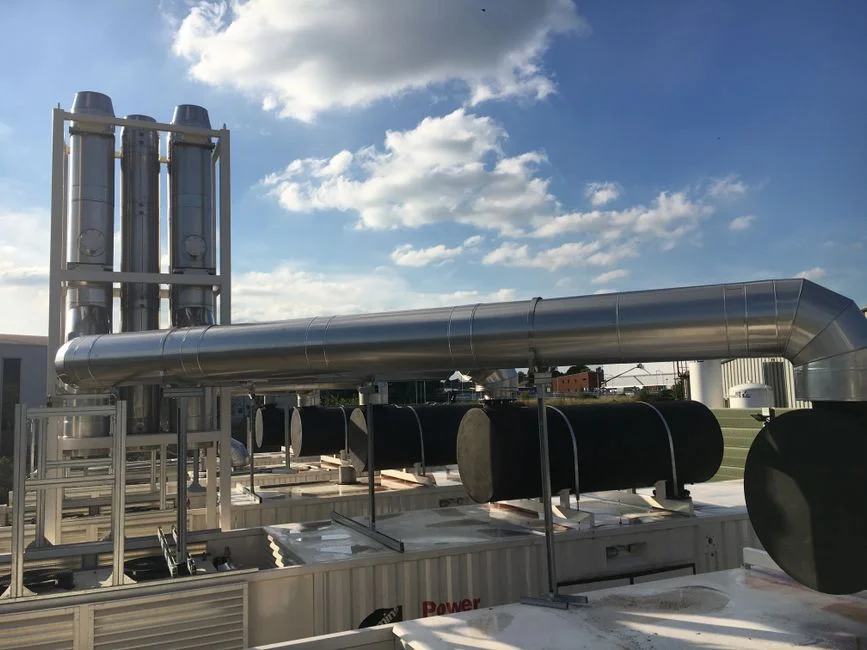
Packaged A/O prioritizes installation simplicity, biological treatment, automation, and a compact buried arrangement; MBR prioritizes membrane-based solids separation and reuse readiness; DAF performs a defined contaminant-removal duty upstream of the main biological process. Designers must evaluate these as distinct procurement objectives rather than interchangeable quality rankings.
| Option | Process and supplied scope | Selection logic | Capacity stated in supplied research |
|---|---|---|---|
| Buried packaged A/O | Anoxic/aerobic biological contact oxidation, sedimentation, and disinfection in one automated buried unit; no operator required; landscaping may remain above the installation | Choose where above-ground space is constrained, conventional biological treatment is appropriate, and automated operation is required | 1–80 m³/h |
| MBR | Activated sludge combined with submerged PVDF membrane filtration; supplied material describes effluent below 1 μm filtration and a footprint 60% smaller than conventional systems | Choose where fine solids separation, compact installation, or progression toward reuse is important | 10–2,000 m³/day |
| DAF pretreatment | Micro-bubble flotation with automatic skimming for suspended solids, FOG, oil and grease, and colloidal matter | Add ahead of biological treatment where the wastewater characterization justifies it | 4–300 m³/h across 13 standard models |
| On-site disinfection | Separate chlorine dioxide generation can support a process requiring on-site chemical generation | Confirm the selected process’s disinfection method and chemical-storage requirements | 50–20,000 g/h for the supplied chlorine dioxide generator range |
The packed A/O unit offers the simplest complete biological package for many hotel applications, but a supplier must still demonstrate that each stage has adequate capacity for the actual peak and wastewater composition. The supplied MBR information states a 60% footprint advantage over conventional systems; that is a supplier-stated comparison, not a Marseille site measurement. The supplied DAF range spans 13 standard models from 4 to 300 m³/h, but model selection still requires flow and contaminant criteria.
Disinfection is a final design function, not an accessory to be added after procurement. The WSZ specification includes disinfection; where the selected process instead requires on-site chemical generation, the chlorine dioxide generator provides a stated capacity range for evaluation. A product cannot be declared compliant with a Marseille permit without site-specific limits, permit conditions, and wastewater analysis.
Build the Treatment Train Around Site and Climate Constraints
A suitable treatment train follows a sequence of collection and segregation, headworks or fine screening where needed, grease and solids removal where justified, biological treatment, solids separation, disinfection, and finally authorized discharge or approved reuse. Every stage should have a stated duty, capacity, and outlet condition.
| Design issue | Decision to make | Relevant equipment or check |
|---|---|---|
| Limited above-ground area | Whether a below-grade package can preserve the site and landscaping | Evaluate the WSZ installation envelope, excavation, access covers, and lifting routes |
| Kitchen and spa loads | Whether oil, grease, or solids require a separate pretreatment stage | Evaluate the DAF machine against measured wastewater characteristics |
| Maintenance and sludge removal | How pumps, membranes, media, controls, and residuals will be serviced | Plan access points and consider a plate-frame filter press where sludge dewatering is required |
| Chemical dosing and controls | Where reagents are dosed, monitored, and stored | Evaluate the automatic chemical dosing system and alarm architecture |
| Power and site services | Whether power, drainage, ventilation, odor control, and control connections are available | Include them in the supplier’s utilities and installation scope |
The WSZ can be installed below grade with landscaping above it or mounted on a trailer for mobile deployment, according to HydropureWater. Before accepting a buried layout, verify access for maintenance, sludge removal, odor control, electrical supply, controls, and replacement of membranes or media. A below-grade footprint does not remove service requirements.
Water conservation should be treated as an operational objective across the property. Sofitel’s reported use of water-saving equipment is separate from the treatment plant’s reuse capability. Similarly, tourism seasonality may alter loading and maintenance schedules, but the supplied research provides no Marseille-specific seasonal factor. Do not apply an invented loading adjustment; obtain operating data and schedule biological checks around actual occupancy.
Turn the Selection into a Supplier and Compliance Brief
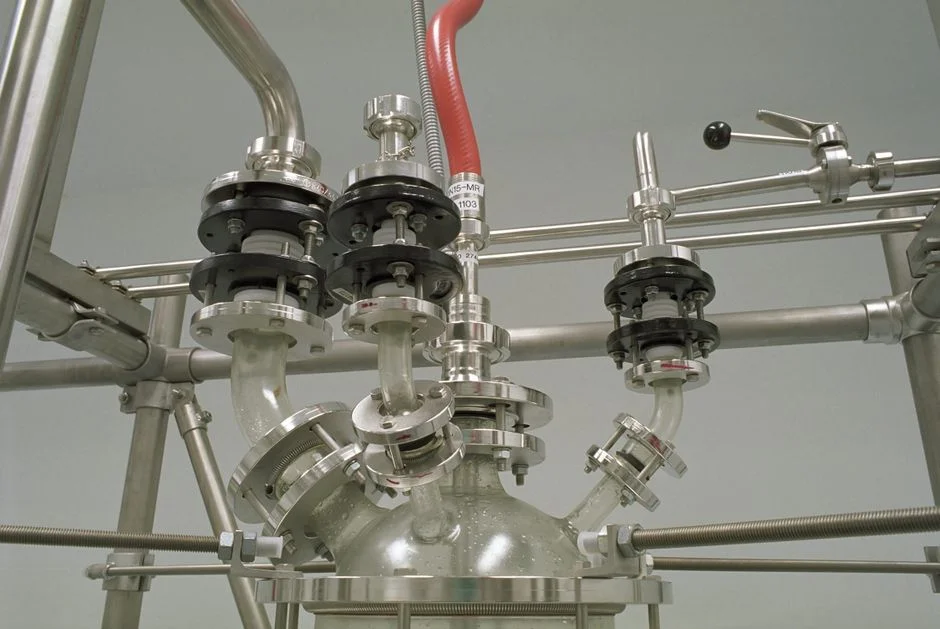
A procurement-ready brief must state the wastewater basis, treatment objective, discharge route, and operating responsibilities before asking for a price. It converts a general equipment enquiry into a comparable technical offer and creates a record of the assumptions on which the selection rests.
- Request three wastewater samples across representative operating conditions and specify the laboratory parameters to be tested. The supplied research does not provide a complete French sampling or analysis protocol.
- Ask each supplier to state design flow, treatment objectives, stage capacities, footprint, utilities, sludge production, control architecture, maintenance requirements, and expected operator involvement.
- Obtain written confirmation from the local authority or sewer authority covering the permitted outlet, connection conditions, pretreatment requirements, monitoring, and reuse constraints.
- Request a commissioning plan covering startup, training, spares, controls, alarms, sampling, and maintenance intervals.
- Compare bids on total installed scope and life-cycle responsibilities, not equipment price alone.
| Supplier response required | Minimum detail for comparison |
|---|---|
| Design basis | Average and peak flow, wastewater analysis, discharge route, reuse objective |
| Process design | Every treatment stage, duty, capacity, outlet objective, bypass or contingency arrangement |
| Installed scope | Civil works, piping, controls, utilities, access, drainage, odour control, commissioning |
| Operating commitment | Maintenance, inspections, consumables, sludge handling, training, alarms, remote support |
| Commercial terms | Itemized equipment, installation, commissioning, energy, consumables, sludge disposal, service, and warranty costs |
The supplied research contains no Marseille project cost figures, so a defensible quotation cannot be derived here. Require separate pricing for capital equipment, civil and installation work, power and chemicals, media or membrane replacement, sludge handling, routine service, and commissioning. The domestic sewage equipment selection and compliance guide provides a useful structure for comparing proposals.
Local supplier presence is a service consideration, not proof of technical suitability. Environmental XPRT lists Nomado, a water-treatment manufacturer at 21 Boulevard du Capitaine Gèze, Marseille 13014. Include local response time and technician availability in the evaluation, but retain the same design and compliance checks for every bidder.
Frequently Asked Questions
What will a wastewater treatment system cost for a Marseille hotel?
No reliable price can be calculated from the supplied research because no Marseille hotel cost figures or site data are provided. Ask for itemized capital equipment, installation, civil works, utilities, consumables, energy, sludge handling, service, training, and warranty costs. Compare the complete installed and operating scope.
How should the system be sized?
Provide separate average-flow, peak-flow, and wastewater-quality inputs rather than sizing from room count alone. The supplied WSZ range is 1–80 m³/h, while the MBR range is 10–2,000 m³/day; neither range determines the final size. The supplier must reconcile hydraulic loading, contaminant loading, treatment stages, and the selected discharge or reuse route.
How should a supplier be selected?
Request the wastewater design basis, process calculations, stage capacities, utilities, installation details, controls, maintenance scope, commissioning plan, and operator responsibilities. Require written local regulatory confirmation for the proposed outlet, and compare proposals on total installed scope and service capability.
Can MBR be assumed to satisfy the permit and water-reuse requirements?
No. MBR may provide the separation performance needed for a reuse application, but each end use requires an approved water-quality specification. Before ordering,