Which Treatment Should a Dallas Petroleum Plant Choose in 2026?
For petroleum wastewater in Dallas, choose DAF when the objective is to remove emulsified oil, FOG and fine solids after coagulation; Hahn’s 2010 review reports 90% oil removal for DAF, while identifying air-to-solids ratio, hydraulic loading, chemical addition, pressure and flow rate as critical design factors. Choose a clarifier when dense, settleable solids are the main target and gravity separation can meet the required solids-removal rate. Many plants need both: an oil-removal step followed by a clarifier or other polishing process. Final selection should be based on jar tests, oil-speciation data, equalization needs, sludge handling, flow variability and the Dallas-area POTW or discharge permit—not equipment type alone.
That is a conditional selection rule, not a universal ranking. An industrial dissolved air flotation system is the stronger primary candidate when significant oil is dispersed or emulsified and must be converted into buoyant flocs. A lamella clarifier for solids separation is more directly aligned when the design load consists primarily of solids that can be removed by gravity.
Hahn’s 90% oil-removal figure is evidence from the flotation systems reviewed in Fundamentals of Wastewater Flotation, published in 2010; it is not a guaranteed removal rate for every refinery, terminal or petrochemical wastewater. Equipment selection should proceed through representative wastewater testing and comparison of operating scenarios.
A combined treatment train is often the defensible answer. A gravity or API-type separator can remove substantial free oil first, coagulation can destabilize emulsions, DAF can float conditioned oil and fines, and clarification or filtration can remove the remaining solids. If the objective is biological treatment, membrane treatment or reuse, that downstream duty must be included before purchasing the physical separation unit.
Understand the Petroleum Wastewater Before Comparing Equipment
Oil concentration alone does not identify the treatment mechanism; droplet size and physical form determine how the contaminant behaves. The commercial Oily Wastewater Treatment Methods guide defines free oil as droplets larger than 150 micrometers, dispersed oil as 20–150 micrometers, and emulsified oil as below roughly 20 micrometers.
Request representative measurements for flow, free and emulsified oil, FOG, suspended solids, droplet size, temperature, pH, salinity and flow variability. These measurements are not administrative details: they establish whether gravity separation is credible, which chemicals must be jar-tested, and what hydraulic and equalization conditions the supplier must price.
| Input | What it tells the engineer | Why it affects selection |
|---|---|---|
| Flow range and variation | Normal, peak and upset hydraulic conditions | Sets equalization, treatment capacity and hydraulic-loading checks |
| Oil form and droplet size | Free, dispersed or emulsified contamination | Determines whether skimming, gravity separation or coagulation-assisted flotation is credible |
| FOG and suspended solids | Separate organic and solids loads | Defines skimming, sludge and polishing duties |
| pH, temperature and salinity | Chemical and biological operating conditions | Influences chemical choice, coagulation performance and downstream treatment |
| Discharge destination | POTW, pretreatment, reuse or zero-liquid-discharge route | Sets the required polishing sequence and acceptance criteria |
The same reported oil concentration can describe a readily skimmable free-oil stream or a stable emulsion that resists gravity separation. Therefore, request droplet-size and oil-speciation data rather than relying on one aggregate concentration.
The destination also changes the answer. Direct discharge, sanitary sewer pretreatment, equipment-process reuse and zero-liquid-discharge preparation impose different obligations on oil, solids, turbidity and documentation. For a chemical-intensive train, the automatic chemical dosing system should be evaluated with the physical unit so that dose control, alarms and operating interlocks are part of one performance basis.
How DAF and Gravity Clarifiers Remove Contaminants
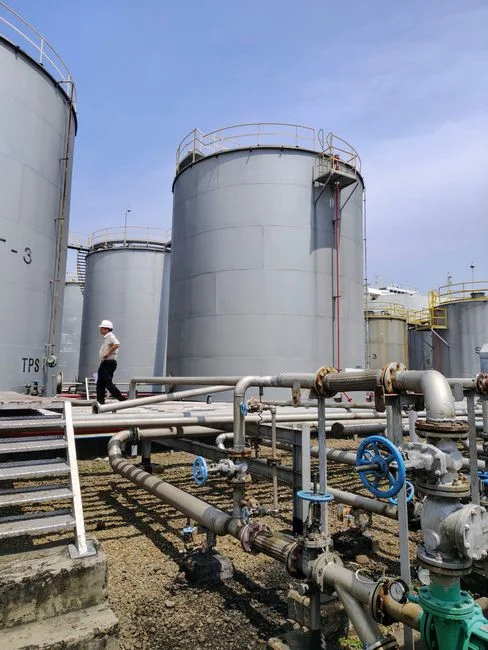
DAF separates oil and solids by generating bubbles, attaching them to conditioned particles and floating the resulting aggregates to the surface for skimming. Gravity clarification instead relies on density and settling behavior. These are different separation mechanisms even when a supplier uses the word “clarifier” for both.
DAF performance depends on bubble generation, particle attachment, recycle conditions and hydraulic loading. Hahn’s 2010 review identifies the air-to-solids ratio, hydraulic loading, chemical addition, pressure and flow rate as critical DAF design and operating variables. The bubble-to-particle attachment step is also why chemical conditioning is usually central to petroleum DAF performance.
A conventional horizontal-flow clarifier provides a larger settling zone, while a lamella clarifier uses inclined plates to capture settleable solids in a more compact structure. Neither should be presumed to remove a stable emulsion without chemical conditioning or a preceding oil-removal step.
| Mechanism | Separation principle | Best-supported process duty | Main limitation |
|---|---|---|---|
| Dissolved air flotation | Bubbles attach to conditioned oil or solids, which rise and are skimmed | Emulsified oil, FOG and fine solids after coagulation | Chemical demand and dependence on recycle, pressure and bubble attachment conditions |
| Lamella gravity separation | Settleable solids are captured on inclined plates | Compact solids separation and sludge concentration | Does not independently solve stable emulsions |
| Conventional gravity sedimentation | Density-driven settling in a horizontal-flow basin | Heavier settleable solids using an established gravity process | Requires suitable settling behavior, hydraulic control and effective sludge withdrawal |
The commercial guide explains that gravity or API separation is effective for free oil but struggles with tight emulsions below roughly 20 micrometers. Coagulants and flocculants can be used when emulsified oil must be floated or settled as larger flocs.
The guide also references a 2018 ship-generated wastewater study involving 10–15-micrometer droplets. Polyaluminum ferric chloride with microbubble flotation produced effluent oil below 15 mg/L in that study. That result is specific to the tested feed and conditions; it is not transferable performance evidence for an unrelated petroleum stream.
Compare DAF, Lamella Clarifiers and Conventional Clarifiers
DAF is best compared with gravity equipment by treatment objective and operating consequences, not by shared product labels. Its principal strengths are recovery of conditioned emulsified oil and FOG, removal of fine suspended solids, and automatic surface skimming. These benefits make it relevant to petrochemical wastewater pretreatment where a biological, membrane or reuse system needs a cleaner oil load.
The tradeoffs are equally concrete. DAF requires reliable chemical conditioning, recycle-pump and compressor operation, pressure control, adequate air-to-solids ratio and controlled hydraulic loading. Flow variation can change both chemical demand and separation conditions. DAF scum and recovered oil also require a defined collection, transfer and disposal route; otherwise the unit moves the contaminant into a concentrated side stream rather than removing it from the facility’s water balance.
Lamella clarification is most relevant when settleable solids are the main target and footprint matters. Its inclined plates provide compact solids capture, and sludge recirculation can support concentration. Conventional clarification offers an established gravity-separation principle for heavier settleable solids, but inlet distribution, overflow rate, sludge withdrawal and weir performance remain critical.
| Decision factor | DAF | Lamella clarifier | Conventional clarifier |
|---|---|---|---|
| Primary contaminant | Conditioned emulsified oil, FOG and fine solids | Settleable solids | Heavier settleable solids |
| Chemical conditioning | Normally central to oil and fine-particle separation | May assist solids capture | May be required for difficult solids |
| Recovered material | Surface scum or recovered oil | Concentrated sludge | Concentrated sludge |
| Critical operating controls | Flow, pressure, recycle air, chemical dose, loading and skimming | Loading, plate capture, sludge withdrawal and recirculation | Loading, inlet hydraulics, sludge withdrawal and weir performance |
| Best placement | Primary oil-removal stage before clarification, biology or membranes | Solids-capture stage after oil removal where appropriate | Solids-capture stage where hydraulic and settling conditions fit |
Polishing requirements can change the equipment decision. The commercial guide cites up to 99% TPH removal in a hybrid membrane bioreactor study at a 24-hour retention time and ceramic-membrane oil rejection from 73% to 99%. These are study-specific results. The broader DAF selection for industrial wastewater provides a useful adjacent methodology, but petroleum feed characteristics and receiving-authority requirements remain controlling.
Build a Treatment Train That Handles Variable Petroleum Feed
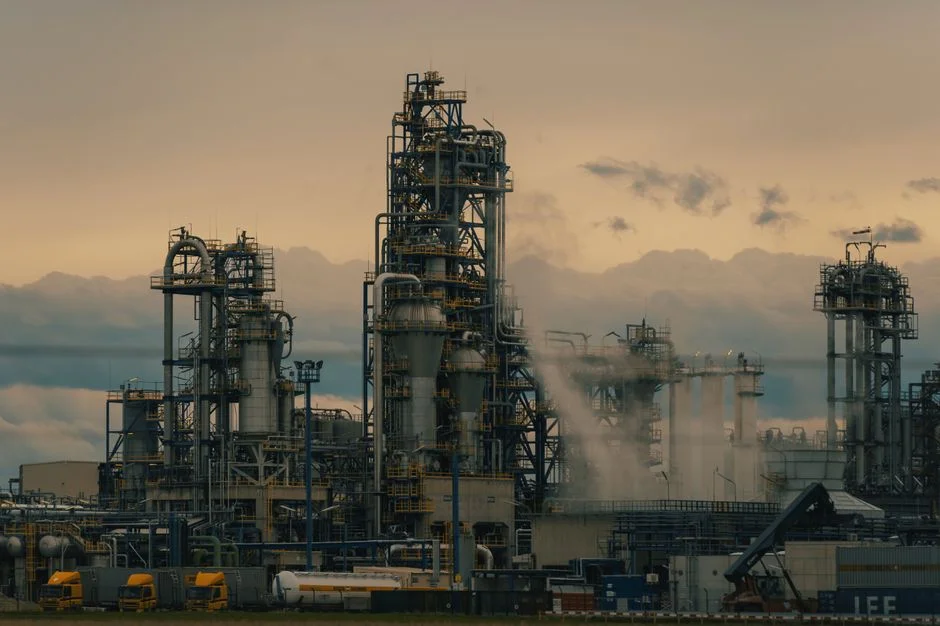
A defensible treatment train starts with equalization and ends with a defined route for every concentrated residue. Hahn’s 2010 source states that equalization stabilizes wastewater characteristics and improves treatment efficiency. Equalization also protects downstream units from short-duration oil or solids excursions, provided the tank is sized for the relevant variation rather than merely average flow.
- Characterize and equalize. Establish the representative flow, oil, FOG and solids loads and determine whether equalization is required for hydraulic or contaminant variation.
- Remove readily separable free oil. Use gravity separation or skimming ahead of DAF when substantial free oil is present, reducing the burden on chemical conditioning and flotation.
- Destabilize emulsions and form flocs. Establish coagulant, flocculant and pH-control requirements through jar testing on the actual wastewater.
- Float or settle conditioned material. Apply DAF for oil-bearing and fine buoyant flocs; use gravity clarification where the demonstrated solids duty is the controlling requirement.
- Polish to the destination. Apply biological treatment, ultrafiltration, ceramic membranes or another approved process when required. The commercial guide distinguishes biological degradation of oil from physical membrane separation.
- Manage residuals. Define collection, dewatering and disposal for DAF scum, recovered oil, lamella sludge and chemical residues.
Chemical selection cannot be generalized from a generic dose. The commercial guide specifically recommends jar testing before locking in a chemical program. A controlled automatic chemical dosing system should be tied to verified operating conditions, with alarms for loss of dosing, abnormal tank level and incompatible flow or load conditions.
Residue handling is part of process design. Untreated oil-bearing sludge can foul downstream equipment and transfer contamination into a disposal route. Where further solids reduction is justified, evaluate a plate-frame filter press against the sludge characteristics and required disposal method. Where tighter separation is required, the MBR integrated wastewater treatment system should be assessed as a downstream polishing option rather than assumed to replace oil and solids pretreatment.
Turn the Selection into a Dallas Procurement Package
The bid package should define the wastewater, operating scenarios and acceptance tests before it asks vendors to compare equipment dimensions. A signed performance basis built on representative wastewater is more defensible than a promise based on generic petroleum wastewater.
State the required flow range, peak-flow condition, equalization duty, available footprint, utilities, maintenance access and future-expansion constraints. Require at least three operating scenarios: normal flow, peak hydraulic loading and an upset oil load. For each scenario, ask for chemical dose, recycle rate, expected recovered-oil quantity and sludge production.
| Procurement item | Information the buyer must supply or require | Acceptance evidence |
|---|---|---|
| Performance basis | Representative wastewater characterization, oil speciation and discharge objective | Signed design basis tied to the sampled feed |
| Hydraulic duty | Normal, peak and upset flows; equalization conditions | Stable operation and required effluent quality under agreed scenarios |
| Controls | Flow, pressure, recycle air, levels, chemical dosing and skimming sequence | Functional test of instruments, interlocks, alarms and automatic skimming |
| Residuals | Scum, recovered oil, sludge and chemical-waste routes | Documented collection capacity and handling method |
| Site acceptance | Oil, FOG, suspended solids, turbidity and skid-performance criteria | Agreed sampling locations, laboratory methods and representative test duration |
Require instrumentation and controls for flow, pressure, recycle air, chemical dosing, tank levels and any differential conditions used by the vendor to identify hydraulic upset. Alarm response and automatic skimming should be demonstrated, not merely described in a control narrative.
HydropureWater’s published DAF range is 4–300 m³/h across 13 standard models, with petrochemical applications listed. Use that published range only to identify an available platform envelope; it does not determine the required size. The supplier must demonstrate that the selected unit remains effective at the buyer’s minimum, normal and peak conditions.
Define site acceptance around oil, FOG, suspended solids, turbidity and skid performance under representative conditions. Agree sampling points, laboratory methods, feed variability, uptime requirements and remedies before award. The dissolved air flotation equipment platform should be evaluated against that written acceptance basis.
Check Dallas Discharge and Pretreatment Requirements
Compliance begins with identifying the receiving authority and discharge route: sanitary sewer POTW, industrial pretreatment system, surface water, approved reuse or zero-liquid discharge. Each route can impose different limits, monitoring points and operating controls, so equipment selection and permit review should be treated as one engineering workstream.
The commercial Oily Wastewater Treatment Methods guide cites EPA pretreatment guidance showing local FOG limits commonly clustering around 100 mg/L, with a documented range of 50–450 mg/L. These are jurisdiction-dependent figures, not a universal Dallas limit. Confirm the exact requirement with the receiving authority and match it to the specific sewer-use ordinance, permit or pretreatment agreement.
Before ordering, request the applicable analytical methods, sampling frequency, monitoring points, bypass restrictions, spill-response controls and reporting requirements. Ask whether flow-proportional or time-proportional sampling is required, where oil and FOG monitoring must occur, and what records the plant must retain.
Map each criterion to a process step: flotation for conditioned oil-bearing solids, clarification for settleable solids, filtration for residual solids, biological treatment for biodegradable organics and membranes for tighter separation requirements. This mapping prevents a DAF or clarifier from being credited with performance that depends on untreated downstream polishing.
Plan for upset streams and chemical-system failure. An overloaded flotation unit, failed recycle pump or interrupted dosing can send a concentrated oil load into downstream equipment or the sewer. Define diversion, response, sampling and shutdown actions, and ensure that the pretreatment-limit compliance workflow is incorporated into operating procedures rather than left to procurement.
Frequently Asked Questions
How should petroleum wastewater equipment be sized without relying on a vendor’s standard flow chart?
Request a signed sizing basis based on representative wastewater: flow range, peak condition, oil form and droplet size, FOG, suspended solids, temperature, pH and salinity. Require the supplier to state which measured inputs determine hydraulic capacity, chemical dose, recycle rate and sludge production. A published flow range can identify an available platform, but it cannot establish the required size without these feed and operating inputs.
Which supplier qualifications should a Dallas buyer verify before selecting DAF or a clarifier?
Ask each supplier to demonstrate experience with a feed and treatment objective comparable to the proposed petroleum application, not merely provide a product photograph or a generic removal percentage. Require a proposed process basis, vendor sizing calculation, controls narrative, utility demand, chemical strategy, residue-handling plan and site acceptance method. Verify that proposed performance evidence has the same contaminant context and operating conditions as the buyer’s stream.
What does the full treatment sequence look like for emulsified oil and fine solids?
For a feed containing stable emulsion, the likely sequence is equalization, optional free-oil separation, jar-tested coagulation and flocculation, DAF flotation, and then clarification, filtration, biological treatment or membranes as required by the discharge route. Gravity clarification should not be assumed to solve tight emulsions without conditioning or an upstream oil-removal step. The final sequence depends on the destination and the treatment objectives stated in the permit or reuse criteria.
How should operating cost and procurement budget be compared for DAF versus clarification?
Request a lifecycle cost comparison covering equipment, installation, utilities, chemicals, maintenance, sludge and recovered-oil handling, and any downstream polishing. For DAF, the supplier should price coagulant and flocculant demand, aeration or recycle requirements, compressor and pump maintenance, and scum management. For clarification, include sludge withdrawal, basin cleaning, plate or sludge-handling requirements and replacement of downstream filtration. No reliable total-cost conclusion can be made until the feed characterization, operating scenarios and residue routes are issued to bidders.