Which Treatment Should an Indianapolis Refinery Choose?
For petroleum-refining wastewater in Indianapolis, choose DAF when the immediate objective is recovering free oil, grease, or other floatable contaminants; use chemical conditioning when suspended or colloidal material must be aggregated and removed with the float. Choose a clarifier when the primary objective is separating settleable solids after upstream oil recovery. Many refineries need both in sequence: source segregation and oil recovery first, then clarification, biological treatment, and polishing as required. EPA’s 1996 petroleum-refining study, based mainly on 1992–1993 data, identifies wastewater segregation, biological treatment, and effluent polishing as distinct parts of refinery wastewater management. Final selection requires site-specific characterization, permit review, and pilot testing.
EPA’s April 1996 report, Preliminary Data Summary for the Petroleum Refining Category, EPA 821-R-96-015, divides the industry into five subcategories: Topping, Cracking, Petrochemical, Lube, and Integrated. That division is not itself an equipment-selection rule, but it reinforces the need to identify the refinery’s processes and wastewater sources before selecting a vendor.
For an oily process stream, use an industrial DAF system for refinery oil and grease removal where flotation is the intended separation mechanism. For downstream solids separation, evaluate a lamella clarifier for settleable refinery solids. If the stream contains both recoverable oil and significant settleable solids, forcing one device to perform both jobs creates unnecessary risk.
Why Refinery Wastewater Cannot Be Treated as One Stream
EPA’s 1996 study evaluates petroleum-refining wastewater controls under 40 CFR Part 419, which covers BPT, BAT, NSPS, PSES, and PSNS, but its principal data were collected in 1992 and 1993. It is therefore useful as process and regulatory context—not as a substitute for current refinery flow data, current permit conditions, or current discharge limits.
The study identifies steam stripping, neutralization of spent acids and caustics, source control, wastewater segregation, boiler-condensate recovery, treated-effluent reuse, biological treatment, and activated-carbon treatment as parts of refinery wastewater management. Those measures establish why a plant-wide average is an inadequate basis for equipment sizing. An oily process stream, spent caustic, wash water, stormwater, and boiler condensate should not receive one assumed contaminant profile simply because they share a discharge point.
Build the engineering basis from segregated streams and current operating records. The table identifies the data a refinery should obtain before comparing DAF and clarification.
| Stream category | Primary separation concern | Data required before equipment selection |
|---|---|---|
| Oily process wastewater | Free oil, grease, and floatable solids | Current flow, peak flow, oil and grease, TSS, pH, temperature, and relevant constituents |
| Spent caustic or acidic process stream | Neutralization requirements and reaction products | pH, acidity or alkalinity, flow variability, temperature, toxicity, and chemical compatibility |
| Wash water and high-solids stream | Suspended solids and possible grit | TSS, particle characteristics, flow profile, grit or solids concentration, and cleanout method |
| Stormwater | Variable contaminants and episodic loading | Source areas, rainfall response, containment status, representative samples, and discharge route |
| Boiler-condensate candidate | Reuse potential or stream segregation | Flow, temperature, conductivity, pH, contaminants, and plant reuse criteria |
Request current measurements for each candidate stream rather than relying on a plant-wide average or a historical EPA dataset. EPA’s April 1996 study supports segregation as a management principle; it does not establish current Indianapolis limits. Those limits must come from the refinery’s present discharge authorization, applicable pretreatment requirements, and any reuse specification.
How DAF and Clarifiers Separate Different Contaminants
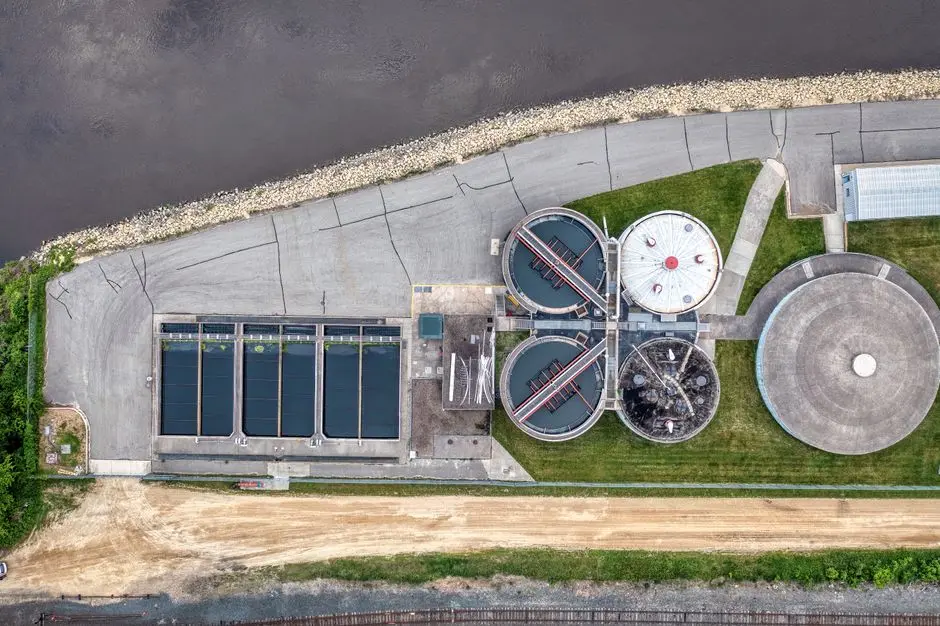
Dissolved air flotation separates contaminants by attaching pressurized air bubbles to particles that can be floated, while gravity clarification separates flocculated solids by settling. These mechanisms target different fractions of refinery wastewater and should be evaluated separately.
According to Clearwater Industries’ Dissolved Air Flotation for Industrial Wastewater Treatment, DAF uses 30–50 micron micro-bubbles that attach to impurities and flocculated particles. A skimmer removes the floating material, and clarified water is recovered beneath the float. Clearwater also notes that most DAF packages include a separate compartment for settled sludge, so a DAF installation does not eliminate residual-handling requirements.
DAF generally follows coarse screening or filtration, pH control, and chemical conditioning where coagulant, flocculant, or pH adjustment is required. A conventional clarifier relies on gravity settling. A lamella clarifier adds inclined plates to increase effective separation area; it is a solids-clarification device after suitable conditioning, not a substitute for primary floatable-oil recovery.
| Design element | Dissolved air flotation | Conventional or lamella clarifier |
|---|---|---|
| Separation mechanism | Micro-bubbles attach to oil, grease, flocculated particles, or other floatable material | Gravity settling; lamella plates add effective separation area |
| Primary target | Free oil, grease, and chemically conditioned floatable solids | Settleable solids and flocculated material |
| Residual stream | Skimmed float plus settled sludge | Settled sludge |
| Chemical conditioning | Often required where suspended or colloidal material must be aggregated with the float | Floc formation and settleability strongly affect performance |
| Typical process position | After screening or coarse filtration and pH control | After DAF, chemical conditioning, or upstream solids removal |
| Supplier claim requiring validation | Clearwater specifies 30–50 micron micro-bubbles | HydropureWater lists 20–40 m/h surface-loading rates and chemical consumption up to 30% below the comparator named by the manufacturer |
The HydropureWater figures are catalog claims, not universal performance. Loading rate, chemical consumption, flotation recovery, and solids capture must be checked against the selected stream and the bidder’s stated design basis. A catalog name alone does not demonstrate refinery suitability.
Head-to-Head Comparison for Refinery Applications
DAF and clarification differ most sharply in their primary targets: DAF addresses floatable material, while lamella clarification addresses settleable solids after suitable conditioning. The more defensible refinery design often separates these functions instead of asking one unit to perform both.
Oily wastewater can challenge DAF feed consistency, making upstream equalization and chemical-conditioning control important. Clarifier performance depends on floc formation, settling characteristics, feed distribution, and reliable sludge withdrawal. Neither mechanism removes dissolved contaminants at the rates required for every biological or polishing application.
HydropureWater lists 13 DAF models spanning 4–300 m³/h and describes its lamella clarifier as a compact unit with 20–40 m/h surface-loading rates. These are catalog limits, not a refinery sizing formula. The selected oily stream’s design flow, variability, operating contingencies, and treatment objectives determine the required capacity.
| Procurement variable | DAF | Clarifier | Decision implication |
|---|---|---|---|
| Primary separation | Oil, grease, and conditioned floatable solids | Settleable and flocculated solids | Match the unit to the contaminant fraction |
| Feed sensitivity | Requires control of oily loading, equalization, and chemical conditioning | Sensitive to floc quality, settling behavior, and sludge withdrawal | Define operating envelope before selecting equipment |
| Catalog capacity statement | 13 models from 4–300 m³/h | 20–40 m/h surface-loading rates | Validate against the selected stream, not the whole refinery |
| Residuals | Skimmed float and settled sludge | Settled sludge | Include collection and dewatering in either bid |
| Process position | After screening or coarse filtration and pH control | After DAF, conditioning, or solids removal | Evaluate a sequential train |
| Compliance implication | Neither technology establishes permit readiness by itself | Neither technology establishes permit readiness by itself | Use current authorization and site data |
Residual handling can determine whether an otherwise suitable unit is practical. DAF generates a skimmable float, while clarification generates settled sludge. Both require collection, conditioning where needed, dewatering, transport, and an approved disposal route. A filter press for DAF and clarifier sludge dewatering should therefore be evaluated as part of the treatment train, not as an optional accessory.
Include PLC-controlled chemical dosing for wastewater conditioning when the process relies on consistent coagulant, polymer, or pH control. Compliance risk remains a design issue: EPA’s historical study and a vendor catalog cannot replace present site data, current Indianapolis requirements, or a defined acceptance test.
Use a Decision Framework Before Requesting a Quote
A refinery should select equipment only after defining the treatment objective, segregating the wastewater, and setting measurable acceptance criteria. If the objective is oil recovery, DAF is the appropriate primary physical unit; if it is settleable-solids separation, clarification is the appropriate unit.
- Define the objective. Separate oil recovery, solids clarification, biological pretreatment, discharge compliance, and process-water reuse.
- Segment the wastewater. Identify oily streams, high-TSS streams, chemical streams, cooling or clean-water flows, and stormwater that should remain separate.
- Set acceptance criteria. Define required oil and grease, TSS, pH, flow, and variability limits using the current discharge authorization and reuse specification.
- Match the unit. Use DAF for floatable-oil recovery, lamella or conventional clarification for settleable solids, and biological or polishing processes where physical separation alone is insufficient.
- Validate the design. Conduct a wastewater survey and, where stream behavior or scale-up is uncertain, perform pilot testing. Clearwater Industries states that mixing and chemical dose should be established through jar testing.
- Price the complete train. Include equalization, screening or filtration, pH control, chemical dosing, compressed air, pumps, sludge handling, controls, redundancy, installation, and disposal.
- Confirm compliance and support. Require the supplier to identify the design basis, applicable codes, control philosophy, startup procedure, operating envelope, and local service support.
| Decision stage | Required decision | Evidence to request |
|---|---|---|
| Objective | Oil recovery, solids removal, biological pretreatment, compliance, or reuse | Current authorization, reuse specification, and treatment-train criteria |
| Segmentation | Which streams share equipment and which remain separate | Current flow and constituent survey for each stream |
| Acceptance criteria | What the unit must remove and under what variability | Measured limits, sample method, and test protocol |
| Validation | Whether jar testing or pilot testing is needed | Chemical-response data, settling or flotation observations, and scale-up record |
| Commercial comparison | Which bids cover the same train and performance obligation | Integrated scope, exclusions, guarantees, startup support, and residual-disposal assumptions |
The industrial wastewater treatment process steps provide useful sequencing context, but the refinery’s permit and stream survey must determine the actual configuration. For a related mechanical-selection comparison, see the DAF versus clarifier selection framework; the contaminant-specific principles still require refinery-specific validation.
Design a Refinery Treatment Train That Fits Indianapolis Requirements
A defensible refinery treatment train commonly begins with source segregation and equalization, proceeds through coarse protection, oil recovery or DAF and solids clarification, and then adds biological treatment and final polishing where the objectives require them. Clarification should not be treated as a substitute for every downstream treatment step.
Kemco Systems’ Dissolved Air Flotation for Industrial Wastewater Treatment describes a comparable sequence: coarse filtration, pH control, DAF, skimming, and mechanical sludge dewatering before disposal or reuse. That sequence supports the broader engineering point: equipment selection depends on the surrounding treatment train.
EPA’s April 1996 study separately evaluates preliminary treatment, biological treatment, and effluent polishing. Its historical evidence supports a train-based approach, but it does not establish present Indianapolis effluent limits or prove that any catalog equipment will achieve compliance at a particular refinery.
Evaluate the HydropureWater DAF range of 4–300 m³/h against the selected oily stream’s design flow after accounting for variability and operating contingencies. Do not infer a universal sizing rule from that catalog range. A mechanical bar screen for upstream protection may also be relevant where debris must be removed before DAF or clarification, but hydraulic headloss, screen selection, and maintenance access still require project-specific design.
Residual handling is part of the train from the beginning. DAF float and clarifier sludge require collection, conditioning if needed, dewatering, and an approved disposal route; a filter press for refinery sludge dewatering should be evaluated against the expected residual properties and disposal plan.
For Indianapolis, obtain and reconcile the current discharge authorization, sewer-pretreatment requirements, stormwater obligations, and any process-water reuse conditions. The supplied research does not provide site-specific limits, so procurement should not rely on invented values or assume that physical treatment alone establishes permit compliance.
Questions to Ask Before Selecting a Refinery Equipment Supplier
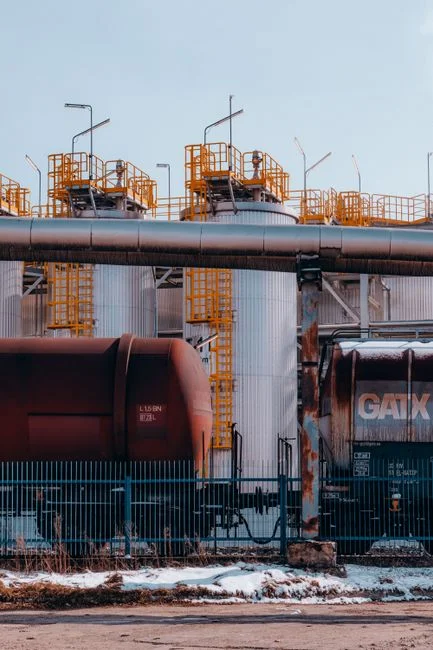
A refinery bid should state the design basis and identify every assumption that affects performance. Without that information, a DAF or clarifier catalog offer cannot be compared technically or commercially.
| Supplier question | Acceptable supporting detail | Procurement check |
|---|---|---|
| What flow and stream were used for sizing? | Design flow, peak flow, selected stream, and variability assumptions | Reject bids based only on a refinery-wide average |
| What are the contaminant and operating ranges? | Oil and grease, TSS, pH, temperature, relevant constituents, and toxicity information | Compare against current laboratory data |
| How were loading, retention time, chemical dose, and sludge yield derived? | Calculation method, test basis, and any pilot or jar-test data | Do not accept an unqualified performance guarantee |
| What materials and safeguards are specified? | Corrosion protection, chemical compatibility, pump and compressor redundancy, controls, instrumentation, and explosion-protection review where required | Match the specification to refinery service |
| What support is included? | Startup, operator training, preventive maintenance, spare parts, performance-test protocol, and local service availability | Make support a contractual deliverable |
| What is included in the integrated price? | Installation, controls, chemical skid, air supply, sludge dewatering, freight, commissioning, and disposal assumptions | Normalize exclusions before comparing bids |
Confirm how the supplier intends to start and operate a recirculating DAF system. Clearwater Industries states that clean water must be available for initial filling because the system pressurizes and saturates water with air; filling with wastewater could release poorly clarified effluent and risk the recirculation and saturation equipment. The startup plan should therefore address clean-water access, operator sequence, controls, and acceptance testing.
Require the supplier to identify applicable codes and design assumptions, but leave permit compliance tied to the refinery’s current authorization and verified site performance. A supplier’s statement that a unit is “compliant” is not a substitute for a defined test method, sample point, and acceptance criterion.
Frequently Asked Questions
What is the lowest-cost way to compare a DAF and a clarifier for a refinery?
Price the same performance obligation and treatment scope for both bids. Request the design flow, contaminant ranges, chemical requirements, loading basis, electrical and air-system requirements, residual collection, sludge dewatering, controls, installation, commissioning, freight, and disposal assumptions. No equipment price or operating-cost comparison is defensible until the quoted trains cover the same stream and acceptance criteria.
Should an Indianapolis refinery choose DAF, a lamella clarifier, or both?
Choose DAF for free oil, grease, and other floatable contaminants; choose clarification for settleable solids after suitable conditioning. If the refinery has variable oily streams, substantial oil-recovery requirements, and downstream biological or solids-treatment needs, evaluate a sequential DAF-and-clarifier train. The final decision should follow a current wastewater survey, permit review, and pilot testing where stream behavior is uncertain.
How much treatment data is needed before sizing refinery DAF or clarification equipment?
Request current flow, peak flow, oil and grease, TSS, pH, temperature, toxicity, and relevant constituent data for each segregated stream. Include wastewater variability, chemical-conditioning response, settling or flotation behavior, and downstream reuse or discharge criteria. EPA’s April 1996 study supplies historical process context, but it does not replace these site measurements or current Indianapolis requirements.
Which supplier and compliance risks should an Indianapolis refinery check before purchasing?
Ask each supplier to document the design basis, sizing calculations, applicable codes, operating envelope, controls, corrosion and chemical compatibility, redundancy, startup procedure, operator training, local service, and performance-test method. Check the current discharge authorization, pretreatment requirements, stormwater obligations, and reuse conditions. Treat a catalog loading rate as a vendor claim until the proposed unit is validated against the refinery’s selected stream.
Related Equipment
- industrial DAF system for refinery oil and grease removal — specifications, capacity range, and technical data