What Changes When an API Plant Expands?
Merck may need an expanded, segregated and more robust ETP after an API plant expansion, but the correct configuration cannot be selected from plant capacity alone. The design must respond to the quantity and quality of each wastewater stream, land, construction and operating costs, and the intended reuse or disposal route. A practical train typically starts with screening and equalization, follows with pH control and chemical or DAF pretreatment where needed, and uses biological treatment for biodegradable organics. MBR, disinfection and sludge dewatering should be added where reuse quality, footprint or residual contaminant control justifies them. The cited textile example reports up to 90% BOD and COD reduction, but that figure is not a Merck performance guarantee.
API expansion can change wastewater flow, pollutant concentration, batch variability, chemical inventory and reuse demand even when the expansion is described primarily in manufacturing terms. The design drivers identified by the IIT Delhi ETP presentation are effluent quantity and quality, land availability, and monetary considerations for construction, operation and maintenance. These drivers point to a broader decision than adding one larger treatment unit.
No Merck capacity or equipment order should be specified without a source-by-source wastewater mass balance. The supplied research describes general ETP design and a textile case; it does not provide Merck-specific API wastewater flow rates, compositions, expansion details or acceptance criteria. Those gaps must be closed with site sampling, production information and the applicable permit before a pharma plant expansion ETP framework becomes an equipment specification.
Build a Wastewater-by-Wastewater Mass Balance
The ETP design basis should start by separating streams that have different contaminant profiles, flow patterns and permitted destinations. A single combined average flow can conceal batch shocks, chemical incompatibility and opportunities to segregate cleaner water for reuse. The industrial wastewater equipment selection guide provides the broader equipment framework, but the mass balance must be populated with Merck site data.
| Stream category | Information to establish | Design implication |
|---|---|---|
| High-strength process wastewater | Average and peak flow, batch duration, COD, BOD, pH, toxicity and compound-specific results | May require dedicated equalization, chemical pretreatment and biological load management. |
| Equipment and product-contact wash water | Batch sequence, cleaning chemicals, rinse quality, temperature and segregation potential | Determine whether segregated treatment or controlled reuse is feasible. |
| Floor and equipment washing | Cleaning frequency, detergents, oil and grease, suspended solids and drain routing | Protect downstream biological and membrane systems from fouling or shock loads. |
| Cooling and utility blowdown | Flow variability, temperature, conductivity, salinity, treatment chemicals and reuse potential | Consider separate cooling, recovery or reuse rather than dilution of contaminated streams. |
| Laboratory wastewater | Solvent, reagent and analyte inventory, collection practice and toxicity | Prevent incompatible chemical discharges from entering the main ETP. |
| Sanitary wastewater | Flow, treatment compatibility and sewer or disposal route | Decide whether to segregate from industrial streams or treat through a dedicated route. |
For every stream, request average and peak flow, batch duration, pH, COD, BOD, TSS, oil and grease, conductivity or salinity, temperature, toxicity and compound-specific screening results. Record whether discharges are continuous or intermittent; batch campaigns can produce concentrated loads that are obscured by a daily average. Equalization should then be sized around the measured flow and load profile, not nominal production capacity alone.
Define the destination before selecting treatment: reuse, direct discharge or discharge to a municipal or industrial pretreatment system creates different acceptance criteria. Because the supplied research contains no Merck API stream compositions, the required values must come from site sampling, process mass balances and the applicable permit or sewer authority.
Match the Treatment Objective to the Effluent
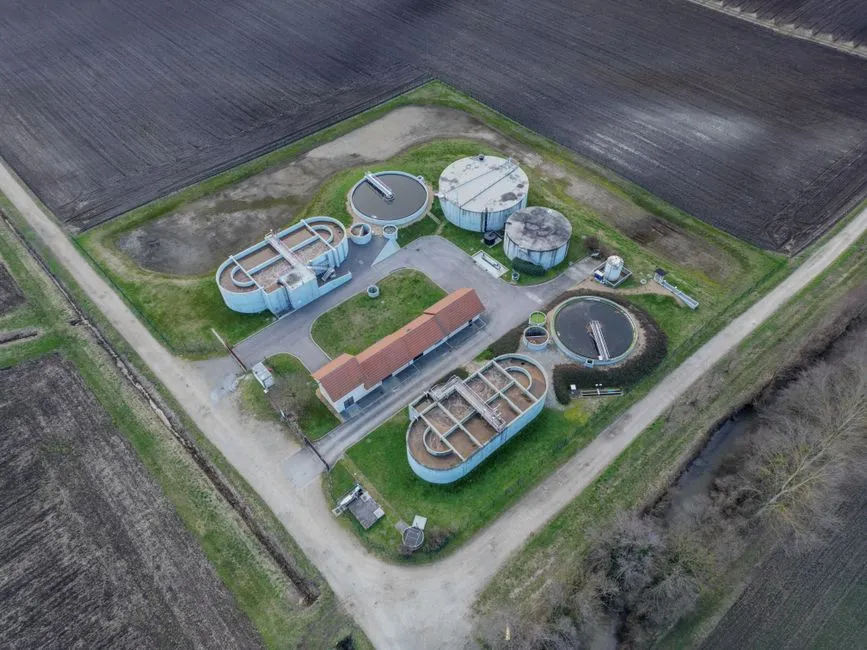
Treatment should be assembled around the required effluent function, not selected as a single package. The IIT Delhi presentation organizes ETP into preliminary, primary, secondary and tertiary or advanced levels, supported by physical, chemical and biological mechanisms.
| Objective | Relevant function | Selection evidence |
|---|---|---|
| Protect downstream equipment | Screening and sedimentation to remove large solids and suspended material | Physical-characterization data and expected batch solids |
| Control variable acidity or alkalinity | pH correction before biological treatment | pH range, dosing demand and operating controls |
| Remove fine or floating material | Coagulation-flocculation and clarification; DAF where its duty is justified | TSS, colloid, oil and grease, and FOG data; jar and pilot testing |
| Remove biodegradable organics | Aerobic treatment uses oxygen to assimilate organic impurities; anaerobic treatment operates without oxygen and produces methane and biomass | COD and BOD, biodegradability, toxicity and process-residence requirements |
| Meet a reuse or stringent final-quality target | Filtration, membrane separation and disinfection | Reuse specification, compound-specific limits and pilot evidence |
Physical pretreatment normally precedes biological and membrane duties. A rotary mechanical bar screen can protect pumps and downstream equipment, while clarification addresses settleable solids. For chemical pretreatment, a PLC-controlled chemical dosing system supports controlled pH correction and coagulation-flocculation where wastewater chemistry shows it is necessary.
The IIT Delhi source identifies alum, ferric sulfate and polyelectrolyte as examples for chemical conditioning. These are not automatic selections: the correct chemical and dose depend on the Merck stream, solids surface properties, pH, mixing and downstream compatibility. For reuse or stringent final quality, filtration, membrane separation and disinfection may be necessary, but site-specific confirmation is required.
Design a Capacity-Resilient Treatment Train
A practical train begins with screening, equalization, controlled pH adjustment and targeted solids removal, then applies biological treatment where biodegradable organics warrant it. Membrane separation, disinfection and sludge dewatering complete the train only where the destination and residual-risk assessment justify them.
| Process stage | Primary duty | Expansion risk addressed |
|---|---|---|
| Screening | Remove coarse material before pumping and downstream treatment | Blockage, abrasion and pump damage |
| Equalization | Blend variable flow and concentration; reduce shock loading | Intermittent API batch discharges |
| pH correction | Bring wastewater to the operating range required by the next process | Acidity, alkalinity and biological upset |
| Coagulation, clarification or DAF | Remove suspended solids, colloids, oil and grease or FOG where identified | Fouling, carryover and interference with downstream systems |
| Biological treatment | Reduce biodegradable organics | COD and BOD load, including variable campaign loads |
| Secondary clarification or membrane separation | Control biomass and solids carryover | Sludge loss and solids entering the final treatment stage |
| Disinfection | Provide microbial control | Reuse or discharge requirements |
| Sludge thickening and dewatering | Reduce sludge water content for handling and disposal | Residual waste volume and operational handling |
The IIT Delhi presentation gives a general equalization reference of 8–16 hours and describes 8–12 hours in its textile example. These are reference points, not a Merck sizing rule; final hydraulic residence time must follow the measured flow profile, batch duration and operating strategy. For pH correction, the source lists lime, sodium carbonate, calcium carbonate, calcium hydroxide, sulfuric acid and hydrochloric acid as acid or alkali examples. Selection should follow wastewater chemistry, chemical inventory and control requirements.
Where suspended solids, colloids, oil and grease or FOG could interfere with biological treatment or membranes, coagulation-flocculation, clarification or a DAF system for industrial wastewater pretreatment may be appropriate. Biological treatment then addresses biodegradable organics. The cited textile aeration process reports up to 90% BOD and COD reduction, but that performance cannot be assumed for pharmaceutical effluent without representative testing.
An integrated MBR membrane bioreactor can combine activated sludge with membrane separation where the reuse target and footprint justify the added operating complexity. Include sludge handling in the design. The textile example changes sludge composition from 60% water and 40% solids to 40% water and 60% solids after thickening; an industrial sludge dewatering filter press requires its own performance test because Merck sludge characteristics are not supplied.
Choose Equipment by the Treatment Risk
DAF, lamella clarification, conventional clarification and MBR are not interchangeable. The correct comparison depends on the solids to be removed, required hydraulic capacity, footprint, reuse objective, automation, sludge characteristics and the consequences of failure.
| Equipment | Catalog or source reference | Primary decision question |
|---|---|---|
| DAF | Fourteen? No: 13 standard models spanning 4–300 m³/h; micro-bubble flotation and automatic skimming for suspended solids, FOG, oil and grease, and colloidal matter | Does the measured contaminant duty justify DAF, and what pilot evidence supports the selected capacity? |
| MBR | Activated sludge combined with submerged PVDF membrane filtration; filtration below 1 μm; 60% smaller footprint than conventional systems; 10–2,000 m³/day availability | Does the reuse specification and site footprint justify MBR, including membrane-cleaning and replacement obligations? |
| Chlorine dioxide generator | 50 g/h manual to 20,000 g/h fully automated | What chlorine dioxide demand, residual control and site-hazard management apply to the selected reuse or discharge route? |
| Plate and frame filter press | 1–500 m² filtration area; manual, hydraulic or fully automatic PLC operation | What cake dryness and chemical-conditioning dose can representative sludge achieve? |
| Sedimentation tank | Catalog selection requires site-specific hydraulic and solids data | Is conventional clarification sufficient, or are colloidal or floating contaminants better addressed by DAF? |
The DAF and MBR figures above are catalog-selection references, not guarantees for Merck’s permit, reuse target or process-water specification. The DAF system addresses solids and floatable contaminants; a lamella or conventional clarifier addresses settleable solids with a different hydraulic and maintenance profile. An MBR provides biological treatment and membrane separation but introduces membrane fouling, cleaning and replacement risks.
The chlorine dioxide generator range indicates available equipment scale, not the required dose. Selection depends on chlorine dioxide demand, residual control and hazards associated with storage and generation. Likewise, plate-and-frame press area does not establish dewatering performance: cake dryness, chemical conditioning and sludge variability require testing. For pharmaceutical wastewater, the DAF versus clarifier for pharmaceutical wastewater comparison should be applied only after the waste profile is established.
Plan for Compliance, Monitoring and Operational Resilience
The governing destination must be defined before final equipment is specified because direct environmental discharge, sewer pretreatment and controlled reuse have different acceptance bases. The IIT Delhi presentation lists Indian inland-surface-water limits of pH 5.5–9.0, TSS below 100 mg/L, oil and grease below 10 mg/L, BOD below 30 mg/L and COD below 250 mg/L. These are the source’s listed benchmarks, not universal limits and not Merck-specific requirements.
Monitoring should include flow, pH and TSS, with online measurement where justified, plus the parameters required by the applicable permit. Add COD, nutrients, conductivity, toxicity and compound-specific screening where the destination, reuse application or sewer authority requires it. Define sampling points, frequencies, calibration requirements, data ownership and response actions for excursions.
Operational resilience also requires bypass conditions, standby provisions, alarms, sludge-removal routes and chemical-storage controls. A bypass is not a compliance strategy; its design must identify isolation, notification and treatment of diverted flow. The sewer-pretreatment compliance framework illustrates the need to connect equipment operation with the receiving authority’s acceptance criteria.
Use pilot testing when wastewater is variable, potentially toxic to biological organisms or prone to membrane fouling. Mixed-waste testing is more decision-useful than a single clean laboratory sample because it exposes campaign variability and combined-stream effects. The pilot should test the actual treatment objective, including solids carryover, biological response, membrane flux behavior and sludge dewatering.
Build the Investment Case Before Ordering Equipment

The investment case should compare alternatives over their operating life, not rank them by purchase price alone. Begin with a design-basis report covering the wastewater mass balance, flow and contaminant-load scenarios, reuse target, permit route, site constraints and expansion phases.
| Comparison | Evidence to request | Procurement decision |
|---|---|---|
| DAF versus lamella clarification | Representative solids, oil, grease and FOG data; pilot results; footprint and maintenance requirements | Select the unit matching contaminant type, hydraulic duty and operating risk. |
| MBR versus conventional biological treatment | Reuse specification, footprint, membrane cleaning, automation, spare strategy and solids-disposal route | Select the added treatment performance that the destination actually requires. |
| Supplier quotation | Delivered equipment, installation, controls, utilities, civil work, commissioning, training, spares, guarantees and capacity envelope | Compare complete scopes on a common commercial and technical basis. |
| Performance guarantee | Representative or synthetic wastewater envelope and agreed sampling protocol | Define measurable acceptance conditions rather than a generic removal percentage. |
| Staged expansion | Calculated hydraulic and contaminant reserves, expansion triggers and demonstrated envelope | Reserve modularity only after the future load is quantified. |
The IIT Delhi source identifies construction, operation and maintenance as core ETP cost drivers. Request supplier quotations that separate these elements so procurement teams can compare lifecycle value rather than equipment price alone. Sludge disposal, chemical consumption, membrane replacement, residual handling and downtime should remain visible in the comparison.
Specify performance guarantees against representative or synthetic wastewater envelopes and an agreed sampling protocol. Extra hydraulic capacity cannot substitute for proper segregation, equalization or pretreatment. Use the DAF-versus-clarifier selection framework as a structured comparison method, and obtain project-specific sludge data before applying the sludge-dewatering specification guide.
Frequently Asked Questions
How should Merck size the ETP after the API plant expansion?
Size from measured average and peak flows, batch durations and contaminant loads for each segregated stream, then apply the relevant treatment-stage duty. API output alone is not a hydraulic or treatment-capacity basis. The supplier should demonstrate that the selected train remains compliant under the agreed flow and load envelope.
Which treatment option is better for pharmaceutical wastewater—DAF, clarification or MBR?
DAF is relevant where floatable solids, oil, grease, FOG or colloidal material must be removed; clarification addresses settleable solids; MBR combines biological treatment with membrane separation where reuse quality and footprint justify the added complexity. Decide from the measured waste profile and reuse or discharge specification, then confirm performance through representative testing.
What should procurement require when selecting an ETP supplier?
Request evidence of demonstrated equipment scale, controls and automation, performance guarantees, design documentation, commissioning scope, spares availability and service support. The quotation should identify the capacity envelope and exclusions clearly. Ask for references or test evidence relevant to the proposed wastewater duty rather than relying on catalog capacity alone.
Which compliance criteria should determine final treatment acceptance?
The destination and jurisdiction determine the acceptance criteria: direct environmental discharge, sewer pretreatment and controlled reuse are governed by different permits and specifications. Obtain the applicable permit and receiving authority’s requirements, then translate them into monitoring points, guarantee tests and operating-response procedures. The Indian benchmarks in the supplied source are references, not Merck-specific limits.
Related Equipment
- DAF system for industrial wastewater pretreatment — specifications, capacity range, and technical data