Why a pharmaceutical expansion changes the ETP design basis
An expanded AstraZeneca pharmaceutical plant will need a site-specific pharmaceutical effluent treatment plant (ETP), not a generic unit selected from expansion volume alone. The design basis must combine hydraulic buffering, equalization and neutralization, pollutant-specific chemical or physical treatment, biological COD removal, API-retaining polishing and controlled sludge dewatering. Coppell, Södertälje and Avlon Works demonstrate why: their wastewater, reuse and permitting conditions differ, so the treatment train must be developed around the affected site rather than transplanted from another AstraZeneca facility.
Pharmaceutical effluent is a composite of API synthesis, formulation cleaning, equipment washing, utility blowdown, floor-drain and laboratory streams. Pharmaguddu’s 2026 pharmaceutical ETP guide notes that solvent recovery can produce high-COD, low-pH effluent, while formulation-area cleaning can introduce surfactants and trace APIs. A production expansion may therefore change not only flow, but also COD/BOD, solvent content, pH, API profile and sludge generation.
Fermentation-based API wastewater is reported at COD of 5,000–15,000 mg/L and BOD of 2,000–6,000 mg/L in HydropureWater’s 2026 process-engineering data. These concentrations reinforce the need to control batch dumps and avoid sending acidic or solvent-rich flows directly to biological treatment.
The defensible sequence is: control hydraulic and chemical variability; remove site-specific pollutants; reduce biodegradable organics; retain residual APIs; then polish for reuse or permitted discharge. Before that sequence can be sized, the team needs the affected site, API portfolio, batch schedule, sewer or receiving-water route and reuse objective. The same framework used for ETP requirements for an expanded advanced manufacturing plant applies, but pharmaceutical API risk determines the critical unit operations.
What AstraZeneca’s site evidence says about the required treatment train
Coppell’s treatment train confirms that non-biodegradable pollutants require a dedicated chemical-physical solution. AECOM separated high- and low-silica process-wastewater streams, selected acid-based pH adjustment to precipitate silica, and added chemical-treatment tanks with a plate-and-frame filter press. The upgraded facility reported approximately 80% less landfill waste and approximately 90% lower waste-treatment costs, according to the AECOM project page cited by HydropureWater’s 2026 analysis.
Södertälje provides a different reference. Its biological core is a Veolia AnoxKaldnes MBBR, selected for wastewater described as highly toxic and high in organic content. HydropureWater’s 2026 analysis also records a Pharem Biotech Zymatic enzymatic pilot for organic micropollutants. Vendor-cited work summarized by IIoT World in 2022 associates the enzymatic technology with reductions of up to approximately 95% in harmful pharmaceutical compounds; that is not a guaranteed performance claim for AstraZeneca.
At Avlon Works, the proposed ETP was engineered for 60–80% COD reduction, yet its suspension for more than 12 months in 2002 showed that process design does not eliminate environmental-permitting risk. The site evidence therefore supports source segregation and equalization, followed by site-specific chemical or biological treatment, final polishing and controlled sludge handling. It does not support one universal process recipe.
| AstraZeneca evidence | Documented treatment function | Decision relevance |
|---|---|---|
| Coppell | Acid precipitation, chemical-treatment tanks and plate-and-frame filtration | Target silica and mineral sludge separately from biodegradable pollution |
| Södertälje | MBBR biological treatment and an enzymatic micropollutant pilot | Evaluate biological removal against compound-specific residual risk |
| Avlon Works | Proposed ETP designed for 60–80% COD reduction | Include EIA and discharge-consent gates in the project schedule |
A 2026 reference ETP for expanded pharmaceutical production
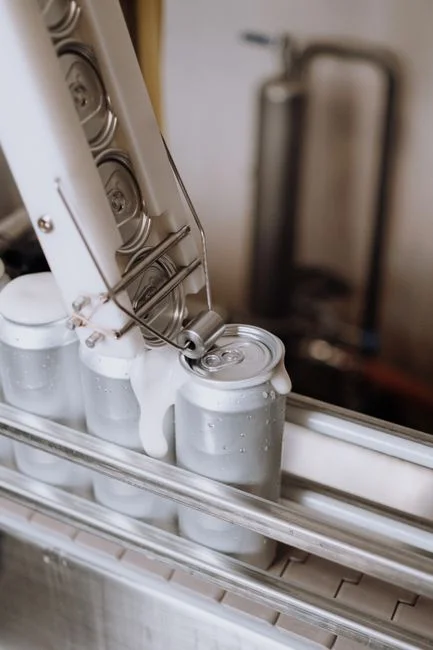
A preliminary pharmaceutical wastewater treatment plant train should be developed as a sequence: segregated collection and screening; equalization and mixing; DAF where oil, solvent or floatable loads justify it; pH adjustment; coagulation-flocculation or targeted precipitation; biological treatment; secondary clarification or MBR; polishing and disinfection; reuse or permitted discharge; and sludge dewatering. Each stage should have a defined pollutant duty and a measurable performance basis.
HydropureWater’s 2026 reference design sizes equalization at 1.5–2.0 times average diurnal flow, with active mixing and automated pH control. Pharmaguddu’s 2026 guide separately gives an equalization hydraulic retention time of 6–24 hours, depending on flow variability. The selected basis must reflect the actual batch-dump pattern and peak-flow survey rather than use either range by default.
The same 2026 reference uses anaerobic HRT of 20–30 days, followed by aerobic polishing for 4–8 hours. Pharmaguddu’s guide places biological pH at 6.5–8.5 and aeration-tank dissolved oxygen at 2–4 mg/L; these are general biological criteria, not site guarantees. For API retention, HydropureWater specifies a 0.1 μm PVDF MBR barrier. An integrated MBR wastewater treatment system combines activated sludge with submerged membrane filtration and is presented as producing effluent below 1 μm; actual performance must be demonstrated on site-specific wastewater.
DAF should precede biology when floating oil, grease, solvent or fat loads could interfere with biomass and oxygen transfer. Where precipitation creates substantial mineral sludge, the plate-and-frame sludge filter press provides a dewatering function. HydropureWater’s 2026 data gives a filter-press capital range of $150,000–$450,000 for a 1,200 m³/day pharmaceutical plant.
| Design element | Reference criterion | Verification required |
|---|---|---|
| Equalization | 1.5–2.0× average diurnal flow with active mixing and automated pH control | Batch schedule, peak-flow survey and diurnal loading profile |
| Anaerobic reactor | 20–30-day HRT | Solvent biodegradability, temperature, alkalinity and COD profile |
| Aerobic polishing | 4–8-hour HRT | Biodegradable COD, nutrients and biomass settleability |
| API barrier | 0.1 μm PVDF MBR | API properties, fouling potential, compound-specific analytics |
| Sludge dewatering | $150,000–$450,000 filter press for a 1,200 m³/day plant | Sludge mass, mineralogy, hazardous classification and cake-disposal route |
These are concept-development criteria from the supplied research, not final design values. Current permits, influent characterization, pilot studies and the equipment proposal must confirm them.
How to select treatment technology for each wastewater risk
Treatment selection should begin with the dominant failure mechanism, because no single device removes every pharmaceutical wastewater risk. Equalization with active mixing and online pH control is the first control for variable batch flows and inconsistent pH. Pharmaguddu’s 2026 guide identifies incomplete or inconsistent neutralization as a common cause of ETP upsets.
For oil, grease, surfactants and floatable material, DAF before biological treatment can prevent biomass coating and oxygen-transfer interference. A DAF unit with micro-bubble flotation is relevant where solvent or fat loads are present, but its duty must be demonstrated rather than inferred from plant flow.
Silica and other non-biodegradable solids require targeted precipitation. Coppell supports acid-based silica precipitation; expecting biology to remove silica would leave the membrane-fouling and sludge-disposal problem unresolved. Chemical dosing should be controlled by online flow and pH feedback and verified through jar testing. A paired automatic chemical dosing system can maintain reagent stoichiometry as influent load changes, while an high-efficiency lamella clarifier can recover flocculated solids where footprint is constrained.
For high biodegradable COD, compare anaerobic pretreatment with aerobic MBBR or activated-sludge polishing against the reference sequence of 20–30 days anaerobic HRT followed by 4–8 hours aerobic polishing. For residual or macromolecular APIs, use MBR retention and compound-specific analytical monitoring; COD, BOD and TSS alone do not demonstrate removal of a particular API.
| Dominant risk | Primary treatment decision | Supporting evidence or control |
|---|---|---|
| Variable flow and pH | Active equalization and automated neutralization | Protect downstream biology from batch dumps |
| Oil, grease, solvent or floatables | DAF before biological treatment | Prevent biomass coating and oxygen-transfer interference |
| Silica or mineral solids | Targeted precipitation and solids separation | Coppell acid-precipitation and filter-press evidence |
| High biodegradable COD | Anaerobic treatment followed by aerobic polishing | HydropureWater’s 2026 reference HRT criteria |
| Residual or macromolecular APIs | MBR plus compound-specific monitoring | 0.1 μm PVDF reference barrier; analytical acceptance limits |
For sludge, select dewatering by generated volume and hazardous-waste classification. HydropureWater’s 2026 analysis reports approximately 80% less landfill waste from Coppell’s plate-and-frame approach, but that site result cannot be transferred to another expansion without a local sludge inventory.
Compliance, capacity and procurement risks for a 2026 expansion
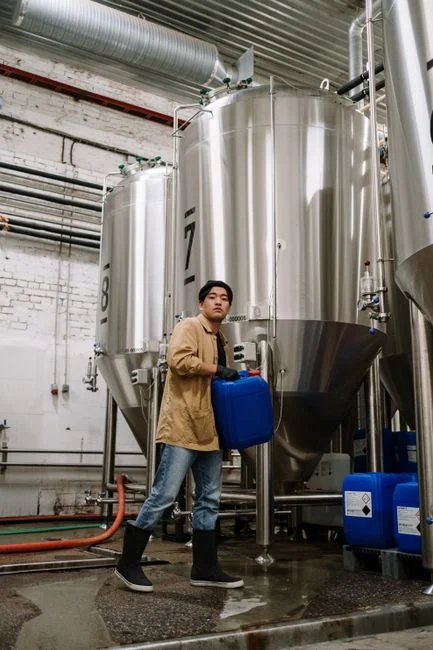
The largest procurement risk is accepting a generic performance promise without a site-specific permit basis. The supplier must confirm the applicable site consent, sewer pretreatment agreement or receiving-water consent and identify site-specific limits for BOD, COD, TSS, pH and hazardous substances, as described by Pharmaguddu’s 2026 guide. Generic discharge standards should not replace the governing site conditions.
HydropureWater’s 2026 analysis states that EU IED recast BAT-AEL compliance milestones run through 2027. Contracts should therefore allocate responsibility for regulatory changes, identify performance guarantees and preserve a practical route for future retrofit.
The Avlon Works precedent shows why permitting must sit on the critical path: the proposed £20 million ETP was suspended for more than 12 months in 2002 after a positive EIA screening direction. HydropureWater’s 2026 analysis also identifies a 12–18-month delay risk where a permit transfer or ETP modification may be treated as a new discharge. That is a schedule risk requiring a defined decision owner, not a footnote to the installation schedule.
Lifecycle evaluation must include replacement, not just initial purchase. HydropureWater’s 2026 data puts MBR cassette replacement at $420,000–$1,800,000 for a 1,200 m³/day pharmaceutical plant. Its operating comparison estimates that MBR plus filter press adds roughly $35,000/year in energy and chemicals while saving approximately $120,000/year in disposal volume and approximately $95,000/year in biogas thermal-energy offsets. These estimates require site-specific energy, chemical, waste and biogas prices.
| Pre-award gate | Required evidence | Commercial protection |
|---|---|---|
| Design basis | Composite influent/effluent sampling, batch profile and API characterization | Size guarantees tied to measured load and operating mode |
| Chemical treatment | Jar or pilot testing for dosing and precipitation | Reagent consumption and cake-quality criteria |
| Sludge | Inventory, hazardous classification and disposal route | Volume, moisture-content and disposal obligations |
| Permitting | Consent review, EIA assessment and discharge-modification pathway | Schedule responsibility and regulatory-change allocation |
| Expansion | Hydraulic headroom and physical asset-condition survey | Documented future-capacity basis rather than unsupported headroom claims |
Before purchase order, require composite sampling, dosing and precipitation tests, an API-monitoring plan, a sludge inventory and a survey of hydraulic headroom and asset condition. A 2026 ETP supplier comparison and cost guide can support commercial review, while pretreatment-limit compliance guidance provides a useful check on sewer-acceptance risk. Neither replaces site-specific engineering.
Frequently Asked Questions
How much does an ETP for an expanded AstraZeneca pharmaceutical plant cost?
There is no defensible universal quote without the site flow, wastewater profile, treatment objectives and permit basis. HydropureWater’s 2026 data provides two scoped reference points for a 1,200 m³/day pharmaceutical plant: MBR cassette replacement at $420,000–$1,800,000 and a plate-and-frame filter press at $150,000–$450,000. Ask the bidder for a bill of quantities, membrane replacement schedule, chemical consumption, energy demand, sludge-disposal assumptions and a separate performance-guarantee price.
Can one ETP design be used for every AstraZeneca site?
No. Coppell required silica precipitation and filter-press dewatering; Södertälje uses MBBR biology with an enzymatic micropollutant pilot; and Avlon Works’ proposed ETP had a 60–80% COD-reduction design objective and a permitting delay. Each expansion therefore needs its own API profile, batch pattern, permit or sewer route, reuse objective and retrofit assessment.
Should the expanded ETP use MBR instead of conventional activated sludge with clarification?
The decision depends on API-retention requirements, footprint, reuse quality, membrane fouling and lifecycle cost. HydropureWater’s 2026 reference uses a 0.1 μm PVDF MBR to retain macromolecular APIs that secondary clarifiers can pass. For a direct technical comparison, use the MBR versus conventional activated-sludge comparison, then validate the choice with compound-specific influent and effluent data.
How should an ETP supplier be evaluated?
Require a site-specific design basis, pilot or jar-test evidence, guarantees tied to measured parameters, explicit membrane and sludge assumptions, permit-support responsibilities and documented expansion headroom. In the commercial evaluation, ask for the proposed worst-case operating mode and each unit’s duty during batch dumps; these checks expose whether the quotation assumes smooth municipal-like flow or real pharmaceutical variability.
What compliance risk should be included in the project plan?
Include permit transfer or modification, EIA implications, current site consent, API-specific monitoring, whole-effluent toxicity assessment and the 2027 EU IED recast BAT-AEL milestone identified by HydropureWater. Assign a permit decision date and required technical evidence before equipment manufacture begins, because treatment selection can change if discharge status or limits differ from the design assumption.