What an Effluent Treatment Plant in Pattaya Must Deliver
An effluent treatment plant in Pattaya should be selected from the wastewater duty and the legally applicable discharge or reuse target, not from a generic package. HydropureWater’s 2026 Pattaya guide cites common industrial limits of COD ≤120 mg/L, BOD ≤60 mg/L, TSS ≤50 mg/L and pH 5.5–9.0, but each project must verify its permit and industry category. DAF is relevant where suspended solids, oil, grease or colloids dominate; MBR is appropriate when biological treatment and membrane polishing are needed. The same source gives indicative 2026 budgets of THB 8M–12M for a 50 m³/h DAF system and THB 1.5–2.5/m³ OPEX.
The enforceable outcome is the first line on the project brief. For direct discharge, identify the receiving authority, discharge point and current permit conditions. For sewer discharge, obtain the sewer operator’s industrial acceptance criteria, prohibited parameters and required pretreatment. For non-potable reuse, define the intended application and water-quality requirement rather than treating “reuse” as a single category.
HydropureWater’s 2026 guide states that WMA discharge permits apply to facilities generating more than 50 m³/day, but the buyer should confirm which authority regulates the facility, where it discharges and which conditions apply. The same guide describes local rules prohibiting untreated industrial effluent from entering storm drains or public waterways.
Advanced treatment may be necessary where biological treatment and membrane filtration do not by themselves establish the required water quality. The University of Twente thesis, Direct nanofiltration of wastewater treatment plant effluent, investigated nanofiltration for polishing wastewater-treatment-plant effluent to EU Water Framework Directive standards for agricultural or indirect potable uses. That research supports treating advanced purification as a defined reuse stage, not assuming every MBR installation provides potable water.
Constructed wetlands require a separate land and site case. Wageningen University’s 2022 thesis, Removal of micropollutants from wastewater treatment plant effluent by constructed wetlands, investigated this application specifically for micropollutant removal. For an industrial ETP in Pattaya, that research supports further assessment rather than substitution of a wetland for industrial pretreatment.
Build the Wastewater and Permit Basis Before Choosing Equipment
A comparable supplier quotation requires a verified wastewater dataset, a complete flow profile and a defined receiving-system outcome; a generic flow rate does not establish treatment duty. HydropureWater’s 2026 article advises verification of site-specific design values against current permits, influent testing and the final equipment proposal.
Require representative analysis of COD, BOD, TSS, FOG, pH and sector-specific contaminants such as metals. The supplied research does not provide a universal Pattaya influent profile, so the buyer must obtain site data instead of transferring example concentrations from another factory. Sampling should cover production and cleaning cycles rather than one shift.
Flow information should include average flow, peak flow, production schedule, discharge duration, equalization requirements and any minimum dilution accepted by the receiving authority. Ask each supplier to state the objective of every unit and the proposed final-effluent parameters. Capacity and guaranteed performance are different items and should not be combined in one unsupported statement.
Include sampling and verification obligations in the brief. HydropureWater’s 2026 article states that COD and BOD may be evaluated through 24-hour composite sampling, while pH and metals are generally associated with grab sampling under its cited guidance. Confirm the method, frequency, laboratory and reporting requirements with the regulator or sewer operator.
Request a process flow covering screening, equalization, pretreatment, primary separation, biological treatment where required, polishing, disinfection where relevant, sludge handling and monitoring. Equipment scope must include the supporting units: a mechanical bar screen for inlet protection and an automatic chemical dosing system where chemical conditioning is justified by the wastewater analysis.
| Design input | Buyer must obtain | Why it changes selection or price |
|---|---|---|
| Wastewater quality | Representative COD, BOD, TSS, FOG, pH and sector contaminants | Determines pretreatment, biological loading, polishing and discharge guarantees |
| Hydraulic profile | Average flow, peak flow, operating hours, discharge duration and production cycles | Determines equalization and hydraulic equipment sizing |
| Regulatory basis | Permit limits, authority, discharge point and sampling requirements | Defines the enforceable outcome and compliance evidence |
| Discharge or reuse route | Direct discharge, sewer acceptance or non-potable reuse criteria | Sets the required receiving-system and polishing conditions |
| Site and utilities | Available footprint, power, water, drain routes and sludge-removal access | Defines layout, installation boundary and operating constraints |
Compare DAF, MBR and Package Treatment for Pattaya ETP Projects
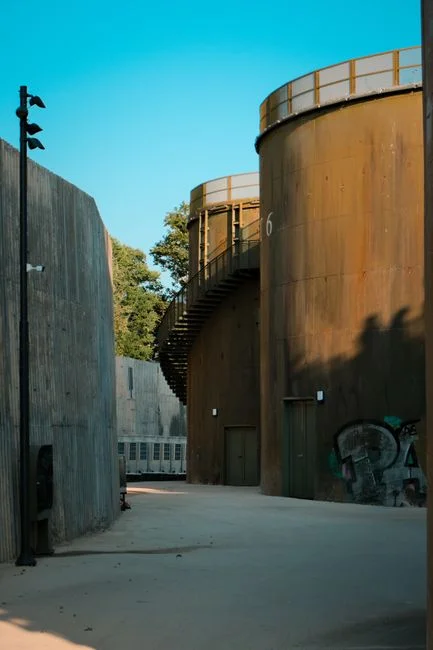
DAF, MBR and packaged sewage treatment should be compared on the same duty, footprint, energy, sludge and reuse criteria because they solve different wastewater problems. HydropureWater’s 2026 Pattaya guide supplies performance and operating ranges for DAF, MBR and chemical dosing; these are screening values, not guarantees for an untested factory discharge.
DAF is a physical separation option for suspended solids, oil, grease and colloids. The 2026 guide cites 92–97% TSS removal, 60–80% FOG removal, energy use of 0.3–0.5 kWh/m³ and sludge production of 0.2–0.4 kg/m³. It also identifies DAF for food processing, pulp and paper, and metalworking duties with high suspended-solids or FOG loads.
MBR combines biological treatment with membrane filtration. The same source cites 99% pathogen reduction, COD below 50 mg/L, energy use of 0.8–1.2 kWh/m³ and sludge generation of 0.1–0.3 kg/m³ for the cited application. It also states that an MBR system can require up to 60% less space than conventional activated-sludge systems. Actual site area still depends on pretreatment, tank arrangement, access and maintenance clearances.
Chemical dosing is pretreatment rather than a complete treatment train. HydropureWater’s 2026 guide cites 70–90% TSS removal, energy use of 0.1–0.2 kWh/m³ and sludge generation of 0.5–1.5 kg/m³ for dosing-based treatment. Compare a Dissolved Air Flotation system for Pattaya wastewater or an integrated MBR wastewater treatment system against a sewer or reuse outcome only after including the necessary pretreatment.
The available configuration ranges are also different: the supplied product portfolio lists DAF at 4–300 m³/h across 13 standard models, MBR at 10–2,000 m³/day and the WSZ integrated package at 1–80 m³/h. These ranges establish available configurations, not application-specific suitability.
A package sewage-treatment plant is most credible for predominantly domestic sewage or comparable biodegradable flow. The WSZ underground integrated sewage treatment system should not be treated as a substitute for industrial pretreatment without characterization, because oils, solids, toxics, salts or non-biodegradable contaminants may require a dedicated process.
| Criterion | DAF | MBR | Chemical dosing | WSZ package |
|---|---|---|---|---|
| Primary role | Physical separation of solids, oil, grease and colloids | Biological treatment with membrane filtration | Chemical conditioning and aggregation | Predominantly domestic or comparable biodegradable sewage treatment |
| HydropureWater 2026 cited TSS removal | 92–97% | Not stated as a TSS range | 70–90% | Not stated in supplied research |
| HydropureWater 2026 cited FOG removal | 60–80% | Not stated as a FOG range | Not stated as a FOG range | Not stated in supplied research |
| HydropureWater 2026 cited energy use | 0.3–0.5 kWh/m³ | 0.8–1.2 kWh/m³ | 0.1–0.2 kWh/m³ | Not stated in supplied research |
| HydropureWater 2026 cited sludge generation | 0.2–0.4 kg/m³ | 0.1–0.3 kg/m³ | 0.5–1.5 kg/m³ | Not stated in supplied research |
| Configuration range in supplied portfolio | 4–300 m³/h; 13 standard models | 10–2,000 m³/day | Project-specific within the treatment train | 1–80 m³/h |
| Main procurement limitation | Does not by itself establish biological treatment or disinfection | Requires suitable biodegradable influent and pretreatment where needed | Not a complete treatment or disinfection train | Industrial contaminants require a separate design basis |
Match the Treatment Train to the Industrial Wastewater Profile
A standalone-unit purchase can fail because the selected technology addresses only one part of the wastewater duty. Start with the contaminant profile, then define the required sequence through equalization, pretreatment, separation, biological treatment, polishing, disinfection, monitoring and sludge handling.
For food processing, pulp and paper, textile, metalworking and petrochemical duties with suspended solids or FOG, begin by evaluating DAF. HydropureWater’s 2026 guide identifies DAF for these applications and contaminant types. The plate and frame filter press can then be considered when sludge dewatering is required before disposal or reuse, subject to the sludge characteristics and disposal route.
For biodegradable industrial flows requiring high-quality discharge or reuse, evaluate MBR. HydropureWater’s 2026 source cites COD below 50 mg/L and 99% pathogen reduction for the cited MBR application. This supports preliminary comparison, not a guarantee before wastewater testing and process design.
Use an automatic chemical dosing system for pH adjustment, coagulation, flocculation or specialist dosing where testing demonstrates a need. Dosing can improve solids capture, but it does not substitute for biological treatment, complete COD removal or disinfection.
For potable or high-purity reuse, distinguish the established biological and membrane stages from the additional purification identified in the University of Twente nanofiltration thesis. An RO and UF membrane filter element may form part of a project-specific polishing train, but the required process depends on the reuse target and residual contaminant analysis.
Sludge management belongs in the process flow, not after commissioning. Chemical dosing has the highest cited sludge range in HydropureWater’s 2026 comparison, so chemical-intensive pretreatment can increase disposal demand. Final train selection still depends on influent testing and permit conditions; the supplied research does not justify a universal flow configuration for every Pattaya factory.
Plan 2026 Capital and Operating Costs
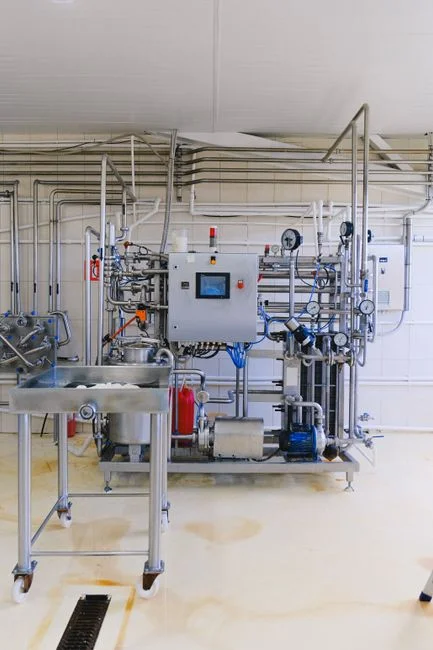
The 2026 budget must separate verified project inputs from indicative market benchmarks. HydropureWater’s 2026 Pattaya guide gives THB 8M–12M for a 50 m³/h DAF system, including equipment and installation, and THB 1.5–2.5/m³ OPEX. These figures provide an initial screen only; they do not establish a quotation for a different duty or site.
Request a breakdown of electricity, chemicals, sludge handling, maintenance, monitoring and labour. The same source provides a broader capital envelope from THB 5M for small DAF units to THB 50M for MBR systems. It does not state that these technologies share identical duty, footprint or installation boundaries, so the figures should not be compared as if they were like-for-like bids.
Price sludge disposal using HydropureWater’s indicative 2026 Pattaya rate of THB 800–1,500/ton, then apply the buyer’s actual dewatered sludge mass, moisture content and transport basis. The source cites sludge generation of 0.2–0.4 kg/m³ for DAF, 0.1–0.3 kg/m³ for MBR and 0.5–1.5 kg/m³ for chemical dosing; these ranges identify where sensitivity analysis matters but do not replace a project mass balance.
Set each commercial comparison to include site works, utilities, access roads, odor control, controls, instrumentation, commissioning, training, permits and contingency. Identify exclusions explicitly. Do not rely on the source’s example payback period; calculate project-specific value from actual flow, reuse value, avoided penalties and disposal cost.
| Cost element | 2026 figure in the supplied research | Buyer action before budgeting |
|---|---|---|
| 50 m³/h DAF capital cost | THB 8M–12M including equipment and installation | Confirm wastewater duty, flow basis, civil scope, utilities and installation boundary |
| 50 m³/h DAF operating cost | THB 1.5–2.5/m³ | Request separate electricity, chemical, sludge, maintenance, monitoring and labour rates |
| Broader capital envelope | THB 5M for small DAF units to THB 50M for MBR systems | Use only as a high-level screen because the source does not define equal scope |
| Sludge disposal | THB 800–1,500/ton | Confirm receiving site, truck capacity, moisture basis and whether additional dewatering is required |
Use a Supplier Briefing and Verification Checklist
A technically comparable quotation is built from one common project basis rather than a list of nominal flow rates. Give every shortlisted supplier the wastewater analysis, average and peak flow, operating schedule, discharge point, applicable permit values, reuse target, available footprint and utility connections.
Require each quotation to identify the treatment objective, unit duties, process sequence, materials of construction, controls, monitoring, utilities, sludge route and exclusions. Ask for guaranteed final-effluent parameters and the test method, while withholding acceptance of any guarantee that has not been established by site-specific analysis.
- Provide the verified wastewater analysis, production-cycle data and current permit or sewer acceptance conditions.
- Define the discharge route and reuse application, including any additional treatment requirement.
- Issue the same hydraulic design basis, site constraints and utility information to every bidder.
- Require a process flow, equipment schedule, controls narrative and sludge-management route.
- Request FAT/SAT or commissioning plans, operator training, maintenance schedules, critical spares, DAF or membrane service access and remote-support terms.
- Compare prices only against the same influent basis, effluent target, flow, installation scope, test protocol and sludge-disposal assumption.
- Make final technical and commercial acceptance conditional on review of the current permit and site-specific design values.
HydropureWater’s 2026 Pattaya article explicitly advises verification of site-specific design values against current permits, influent testing and the final equipment proposal. That verification is not a post-award formality: it is the control that prevents a generic quotation becoming the operating design basis.
Frequently Asked Questions
How much does an effluent treatment plant in Pattaya cost?
HydropureWater’s 2026 Pattaya guide estimates THB 8M–12M for a 50 m³/h DAF installation including equipment and installation, with OPEX of THB 1.5–2.5/m³. The actual price depends on wastewater characteristics, permit conditions, capacity basis, civil works, utilities, controls and site works. Request a quotation using verified influent data and a defined installation boundary rather than treating the estimate as a universal price.
Should a Pattaya factory choose DAF or MBR?
Choose DAF when the principal problem is suspended solids, FOG, oil or colloids and testing supports physical separation as the key stage. Evaluate MBR when the flow is sufficiently biodegradable and the discharge or reuse target requires biological treatment combined with membrane filtration. Influent testing, biodegradability, footprint, energy use and sludge route determine the final selection.
What information should a wastewater equipment supplier request?
Provide COD, BOD, TSS, FOG, pH, sector-specific contaminants, flow variation, permit limits, discharge route, reuse requirements, footprint and utility connections. Also state the operating schedule, sampling requirements and sludge-disposal route. Without these inputs, the supplier cannot define comparable unit duties or meaningful final-effluent guarantees.
How large should the ETP be?
Size hydraulic capacity around peak flow and discharge duration, including production surges and equalization—not average flow alone. Then check biological and polishing duties against the treatment objectives using the verified wastewater analysis. Package capacity ranges indicate possible configurations, but they do not establish suitability without site-specific flow and contaminant data.
Can a package sewage treatment plant handle industrial wastewater?
Only where the wastewater is predominantly domestic sewage or a comparable biodegradable flow and the package supplier accepts the verified industrial duty. The supplied WSZ range is 1–80 m³/h, but industrial oils, solids, salts, toxics or non-biodegradable contaminants can require pretreatment or a dedicated treatment train. A separate industrial DAF system for Pattaya wastewater or integrated MBR wastewater treatment system may be required before or instead of packaged sewage treatment.