Why Jajmau Data Centers Need a Separate Water-Treatment Strategy
A data center in Jajmau needs separate treatment paths for cooling-tower blowdown, sanitary wastewater, process wastewater, and any direct liquid or immersion-cooling effluent. The appropriate train begins with a site water balance and representative sampling, then applies physical pretreatment, targeted polishing, reuse, or approved discharge. Local Jajmau/Kanpur rules, groundwater conditions, and reuse demand must be confirmed before selecting equipment.
The regional context matters. A 2023 Indian Ecological Society study assessed Common Effluent Treatment Plant discharge and its effects on irrigated soil around Jajmau, Kanpur. That study documents an existing industrial-effluent environment, but it does not establish the discharge limits applicable to a new data center. Applicable sewer, surface-water, and groundwater requirements must instead be confirmed with the responsible local authorities.
Stream segregation is the first engineering decision. Cooling-tower blowdown is concentrated recirculating water; sanitary wastewater requires a separate treatment basis; equipment and process wastewater depend on their contents; and immersion-cooling effluent may contain refrigerants or PFAS compounds requiring specialized handling. Commercial Water Lab identifies suspended solids, metals, treatment chemicals, PFAS, and thermal pollution among possible discharge concerns in its 2026 review.
The first project deliverable should therefore be a data-center water balance covering makeup water, evaporation, blowdown, wastewater generation, proposed discharge routes, and candidate reuse demand. It should be developed with the data-center blowdown treatment options in Bulawayo as a technical comparison, while final decisions remain specific to Jajmau.
Build the Jajmau Cooling-Water Balance Before Selecting Equipment
Cycles of concentration determine the blowdown quantity, but the calculated value must be reconciled with actual tower operations before treatment capacity is fixed.
Cycles of concentration, or CoC, are the ratio of dissolved-solids concentration in circulating cooling water to that in makeup water. The relationship cited by Genesis Water Technologies is:
Blowdown ratio = 1 ÷ (CoC − 1)
At 4 CoC, blowdown is 25% of makeup-water volume; at 6 CoC, it is 20%. Moving from 4 to 6 CoC therefore reduces blowdown by 20% of the 4-CoC volume, not 50%. Higher CoC can increase scaling, corrosion, and biological-control risks, so the operating target should be validated against water chemistry and tower-control requirements.
| Cooling-water input | What the supplier needs | Decision supported |
|---|---|---|
| Cooling-system configuration | Number and type of towers; wet or dry arrangement; operating schedule | Identifies the source and operating pattern of blowdown |
| Makeup and circulating water | Conductivity, pH, suspended solids, hardness, silica, temperature and complete laboratory analysis | Sets the baseline for CoC, scaling, corrosion and pretreatment |
| Blowdown control | Design CoC, conductivity controls, alarms, dumps and measured purge flow | Distinguishes normal purge from emergency discharge |
| Operating context | Chemical program, operating hours, seasonal load and future expansion | Checks variation, redundancy and treatment demand |
Genesis Water Technologies reports that measured blowdown can exceed theoretical calculations by 15–30% because of unmeasured losses and emergency dumps. Treat that finding as a warning to verify operating data, not as a Jajmau design allowance. The supplied research contains no local temperature, TDS, demand, or blowdown-flow dataset, so none should be assumed. Any treatment sizing should be based on measured flows and vendor-confirmed tower performance. Equipment such as the water-treatment valves and filter media should be selected only after that basis is established.
Characterize Each Wastewater Stream Before Designing the Treatment Train
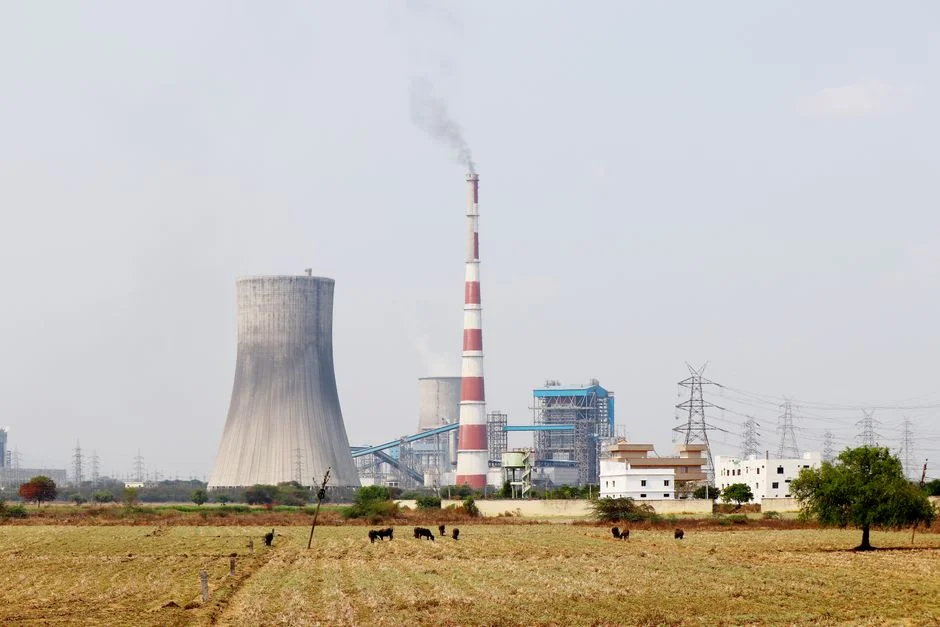
A data-center treatment train should be designed around separate sample points because equal flow does not mean equal contamination risk.
Cooling-tower blowdown is purged to control accumulated dissolved solids. It may contain suspended solids, concentrated salts, biocides, corrosion inhibitors, scale-control chemicals, and other treatment residuals. Sanitary wastewater has a different organics, solids, and nutrient profile. General process wastewater may contain metals, oils, cleaning chemicals, or contaminants specific to the installed equipment. Immersion-cooling effluent may contain refrigerants or PFAS compounds and should not be blended with ordinary blowdown before its composition and required handling are established.
The sampling matrix should cover representative operating periods, makeup water, circulating water, blowdown, each wastewater stream, and every proposed reuse point. Minimum parameters are flow, pH, conductivity or TDS, total and suspended solids, temperature, hardness, silica, and the chemicals used in the cooling program. Add BOD/COD, nutrients, metals, oils, PFAS, or refrigerants where the equipment inventory or preliminary screening indicates them.
| Sample point | Minimum analysis | Purpose |
|---|---|---|
| Makeup water | Flow, pH, conductivity or TDS, hardness, silica, temperature | Defines the feed baseline and scaling potential |
| Circulating water | Conductivity, pH, suspended solids, temperature, treatment chemicals | Verifies CoC and cooling-system control |
| Cooling-tower blowdown | Flow, conductivity or TDS, suspended solids, hardness, silica, chemicals and temperature | Sets pretreatment, polishing and recovery requirements |
| Sanitary wastewater | Flow, pH, solids, BOD/COD and nutrients | Supports a stream-specific treatment and reuse decision |
| Process or immersion-cooling effluent | Base parameters plus stream-specific metals, oils, refrigerants or PFAS | Identifies specialist handling or separation needs |
| Proposed reuse points | Required quality parameters for the intended use | Confirms whether treatment is adequate at the point of use |
Thermal discharge also needs a separate check. Commercial Water Lab notes that heated water returned to a receiving water can cause thermal pollution, while evaporative cooling avoids that direct thermal discharge but consumes water through evaporation. For heated streams, establish the receiving route and temperature condition before selecting equipment. Automated chemical dosing should be based on demonstrated chemistry needs rather than used as a substitute for sampling.
Match the Treatment Objective to the Discharge or Reuse Route
Equipment should be selected from the final destination of each stream, not from a generic assumption that all wastewater requires the same high-grade treatment.
- For controlled cooling-tower purge: begin with physical removal of solids and contaminants that cause deposition or operational fouling, then add targeted treatment only where the selected discharge or reuse route requires it.
- For cooling-tower makeup reuse: assess UF followed by RO against chemistry-aware, higher-recovery systems. IDE Tech reports in 2026 that conventional brackish-water RO commonly plateaus at 75–80% recovery, while its cited industrial desalter operated at around 95% recovery and reduced silica in the permeate to about 1 mg/L.
- For lower-priority reuse: compare toilet flushing and equipment washing with the cost of treatment, storage, pumping, monitoring, and residual-disposal management.
- For zero-liquid-discharge objectives: include concentrate management, salt precipitation or crystallization, and scale control in the project scope. RO permeate alone is not a complete ZLD design.
| Treatment objective | Applicable technology | Design caution |
|---|---|---|
| Remove solids, colloids, bacteria or turbidity before RO | 0.03 μm PVDF ultrafiltration system | HydropureWater specifies PVDF membranes, 2,000–40,000 L/h capacity, turbidity up to 300 ppm, automatic backwash and air scour |
| Remove oil, grease, FOG, colloids or suspended solids | DAF equipment | HydropureWater specifies a 4–300 m³/h capacity range; actual applicability depends on feed analysis |
| Produce cooling-tower makeup water | industrial RO cooling-blowdown reuse system | Set recovery from complete chemistry, not from permeate quality alone |
| Achieve ZLD | RO plus concentrate treatment and salt-management stage | Define the residual route before committing to recovery |
For example, a DAF unit is justified where analysis confirms floatable contamination; UF is justified where suspended matter, colloids, bacteria, or turbidity could compromise downstream membranes. Neither is a default answer. Higher-recovery reuse reduces freshwater demand, but its value depends on concentrate handling, energy, chemical use, and operator capability.
Use a Modular Pretreatment Train for a Medium-Sized Jajmau Site
A modular train is appropriate when it reflects the measured treatment objective, available footprint, operating staff, and expansion plan.
A workable process sequence is:
- Segregated collection and equalization.
- Strainer or screen protection where required.
- DAF or clarification for streams containing suitable floatable material.
- UF for removal of suspended solids, colloids, bacteria, and turbidity.
- RO or targeted polishing where the reuse specification requires it.
- Monitored storage and distribution to the intended use.
HydropureWater multi-media filters remove suspended solids, turbidity, and colloidal matter and include automated backwash. They can provide pretreatment ahead of UF or RO where raw-water quality warrants it, but their selection should follow filtration testing and head-loss requirements.
Automatic chemical dosing should be limited to demonstrated needs. The PLC-controlled dosing skid can meter coagulants, flocculants, pH adjusters, and specialty chemicals, while automatic chemical dosing equipment should interlock with flow and water-quality conditions. A UV treatment stage may be relevant if the reuse specification includes a disinfection barrier, but it does not replace analysis or residual-management design.
| Control point | Instrument or action | Engineering response |
|---|---|---|
| Equalization | Flow, level and temperature | Stabilizes feed flow and exposes abnormal discharges |
| Filtration and UF | Differential pressure, flow and turbidity | Detects fouling and triggers backwash or isolation |
| RO | Conductivity, pressure, flow and recovery ratio | Protects membranes and identifies scaling conditions |
| Chemical dosing | pH, dose rate, flow and tank level | Prevents over-dosing and uncontrolled chemical addition |
| Reuse storage | Water quality and distribution flow | Protects the intended process from untreated or contaminated water |
Advanced treatment should be reserved for streams whose final use justifies the capital, energy, chemical, and operating burden. A multi-media filtration module may be the correct pretreatment stage, but it should not be used to imply that filtration alone solves scaling, disinfection, salinity, or permit requirements.
Evaluate Reuse and Discharge Risk Using Whole-Life Costs
The business case must compare total water-system cost rather than count only avoided freshwater or discharge volume.
Include avoided freshwater, avoided discharge charges, chemical savings, recovered-water value, treatment electricity, maintenance, labour, membrane replacement, storage, pumping, monitoring, and concentrate handling. The recovery assumption should be tied to the measured blowdown flow and verified treatment performance.
The 2026 life-cycle study by Open Engineering Inc found that its wastewater-reuse scenario had about twice the global warming potential of the freshwater scenario, with treatment energy accounting for roughly 80% of the difference. The study also reported an indirect water penalty of approximately 0.93 L/m³, which it described as less than 0.1% of the direct freshwater-displacement benefit. In the UF+RO scenario, wastewater energy use grew to more than five times that of the freshwater case, although improved cycles of concentration reduced blowdown and chemical consumption.
These findings expose the wastewater reuse economics trade-off rather than settling it for Jajmau. The cited study concerns its own data-center scenario; it does not establish local tariffs or site performance. Obtain Jajmau freshwater and electricity rates, any applicable discharge charge, expected demand, recovery target, and disposal route before calculating payback.
Compare at least these cases:
- Current freshwater purchase and direct disposal.
- Physical treatment followed by lower-priority reuse.
- UF–RO or chemistry-aware treatment for cooling-tower makeup reuse.
- A ZLD configuration including concentrate management.
Environmental and regulatory approval should be complete before reuse or discharge savings are included as assured value in the investment case. The high-capacity industrial wastewater treatment guide provides a useful architectural reference, but its equipment scale and economics should not be transferred automatically to a Jajmau site.
Use a Site-Data Checklist for Supplier Selection and Final Design
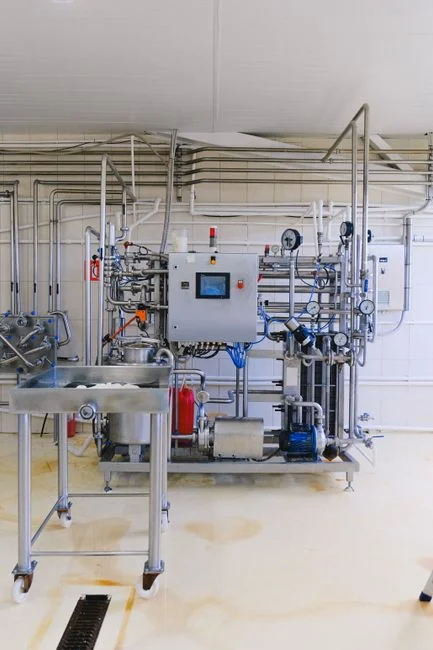
Suppliers should quote against the same measured site basis, with the final destination and residual route stated explicitly.
- Flow and service: peak and average flow for every stream, operating schedule, expansion envelope, availability requirement, and intended reuse destinations.
- Analysis: representative laboratory results, complete water analyses, cooling-water chemical inventory, and source-specific testing for metals, oils, PFAS, or refrigerants where indicated.
- Performance: required permeate or reuse-water quality, recovery target, treated-water storage requirements, and residual-disposal route.
- Equipment: membrane materials, pretreatment requirements, scaling controls, chemical consumption, cleaning frequency, redundant capacity, footprint, utilities, automation, remote monitoring, and operator-skill requirements.
- Approvals: the intended sewer-discharge or surface-water route, groundwater-use permissions, and responsible Kanpur/Jajmau authority requirements.
- Validation: pilot or side-stream testing where blowdown chemistry is uncertain, particularly for silica, hardness, conductivity, and treatment-chemical residuals.
| Bid document | Required response | Reason for review |
|---|---|---|
| Measured water balance | Design basis, peak and average flows, expansion assumptions | Prevents generic capacity factors |
| Representative analyses | Source-by-source laboratory reports and chemical inventory | Supports stream-specific process design |
| Process guarantee | Treated-water quality, recovery, operating envelope and monitoring | Makes performance testable |
| Residual-management plan | Concentrate volume, chemistry, handling route and operating responsibility | Exposes a common lifecycle omission |
| Commercial schedule | Itemized capital, energy, chemicals, membranes, maintenance, labour and disposal | Allows comparable lifecycle evaluation |
| Compliance schedule | Applicable authority, permit pathway and unresolved approval conditions | Distinguishes design assumptions from approvals |
The supplied research does not provide a Jajmau-specific numerical permit limit. Do not accept a bidder’s generic discharge limit as local approval. Require the supplier to identify the governing authority, assumed route, permit dependency, and any unresolved compliance condition. The comparable data-center cooling-blowdown guide can support technical comparison, but it cannot replace a Jajmau compliance check.
Frequently Asked Questions
What wastewater and cooling blowdown treatment does a data center in Jajmau, India need?
It needs a stream-specific treatment train: segregation and equalization for cooling-tower blowdown, sanitary wastewater, process wastewater, and any immersion-cooling effluent; physical pretreatment where required; UF, RO, or other targeted polishing where the selected reuse or discharge route requires it; and a documented concentrate or residual-disposal plan. The final design must follow measured flows, complete chemistry, local approvals, and intended reuse quality.
How should treatment capacity be sized for a Jajmau data center?
Size it from measured cooling makeup, operating CoC, evaporation, blowdown, wastewater generation, operating schedule, and expansion—not from a generic data-center flow rule. Reconcile calculated blowdown with actual purge and emergency-dump records. Obtain cooling-system configuration and representative water analyses before selecting capacities for equalization, filtration, UF, RO, storage, or pumping.
How do I select a wastewater-treatment supplier in Jajmau?
Require each bidder to demonstrate treatment for the actual stream chemistry, not a generic data-center package. Check the proposed recovery target, membrane materials, pretreatment basis, scaling controls, chemical consumption, cleaning regime, redundancy, monitoring, operator requirements, and residual-management route. Also require evidence that the supplier understands the applicable Kanpur/Jajmau approval pathway and can support commissioning and maintenance.
What should the budget and lifecycle-cost comparison include?
Compare avoided freshwater, avoided discharge costs, recovered-water value, electricity, chemicals, maintenance, labour, membrane replacement, storage, pumping, monitoring, and concentrate disposal. The 2026 Open Engineering Inc life-cycle study found an energy-heavy environmental trade-off, including UF+RO energy use above five times the freshwater case, so water savings should not be valued without treatment energy and residuals. Request a Jajmau-specific quotation; no supplied source supports a local price or payback period.
Does the 2023 Jajmau CETP study establish the data center’s discharge limits?
No. The Indian Ecological Society study is regional evidence about CETP discharge and irrigated soil around Jajmau, Kanpur. It does not establish the permit or pretreatment limits for a data center. Confirm the intended sewer, surface-water, or groundwater route and applicable requirements directly with the responsible authorities before treating the discharge route as approved.